





Article by: Hash Power Heart
The Bitcoin 2026 conference will be held at the Venetian Expo in Las Vegas from April 27 to 29, 2026.
On stage, Michael Saylor, co-founder and executive chairman of Strategy (formerly MicroStrategy), delivered his signature Bitcoin-themed speech with passion, stating that digital credit should "push Bitcoin to $10 million per coin."
BitMEX co-founder Arthur Hayes has set an optimistic price target of $125,000 for Bitcoin by year-end.
Eric Trump, Donald Trump's second son, said, "I am absolutely convinced that Bitcoin will reach $1 million."
Industry leaders such as MARA CEO Fred Thiel and Tether CEO Paolo Ardoino were all present.
Meanwhile, SEC Chairman Paul Atkins and CFTC Chairman Mike Selig made an unprecedented appearance in their official capacities, and White House crypto advisor Patrick Witt previewed on-site that the strategic Bitcoin reserve plan will see significant progress within weeks.
Official data shows that over 40,000 people attended in person over three days, with over a million online viewers worldwide.
However, as you step into the exhibition halls of the Venetian Expo Center, a subtle shift is permeating the air.
Belief in Bitcoin remains strong, but the industry's narrative focus has quietly shifted.
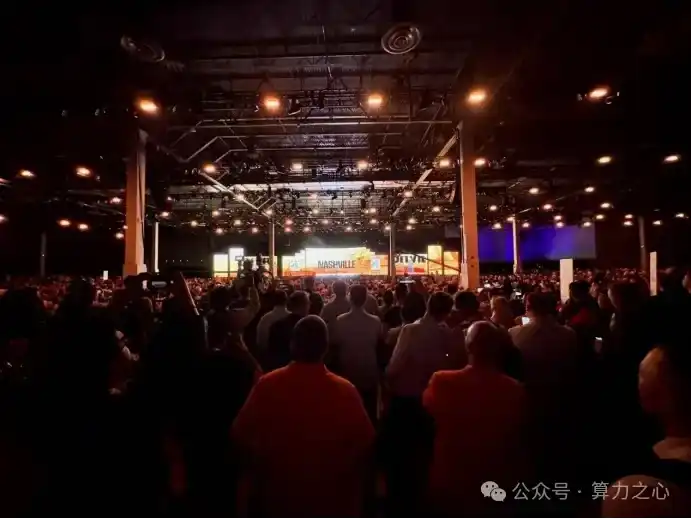
(Figure 1: Michael Saylo delivers a keynote speech at the Bitcoin 2026 main stage, with a packed audience)
One,Onstage, faith is being funded; offstage, the booth stands empty.
On April 27, 2026, the Bitcoin 2026 conference, drawing over 40,000 attendees, opened at the Venetian Convention Center.
As the annual barometer of the Bitcoin ecosystem, the Bitcoin Conference has long been the central gathering point for miners, mining hardware manufacturers, investment institutions, technology developers, and policymakers.
In 2021, Miami had 11,000 participants. In 2025, Las Vegas will have 35,000 participants.
The official stated that this year's participation reached 40,000 people, with over a million online viewers worldwide.
The official agenda remains enthusiastic.
The agenda includes热门议题 such as the U.S. strategic Bitcoin reserve, Bitcoin education, Bitcoin network quantum resistance, clean energy mining, Bitcoin mining hardware and AI computing synergy, and mine site transformation into data centers.
Michael Saylor, Arthur Hayes, and Eric Trump, the second son of Donald Trump, successively called out trades on the main stage, pushing the atmosphere of the venue to a climax.
But there was another image in the exhibition hall at the same time.
According to several exhibitors, the actual foot traffic was noticeably lower than last year.
Industry insiders said: "There were more staff at the booth than actual customers buying equipment; most others were Bitcoin enthusiasts coming to learn."
Multiple exhibitors confirmed that foot traffic at the event dropped by more than 30% compared to last year. Attendance for general speakers has fallen to just one-fifth of last year’s levels, and there are significantly fewer exhibitors than last year.
Last year’s bull market saw exhibitors’ target customers everywhere at the expo; this year, exhibitors are searching everywhere for customers.
You can tell something from the sponsor wall.
The list of sponsors for this year’s conference includes the four major mining hardware manufacturers, numerous container brands from China and abroad, as well as compliant exchanges based in the United States and the three largest publicly traded mining companies in the U.S.
Compared to the previous list, some major sponsors from last year have disappeared this year, while new brands that have emerged are noticeably more focused on data centers and AI infrastructure.
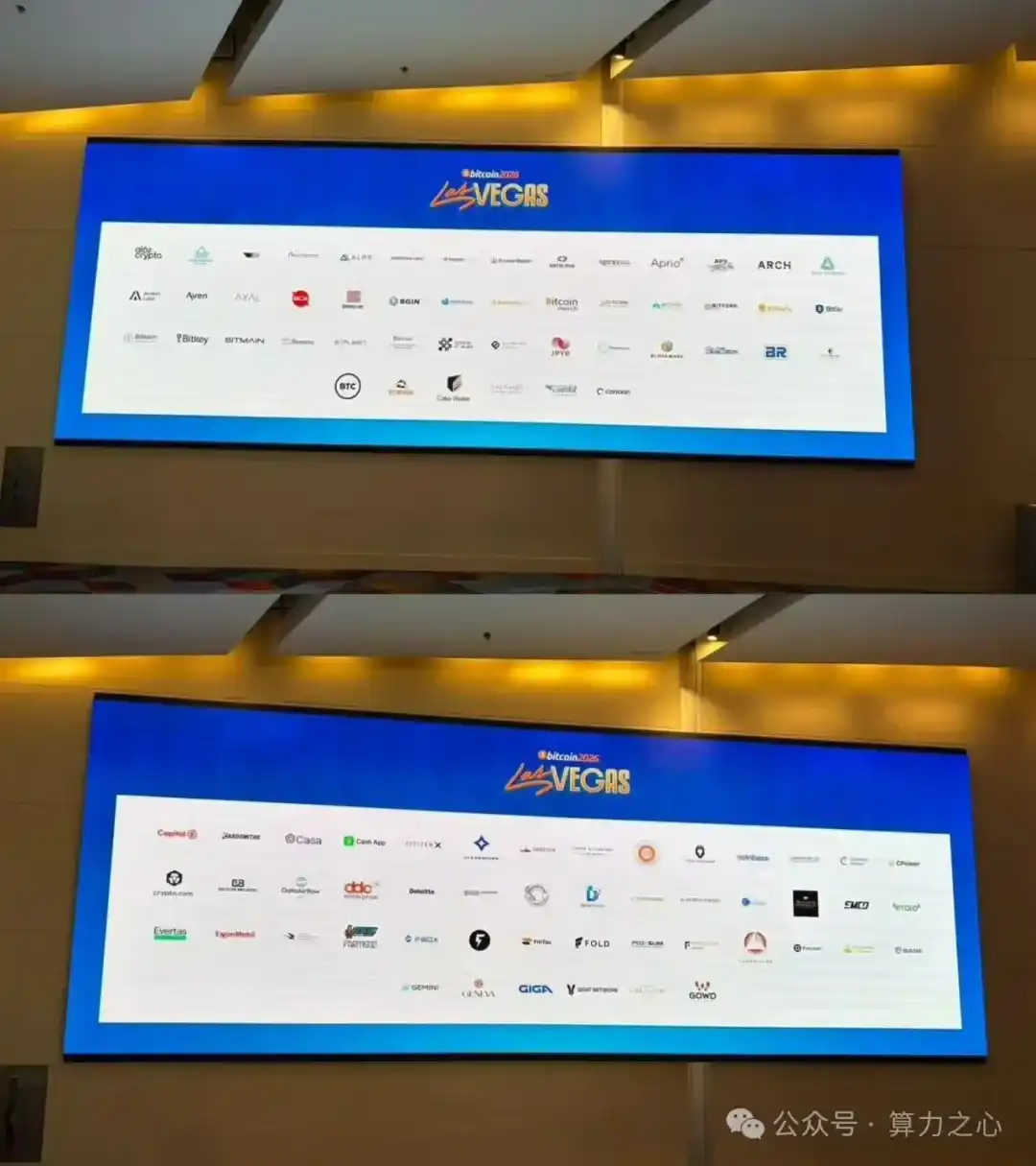
(Figure 2: Sponsor display wall at the Bitcoin 2026 conference)
While the stage continues to promote faith, the audience below is virtually nonexistent.
Money and attention have already shifted direction.
II. Exhibition Tour of Mining Companies — Mining Equipment Remains, AI Has Arrived
Despite the challenging industry conditions, this year’s exhibition features participants covering every segment of the Bitcoin mining supply chain.
From large mining companies to mining hardware manufacturers, from overseas mining container brands to top domestic manufacturers, the brand competition inside and outside the Las Vegas Convention Center is itself a vivid portrait of industry transformation.
Among the large mining companies, CleanSpark’s booth stood out prominently. This North American miner, known for its low-carbon hydropower, no longer merely promotes its Bitcoin production on its display boards this year—instead, it features the slogan "OPTIMIZING POWER INTELLIGENCE," clearly signaling its strategic shift toward AI/HPC.
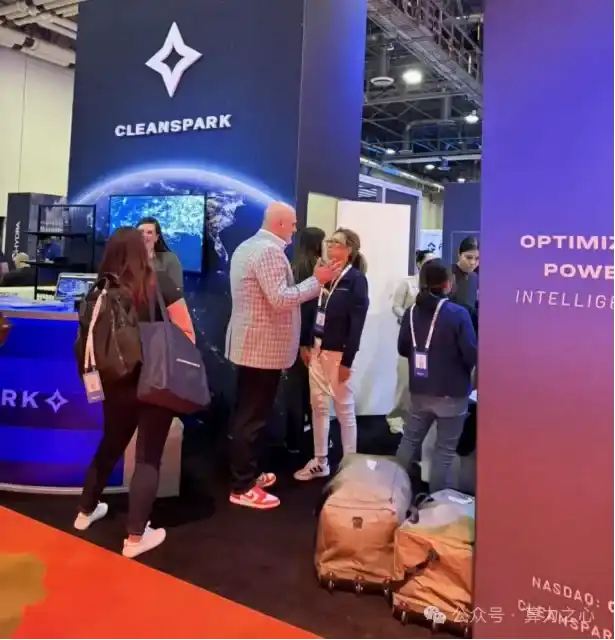
(Figure 3: CleanSpark booth—the slogan "Optimizing Power Intelligence" signals an AI transformation)
In addition, Antalpha, as a BTC ecosystem service platform, recently received investment from Tether and demonstrated its institutional-grade Bitcoin financial services at this conference.
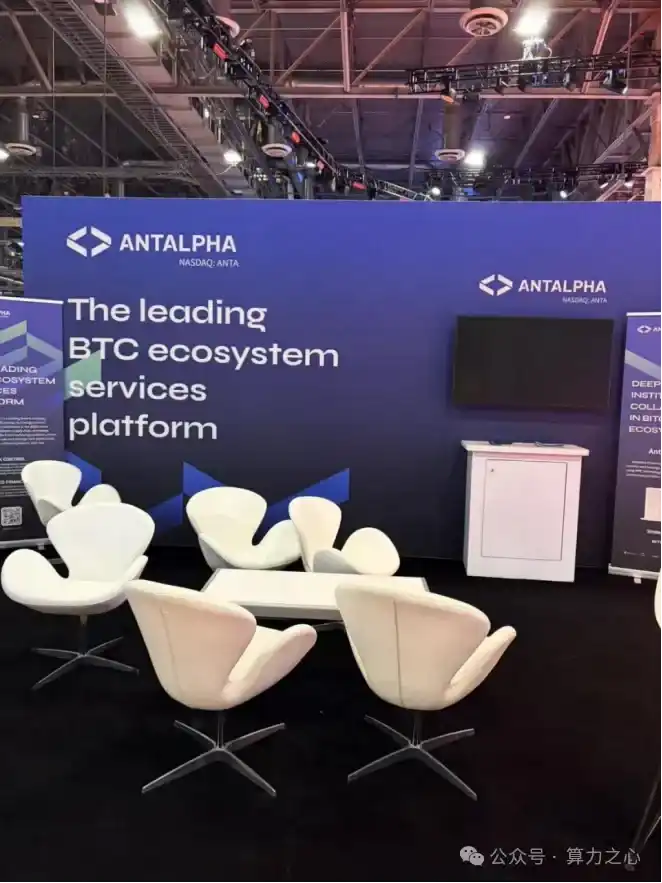
(Figure 4: AntalphaBTC Ecosystem Service Platform Booth)
Miner manufacturers remain the "hardcore" highlight of every Bitcoin conference. At this year’s exhibition, Bitmain, the world’s largest ASIC miner manufacturer, continues to occupy a central position, with its latest Antminer S23 series serving as the technological benchmark of the show.
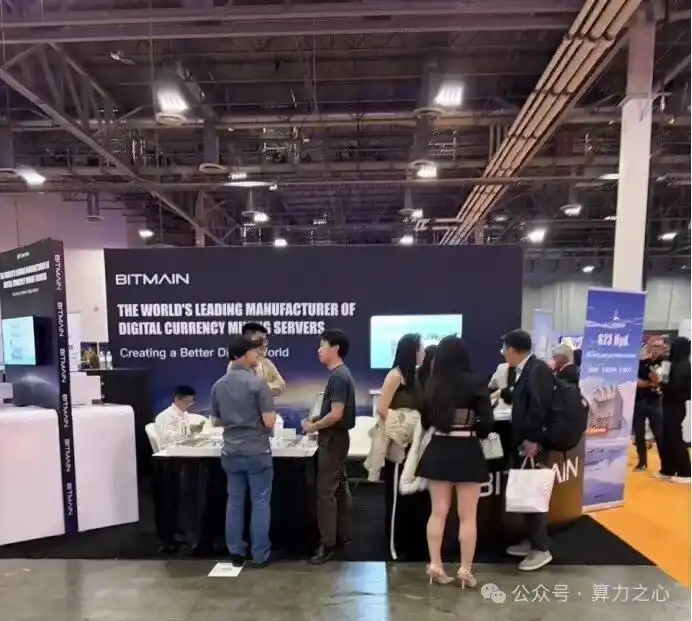
(Figure 5: Bustling on-site interactions at Bitmain's booth)
Bitdeer’s booth was more direct—its banner prominently displayed “Bitcoin mining & AI Cloud.” As one of the pioneers in global cloud hashing power platforms, Bitdeer unveiled its dual-drive strategy at this exhibition: Bitcoin mining on one side, AI cloud computing on the other. The looped content on display featured real footage from traditional mining farms alongside renderings of data centers transformed into GPU clusters.
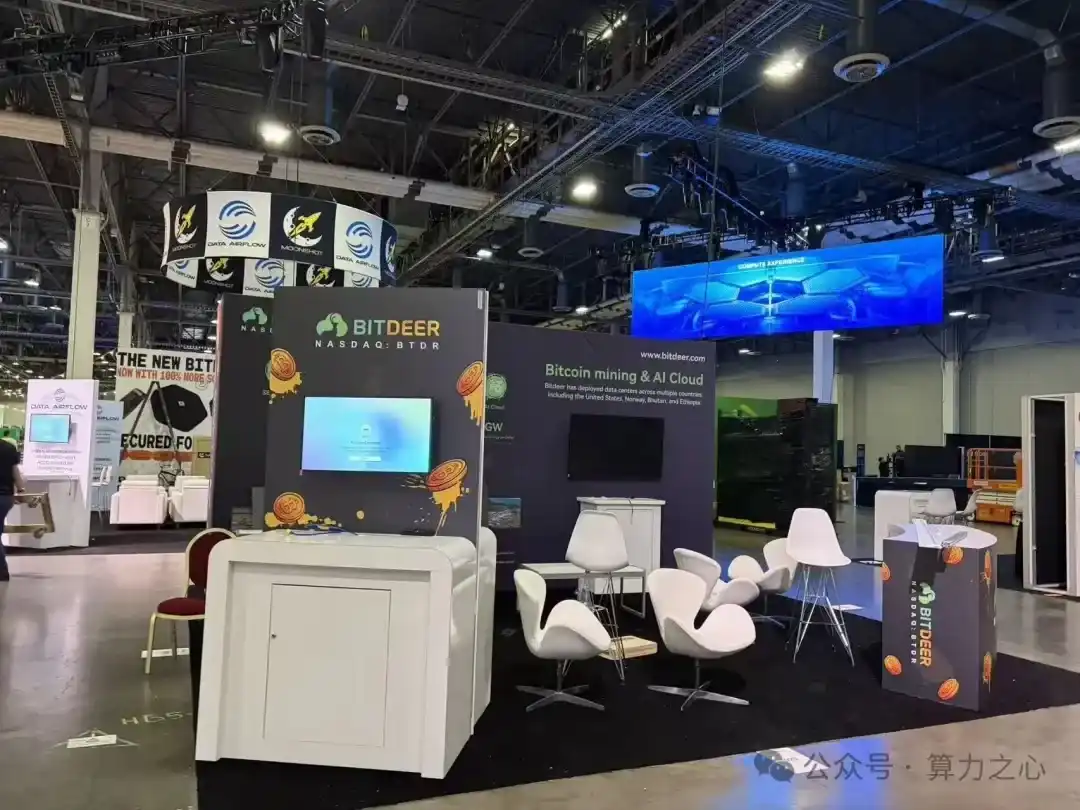
(Figure 6: Bitdeer booth—Bitcoin mining and AI cloud computing driving dual growth)
Meanwhile, Bitmain’s WhatsMiner has also introduced its integrated water-cooled mining machine and container solution, with the banner "Mining Forward, Together" suggesting the manufacturer is seeking synergy with data center operations.
In the infrastructure sector, Intelliflex’s booth stood out. This brand, specializing in "Innovative Data Solutions," showcased core components of its modular data centers, whose design clearly moves beyond traditional mining rigs and more closely resembles enterprise-grade AI data center deployments.
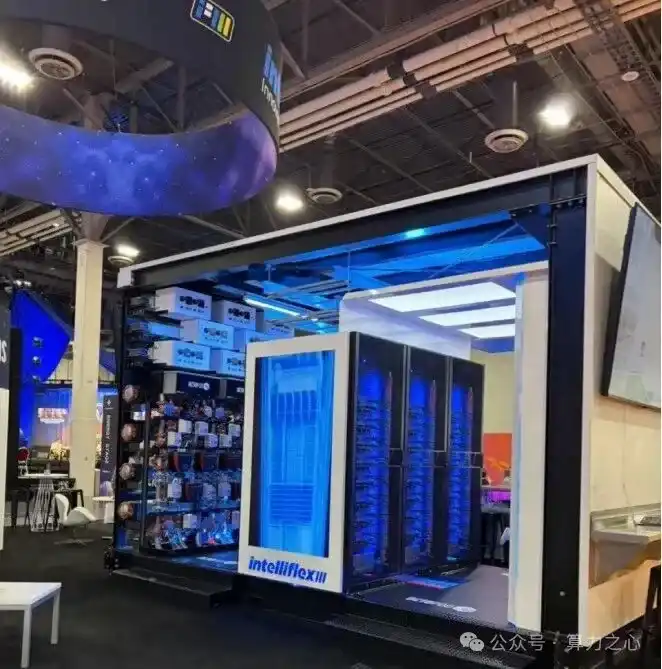
(Figure 7: Physical display of the Intelliflex large modular data center)
As a brand specializing in data center infrastructure engineering, Moonshot clearly lists its full product line on its display board, ranging from UL-certified distribution cabinets and transformers to modular data centers. This indicates that even traditional "mining farm builders" now view modular data centers as a core growth direction.
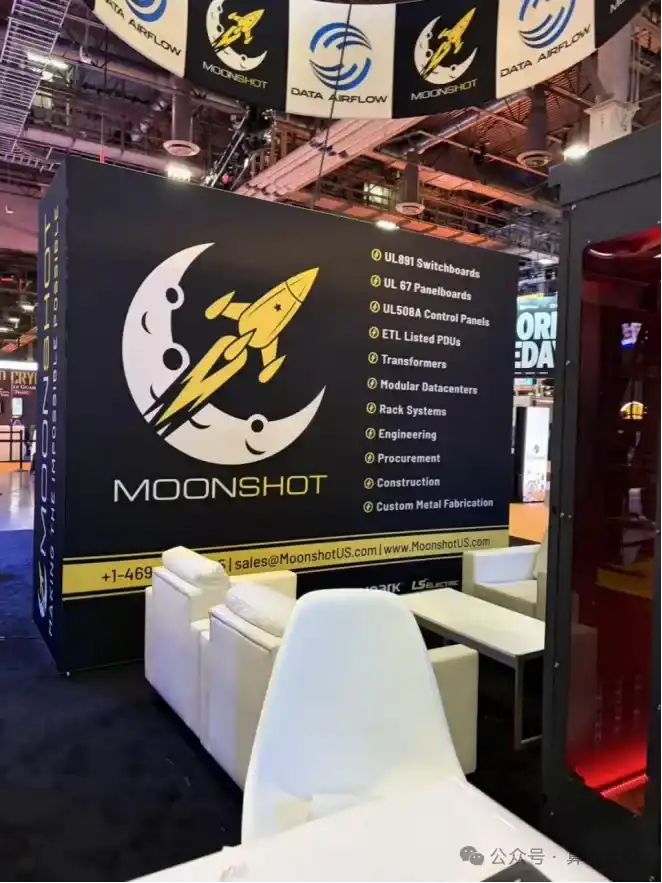
(Figure 8: Moonshot booth—infrastructure product line including modular data centers)
Three, the great reversal of hash power,AI’s physical assimilation of the crypto world
In fact, crypto buyers haven't gone far—they've just shifted their buying direction.
This is also related to the sluggishness of the Bitcoin market.
In the first quarter of 2026, the average cash cost per bitcoin for publicly traded mining companies rose to approximately $79,995, while hash rate prices fell to a historical low of $28–30 per PH per day.
High electricity costs have made mining losses a reality.
Therefore, although Bitcoin flags fluttered throughout the convention center in Las Vegas, the big players' attention has long moved on.
Just this quarter, major publicly traded mining companies quietly signed AI computing power contracts exceeding $70 billion.
A mass migration under the guise of cryptocurrency is dividing miners.
All exhibitors are quietly removing the "pure miner" label from themselves.
The most aggressive move was made by Bitdeer. In February 2026, this giant released a startling report, clearing its treasury of 943.1 reserved bitcoins, achieving "zero holdings."
They poured the cashed-out funds, along with $300 million in new capital, entirely into AI.
The Power Heart visited the Bitdeer booth and had an in-depth discussion with staff about Bitdeer’s strategies in mining and AI. Through the conversation, the Power Heart summarized Bitdeer’s current core strategy: using cash flow from Bitcoin mining to secure an early position in AI-era computing infrastructure.
The underlying logic is not complicated: Bitcoin and AI represent two definitive trends for the next decade, and their only shared constraint is electricity—centered around this core limitation.
Bitdeer has built a three-tiered structure: At the base are power assets—the location selection, grid connection, and operational capabilities accumulated through long-term mining farm operations, essentially scarce resources gained over time; in the middle is cost and efficiency control—through its proprietary SEALMINER system, continuously pushing the boundaries of energy efficiency to lock in computing output per unit of electricity, giving mining operations stable cash flow characteristics; at the top is the realvaluation of computing power—extending computing power from cryptocurrency production to AI computing services on the same power foundation, achieving a leap in revenue per unit of energy.
Overall, Bitdeer is not a single mining company, but is building a power-centric computing power infrastructure platform, occupying a critical position in resource allocation and value distribution between the two demand sides: Bitcoin and AI.
Bitdeer is not playing chess in a vacuum, as the entire North American mining crust is already shifting.
Right now, a battle for resources is unfolding in North America, as AI data centers consume the electricity and data center space once allocated to cryptocurrency.
Industry insiders point out: "Who still foolishly relies solely on mining for profit? The current strategy is to lease land and power grids to AI giants and become a landlord."
The three major publicly traded mining companies in North America—MARA Holdings, CleanSpark, and Riot Platforms—are indeed doing the same thing: converting their mining facilities into AI data centers.
The most aggressive is MARA Holdings.
They directly sold over 10,000 bitcoins in March. After cashing out $1.1 billion in one go, MARA immediately partnered with capital to form a joint venture, converting all of its power capacity into AI data centers. Even the European market wasn’t spared—they directly invested to acquire related companies in France.
CleanSpark is playing a smarter game.
The company reported a net loss of $370 million in the first quarter due to cryptocurrency price volatility. Yet interestingly, during the earnings call, management painted a picture of several large AI deals about to close, and the stock miraculously rebounded. As long as they hold 1.8 gigawatts of low-cost energy assets, capital markets are willing to fund their AI transition.
Even losses can be offset by AI expectations—converting mining farms into AI centers, just how much profit can be squeezed out?
The answer is written in Riot Platforms' contract.
This major mining company has just signed a 10-year lease agreement with chip giant AMD. If fully utilized, the total value of this contract could reach $1 billion. To secure Texas grid capacity outright, Riot even spent nearly $100 million to purchase permanent ownership of 200 acres of land, eliminating future rental costs altogether.
Industry insiders say: "Providing data center hosting for giants like AMD generates 2.5 times the gross profit per megawatt compared to traditional mining—anyone would know which to choose."
So, it's not just these three giants.
Billions, even hundreds of billions of dollars in AI infrastructure leases are being rapidly signed, from Core Scientific to Hut 8.
By the end of this year, AI business revenue is expected to surge from 30% to 70% of the total revenue for these publicly traded mining companies.
What mining companies value most is no longer mining equipment, but electricity.
But changing a mine into an AI data center isn't as simple as just changing a sign.
As major miners in North America struggled to upgrade their old mining facilities, they looked around the exhibition hall and finally stopped at a booth run by a Chinese company.
Fourat the Bitcoin Conference“Outlier,”Chinese modular data center
In the vast Las Vegas venue, the Chinese brand Fourier amazed the big names of the American mining community.
Well-known Twitter influencer and North American Bitcoin miner Bruce J posted after touring the event: "This year’s Bitcoin Conference in Las Vegas was pretty quiet, but the only standout I saw was this modular AI data center—I have to say, Chinese companies are really impressive when it comes to product innovation."
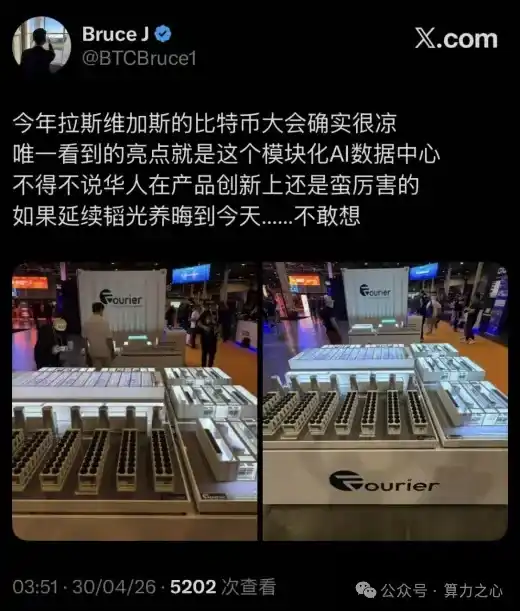
(Figure 9: North American Twitter influencer Bruce J posts praising the Chinese modular AI data center product)
Among all exhibitors, Fourier is not the only one offering modular data centers.
Even traditional mining facility builders are shifting in this direction.
Intelliflex showcased modular data center core components, with product designs that have moved beyond the traditional mining rig framework and are now closer to enterprise-grade AI data center delivery standards.
Moonshot listed its full product line on the display board, ranging from UL-certified distribution cabinets and transformers to modular data centers.
Why are modular data centers suddenly so popular in North America?
In fact, this tweet precisely highlights the current pain point of American capital.
Traditional AI data center construction typically takes 3 to 5 years, but this modular solution from China’s supply chain reduces deployment time to just a few months.
For North American consortia eager to bet on AI and holding expensive GPUs, time is life.
Whoever can power up their device the fastest gains the advantage.
The value of the modular solution lies in its ability to convert sites originally designed for mining rigs into AI data centers compatible with GPU clusters, at lower cost and faster speed.
Five: Holding Steady Against the Headwinds, Quietly Seizing Opportunities
At this point, it seems Bitcoin has lost its momentum, and everyone is rushing toward AI.
But we walked around the venue and spoke with people still at the tables, and discovered another side.
Zoey from SpiderPool is a "frequent flyer," constantly traveling between major industry events. After visiting Las Vegas this time, she shared with us the most immediate impression she gained.
Everyone is out of money.
The result of having no money is squeezing costs to the extreme. Zoey also revealed a harsh detail: “Previously, we were the ones seeking clients; now, clients come to us主动. They repeatedly compare rates across different mining pools just to drive the fees down to the lowest possible level.”
In this winter, miners are doing everything they can to save every penny.
So, what are the surviving giants up to? The Hash Power Heart arrived at the BitFuFu booth.
Had an in-depth conversation with the booth manager about their thoughts on the Bitcoin2026 conference.
The booth manager of Bitfufu said: This year’s BTC conference in the U.S. wasn’t as bustling as last year, but there were also far fewer onlookers; those who came had clear goals, such as buying mining rigs, seeking custody services, or looking for partnerships.
Their on-site mining machine solutions in the U.S. are very popular.
Currently, mining companies need to maintain profitability through more refined operations—such as improving mining output via firmware optimization, enhancing energy efficiency with next-generation mining hardware, and seeking out mining facilities with lower electricity rates.
Recent demand for AI has driven significant needs for data centers, and many mining companies are shifting toward HPC/AI. However, many mining sites and regions are not well-suited to the high concurrency and low latency requirements of AI, which instead gives them an opportunity to acquire high-quality mining assets during relatively quiet market periods.
The BitFuFu booth manager stated: Although market sentiment is currently low, they will continue to be bullish on Bitcoin and maintain mining operations.
Their business model of self-mining combined with cloud hashing power makes them relatively more resilient and financially stable.
In the long term, as institutional capital continues to flow in, Bitcoin is decoupling from speculative funds, and its value will become increasingly solidified—they are very bullish on Bitcoin’s future.
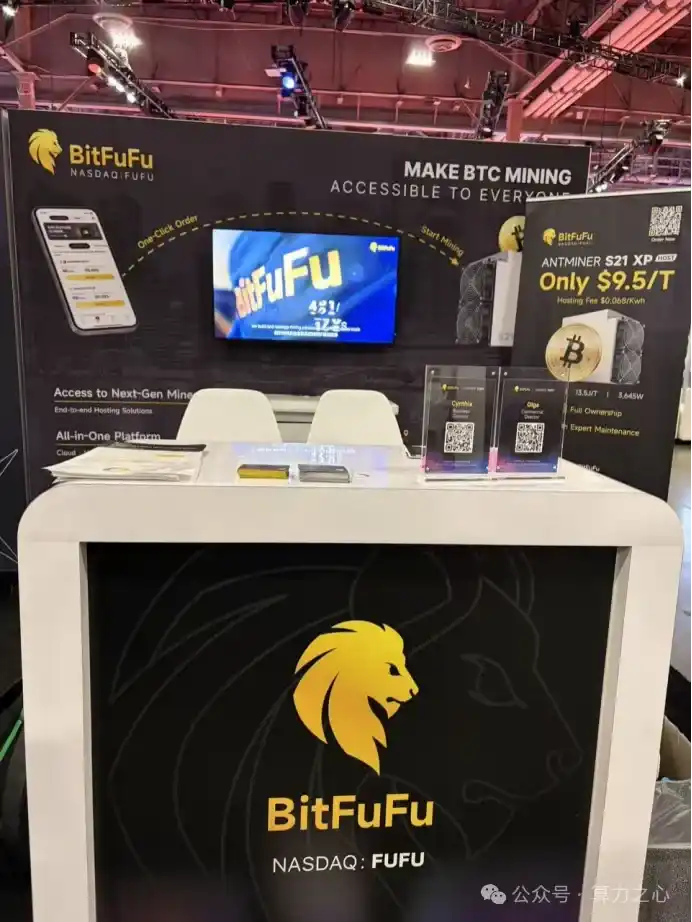
(Figure 10: Real-life view of the BitFufu booth — showcasing the brand and technological strength of a one-stop mining platform)
At the Bitcoin Conference exhibition, many American families brought their children to explore the booths. The children gathered in front of glass display cases, curiously observing the installation art of Satoshi Nakamoto and experiencing novel Bitcoin elements such as mining rigs and the Lightning Network.
People take photos for memory in front of the classic cover wall of Bitcoin Magazine. T-shirts and merchandise featuring Satoshi Nakamoto’s quotes sell well.

(Figure 12: American parents find Bitcoin cool and are willing to let their children learn about it from an early age.)
Bitcoin remains a spiritual symbol for many, and the smiles of children at the exhibition affirm the transmission of Bitcoin belief across generations.
But the computing power and electricity held by mining companies don't adhere to ideology—they are following profit signals into the new frontier of AI.
At this crossroads of industry transformation, the logic of China’s supply chain has also evolved.
But after this loud migration, those who remain are the true believers.