




Author: Hu Tao, ChainCatcher
On March 23, Backpack (also known as Beibao) officially launched its native token, $BP, and opened the channel for claiming reward airdrops. What was initially regarded as a landmark event in the Solana ecosystem and a beacon of hope for countless airdrop hunters unexpectedly triggered a strong backlash within the community, plunging it into an舆论 storm.
The core issue remains the airdrop token distribution: renowned KOLs such as Bingwa, Hebi, Tuda Big Brother, Professor Windless Shuttle, Meta Monkey, and anymose have all stated that their accounts and those of their studios were flagged by the platform as "sybils," resulting in airdrop rewards far below expectations and significant losses.
Countless small retail investors and I all came here with dreams and hopes, eager to fill our backpacks. We believed you were a breath of fresh air, that things would be different. But we’re sorry—we were wrong. You hold the knife, and we are the fish. This time, we’re truly heartbroken,” said Xiao Xiong Binggan.
Historically, many projects have been criticized for anti-sniping, but never has a project been so harshly condemned for it, with so many KOLs joining the outcry.
KOLs have even added the following description directly in their bios: "Note: Backpack is a scam exchange and scam group—do not use it under any circumstances, and be careful not to get scammed."

I. Successful KOL Marketing Cases
The rise of Backpack was once regarded as a textbook marketing case. Founded by former FTX executives, backed by the powerful Mad Lads NFT community, and promoted for its "compliance" and "high performance," Backpack was immediately showered with acclaim upon its launch.
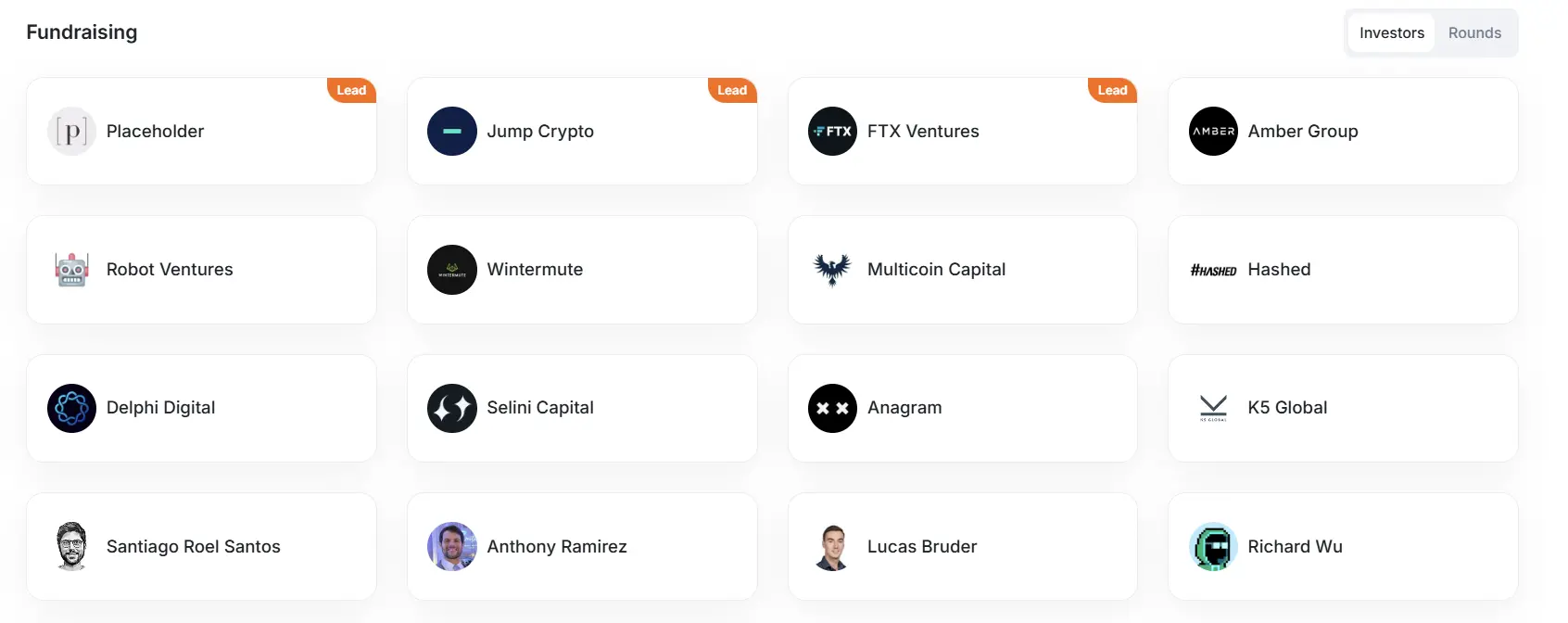
According to RootData, Backpack raised $37 million in funding within two years of its founding, with investors including prominent institutions such as Placeholder, Jump Crypto, Robot Ventures, Wintermute, Multicoin Capital, Hashed, and Delphi Digital.
In the first phase of the Pre-Season campaign announced in 2024, Backpack adopted the “volume as points” logic. At that time, market sentiment was extremely high, and KOL networks significantly drove Backpack’s expansion.
In the following one to two years, a large number of crypto KOLs published comprehensive step-by-step guides on Backpack, covering how to register and complete KYC, how to trade to earn points, how to increase expected returns through multiple accounts, and how to use referral links to reduce costs.
Many KOLs embed unique referral links in their content to generate income through fee rebates, traffic sharing, and other methods. This model has been proven effective across multiple prior projects and has gradually evolved into a semi-industrialized traffic arbitrage pathway. In this scenario, the higher a user’s trading volume and corresponding fees, the more points they earn, and the greater the number of airdropped tokens they receive.
Under strong endorsements from KOLs, countless investors and studios have paid high transaction fees to engage in mass transactions in hopes of securing lucrative airdrops. Under this propagation structure, Backpack’s user growth exhibits a distinct characteristic: users are not primarily driven by the product’s intrinsic value, but rather by the expectation of airdrops.
Two: Betraying the "Community"?
However, with the release of the Backpack airdrop eligibility check link, all hopes of the airdrop hunters were immediately shattered.
As a result, Backpack implemented a strict "one person, one account" policy: any accounts operated from the same device or IP address were all classified as "Sybil" accounts, ultimately leaving nearly all airdrop participants empty-handed—particularly within the Chinese-speaking community.
For example, Anymose and their team, who participated in multiple reward campaigns and actively recruited new users, generated over $4 billion in trading volume for Backpack, resulting in all their accounts being flagged as "sybils."
0x Yuxi commented that this situation could be likened to the Eight-Nation Alliance's invasion of China in the crypto space—Chinese contributors have not only been among the largest, if not the largest, yet they are almost exclusively labeled as "witches." No one fears losing money from short-selling, but this kind of outright provocation is something no one can tolerate.
Backpack is the project on which I've spent the most time, effort, and money in the crypto space. What was supposed to be a celebration for supporters yesterday turned into an absurd farce, and I’ve continuously had to recalibrate my understanding of how low things can go. Based on my communications, the witch hunt primarily targets the Chinese community, and the score is likely far higher than 60 million—many large holders have been wrongly penalized. I cannot understand why Backpack chose to betray the Chinese community. KOL Lin Shan Lynn is also extremely dissatisfied.
Meta Monkey explained on X that his multi-account operations were primarily driven by arbitrage trading needs, as they allow for more efficient capital utilization and help avoid hitting trading volume limits that trigger commission cap restrictions. He dismissed playing cat-and-mouse games with project teams, chose not to isolate his accounts, and even proactively informed project teams about his multi-account approach.
But in the end, the result still left him utterly disappointed. “I don’t blame the project team for the price drop—I’ve invested in so many garbage projects before; one more doesn’t make a difference. I took the risk, I accept the loss,” said Meta Monkey. “But here’s the issue: according to unwritten rules of the community, if you can’t create any economic value, at least show some emotional consideration. Instead, its choice was: no care, no regard, no respect. That made me feel like a fool.”
In response to widespread dissatisfaction and criticism, Claire, Head of the Backpack Chinese Region, posted on the 24th that the strict anti-sybil policy was driven by the European and American compliance team’s rigid adherence to rules. An appeal channel will soon be opened: users who operated three or fewer accounts on a single device and were flagged as sybils will, after manual verification, receive back more than 50% of their points. Additionally, the team will initiate a targeted token buyback on the secondary market within the coming days to specifically compensate eligible users.
However, negative perceptions of Backpack’s actions have spread, causing its token BP to drop below $0.20 since launch, with a single-day decline of over 33% and a fully diluted valuation of just $200 million—far below prior market expectations.