





On the 6th of April, Broadridge Financial Solutions (NYSE: BR) expanded its governance platform to support on-chain proxy voting. The rollout began on Avalanche.
The firm processed nearly $8 trillion in transactions monthly, showcasing its scale in global markets.
The system allowed firms to manage voting, corporate actions, and disclosures across traditional and tokenized securities. Galaxy Digital (NASDAQ: GLXY) became the first adopter, planning usage for its May shareholder meeting.
However, Avalanche [AVAX] fell nearly 10% over the past day despite this integration.
Weak on-chain fundamentals undermine sentiment
That divergence traced back to weakening on-chain activity as capital exited the ecosystem.
Total Value Locked [TVL] dropped to $720 million, its lowest level since the 9th of July 2024. That period also reflected weak sentiment and reduced activity.
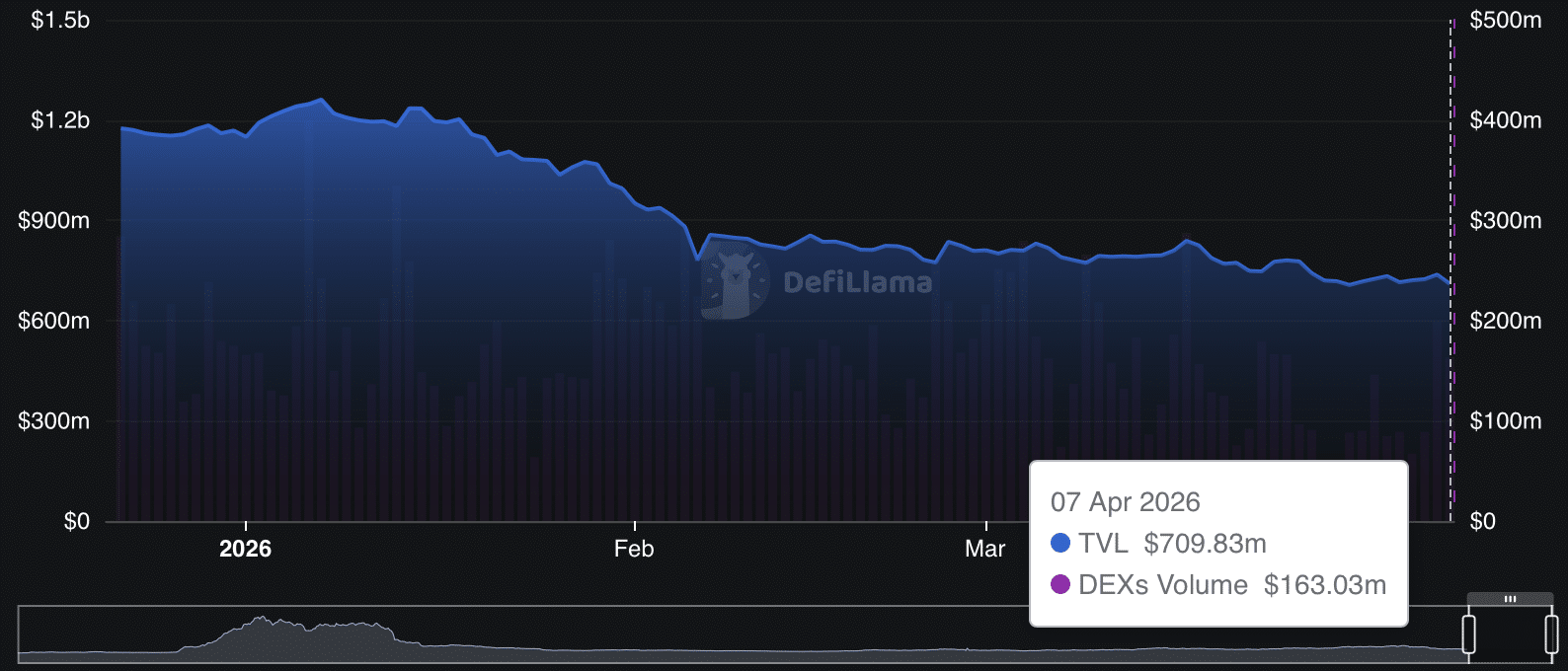
Sustained outflows suggested investors remained cautious, limiting conviction in any short-term recovery.
On top of that, Decentralized Exchange Volumes rose steadily since the 4th of April. This increase reflected distribution rather than accumulation.
Derivatives market accelerates downside
In the Derivatives market, traders have amplified the bearish move.
Data from CoinGlass showed a clear uptick in sell-side activity across AVAX perpetual contracts. The Long/Short Ratio fell to 0.89, confirming short dominance.
A ratio below 1 typically signals that bearish bets outweigh bullish ones, and the current reading points to sustained downside positioning.
At the same time, Open Interest [OI] declined by nearly $37 million. This suggested that traders closed positions instead of adding risk.
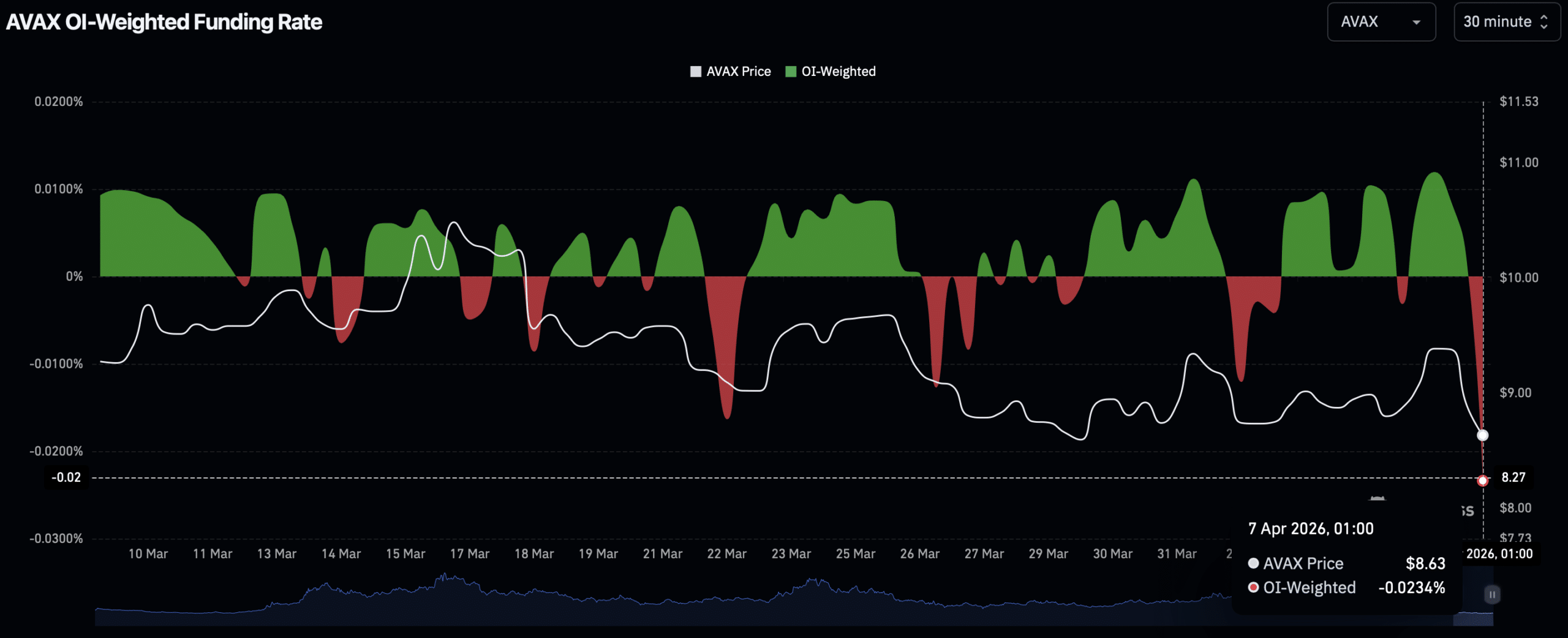
Funding Rates also turned negative, reinforcing downside pressure. This structure meant short traders paid longs, reflecting a persistent bearish bias.
Spot market reveals distribution
By contrast, Spot data showed mixed signals before aligning with the broader trend.
Taker Buy Volume increased, indicating pockets of demand. However, Exchange Netflows pointed to rising sell pressure.
More AVAX moved onto exchanges than was withdrawn, signaling potential distribution.
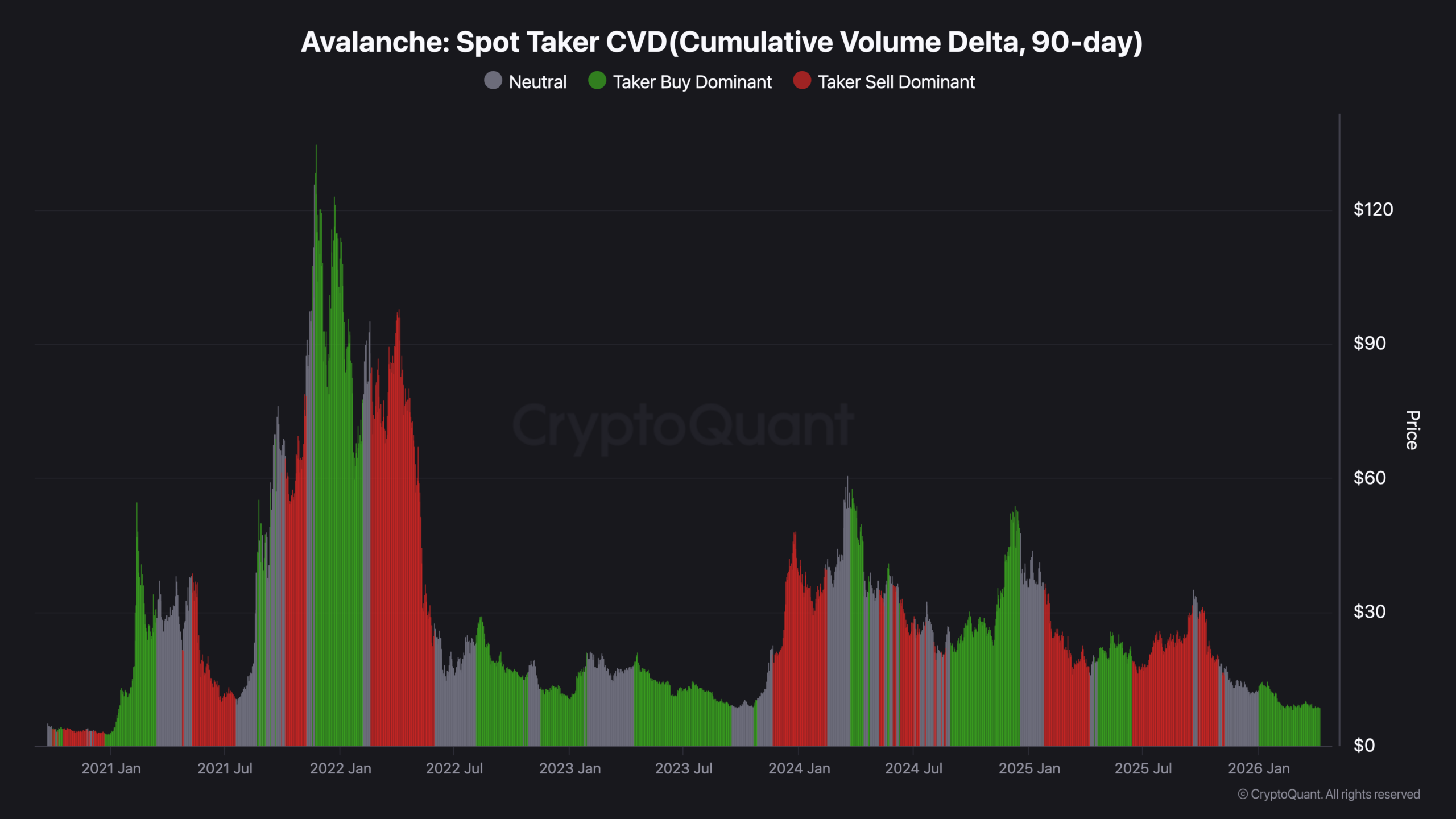
Net inflows reached $2.26 million, while $20.46 million worth of AVAX was sold after the announcement.
That sequence suggested investors positioned ahead of the news and exited once it materialized.
For now, AVAX remained under pressure as weak fundamentals and bearish derivatives positioning outweighed institutional developments.
Final Summary
- AVAX dropped because investors sold into the news, using the announcement as an exit point rather than a trigger for upside.
- The fall in TVL to yearly lows showed capital leaving the ecosystem and weakening network activity.