


The number is taken from a mid-2025 report by Chainalysis, remarking on the reach and potential of cryptocurrencies in Argentina. While the initial use case of crypto was related to stablecoins and preserving purchasing value, analysts claim this is also evolving.
Argentina Enters 2026 With High Crypto Adoption Levels and an Evolving Ecosystem
The Argentine cryptocurrency ecosystem is poised to continue evolving in 2026, as analysts and industry insiders claim that the use cases for crypto in the country are also changing.
Argentina enters this new year registering high levels of crypto adoption, being classified as the first country in crypto usage in Latin America by the Argentine Blockchain Foundation. In its most recent report, blockchain data firm Chainalysis reported adoption levels of nearly 20%, with numbers following an increasing trend.
This means that 8.6 million Argentines have or are using some cryptocurrency, positioning the country among the top countries with the highest digital asset adoption.
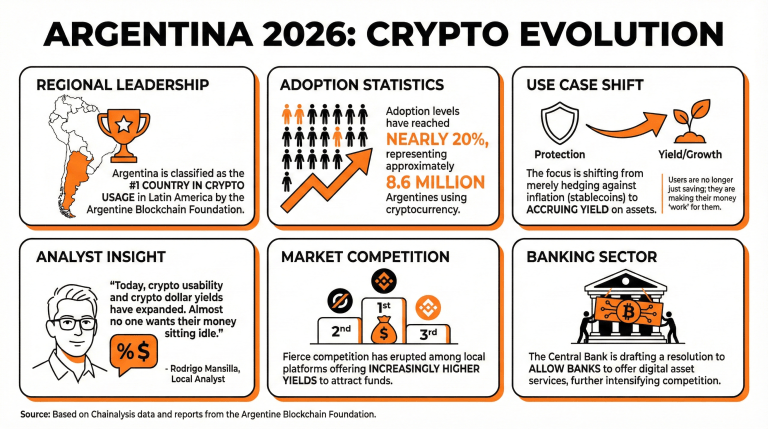
And while the initial use case of Argentines included stablecoins as a means of battling inflation and fiat currency devaluation, this is also changing.
While reports still indicate that stablecoins are the de facto standard digital assets in the country, used as a hedge, users are now taking advantage of these and accruing yield with their stablecoin holdings.
Rodrigo Mansilla, local analyst, stated:
Today, crypto usability, crypto dollar yields, and other attractive features have been significantly expanded. Almost no one wants their money sitting idle, not “working” for them.
This has awakened fierce competition among local players in the industry, who have started offering increasingly higher yields to attract user funds.
The entrance of banks into this ecosystem would also increase competition, as reports indicate that the central bank is currently working on a draft resolution that would allow banks to offer digital asset services.
Read more: Central Bank of Argentina Mulls Allowing Banks to Offer Crypto Services
FAQ
-
What is Argentina’s standing in cryptocurrency adoption in Latin America?
Argentina is classified as the leading country in crypto usage in Latin America, with an adoption rate of nearly 20%. -
How many Argentines are reported to be using cryptocurrency?
Approximately 8.6 million Argentines currently use or have used cryptocurrency, positioning the country among the top adopters globally. -
How are Argentines utilizing stablecoins in 2026?
Initially used to combat inflation, Argentines are now leveraging stablecoins to accrue yield and effectively use their holdings. -
What potential changes are anticipated with the involvement of banks in the crypto ecosystem?
The Argentine central bank is drafting a resolution to allow banks to offer digital asset services, which would intensify competition for user funds.