





Imagine you're a senior software engineer at one of the world's top three tech companies by market capitalization, with a generous salary and an impressive resume. Just as the company is about to launch its most important AI product in a decade, your manager suddenly smiles and hands you a notice—
Clean up and head to tutoring class.
According to The Information, less than two months before this year’s WWDC, Apple made a surprising decision: nearly 200 programmers from the large Siri team were collectively sent to a several-week-long “AI programming bootcamp” for retraining.
It is rare to replace key personnel in the core business lines of tech giants, and to send them for training is unheard of. Behind this lies not only the frustrating delay of the new Siri, but also a genuine, large-scale overhaul.
Stay if you can use AI; go learn if you can't.
The report mentions that, in addition to sending nearly 200 people to a training camp to learn how to code with AI, the once large and bloated core Siri development team has been restructured and now retains only about 60 members.
Additionally, 60 others were separately selected to form an evaluation team tasked specifically with identifying issues in Siri: testing its performance in handling user commands and ensuring compliance with Apple’s extremely stringent security standards.
Making such an architectural adjustment during the final sprint before release inevitably raises a question: Why send frontline troops back to basic training just two months before WWDC?
The answer may be that AI programming assistants like Anthropic’s Claude Code and OpenAI’s Codex have fundamentally rewritten the underlying logic of the software engineering industry over the past year. The experience that engineers once took pride in is becoming obsolete at a visibly rapid pace.
Experienced developers, empowered by AI, are seeing an exponential surge in code output.
Other departments within Apple have already sensed this shift. The software engineering team quickly adopted AI tools, even securing a substantial budget specifically for Claude Code. The Siri team, by contrast, clearly lagged behind.

The sense of pressure brought by AI is spreading throughout Silicon Valley.
Meta’s CTO Bosworth publicly stated that the cost his top engineers spend on AI tokens is equivalent to their own salaries, but their productivity has increased five to tenfold. NVIDIA’s CEO Jensen Huang offered an even more striking assertion: if an engineer earning $500,000 per year does not use at least $250,000 worth of tokens, he would be “deeply concerned.”
To this end, Meta internally developed a dashboard called "Claudeonomics" to track AI usage across its more than 85,000 employees and award titles such as "Token Legend" and "Cache Wizard" to the top 250 highest consumers.
Within 30 days, the total consumption of Meta's community tokens exceeded 60 trillion.
No comparison means no harm. While it’s debatable whether competitors quantify AI usage as KPIs to rank and compete, the cost of falling behind is evident. Learning to use AI for coding and keeping pace with modern software development is the only option available now.
A new story about AI Siri
If you're a user of Apple's ecosystem, you've likely cursed at Siri more than once over the past few years. In fact, Apple had planned to release a new version of Siri in early 2025, but the launch was subsequently delayed due to significant internal setbacks.
To thoroughly address this issue, Apple has undergone a series of drastic power restructurings over the past year. The most critical step was removing the Siri team from the oversight of former AI business lead John Giannandrea and placing it directly under the leadership of the decisive Senior Vice President of Software Engineering, Craig Federighi.
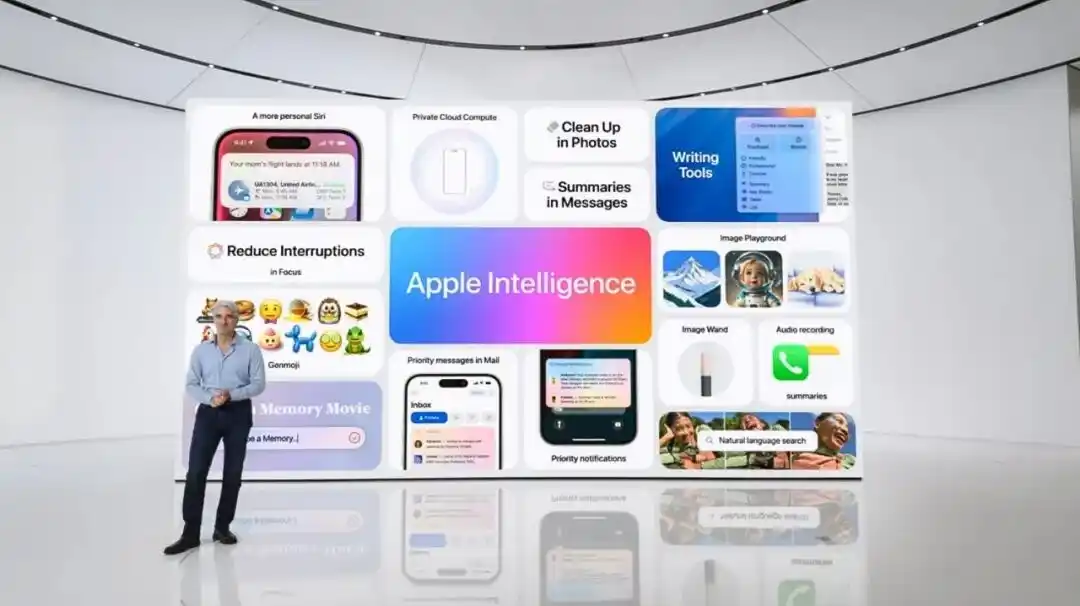
Moreover, Apple has assigned Mike Rockwell, the key figure behind Vision Pro, to directly lead Siri’s product development under Federighi. Giannandrea, who announced his retirement last December, will officially conclude his advisory role at Apple this week.
The old gods step down; a new king ascends. Apple has finally made up its mind to reimagine Siri for the AI era with the same rigorous standards it applies to its top-tier software and hardware. Yet even Apple cannot, in a short time, conjure a large model capable of rivaling ChatGPT, Claude, or Gemini.
With the 2025 release schedule already delayed, Apple has no choice but to seek collaboration with its competitor Google in order to deliver a sufficiently impressive update by this year’s WWDC.
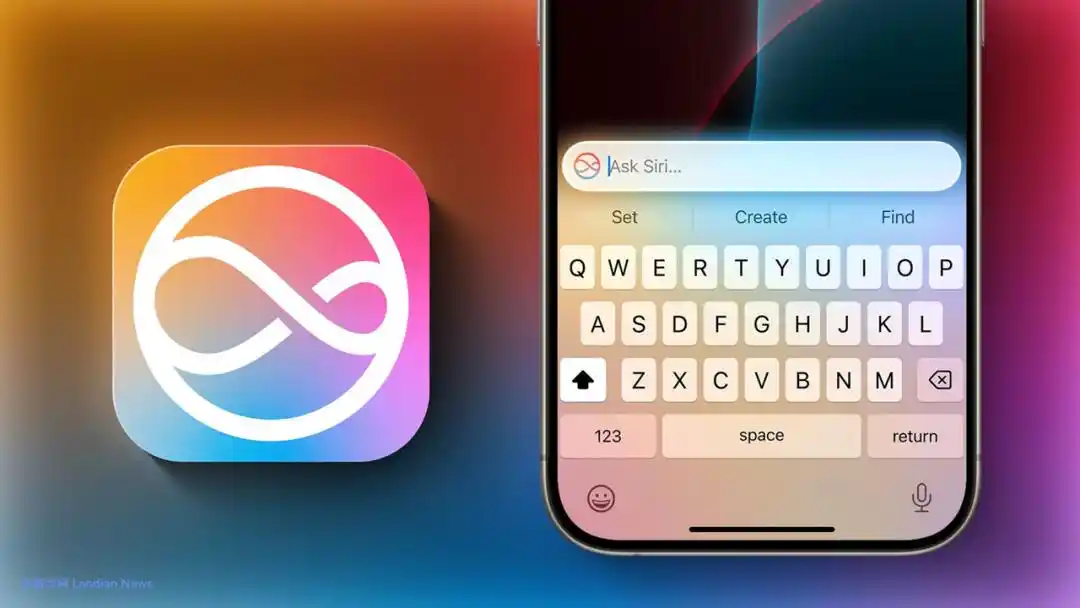
Rumors suggest that the new Siri will be powered by Google’s AI model, Gemini. With Gemini integrated, the new Siri will no longer be just a command-based tool for setting alarms or checking the weather—it will become a truly intelligent assistant with strong conversational capabilities.
In addition, it has been revealed that the new version of Siri can not only directly answer complex logical questions but is also designed to provide users with "emotional support" and can directly assist with complex, multi-step tasks across apps, such as booking an entire trip.
Of course, cooperation does not mean Apple has abandoned its principles. Both parties are still engaged in difficult negotiations, with the core issue being that Apple wants Google to provide the servers to host the new Siri, but must ensure that everything complies with Apple’s strict privacy and data security standards.
When we step back from the rumors about Apple and reconsider the darkly humorous incident of the Siri programmer being sent back to programming school, a genuine chill runs down our spine.
Even programmers at the world’s top tech companies earning six-figure salaries are being sidelined and asked to retrain if they don’t master AI-assisted programming. What about ordinary knowledge workers?
AI has not directly replaced programmers, but programmers who master AI are relentlessly replacing those who don’t. Tools like Claude Code and Codex are transforming coding—a craft once defined by artisanal skill—into an industrial standard capable of mass production.
It is worth noting that this logic is not flawless. In the “Claudeonomics” leaderboard created by Meta employees themselves, some employees were found to have run AI agents for hours on end solely to inflate their token counts.

Tokens are the traces of tool usage; productivity is the result of using tools—they are not always equivalent. Yet even so, in an industry where everyone is using AI to amplify output, choosing not to do so is actively diminishing your own value.
The Siri team’s experience is a vivid metaphor: past credentials, the prestige of a big company, and even your once-proud coding skills can all become worthless assets overnight.
At June’s WWDC, we might witness a reborn Siri rising from the ashes. But behind that keynote are hundreds of engineers frantically catching up in training camps, and a new workplace order being reshaped by AI.
But on the other hand, the Siri team was actually quite lucky.
After all, in an era where AI is used to reduce costs and improve efficiency, finding an employee who can't keep up and still choosing to invest money and time to send them for remedial training—rather than immediately firing and replacing them—is probably something only a company like Apple would do.
This article is from the WeChat official account "APPSO," authored by Discovering Tomorrow's Products.