





Security certifications topped the list of concerns for financial institutions weighing tokenization partners, with 97% saying standards like ISO and SOC II were non-negotiable — a sign that trust, not just technology, is now driving deals in institutional crypto finance.
Stablecoins Lead As Finance Firms Shift Crypto Focus
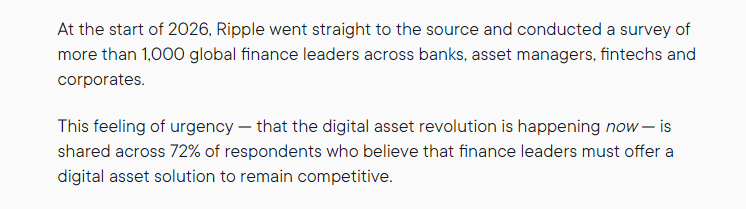
A new survey from Ripple, released Thursday, found that 72% of more than 1,000 financial industry executives worldwide believe their companies must offer digital asset solutions to remain competitive.
The poll covered banks, asset managers, fintechs, and corporate firms across global markets. What stood out wasn’t just the appetite for digital assets — it was how differently each type of firm plans to get there.
Fintech companies are moving fast and building in-house. About 47% of fintech respondents said they plan to develop their own digital asset infrastructure.
Corporate firms are taking the opposite approach. Nearly three-quarters of them said they intend to work with outside providers.
Banks and asset managers are looking for something in the middle — experienced partners who can guide strategy while also supplying the technology.
Stablecoins drew the strongest interest across the board. According to Ripple, 74% of respondents said stablecoins have the potential to improve cash flow and free up capital that would otherwise sit idle.
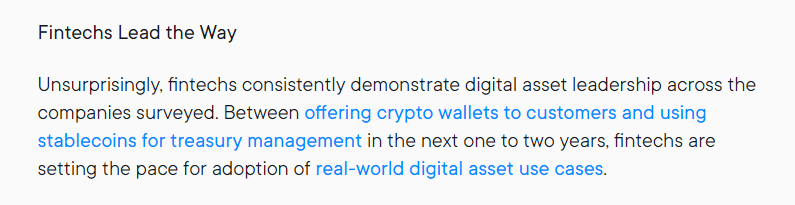
Ripple said institutions are treating stablecoins not just as payment tools, but as instruments for managing treasury operations.
Custody Rises As A Core Priority
Tokenization is also gaining ground, though institutions aren’t rushing in without safeguards. Among those assessing potential tokenization partners, 89% named secure asset storage as a top requirement. Token lifecycle management came in at 82%, and primary distribution ranked at 80%.
Banks showed a particular appetite for advisory help. Based on survey data, 85% of bank respondents called pre-issuance structuring support important. Asset managers were close behind at 76%. Reports indicate that institutions aren’t just buying crypto infrastructure — they want guidance on how to use it.
Ripple credited several forces for pushing digital assets higher on the priority list: shifting regulations, growing interest from major banks, wider use of fintech services, and the continued rise of stablecoins.
The Build-Or-Buy Question Takes Center StageThe survey suggests the industry’s internal debate has moved on. The question is no longer whether to get involved with crypto. It’s who to work with and what to build. That shift, if accurate, marks a turning point in how seriously established financial institutions are treating the space.
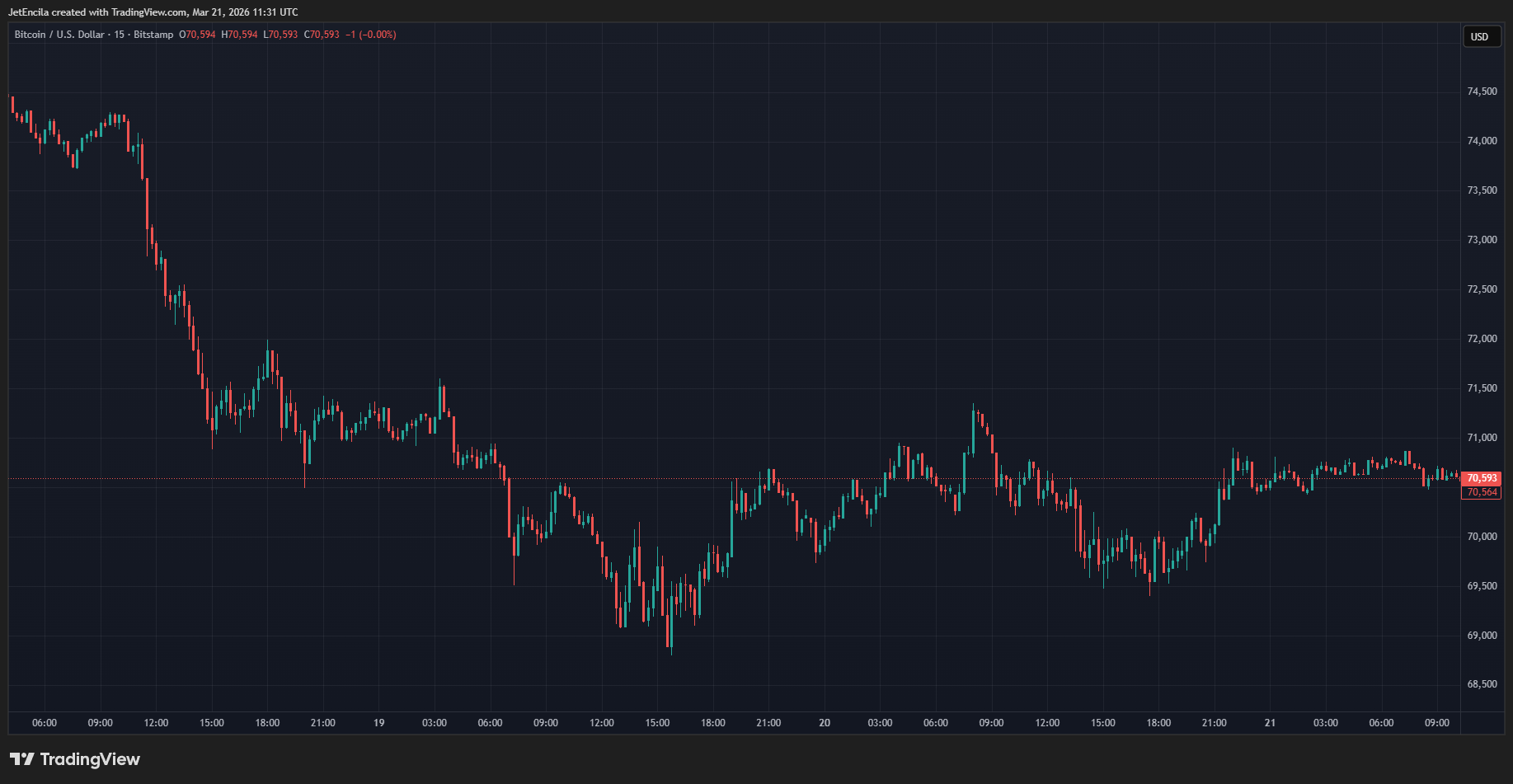
Featured image from Pexels, chart from TradingView