
Understanding KuCoin UTA: How to Assess Account Risk When Using Shared Margin
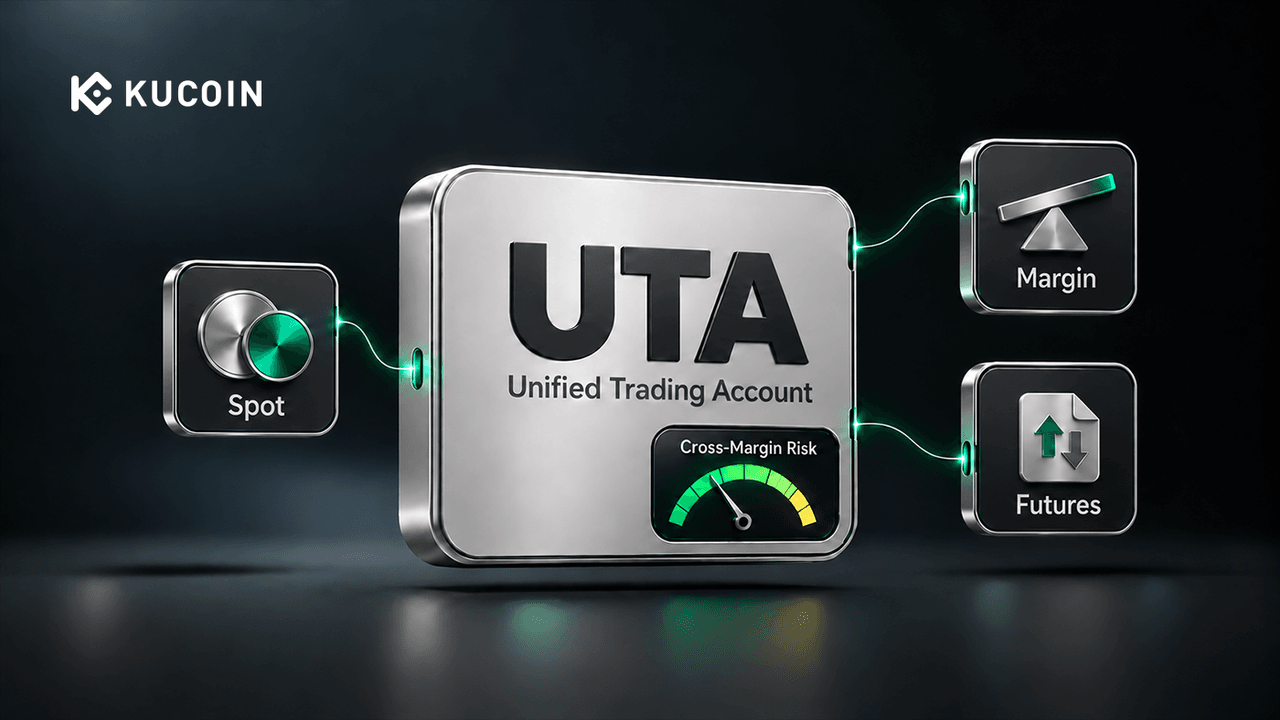
Why can your account risk rise even when you hold the same number of coins and have not opened any additional futures positions?
This question is especially relevant when using a Unified Trading Account (UTA). Shared margin gives you more flexibility in how you use your funds, while also creating closer links between collateral value, position profit and loss, and account risk.
This article uses a simple example to explain how margin works in UTA and what to monitor when trading.
What Does UTA Bring Together?
KuCoin UTA brings asset management for multiple trading activities into one account. In multi-currency margin mode, eligible assets can contribute to margin at their adjusted values under the applicable rules. This reduces the need to transfer funds between separate trading accounts and improves capital efficiency. Learn about UTA
To understand how this works, first distinguish between cross margin and isolated margin:
| Comparison | UTA Cross Margin | UTA Isolated Margin for Futures |
|---|---|---|
| How margin is used | Shared across the cross-margin account | Allocated separately to each position |
| Where to monitor risk | At the cross-margin account level | At the individual position level |
| How P&L affects other positions | Positions are linked through shared margin | Calculated separately under isolated-margin rules |
Before trading with UTA, check which margin mode each position uses. The rest of this article focuses on shared margin and account risk in cross-margin mode. Learn about UTA isolated-margin rules
Why Is Market Value Different From Margin Value?
What an asset is currently worth and how much of that value is recognized as margin are two different things.
Crypto assets differ in price volatility and liquidity. To account for these differences, UTA applies the relevant collateral weight, or discount factor, to eligible collateral assets. View the multi-currency margin rules
Consider this simplified example:
Suppose a collateral asset has a market value of $10,000 and an applicable collateral weight of 95%. Its adjusted contribution to margin would be:
$10,000 × 95% = $9,500
The difference does not mean $500 has been deducted from your account. It means the asset contributes to margin at its adjusted value. Nor does $9,500 necessarily represent the amount available to open new positions: existing margin requirements and other adjustments may also apply.
These figures are hypothetical and do not represent the actual parameters for any asset. This simplified example does not include tiered calculations. UTA collateral tiers are based on USD value, with the applicable collateral weight applied separately to each tier. Refer to the current rules and platform page for details. View collateral weights
An Example: Why Can Risk Rise Without Increasing a Position?
Suppose a user holds BTC as collateral in a UTA cross-margin account and also holds a long ETH futures position.
The prices of both BTC and ETH then fall.
| Change in the Account | Potential Effect |
|---|---|
| BTC falls in price | The value of the BTC collateral decreases |
| The long ETH futures position incurs an unrealized loss | The position’s loss puts pressure on shared margin |
| Both changes occur together | The account may have less capacity to absorb further adverse price movements |
This hypothetical scenario illustrates how shared margin works. Even if coin holdings and position sizes stay the same, the value of the assets backing those positions and the positions’ P&L can still change.
A useful question to ask is: If the market keeps falling, could my collateral assets and trading positions both lose value at the same time?
Holding different coins does not automatically mean your risk is diversified. If they move in the same direction during a market downturn, several parts of your account may come under pressure together.
Why Shouldn’t You Rely Only on the Estimated Liquidation Price?
In KuCoin UTA cross-margin mode, the Account Risk Ratio is the key indicator used to determine whether liquidation is triggered. As the ratio approaches 100%, the account moves closer to the liquidation threshold. A ratio of 100% or higher triggers the liquidation process. The estimated liquidation price shown for one-way positions is for reference only. View the Account Risk Ratio and liquidation rules
The estimated liquidation price can help you understand a position, but you also need to monitor changes elsewhere in the account. A decline in collateral prices or losses on other positions can change the account’s overall condition.
“How close am I to liquidation?” and “How much have I already lost?” are separate questions. An account that has not reached liquidation may still have losses beyond the limits set in your trading plan.
What Happens When the Liquidation Threshold Is Reached?
KuCoin uses a tiered liquidation mechanism for UTA cross-margin accounts, linked to position risk limit tiers.
According to the upgrade announcement, when an account meets the liquidation conditions and has positions in Risk Limit Tier 2 or above, the system first performs a risk assessment and simulation calculations. If partially closing positions through the order book can bring the account back within the required risk level, partial liquidation will be carried out. If all positions are in Tier 1 and the Account Risk Ratio reaches or exceeds 100%, the liquidation engine takes over. Read about the tiered liquidation mechanism
This mechanism handles risk according to the account’s condition. It does not guarantee that only part of a position will be closed or that you will be able to retain your existing positions. Your trading plan should define acceptable losses and exit conditions before liquidation is triggered.
What Should You Check When Using UTA?
Organize your routine checks around these four areas:
-
Understand the scope of shared risk. Identify which positions use cross margin, which use isolated margin, and which funds support each.
-
Review your collateral mix. Check whether your collateral is concentrated in a small number of assets and whether adverse market conditions could affect both your collateral and your positions. Monitor changes to collateral weights and eligibility.
-
Monitor both the risk ratio and your losses. Find the Account Risk Ratio in the Assets section of the Spot or Futures trading page in the app, or in Asset Overview on the web trading interface. Review it alongside position P&L and changes in account asset values to assess whether your losses remain within your original plan. See where to find the indicator
-
Set limits on additional funding. Adding eligible collateral to a cross-margin account commits more funds to support existing exposure. Reducing a position directly lowers that position’s market exposure. Before acting, decide which problem you want to address and the maximum loss you are willing to accept. Our earlier article on the risks of adding margin explores this distinction further.
Disclaimer: The information on this page may come from third parties and does not necessarily reflect KuCoin’s views. It is provided for general reference only and should not be interpreted as financial or investment advice.
Virtual asset investments may involve risk. Please carefully assess the product risks and your own risk tolerance. For more information, please refer to our Terms of Use and Risk Disclosure.