
What is the Difference Between Isolated Margin and Cross Margin in DeFi?
Key Takeaways:
-
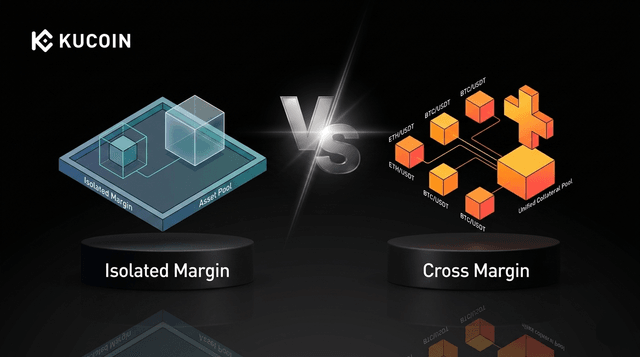
Risk Containment vs. Shared Resources: Isolated Margin restricts your trading collateral to one specific position, acting as a financial firewall. Cross Margin pools your entire account balance to support all open trades simultaneously.
-
Liquidation Impact: A liquidation event in Isolated Margin only wipes out the funds explicitly allocated to that single trade. In contrast, a liquidation in Cross Margin can potentially drain your entire decentralized margin account.
-
Capital Efficiency: Cross Margin provides superior capital efficiency by allowing unrealized profits from winning trades to automatically cover the margin requirements of losing trades, maximizing the utility of your locked assets.
-
Strategic Use Cases: Isolated Margin is highly recommended for speculative, high-leverage bets on volatile altcoins. Cross Margin is best suited for experienced traders managing diversified portfolios or executing complex delta-neutral hedging strategies.
-
Smart Contract Execution: Both margin systems rely entirely on decentralized price oracles and automated keeper bots to monitor collateral ratios and execute liquidations without human intervention or centralized clearinghouses.
Introduction to Margin Modes in DeFi
Decentralized Finance (DeFi) has revolutionized asset trading by replacing centralized intermediaries with permissionless, non-custodial smart contracts. Among the most popular instruments in this ecosystem are decentralized margin trading and perpetual futures. Margin trading empowers users to borrow funds from decentralized liquidity pools to amplify their trading positions, increasing both potential returns and potential losses.
However, the decentralized, immutable nature of DeFi requires automated risk management frameworks to protect both traders and liquidity providers. This brings us to a critical decision: choosing between Isolated Margin and Cross Margin. How your collateral is managed dictates your portfolio's survival in a volatile market. The core difference lies in how your deposited margin is allocated across trades and how automated liquidations are mathematically triggered by smart contracts. Choosing the incorrect margin mode for a specific strategy can lead to unnecessary liquidations or the total loss of your trading portfolio. This guide dissects the mechanics, advantages, disadvantages, and optimal strategic applications of both systems.
Core Mechanics: How Each Margin Mode Operates
To leverage the power of decentralized trading platforms, we must first break down the underlying mechanics of how collateral, leverage, and smart contract protocols interact within these two distinct margin modes.
-
Isolated Margin: The Siloed Approach
Isolated Margin is a trading mode where the collateral assigned to a given position is restricted to a fixed, predetermined amount. When you execute a trade using Isolated Margin on a Decentralized Exchange (DEX), you segregate a specific portion of your funds from your main wallet to serve as the exclusive collateral for that single trade. The protocol's smart contracts lock these funds into a distinct silo. Crucially, these funds cannot support any other open positions you hold, nor can the broader funds remaining in your wallet be automatically drawn upon to save this specific position from an impending liquidation.
How it Works in Practice:
Imagine you hold a total balance of 20,000 USDC in your trading smart contract. You decide to open a speculative long position on a newly launched altcoin using Isolated Margin. You manually allocate 2,000 USDC as your initial margin and apply 10x leverage, creating a total position size of 20,000 USDC.
-
The Strict Firewall Effect: If the price of this volatile token plummets, your position will accumulate unrealized losses. Because you selected Isolated Margin, the protocol's risk engine only looks at the 2,000 USDC allocated to that trade, completely ignoring the rest of your portfolio.
-
Defined Maximum Downside: If the loss approaches your maintenance margin threshold, the smart contract will automatically liquidate the position. Your maximum possible loss is strictly capped at the 2,000 USDC you isolated, plus protocol execution fees. The remaining 18,000 USDC in your account remains completely untouched and safe.
-
Manual Intervention Required: If you wish to prevent liquidation during a temporary price dip, you must manually execute an on-chain transaction to inject more collateral into that specific silo, which requires paying blockchain gas fees and acting before keeper bots trigger the liquidation sequence.
-
Cross Margin: The Pooled Approach
Cross Margin takes a fundamentally opposite approach by pooling your liquidity. Instead of segregating collateral into separate smart contract silos, Cross Margin utilizes the entire available balance in your margin account as a shared pool of collateral for all open positions. In most modern DeFi protocols, any supported asset you deposit is dynamically calculated to maintain your account's overall margin ratio, providing a highly interconnected trading experience.
How it Works in Practice:
Revisiting the previous scenario, suppose you utilize a Cross Margin framework with 20,000 USDC in your DeFi margin account. You open three separate positions simultaneously:
-
A large long position on Bitcoin (BTC).
-
A moderate long position on Ethereum (ETH).
-
A short position on Solana (SOL).
-
Dynamic Collateral Sharing: Suppose your BTC and SOL positions perform well, generating 5,000 USDC in unrealized gains. However, your ETH position suffers heavy losses, drawing down 4,000 USDC. Under Cross Margin, the smart contract calculates your total account health by factoring in your original 20,000 USDC deposit plus the 5,000 USDC in unrealized profits against the 4,000 USDC in losses.
-
Liquidation Avoidance Buffer: This unified equity pool provides a financial buffer for the losing ETH trade. The ETH position will not be liquidated because the aggregate health of your entire account remains significantly above the protocol's global maintenance margin requirement. The profits from your winning trades actively subsidize the margin requirements of your losing trade automatically, without requiring extra gas fees.
Detailed Comparison: Isolated vs. Cross Margin
To make an educated decision on a decentralized exchange, it is vital to directly compare how these two systems behave under various market conditions.
Capital Efficiency
Capital efficiency refers to how effectively a trader can deploy available, locked funds to generate returns. In the DeFi space, margin modes play a massive role in capital optimization.
-
The Inefficiency of Isolated Margin: Isolated Margin is inherently capital inefficient. If you have 50,000 USDC and wish to open five distinct trades with robust collateral buffers to prevent liquidation, you must manually divide and lock your funds into five separate, uncommunicative silos. If trade 'A' generates excess margin, that collateral is trapped within that specific position until you close the trade or manually reduce the margin. Meanwhile, trade 'B' might face liquidation, forcing you to deposit fresh capital from an external wallet despite having idle profits in trade 'A'.
-
The Efficiency of Cross Margin: Conversely, Cross Margin is the pinnacle of capital efficiency. By treating your entire account balance as a single pool of collateral, you can open larger positions or maintain more simultaneous positions using the exact same initial deposit. The protocol automatically routes the financial health of your winning trades to support struggling positions without requiring manual on-chain transactions, saving you expensive gas fees and crucial execution time. This is precisely why institutional players, hedge funds, and algorithmic market makers almost exclusively operate in Cross Margin environments.
Feature Comparison Matrix
| Feature | Isolated Margin | Cross Margin in DeFi |
| Collateral Scope | Strictly restricted to a single, specific position. | Dynamically shared across all open positions. |
| Maximum Potential Loss | Hard-capped at the specifically allocated margin amount. | Up to the entire balance of the decentralized margin account. |
| Overall Capital Efficiency | Low (profits are trapped and cannot support other trades). | High (profits offset losses dynamically and automatically). |
| Liquidation Probability | Higher (highly vulnerable to asset-specific price wicks). | Lower (heavily buffered by total account equity and other trades). |
| Ideal Trader Profile | Retail traders, risk-averse speculators, high-leverage traders. | Institutional traders, market makers, delta-neutral yield farmers. |
| Risk Management Style | Micro-management (managed per individual position). | Macro-management (managed based on total portfolio health ratio). |
Liquidation Risks and Smart Contract Execution
Liquidations in decentralized finance are executed in a radically different manner than on traditional centralized exchanges (CEXs). There are no centralized clearinghouses or manual margin calls; instead, DeFi protocols rely on automated, profit-driven actors known as Keepers or liquidation bots.
The Mechanics of Isolated Liquidations
When an Isolated Margin position falls below the mathematically defined maintenance threshold, a decentralized price oracle (such as Chainlink or Pyth Network) updates the on-chain price. Instantly, a keeper bot spots the under-collateralized position and triggers the liquidation function within that specific smart contract. The bot seizes your isolated collateral, repays your decentralized debt to the liquidity pool, and pockets a liquidation fee. Because the process is completely compartmentalized, your other open positions on the DEX remain entirely unaffected. This strict containment is the primary appeal of the isolated model.
The Cascading Dangers of Cross Liquidations
Liquidations in a Cross Margin setup are infinitely more complex and potentially devastating. The protocol continuously calculates a global Account Health Factor. If a systemic market crash occurs and your total account equity drops below the global maintenance requirement, keeper bots step in aggressively.
In many DeFi protocols, liquidators are permitted by smart contract code to systematically liquidate your profitable positions alongside your losing ones to make the protocol whole. A single, mismanaged, highly leveraged trade in a Cross Margin account can act like a financial contagion, dragging down perfectly healthy trades and completely draining your entire decentralized trading account balance in a matter of seconds.
Strategic Applications in DeFi Trading
Successful DeFi traders dynamically switch between Isolated Margin and Cross Margin depending on the asset class, macroeconomic environment, and specific trading strategy being deployed.
When to Use Isolated Margin
-
Trading Volatile, Low-Cap Altcoins: DeFi is famous for micro-cap tokens that can experience massive price swings in minutes. Using Cross Margin on these unpredictable assets is dangerous, as a single flash crash could wipe out your blue-chip collateral (like ETH or USDC). Isolated Margin allows you to take a high-risk position while ensuring your core portfolio remains 100% safe.
-
Executing High-Leverage Trades: If you are attempting to catch a market breakout with 50x or 100x leverage, liquidation is a high mathematical probability due to standard market noise. Isolated Margin acts as an automated, guaranteed stop-loss. You allocate an amount of capital you are completely willing to lose, knowing the fallout will not spill over into your main funds.
-
Entering Uncorrelated Market Sectors: If you are trading assets with completely disconnected price drivers (e.g., longing a stablecoin while shorting a decentralized gaming token), there is no strategic advantage to tying their margin together. Keeping them isolated prevents a sudden shock in one niche sector from liquidating your well-researched trades in another.
When to Use Cross Margin
-
Delta-Neutral and Hedging Strategies: Advanced traders often run delta-neutral strategies, such as funding rate arbitrage. For example, a trader might hold spot Wrapped Bitcoin (WBTC) and short an equal amount of BTC perpetual futures to collect funding fees. In Cross Margin, the collateral from the spot WBTC automatically offsets the short position. If BTC's price skyrockets, the short position loses value, but the spot WBTC gains exact proportional value, keeping the account health stable.
-
Portfolio Diversification with Correlated Blue-Chips: If you are trading major, highly liquid assets like ETH, BTC, and SOL with conservative leverage (e.g., 2x to 3x), Cross Margin provides an excellent buffer against market noise. Because these assets generally move together, a market-wide dip draws down equity uniformly, but the combined strength of your portfolio reduces the risk of being stopped out on a single asset's price wick.
-
Consolidated Yield Farming and Borrowing: Many decentralized money markets like Aave operate on a cross-margin basis. If you supply multiple assets (like ETH and LINK) to borrow a stablecoin (like USDC), the protocol uses the combined value of your deposits to assess your health factor. This allows for greater borrowing power than isolating each deposit, maximizing your overall capital efficiency.
Summary
The distinction between Isolated Margin and Cross Margin is a foundational element of DeFi risk management. Isolated Margin acts as a strict financial firewall, capping losses at the exact amount allocated to a specific trade, making it the ultimate tool for high-risk speculation and strict downside protection.
Conversely, Cross Margin prioritizes capital efficiency and seamless liquidity, pooling all assets to allow unrealized profits to automatically support struggling positions. While this reduces premature liquidations during standard volatility, it exposes your entire account balance to catastrophic tail risks if mismanaged. Mastering both models is essential for navigating the fast-paced, trustless world of decentralized finance safely and profitably.
FAQs
Can I switch between Isolated Margin and Cross Margin easily?
Most major perpetual DEXs require you to choose your margin mode before opening a position. You typically cannot switch an active trade from Isolated Margin to Cross Margin without closing the trade first and realizing your current profits or losses.
Which is safer for beginners: Isolated Margin or Cross Margin?
Isolated Margin is significantly safer for beginners. It strictly caps your potential losses to the specific amount allocated to a trade, acting as a built-in safety net and preventing you from accidentally liquidating your entire portfolio due to inexperience.
How do liquidations differ between the two modes?
In Isolated Margin, keeper bots only seize the specific funds assigned to that single trade. In Cross Margin, liquidators can forcefully liquidate all open positions and seize your entire decentralized margin account balance to cover the protocol's debt during a severe market crash.
Do all DEXs support both Isolated Margin and Cross Margin?
While most top-tier perpetual DEXs offer both modes, some simpler protocols only offer Cross Margin to maximize protocol liquidity. Always check the platform's specific documentation before depositing your funds.
Are trading fees different for Isolated Margin and Cross Margin?
No, the standard trading and execution fees are generally identical. However, Isolated Margin might incur higher cumulative blockchain gas fees if you need to manually execute multiple separate transactions to add margin to struggling positions.
How does leverage impact Isolated Margin compared to Cross Margin?
High leverage in Isolated Margin only risks that specific trade's collateral, making it ideal for high-risk market plays. High leverage in Cross Margin drastically increases the risk of a cascading liquidation wiping out your entire aggregated account balance from a single bad trade.
Create a free KuCoin account to discover the next crypto gems and trade over 1,000 global digital assets today. Create Now!


