
What Is the Difference Between Babylon Bitcoin Staking and Ethereum Liquid Staking?
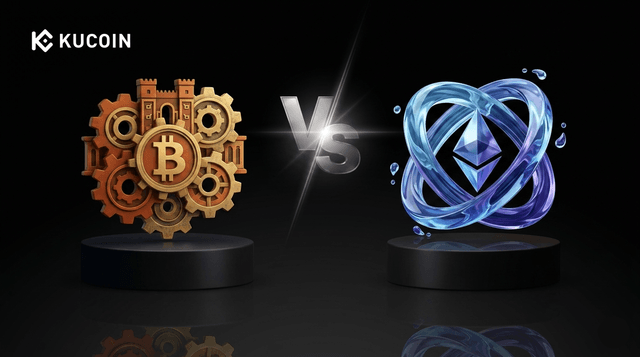
Key Takeaways
-
Babylon Bitcoin Staking enables native BTC staking directly on the Bitcoin blockchain without wrapping, bridging, or custody, using time-locks and cryptographic mechanisms to secure other PoS networks.
-
Ethereum Liquid Staking allows users to stake ETH and receive liquid tokens (like stETH or rETH) that can be traded or used in DeFi while earning rewards.
-
Key differences include custody model (self-custodial native BTC vs. pooled smart contract ETH), liquidity (immediate LSTs vs. time-locked BTC with unbonding), and security (Bitcoin's base layer vs. Ethereum smart contracts).
-
Babylon Bitcoin Staking unlocks yield for BTC holders while preserving self-custody; Ethereum Liquid Staking enhances capital efficiency in a mature DeFi ecosystem.
-
Both carry risks like slashing, but mechanisms and centralization concerns differ significantly.
-
Babylon Bitcoin Staking and Ethereum Liquid Staking represent distinct approaches to activating idle capital in their respective ecosystems.
In the evolving world of cryptocurrency staking, two prominent innovations stand out: Babylon Bitcoin Staking and Ethereum Liquid Staking. As Bitcoin and Ethereum dominate the market, users seek ways to generate yield from their holdings without fully relinquishing control or liquidity. Babylon Bitcoin Staking introduces a groundbreaking method for BTC holders to stake native Bitcoin directly on its blockchain, securing other networks while maintaining self-custody. In contrast, Ethereum Liquid Staking has matured into a cornerstone of DeFi, allowing ETH stakers to receive tradable liquid staking tokens (LSTs) that continue earning rewards.
This article explores the core mechanics, benefits, risks, and differences between Babylon Bitcoin Staking and Ethereum Liquid Staking. Understanding these distinctions is crucial for investors navigating yield opportunities in a multi-chain future.
How Babylon Bitcoin Staking Works
Babylon Bitcoin Staking revolutionizes how BTC generates yield by enabling native staking without leaving the Bitcoin network. Users create special time-locked transactions on Bitcoin using its scripting capabilities. BTC is locked for a chosen period (up to thousands of blocks) and delegated to Finality Providers who secure the Babylon Genesis chain and connected Bitcoin Supercharged Networks (BSNs).
No bridges, wrappers, or third-party custody are involved. Staking occurs via Extractable One-Time Signatures (EOTS) and timelock scripts, ensuring self-custody. Rewards typically come in BABY tokens or from secured networks. This model positions Babylon Bitcoin Staking as a trust-minimized way to utilize Bitcoin's economic security for PoS ecosystems.
How Ethereum Liquid Staking Works
Ethereum Liquid Staking allows users to deposit ETH into protocols like Lido or Rocket Pool and receive LSTs such as stETH or rETH. These tokens represent staked ETH plus accruing rewards and remain fully liquid for trading, lending, or use in DeFi. Node operators handle validation, while the protocol distributes rewards.
This approach solves Ethereum's 32 ETH minimum and lock-up issues post-Merge, making staking accessible with as little as 0.01 ETH in some cases. Liquidity and composability drive its popularity, with billions in TVL.
Key Differences in Babylon Bitcoin Staking vs Ethereum Liquid Staking
Babylon Bitcoin Staking keeps BTC on its native chain, emphasizing security and self-custody. Ethereum Liquid Staking prioritizes liquidity and DeFi integration through tokenized derivatives.
| Aspect | Babylon Bitcoin Staking | Ethereum Liquid Staking |
| Custody & Security | Non-custodial. Users retain full control of their private keys on the Bitcoin blockchain. | Protocol-managed via smart contracts and node operators. Introduces smart contract and counterparty risks. |
| Liquidity | Time-locked staking with ~7-day unbonding period (1008 blocks). Assets are not immediately usable. | Highly liquid. Users receive LSTs (e.g. stETH, rETH) that can be traded or used in DeFi instantly. |
| Yield Sources | Rewards from securing Bitcoin Supercharged Networks (BSNs), typically paid in BABY tokens or other network tokens. | Base ETH staking rewards (~2-4% APR) + additional DeFi yield opportunities through LST composability. |
| Slashing Mechanism | Partial slashing (e.g. 0.1% for double-signing), enforced directly on the Bitcoin blockchain via timelocks. | Consensus-layer penalties distributed across staking pools. Full or proportional slashing depending on the protocol. |
| Core Philosophy | Emphasizes maximum security and self-custody using native Bitcoin. | Prioritizes liquidity, capital efficiency, and DeFi integration through tokenized derivatives. |
Benefits of Babylon Bitcoin Staking
Babylon Bitcoin Staking unlocks yield for the largest crypto asset without compromising Bitcoin's core principles. It brings economic security to new networks using BTC's $1T+ market cap. Self-custody reduces counterparty risk, appealing to Bitcoin maximalists. Early adoption saw significant BTC inflows, highlighting demand.
Additional perks include potential multi-staking across networks and integration with emerging BTCfi applications like lending.
Benefits of Ethereum Liquid Staking
Ethereum Liquid Staking excels in capital efficiency. Users earn base staking rewards while deploying LSTs in lending, DEXs, or yield farming for compounded returns. High liquidity and deep integrations make it a DeFi staple. Protocols like Lido and Rocket Pool offer accessibility and competitive yields.
It has helped onboard millions of ETH into validation, strengthening network security.
Risks and Considerations in Babylon Bitcoin Staking and Ethereum Liquid Staking
Babylon Bitcoin Staking risks include unbonding lock-ups, slashing, Finality Provider performance, and BABY token volatility. On-chain visibility and Bitcoin confirmation times add friction.
Ethereum Liquid Staking faces smart contract exploits, LST depegging (e.g., stETH events), centralization (Lido dominance raising consensus concerns), and regulatory risks around staking as a service.
Both expose users to market and opportunity risks, but Babylon Bitcoin Staking prioritizes base-layer security while Ethereum Liquid Staking emphasizes ecosystem composability.
List of Shared vs Unique Risks
-
Shared: Slashing, reward volatility.
-
Babylon Unique: Timelock mechanics, cross-network dependency.
-
Ethereum Unique: Smart contract governance, LST market dynamics.
Future Outlook for Babylon Bitcoin Staking and Ethereum Liquid Staking
Babylon Bitcoin Staking could catalyze BTCfi growth, expanding to more BSNs and liquid staking derivatives. Ethereum Liquid Staking will likely evolve with better decentralization tools (e.g., DVT) and restaking integrations. Both will coexist, serving different user preferences: security maximalism vs. yield optimization.
Summary
Babylon Bitcoin Staking and Ethereum Liquid Staking offer innovative paths to activate crypto capital but diverge in design philosophy. Babylon Bitcoin Staking preserves Bitcoin's native security and self-custody for securing external networks, ideal for risk-averse BTC holders seeking new utility. Ethereum Liquid Staking maximizes flexibility and DeFi composability through liquid tokens, powering Ethereum's vibrant ecosystem.
Their differences—custody, liquidity, technical foundations, and risk profiles—highlight unique strengths tailored to each blockchain's ethos. As both mature, they may converge in hybrid models, but currently provide complementary opportunities. Investors should assess personal risk tolerance, time horizons, and portfolio goals when choosing between Babylon Bitcoin Staking and Ethereum Liquid Staking. The future points toward greater capital efficiency across chains.
FAQs
What is the main difference between Babylon Bitcoin Staking and Ethereum Liquid Staking?
Babylon Bitcoin Staking uses native BTC on Bitcoin with self-custody and time-locks, while Ethereum Liquid Staking relies on smart contracts and issues liquid tokens for immediate usability.
Is Babylon Bitcoin Staking non-custodial unlike Ethereum Liquid Staking?
Yes, Babylon Bitcoin Staking keeps full user control on Bitcoin. Most Ethereum Liquid Staking pools manage assets via protocols, though still non-custodial in intent.
Can I use my staked assets freely in Babylon Bitcoin Staking vs Ethereum Liquid Staking?
Ethereum Liquid Staking offers high liquidity via LSTs. Babylon Bitcoin Staking has lock-up periods and unbonding, limiting immediate use but enabling emerging BTC collateral applications.
Which has higher risks: Babylon Bitcoin Staking or Ethereum Liquid Staking?
Both have slashing and volatility. Babylon Bitcoin Staking risks center on timelocks and provider behavior; Ethereum Liquid Staking on smart contracts and centralization. Diversification is key.
Are rewards similar in Babylon Bitcoin Staking and Ethereum Liquid Staking?
Rewards vary. Ethereum Liquid Staking offers stable ETH-based yields plus DeFi. Babylon Bitcoin Staking provides network-specific tokens, potentially higher but more variable. Always check current APRs.
Create a free KuCoin account to discover the next crypto gems and trade over 1,000 global digital assets today. Create Now!


