
What is Taker in crypto trading?
Key Takeaways
-
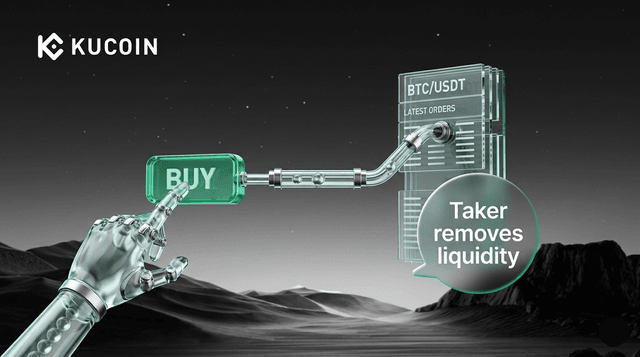
A taker removes liquidity by instantly matching an existing order.
-
Takers always pay the higher “taker fee” (typically 0.05–0.20 %).
-
Makers add liquidity and enjoy lower (or even negative) fees.
-
You can switch from taker to maker simply by changing order type and price.
-
Lower taker fees and higher liquidity on our platform mean more profit stays in your pocket.
What Does “Taker” Actually Mean in Crypto Trading?
In crypto trading, a "Taker" is any participant who removes liquidity from the live order book by instantly matching a resting order. While Makers provide depth by placing limit orders that sit in the book, Takers "hit" those orders with market orders or aggressive limit orders for immediate execution. The moment your trade consumes this available liquidity, the exchange classifies you as a Taker and applies a higher fee. This dual-fee system is designed to reward patient liquidity providers who build the market while charging a premium to those who demand instant fulfillment.
How Taker Orders Work
-
You open the trading interface on our crypto exchange.
-
You choose Market Order → instant fill at the best available price → you are a taker.
-
Or you place a Limit Order that crosses the current spread → it fills immediately → you are still a taker.
-
The exchange matches your order against someone else’s resting limit order.
-
Liquidity is removed, and you pay the taker fee on the traded volume.
Why Exchange Love (and Reward) Makers
Takers bring immediate execution but reduce order-book depth. Makers keep the book thick, tighten spreads, and attract more traders. That’s why maker rebates exist—some high-volume traders even get paid to add liquidity.
How to Stop Paying Taker Fees
To consistently avoid the high cost of taker fees, disciplined traders on our platform shift their strategy toward a "maker mindset" by exclusively using limit orders set at or better than the current best bid or ask. By avoiding market orders—except in cases of extreme urgency—you ensure that you are providing liquidity rather than consuming it. A key tool for this is the "post-only" order feature, which automatically cancels your trade if it is execute as a taker, serving as a fail-safe for your fee strategy. Additionally, splitting large orders into smaller limit increments over time and carefully monitoring the order book depth before execution allows you to stay on the maker's side of the book. Mastering these simple adjustments can routinely cut your effective trading costs by 50% or more, significantly boosting your long-term portfolio performance.
When Being a Taker Is Actually Smart
Not every situation calls for maker tactics. Fast news events, arbitrage, or stop-loss protection often require instant execution. In those cases, the small extra fee is worth the certainty of filling. Our platform’s deep liquidity and low base taker fees make even aggressive taker trades cost-effective.
Summary
A “taker” in crypto is simply any trader who removes liquidity from the order book. While takers get instant fills, they also pay higher fees. By understanding the maker-taker model, choosing limit orders strategically, and using tools like post-only on crypto exchange, you can dramatically reduce costs and keep more of your profits.
Whether you are new to crypto or a seasoned trader, mastering the difference between maker and taker is one of the easiest ways to level up your trading performance.
Start your crypto journey in minutes by creating a secure KuCoin account with no initial deposit required. Sign Up Now!
FAQs
What is taker in crypto?
A taker is a trader whose order immediately removes liquidity from the exchange’s order book, usually by using a market order or a limit order that crosses the spread.
What is the difference between maker and taker in crypto?
Makers add orders to the book (provide liquidity) and pay lower fees. Takers remove orders from the book (consume liquidity) and pay higher fees.
Are taker fees higher than maker fees?
Yes. Almost every crypto exchange charge takes more—typically 0.05–0.20 % versus 0.00–0.05 % for makers.
Do all crypto exchanges use maker-taker fees?
The vast majority do, including Binance, Coinbase Advanced Trade, Bybit, and our own exchange. Some smaller platforms use flat fees, but maker-taker remains the industry standard.
Is it bad to be a taker?
Not at all—when speed matters. The key is knowing when to take liquidity and when to add it so you stay profitable over time.
Further Reading:


