
What is Limit Order in crypto?
Key Takeaways
-
Precision Control: A limit order allows you to set the exact maximum price you are willing to pay (Buy) or the minimum price you are willing to accept (Sell).
-
Maker Fee Advantage: Because limit orders add liquidity to the exchange’s order book, they are usually classified as "Maker" orders, which typically incur lower trading fees.
-
Execution Risk: Unlike market orders, limit orders are not guaranteed to execute. If the market never reaches your specified price, the order will remain open or expire.
-
Slippage Protection: Limit orders eliminate "negative slippage," ensuring you never pay more or receive less than your targeted price.
Understanding Limit Orders in Crypto
What Is a Limit Order?
A limit order is an instruction to an exchange to execute a trade only at a specific price or better. It does not prioritize speed; instead, it prioritizes price certainty.
-
Buy Limit Order: Executed at your specified limit price or lower. You use this when you believe the current market price is too high and want to "buy the dip."
-
Sell Limit Order: Executed at your specified limit price or higher. You use this to "take profit" at a specific resistance level.
How the Order Book Handles Your Limit Order
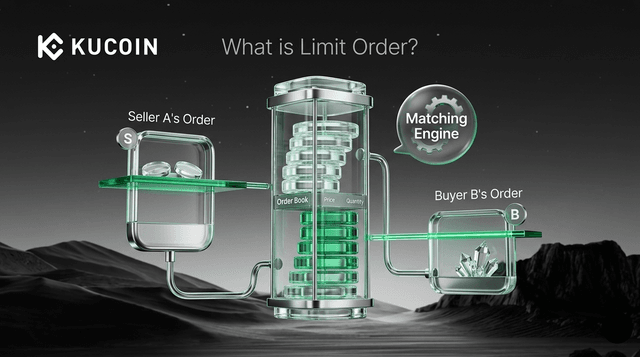
When you place a limited order, it doesn't execute immediately (unless the market is already at your price). Instead, it sits in the Order Book.
-
Market Maker Status: By placing a limit order, you are "making" the market by providing liquidity that other traders can later "take."
-
FIFO (First-In-First-Out): If multiple traders set a limit order at the same price, the exchange usually fills the oldest order first.
-
Partial Fills: If the market hits your price but there isn't enough volume to cover your entire trade, the exchange may "partially fill" your order, leaving the remainder open.
Strategic Use Cases for 2026
In today's market, limited orders are more than just a "set and forget" tool; they are part of advanced risk management:
-
Avoiding FOMO: By setting a buy limit at a technical support level, you avoid the emotional urge to buy at the top of a green candle.
-
Automated Profit Taking: You can set sell limits at your target goals, ensuring you lock in gains even if you are away from your screen during a sudden price spike.
-
Trading Low-Liquidity Altcoins: For smaller tokens, market orders can be disastrous due to thin order books. Limit orders ensure you don't "walk the book" and end up with a terrible average price.
Summary
The limit order is the professional's choice for navigating the crypto markets. It rewards patience with better pricing and lower fees. While it requires a bit more planning than a simple market order, the ability to control your entry and exit points is invaluable in a market as volatile as cryptocurrency. By mastering limit orders, you transition from a reactive trader to a proactive one, letting the market come to you rather than chasing the price.
See why millions of traders choose the People’s Exchange—create your KuCoin account in under 60 seconds. Sign Up Now!
FAQs
Can I cancel a limited order?
Yes. As long as the order has not been filled, you can cancel or modify it at any time without incurring any fees.
What is a "Marketable Limit Order"?
This happens if you set a buy limit price above the current market price (or a sell limit below it). The exchange will treat this like a market order and fill it immediately at the best available price, often charging you a "Taker" fee.
Why was my limited order only partially filled?
This occurs when the market reaches your price, but there were not enough matching orders to fill your entire quantity before the price moved away. The remaining portion stays in the book until it can be filled.
Do limit orders expire?
Most exchanges default to GTC (Good-Til-Canceled), meaning they stay open until you manually close them. However, you can often set them to IOC (Immediate-or-Cancel) or FOK (Fill-or-Kill) depending on your strategy.
Further Reading:


