
What is Market Order in crypto?
Key Takeaways
-
Speed Over Price: A market order prioritizes the speed of execution over the specific entry or exit price.
-
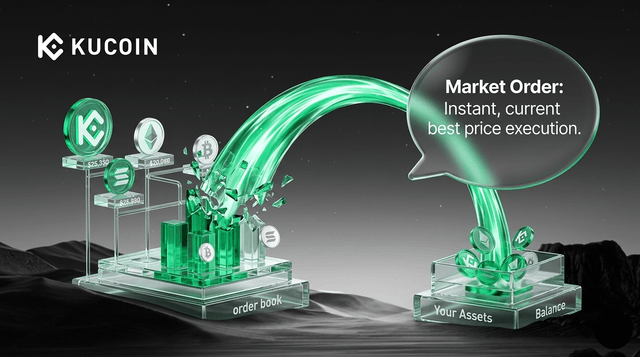
Instant Execution: These orders are filled immediately at the best available price currently on the exchange’s order book.
-
Cost Considerations: Market orders "take" liquidity from the book, often resulting in slightly higher "taker fees" compared to limit orders.
-
Best Use Case: Ideal for high-liquidity assets (like BTC or ETH) or when you need to exit a position urgently during high volatility.
Understanding Market Orders in Crypto
What Is a Market Order?
A market order is an instruction to buy or sell a cryptocurrency immediately at the best available current price. Unlike a limit order—where you specify a maximum buy price or minimum sell price—a market order tells the exchange: "I don't care about the exact price; I want this trade completed right now."
Because they are designed for instant completion, market orders are guaranteed to execute (assuming there is enough liquidity), but the final price is not guaranteed.
How Market Orders Work (The Order Book)
To understand a market order, you must look at the Order Book. The order book is a real-time list of "limit orders" from other traders waiting to buy (bids) or sell (asks).
-
Buying: When you place a buy market order, the exchange matches you with the lowest available "ask" (sell) price on the book.
-
Selling: When you place a sell market order, you are matched with the highest "bid" (buy) price.
If your market order is larger than the amount available at the top of the book, the exchange will "walk the book," filling the rest of your order at the next best price levels until the entire amount is filled.
The Risks: Slippage and Volatility
While market orders offer speed, they come with two primary risks:
-
Slippage: This occurs when a market order is large enough to exhaust the best available price level, forcing the rest of the order to fill at worse prices. This is common in low-liquidity "altcoins."
-
Flash Volatility: In 2026, automated trading bots can cause price spikes in milliseconds. If you place a market order during a "wick," you might buy at the absolute peak or sell at the absolute bottom.
Summary
A market order is the simplest way to trade crypto. It is the go-to choice for traders who prioritize certainty of execution over price precision. While it is perfect for "panic selling" to cut losses or "FOMO buying" into a confirmed breakout of a major asset, it should be used with caution on smaller, illiquid tokens where slippage can significantly eat into your profits.
See why millions of traders choose the People’s Exchange—create your KuCoin account in under 60 seconds. Sign Up Now!
FAQs
Why did my market order execute at a different price than what I saw on the screen?
This is due to the "spread" and "slippage." The price shown on the chart is usually the last traded price, but a market order executes at the current best available bid or ask, which may be slightly different depending on market depth.
Are there higher fees for market orders?
Generally, yes. Most crypto exchanges charge a "Taker Fee" for market orders because you are "taking" liquidity out of the market. Limit orders typically qualify for "Maker Fees," which are lower because they "make" liquidity by adding to the order book.
Can I cancel a market order?
No. Because market orders are processed instantly, they cannot be canceled once the "Buy" or "Sell" button is clicked.
When should I avoid using a market order?
Avoid market orders when trading low-volume altcoins, during extreme "flash" volatility, or when your trade size is very large relative to the exchange's daily volume. In these cases, a limit order is much safer.
Further Reading:


