
What is Leverage Trading in crypto?
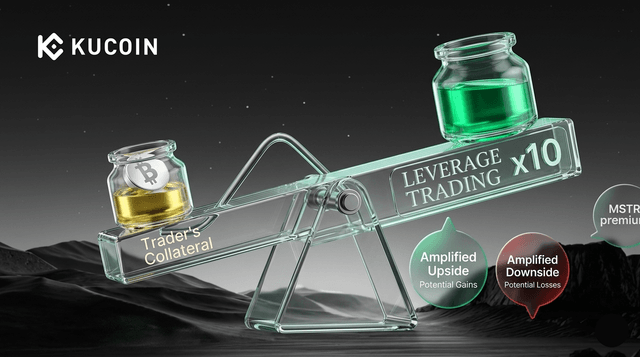
Leverage functions as a powerful multiplier, allowing you to use your existing assets as "margin" to borrow capital and amplify your market exposure. Whether you are "Longing" to capitalize on a bullish breakout or "Shorting" to turn a profit during a market correction, leverage provides the tactical flexibility to navigate any market condition. However, this increased purchasing power is a double-edged sword; while it can turn a minor 5% price move into a 50% gain, it can just as easily accelerate losses and trigger an automatic liquidation. To succeed in today's market, characterized by sophisticated Perpetual Futures and dynamic Funding Rates, a trader must move beyond simple guesswork and master the balance between Isolated and Cross Margin risk management.
This guide breaks down the core mechanics of leverage in 2026, comparing the strategic advantages of longing versus shorting, and outlining the essential safeguards like Stop-Loss orders and conservative leverage ratios—needed to protect your collateral in a volatile landscape.
This guide breaks down the core mechanics of leverage in 2026, comparing the strategic advantages of longing versus shorting, and outlining the essential safeguards like Stop-Loss orders and conservative leverage ratios—needed to protect your collateral in a volatile landscape.
Key Takeaways
-
Leverage allows you to control a large market position (e.g., $10,000) with a small amount of capital (e.g., $1,000) using a multiplier like 10x.
-
Traders can profit from both rising markets (Longing) and falling markets (Shorting), providing flexibility in any market condition.
-
While profits are amplified, losses are too. If the market moves against you by a small percentage, your "margin" can be wiped out, leading to automatic liquidation.
Understanding Leverage Trading in 2026
Leverage trading is a financial tool provided by crypto exchanges that allows you to borrow capital to increase your market exposure. Essentially, it is the practice of using margin (your collateral) to open a position that is significantly larger than your account balance. In 2026, derivatives like Perpetual Futures account for over 70% of all crypto volume, making leverage the primary engine for market liquidity.
How Does It Work?
When you open a leveraged trade, you provide a portion of the total value known as the Initial Margin, while the exchange provides the remaining capital to increase your market exposure. For example, using 10x leverage with $1,000 allows you to control a $10,000 position in Bitcoin. This creates significant upside potential: if Bitcoin rises by 5%, your $10,000 position grows to $10,500, netting a $500 profit that represents a 50% return on your initial investment. However, this power also amplifies the downside; a mere 5% drop in price would reduce your position to $9,500, resulting in a $500 loss and wiping out 50% of your starting capital in an instant.
Longing vs. Shorting
Leverage trading is unique because it allows you to trade the price movement rather than owning the underlying coin.
-
Going Long: You "buy" the contract expecting the price to rise.
-
Going Short: You "sell" the contract expecting the price to fall, allowing you to profit during a "crypto winter" or market correction.
Margin Types: Isolated vs. Cross
To manage risk in 2026, most advanced exchanges offer two margin modes:
-
Isolated Margin: Limits your risk to a single position. If that trade fails, only the funds allocated to that specific position are liquidated.
-
Cross Margin: Uses your entire account balance as collateral. This reduces the chance of liquidation during minor price swings but puts your whole wallet at risk if the market crashes.
Summary
Leverage trading in crypto is a high-reward, high-risk strategy that amplifies your purchasing power through borrowed funds. By using margin as collateral, traders can access larger positions and profit from both upward and downward trends. However, the 2026 market remains highly volatile; without strict risk management—such as stop-loss orders and conservative leverage ratios—traders face a high probability of liquidation, where the exchange automatically closes the position to cover losses.
Start your crypto journey in minutes by creating a secure KuCoin account with no initial deposit required. Sign Up Now!
FAQs
What is the difference between margin and leverage?
Margin is the actual money you put up as collateral (your "skin in the game"). Leverage is the multiplier (e.g., 5x, 10x) that determines the total size of the position you can control using that margin.
What is liquidation in crypto trading?
Liquidation occurs when the market moves against your position to a point where your initial margin can no longer cover the losses. The exchange automatically closes your trade to ensure they can pay back the borrowed funds, resulting in a total loss of your collateral.
Can I lose more than my initial investment?
On most modern exchanges with "Negative Balance Protection," you cannot lose more than the funds you have deposited. However, a single bad trade with high leverage can completely wipe out your account balance.
What are funding rates?
In perpetual futures trading, funding rates are small payments made between long and short traders every few hours. They ensure the price of the contract stays close to the actual spot price of the cryptocurrency.
Is leverage trading suitable for beginners?
Generally, no. Due to extreme volatility and the complexity of maintenance margins, beginners should start with "Spot Trading" (buying the actual coins) before experimenting with low leverage (2x or 3x) on a demo account.
Further Reading:


