
What is Autonoma Network in crypto?
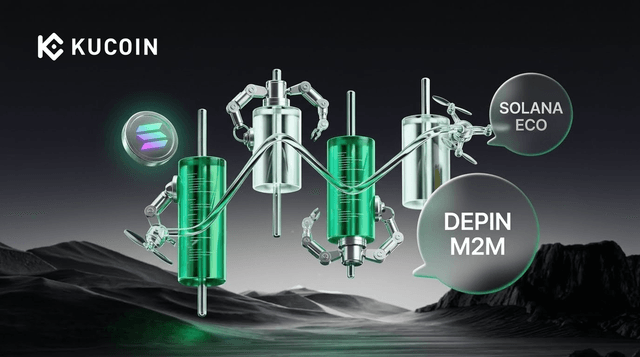
The convergence of artificial intelligence, robotics, and blockchain technology is driving an evolution in the decentralized web. As AI agents and automated hardware grow more sophisticated, they increasingly require an on-chain infrastructure designed specifically for machine-to-machine interactions.
Autonoma Network, a Decentralized Physical Infrastructure Network (DePIN) built natively on the Solana blockchain, represents a notable development in this space. The network aims to establish an unmediated ecosystem where autonomous devices can communicate, process computational tasks, and settle microtransactions independently.
Key Takeaways
-
Autonoma Network is an early-stage, Solana-native DePIN project aiming to establish an on-chain infrastructure layer for machine-to-machine coordination and autonomous robots.
-
The protocol designs a framework for autonomous hardware to register with unique decentralized IDs, theoretically allowing them to verify cryptographic data and coordinates without centralized human intermediaries.
-
Driven by custom smart contract parameters, the infrastructure is engineered to allow devices to execute localized SPL token micropayments upon verified task completion.
-
Utilizing Solana's parallel transaction processing and sub-cent fees is critical for the microtransaction throughput required by high-frequency machine economies.
Understanding the Machine Economy and DePIN
For years, the Internet of Things (IoT) and AI have relied on centralized cloud databases to sync and transfer data. However, centralized servers create single points of failure, introduce heavy latency, and require human-authorized banking pipelines to settle payments. This structure heavily restricts the evolution of a true "machine economy," where devices like autonomous delivery drones, smart charging grids, or automated robotic arms need to operate fluidly on their own terms.
DePIN protocols address this issue by leveraging public blockchains to decentralize hardware resources. Autonoma Network takes this a step further by tailoring its infrastructure specifically to autonomous machine entities. Instead of human-to-machine interfaces, Autonoma establishes a direct framework where machines act as independent economic actors.
Technical Architecture of Autonoma Network
Solana as the Settlement Layer
Autonoma is anchored directly to the Solana blockchain. Solana’s unique architecture—driven by its Proof of History (PoH) consensus mechanism—allows the network to settle thousands of transactions per second. This rapid finality is critical for machines that need to verify operational data or authorize immediate payments in milliseconds to keep physical moving parts running smoothly.
InterPlanetary File System (IPFS)
Physical devices generate vast amounts of operational telemetry and data packets. Storing this directly on-chain is cost-prohibitive. Autonoma Network utilizes IPFS to house data in a distributed ledger environment, ensuring machine logs and job details remain accessible, immutable, and fully decentralized.
Decentralized Oracles
To bridge the gap between physical machine performance and the digital blockchain, the protocol integrates advanced oracle systems. Oracles transmit real-world execution metrics—such as a robot completing a specific assembly line task—directly to the blockchain to verify that the conditions of an active smart contract have been fully met.
Core Features of Autonoma Network
| Core Feature | Technical Function | Conceptual Use Cases & Vision (Early Stage) |
| Decentralized Machine ID | Cryptographic machine passports designed for registration on the Solana network. | Proposes a framework where devices can theoretically verify their asset identity to other participating nodes. |
| Autonomous Micropayments | Programmable on-chain settlement channels utilizing the SPL token standard. | Aimed at letting independent machine wallets complete instant sub-cent transactions if integrated with IoT hardware. |
| Job Bidding & Coordination | An open, decentralized marketplace framework for tracking multi-step automated tasks. | Offers an early infrastructure layer conceptualized for businesses to distribute tasks to autonomous software bots or agents. |
| Cryptographic Proofs | Mathematical validation combining sensor data and location tracking. | Engineered to trigger automated on-chain payouts upon verified submission of physical task evidence. |
The ATNM Token Ecosystem
The economic concept of Autonoma Network introduces its native utility asset, trading under the ticker $ATNM. The contract address for this SPL token is verified on the Solana mainnet. Unlike multi-chain privacy infrastructure projects such as Automata Network (ATA), which serves completely different zero-knowledge and privacy functions, $ATNM is engineered for machine-to-machine coordination within the Solana ecosystem.
Proposed Token Utility (Early-Stage Blueprint)
-
Network Staking Framework: The protocol's roadmap intends for node providers and automated hardware hosts to stake tokens to secure the task-verification layer and ensure data compliance.
-
Transaction Cleardown: High-frequency machine-to-machine interactions and spatial data validations are planned to require micro-gas payments settled using the native asset.
-
Task Incentives: Automated software agents or IoT hardware are designed to receive programmatic payouts in the utility token upon submitting verified cryptographic proofs of task completion.
Conclusion
The Autonoma Network conceptualizes an interesting framework for the emerging machine economy. By theoretical pairing of Solana’s ultra-fast processing speeds with decentralized machine identities and automated payment channels, it proposes a blueprint where AI agents and automated hardware could eventually collaborate with reduced friction. While the project itself remains in a highly experimental, micro-cap phase with significant execution risks ahead, it highlights a broader macroeconomic trend: as the DePIN sector matures, protocols that aim to eliminate human friction from autonomous machine operations will likely remain a crucial area of technological exploration.
FAQs
What makes the Autonoma Network concept different from traditional IoT setups?
Traditional IoT heavily relies on centralized cloud networks and human-authorized fiat payment channels. The Autonoma Network architecture proposes using Solana to provide machines with independent cryptographic identities and native on-chain wallets, aiming to allow them to transact and coordinate without centralized server dependencies.
Why did the project select the Solana blockchain for its infrastructure blueprint?
The technical blueprint relies on Solana's high transaction throughput and ultra-low execution fees. This efficiency is critical for machine economies that theoretically require thousands of high-frequency microtransactions and near-instant confirmations to manage automated hardware operations smoothly.
What is the planned role of the $ATNM token within the ecosystem?
In its technical design, the token is engineered to fuel the network by handling machine-to-machine transactional gas fees, powering the staking requirements for verification nodes, and providing rewards to participating operators who supply hardware data to the pool.
Can I trade Autonoma Network ($ATNM) on centralized exchanges?
No. The Solana-native Autonoma Network asset ($ATNM) operates in an early, micro-cap phase and is not listed on centralized platforms. It can only be traded via independent decentralized exchanges (DEXs) on Solana.
Further Reading:


