

Humanity Protocol Pivots to Enterprise AI After $36M Hack: What Terence Kwok’s Shift Means for Crypto and Identity Projects
2026/07/11 09:00:00
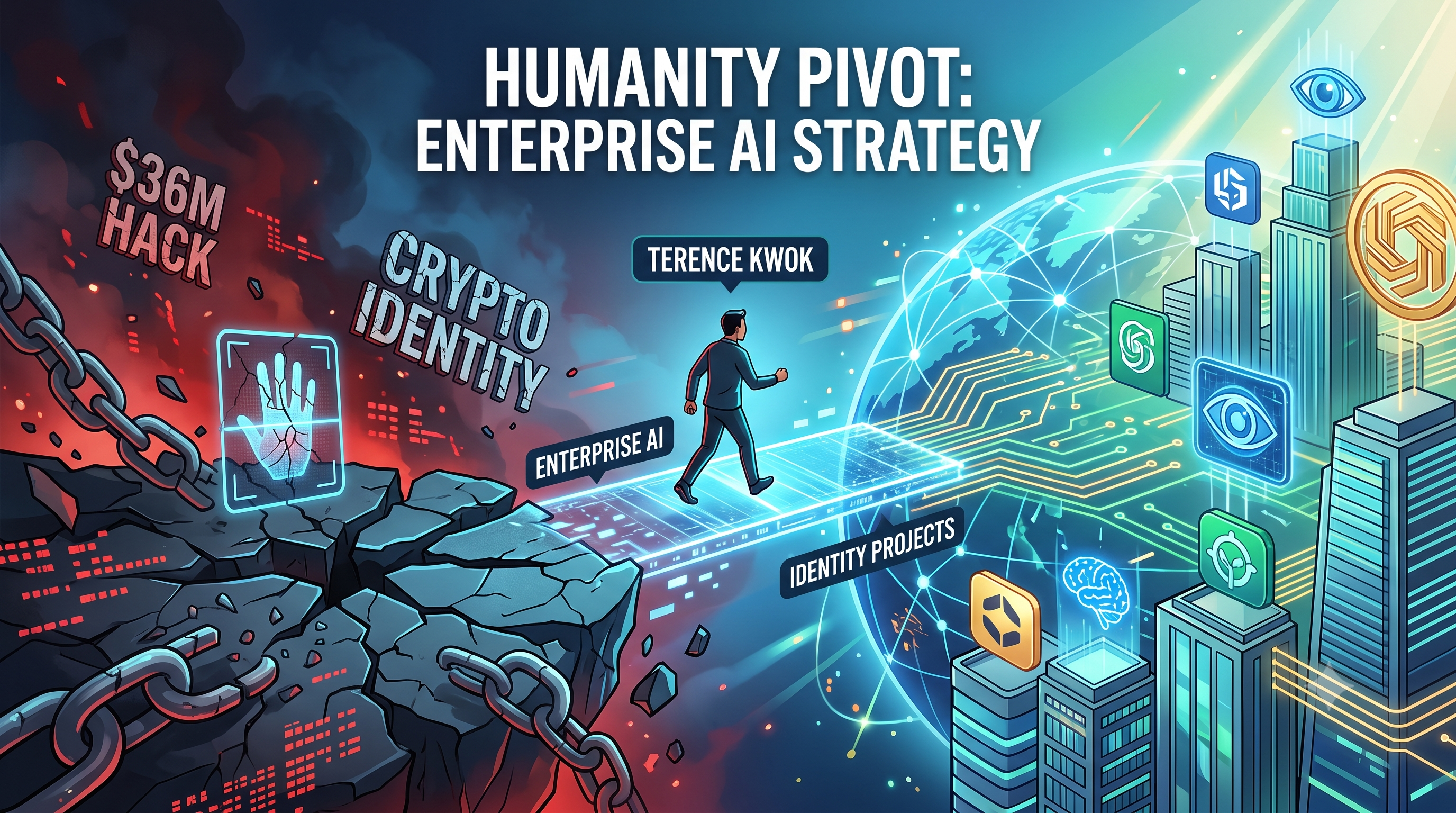
How the $36M Hack Accelerated Humanity Protocol's Enterprise AI Strategy
Humanity Protocol, once positioned as a leading decentralized identity solution leveraging palm scanning and zero-knowledge proofs for Proof of Humanity, has undergone a significant strategic redirection. The project suffered a major security incident in June 2026, resulting in approximately $36 million in losses due to compromised private keys from a developer’s laptop infected via phishing. Founder and CEO Terence Kwok recently confirmed the pivot toward enterprise-grade AI products, framing digital identity as a foundational element for AI systems needing reliable human verification.
This transition comes amid broader market pressures in the crypto sector, where security incidents continue to test project resilience and investor confidence. Terence Kwok’s decision to reorient Humanity Protocol toward enterprise AI solutions, accelerated by the hack, reflects pragmatic adaptation in a maturing crypto landscape. It underscores the growing intersection of verifiable identity and AI, while showing operational security as a persistent industry priority, potentially influencing how other identity-focused projects evolve to deliver sustainable value.
Details of the June 2026 Security Incident and Immediate Fallout
The security breach that struck Humanity Protocol in early June 2026 exposed vulnerabilities tied to operational practices rather than smart contract flaws. Attackers, suspected to have links to North Korean cyber groups, gained access through a compromised developer device that held backed-up private keys, including those for Gnosis Safe multisig wallets on Ethereum and BNB Chain. This allowed them to drain around 141 million H tokens and mint additional supply, leading to an immediate token price collapse of 80-90% and a market cap loss exceeding $1 billion at the lows. The team responded swiftly by suspending bridges and liquidity pools, publishing detailed post-mortems, and outlining a recovery plan centered on token migration to a new audited ERC-20 contract. Existing holders pre-snapshot, excluding attacker wallets, are set to receive airdrops.
Kwok has noted low prospects for full fund recovery, shifting team focus to compensation processes and business rebuilding. This event, one of the larger incidents in a month where total hack losses reached about $76 million, reinforces the need for robust key management, hardware security modules, and ongoing operational security training across crypto teams. The incident’s scale drew attention to how even multisig protections can fail under targeted social engineering, prompting projects to reassess treasury safeguards in an environment where such threats remain active.
Terence Kwok’s Leadership and Pre-Hack Strategic Considerations
Terence Kwok, with a background as founder of a hospitality technology unicorn, has long emphasized maximizing human potential in an AI-impacted world through Humanity Protocol. His leadership drove the project’s initial focus on privacy-preserving biometrics and verifiable credentials for uses like employment, asset ownership, and credit scoring. Kwok indicated that discussions around broadening the scope, including stronger enterprise integrations, had been underway for six to nine months prior to the hack. The incident accelerated this reevaluation, leading to a clearer emphasis on AI applications where identity verification plays a critical supporting role.
Backed by investors like Animoca Brands and Polygon Labs, Kwok’s approach demonstrates continuity in vision while adapting to practical realities. His public communications post-incident have stressed transparency, with updates on investigations and migration efforts helping stabilize some sentiment. This leadership style, combining entrepreneurial experience with responsiveness to crises, positions Kwok as a figure navigating the complexities of building in Web3 while addressing enterprise demands. The pivot aligns with his stated goal of creating a “human layer” for digital interactions, now reframed to serve AI systems requiring trustworthy credentialing.
Evolution from Proof of Humanity to AI Credential Verification
Humanity Protocol originally centered on Proof of Humanity, using non-invasive palm scanning combined with zero-knowledge proofs to establish unique human identities on-chain without relying on traditional KYC documents. This aimed to combat Sybil attacks, bots, and fraud in decentralized applications, supporting democratic on-chain voting and asset verification. The pivot reframes this technology as essential infrastructure for enterprise AI, where distinguishing genuine human inputs from AI-generated content becomes paramount. Kwok has highlighted ongoing testing of products for AI companies, with digital identity serving as a core component for verifying credentials in areas like content authenticity and access control.
This evolution maintains the project’s biometric and cryptographic strengths but directs them toward B2B solutions rather than broad consumer adoption. In practice, such systems could enable enterprises to integrate verifiable human data into AI training datasets or decision-making processes securely. The move illustrates how foundational identity tech can adapt to AI’s proliferation, where the need for provenance and trust layers grows alongside agentic systems and automated workflows.
Market Context and Token Migration Strategy Post-Hack
Following the hack, Humanity Protocol’s H token experienced extreme volatility but showed partial recovery, rallying around 40% at points in mid-June as details of the migration plan emerged. The strategy involves sunsetting the old contract and airdropping a new version, with support from major exchanges. This migration seeks to restore holder value while implementing audited code for the relaunch. In the broader crypto market of 2026, where identity projects compete amid rising AI integration, such events test liquidity and community trust.
Users tracking H token price movements or similar assets can monitor recovery dynamics through reliable platforms. The incident contributed significantly to June’s hack totals, yet overall sector losses declined slightly year-over-year, suggesting improving defenses in some areas even as high-profile cases persist. For identity projects, this context emphasizes diversification beyond token economics toward utility-driven revenue from enterprise services, potentially stabilizing valuations over time.
Implications for Decentralized Identity Projects in Crypto
The Humanity Protocol case offers lessons for other decentralized identity initiatives navigating security risks and market shifts. Many projects in this space leverage similar tools like ZKPs and biometrics to address trust deficits in Web3. However, operational vulnerabilities remain a key risk, often outweighing code-level issues. Kwok’s pivot suggests a viable path: leveraging core tech for enterprise AI use cases where verifiable identity adds immediate value, such as in fraud prevention or compliance workflows.
This could inspire peers to explore hybrid models that combine on-chain proofs with off-chain enterprise integrations. Industry-wide, the event prompts greater scrutiny of key management and team security protocols. Projects with strong backers may fare better in recovery, as seen with Humanity’s continued support. Ultimately, success will depend on delivering measurable utility that extends beyond speculation, particularly as AI adoption accelerates demand for robust verification mechanisms across digital ecosystems.
Role of Biometrics and Zero-Knowledge Proofs in Enterprise AI
Biometric palm scanning, paired with zero-knowledge proofs, provides Humanity Protocol with a privacy-centric foundation adaptable to enterprise AI needs. Enterprises increasingly require ways to authenticate human-generated data or user interactions in AI systems without exposing sensitive information. These technologies enable selective disclosure, allowing verification of attributes like professional credentials or unique personhood while maintaining confidentiality. In AI contexts, this supports applications such as secure model training, data curation, or agent authentication.
Kwok’s team has developed prototypes targeting these areas, positioning the protocol as infrastructure for AI companies facing challenges like deepfakes or unauthorized access. As AI agents proliferate, requiring crypto wallets and verifiable identities for transactions, such tools become strategic. The approach balances innovation with practicality, offering enterprises scalable solutions that align with regulatory expectations around data protection and authenticity.
Investor and Community Reactions to the Pivot Announcement
Community and investor responses to Humanity Protocol’s announced shift have been mixed but show signs of cautious optimism tied to the migration plan and transparent communication. Token holders faced significant losses initially, with the H token plummeting 80-90% in the immediate aftermath of the June exploit, wiping out substantial market value. Yet the airdrop framework for pre-snapshot holders, combined with support from major exchanges for the new audited ERC-20 token, has provided a tangible recovery pathway aimed at restoring some balance. Backers like Animoca Brands and Polygon Labs signal continued confidence in the underlying team and technology, viewing the incident as a catalyst for necessary evolution rather than a fatal blow. Discussions in crypto forums and community channels frequently show appreciation for Kwok’s direct engagement, including in-depth interviews that detail the pre-hack strategic thinking around broadening into enterprise solutions.
Critics point to the hack’s impact on trust, questioning execution risks in the new AI focus, the competitive pressures in enterprise markets, and the operational lessons that still need full implementation. Positive sentiment often centers on the potential for real-world AI utility, such as privacy-preserving verification tools that help enterprises combat deepfakes, authenticate data sources, and manage agent interactions securely. This capability could meaningfully differentiate the project in a crowded identity space by bridging blockchain strengths with immediate AI demands. The pivot is viewed as a necessary adaptation rather than an abandonment of core principles, aligning with wider industry moves toward sustainable, utility-driven models.
Broader Industry Trends in AI and Blockchain Convergence
The convergence of AI and blockchain in 2026 features a growing emphasis on verifiable systems to ensure trust in automated environments. Projects are exploring blockchain as a trust layer for AI outputs, model provenance, and agent interactions. Humanity Protocol’s move aligns with this, using identity tech to support enterprise needs for credential verification amid rising AI agent deployments. Market reports project substantial growth in blockchain identity management, driven by demands for secure, decentralized solutions. Other initiatives similarly integrate biometrics or ZK tech for hybrid applications.
This trend reflects maturing infrastructure where crypto moves beyond speculation toward foundational roles in digital economies. Security incidents like the one affecting Humanity underscore the importance of resilience as these technologies scale. Enterprises seek partners capable of delivering compliant, efficient verification that integrates seamlessly with AI workflows, favoring projects that demonstrate adaptability and proven tech stacks.
Challenges in Transitioning from Consumer to Enterprise Focus
Shifting from a consumer-oriented Proof of Humanity model to enterprise AI services presents execution challenges for Humanity Protocol. Consumer adoption relied on accessibility and broad appeal for on-chain activities, while enterprise sales demand customized solutions, integration expertise, and compliance alignment. The team must refine product offerings, build sales capabilities, and demonstrate ROI for AI clients. Post-hack recovery efforts, including legal coordination and compensation, consume resources alongside pivot development. Maintaining community engagement during this transition is critical, as token utility evolves.
Kwok’s experience in scaling technology businesses provides a foundation, but competition in enterprise AI is intense, with established players and new entrants vying for attention. Success hinges on leveraging the protocol’s biometric and cryptographic advantages to solve specific pain points, such as AI data authenticity or secure human-AI interactions. The pivot requires balancing innovation speed with reliability to rebuild credibility.
Potential Opportunities in AI-Driven Identity Solutions
Enterprise demand for AI-enhanced identity solutions creates opportunities for protocols like Humanity. Companies face challenges verifying human contributions in content generation, customer service, and decision systems. Palm-based verification combined with on-chain credentials offers a non-invasive, privacy-focused method to establish trust. Potential applications include workforce authentication, supply chain participant verification, and AI model auditing. Partnerships with AI firms could expand use cases, generating revenue streams less dependent on token volatility.
As regulatory frameworks around AI and data evolve, solutions emphasizing verifiable provenance gain appeal. Humanity Protocol’s existing infrastructure positions it to capture value in this space, particularly with backing from prominent Web3 investors. Traders following crypto futures or related developments may see increased interest if enterprise pilots succeed. Long-term, this could foster a more sustainable model, where identity tech underpins broader AI ecosystems.
Security Best Practices Highlighted by the Incident
The hack emphasizes operational security as foundational for crypto projects. Reliance on a single device for key backups bypasses multisig protections, highlighting risks in key storage practices, phishing awareness, and the limitations of even advanced wallet configurations when human factors are involved. Best practices now widely recommended include hardware security modules for key protection, segregated environments for sensitive operations, regular comprehensive audits of both code and procedures, mandatory team training on social engineering threats, and multi-layered approval workflows that minimize single points of failure. Many projects across the ecosystem are enhancing these measures in response to rising threats from sophisticated actors, including state-linked groups.
For Humanity Protocol, implementing stricter protocols supports the AI pivot by assuring enterprise clients of robust safeguards, which is essential for building trust in high-stakes B2B environments where data integrity and verification reliability are paramount. Industry-wide adoption of such standards could reduce incident frequency, bolstering overall confidence and encouraging more institutional participation in decentralized identity solutions. The event serves as a prominent case study for developers and founders on balancing accessibility and innovation with rigorous security in decentralized systems, prompting renewed focus on operational resilience. Continued improvements in this area, combined with developing tools like advanced monitoring and automated threat detection, will shape the viability and long-term success of identity projects moving forward amid increasing AI integration and regulatory scrutiny.
Direction for Humanity Protocol and Similar Ventures
Looking ahead, Humanity Protocol’s success in the enterprise AI space will depend on the seamless execution of product development, client acquisition, and community rebuilding efforts. Kwok’s leadership and sustained investor support from entities like Animoca Brands and Polygon Labs provide a solid foundation, while the token migration offers a meaningful reset for holders by introducing an audited contract and structured airdrop mechanisms. In the wider crypto identity sector, projects that effectively integrate AI utility, such as verifiable credentials for model training or agent authentication, while upholding rigorous security standards, are positioned to thrive amid growing enterprise demand. The incident may accelerate broader industry maturation, encouraging more professionalized operations, enhanced key management protocols, and a sharper focus on sustainable revenue models beyond pure token speculation.
Stakeholders, including developers, investors, and users, should closely monitor progress on AI-focused offerings, pilot deployments, and mainnet relaunches to assess long-term viability. Market observers note that the timely delivery of enterprise solutions could attract new partnerships and drive adoption in sectors requiring robust identity layers. The pivot represents not just short-term recovery but a strategic repositioning for relevance in an AI-dominant future, where verifiable human identity serves as essential infrastructure for trust, compliance, and innovation across digital ecosystems. This forward-looking approach, if executed well, could set a precedent for how identity projects navigate crises and capitalize on technological convergence.
Conclusion
Terence Kwok’s strategic shift for Humanity Protocol after the $36M hack illustrates the adaptive nature required in crypto innovation. By channeling identity expertise into enterprise AI, the project addresses immediate challenges while targeting emerging opportunities at the blockchain-AI intersection. This move, grounded in prior planning and transparent response, offers insights for the sector on resilience, utility focus, and security.
As the ecosystem develops, such adaptations may define sustainable paths for identity projects and beyond, particularly as demand grows for verifiable systems in AI-driven applications. The emphasis on practical enterprise solutions could help bridge the gap between Web3 experimentation and institutional adoption, fostering greater long-term stability across similar ventures.
FAQs
What caused the $36 million loss at Humanity Protocol, and how did the team respond?
The incident stemmed from a phishing attack that compromised a developer’s laptop, exposing private keys stored due to an accidental backup. This enabled access to multisig wallets, token drains, and minting. The team suspended operations, issued detailed post-mortems, initiated token migration to a new audited contract with airdrops for eligible holders, and continues investigations while prioritizing compensation. Kwok has been forthcoming about low recovery odds, focusing efforts on rebuilding.
How does Terence Kwok describe the pivot to the enterprise AI for Humanity Protocol?
Kwok explains the shift as an acceleration of discussions held for months, with the hack prompting faster implementation. The core biometric and ZKP technology now targets AI companies needing reliable verification for credentials and human authenticity. Products are in testing, maintaining identity’s role as supporting infrastructure rather than the sole consumer focus. This aligns with his vision of human-centric tech in an AI world.
What does the Humanity Protocol hack mean for security in other crypto identity projects?
It highlights operational risks like key management and phishing as primary threats, even with multisig setups. Projects are encouraged to adopt hardware modules, training, and audits. The event stresses diversifying beyond token models toward enterprise utility, influencing how identity solutions prioritize resilience alongside innovation.
Will the new H token restore value for original holders after the migration?
The migration plan aims to provide a 1:1 airdrop to pre-snapshot holders (excluding attackers), supported by exchanges. While initial losses were severe, the new audited token and AI focus could drive utility-based recovery. Outcomes depend on execution, market conditions, and adoption of enterprise products. Holders should track official updates.
How does palm scanning technology fit into enterprise AI applications?
Palm scanning offers a privacy-preserving way to verify unique humans, integrable with ZKPs for selective disclosure. In AI, it supports authenticating data sources, user interactions, or agent oversight, helping combat deepfakes and ensure provenance in automated systems. Enterprises benefit from secure, compliant verification layers.
Disclaimer: This content is for informational purposes only and does not constitute investment advice. Cryptocurrency investments carry risk. Please do your own research (DYOR).