

Bitcoin as Collateral: What Eric Trump’s Comments Mean for the Future of Crypto Lending
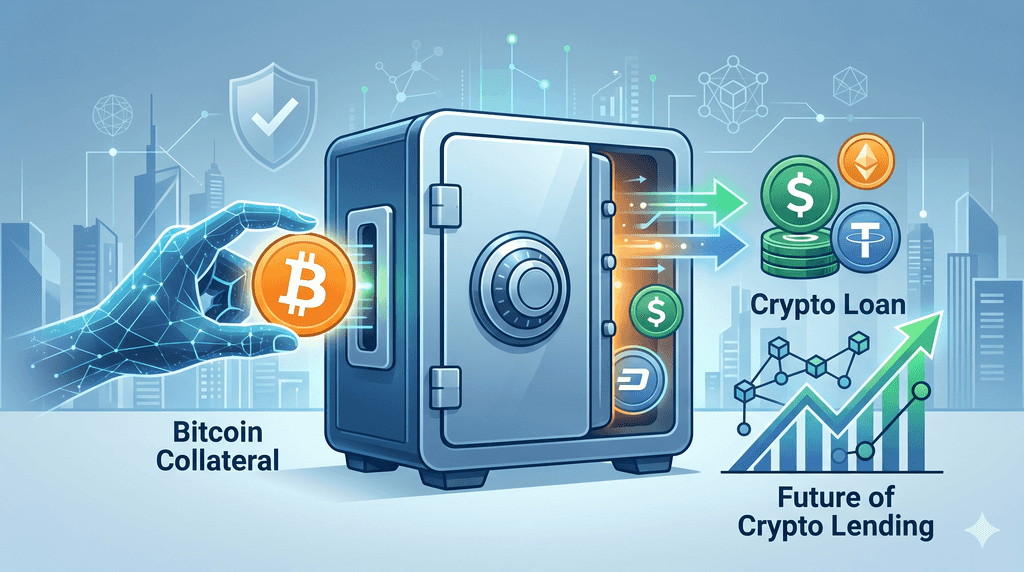
Is your Bitcoin just a digital asset, or is it the key to your next home? As of May 7, 2026, the answer has shifted dramatically toward the latter. Speaking at the Consensus Miami 2026 conference, Eric Trump, Co-Founder of American Bitcoin, revealed a startling transformation in Wall Street’s hierarchy: traditional giants like JPMorgan Chase have pivoted from calling Bitcoin a "joke asset" to officially accepting it as collateral for home mortgages. This isn't just a political soundbite; it is a fundamental restructuring of the global credit market. The immediate reality is that Bitcoin has evolved into a "pristine" form of collateral, bridging the gap between volatile digital wealth and tangible real-world assets. With Bitcoin trading steadily above $81,000 today, the integration of crypto into institutional lending is no longer a future concept—it is the current standard for 2026 finance.
Key Takeaways
-
Institutional Pivot: Major banks like JPMorgan and Merrill Lynch now allow Bitcoin to be used for high-value loan collateral, including mortgages.
-
The "Eric Trump" Effect: As a co-founder of American Bitcoin (holding 7,300+ BTC), Eric Trump’s comments underscore the marriage of crypto mining and traditional real estate finance.
-
Bitcoin at $81,000: Sustained price levels above $80k have provided the "valuation floor" necessary for banks to offer lower-risk lending products.
-
Market Efficiency: American Bitcoin reports mining BTC at a 47% discount to spot, highlighting the profitability of the infrastructure supporting this new lending era.
-
Lending Evolution: The focus has shifted from speculative "yield chasing" to using BTC for risk-managed, long-term liquidity through regulated institutional channels.
The Death of Skepticism: JPMorgan’s Great Bitcoin Reversal
The most significant takeaway from the current May 2026 market is that institutional skepticism toward Bitcoin has officially died. Eric Trump’s recent takedown of JPMorgan at Consensus 2026 highlighted that the bank, which once "crapped on" the asset, is now facilitating its use in the multi-trillion-dollar mortgage industry. This reversal is not merely symbolic; it represents a calculated shift in risk management protocols across the world's largest financial institutions.
Just 18 months ago, the narrative from legacy finance was one of extreme caution, often bordering on hostility. However, the technical and regulatory infrastructure is now in place for JPMorgan to treat Bitcoin as a high-quality liquid asset. Under new pilot programs launched in May 2026, high-net-worth clients can use their BTC holdings to secure institutional loans with competitive Loan-to-Value (LTV) ratios. This shift is driven by the realization that they could no longer ignore the $2.68 trillion global crypto market capitalization without losing significant market share to digital-native competitors.
| Bank / Institution | 2024 Stance | May 2026 Status |
| JPMorgan Chase | Skeptical / "Joke Asset" | Accepting BTC for Mortgage Collateral |
| Merrill Lynch | Restricted Access | Full Institutional BTC Integration |
| American Bitcoin | N/A (Founded 2025) | 16th Largest Global Holder (7,300+ BTC) |
This reversal signals that Bitcoin is being treated less like a tech stock and more like "digital gold" with the legal status of an authorized financial instrument. For the first time, the "I told you so" moment for crypto advocates has transitioned from internet forums to the executive suites of Wall Street.
The Institutionalization of Meme Logic
Eric Trump’s critique of JPMorgan underscores a broader trend: the institutionalization of what was once considered "meme" or "retail" logic. In 2021, the idea of using a decentralized ledger to secure a suburban home was a pipe dream. By 2026, the volatility of Bitcoin has been sufficiently dampened by institutional liquidity to make it a viable, albeit high-beta, collateral type. The banks aren't doing this out of the goodness of their hearts; they are doing it because Bitcoin is the most liquid asset on the planet that never sleeps.
Why Bitcoin is Becoming "Pristine Collateral" in 2026
Bitcoin is currently the preferred collateral for institutional lenders because its liquidity and 24/7 market access make it easier to manage than traditional real estate or equity portfolios. Unlike a house, which can take months to sell, or a stock that is subject to market hours and "circuit breakers," Bitcoin can be liquidated in milliseconds if a margin call is triggered. This provides lenders with a safety net that traditional assets simply cannot match in a fast-moving digital economy.
The emergence of companies like American Bitcoin Corp (ABTC) has further solidified this. According to their Q1 2026 earnings reported on May 6, the company is mining Bitcoin at a cost of approximately $36,200 per coin—a 47% discount to current spot prices of $81,039. This industrial-scale efficiency provides a "supply-side" stability to the market. When large holders like ABTC, which now controls over 28 exahash of capacity, treat Bitcoin as a strategic reserve rather than a trading chip, it reduces market volatility and increases lender confidence.
The Role of Regulatory Clarity
Regulatory progress in North America throughout early 2026 has allowed banks to bridge the divide between Centralized Finance (CeFi) and Decentralized Finance (DeFi). The Depository Trust & Clearing Corporation (DTCC) recently announced that its new tokenization service is on track for a July 2026 production test, which will allow real-world assets (RWAs) and Bitcoin to interoperate seamlessly across different blockchains. This interoperability is the "glue" that allows a bank in New York to accept a digital token as a guarantee for a physical property in Florida.
Furthermore, the implementation of clearer accounting standards (similar to the previously anticipated FASB rules) now allows companies to report their Bitcoin holdings at fair market value. This seemingly technical change has unlocked billions in corporate balance sheet capacity, as firms can now show the appreciation of their digital assets rather than only recording impairments.
Eric Trump and the "Infrastructure Backbone" Strategy
The comments made by Eric Trump at Consensus 2026 are part of a broader strategy to position the United States as the "Bitcoin Infrastructure Backbone." By combining massive self-mining operations with institutional-grade lending exposure, the Trump-led venture is aiming to set a new standard for how corporations hold and use digital assets. It’s a strategy that blends political influence with hardcore industrial output.
In Q1 2026, American Bitcoin grew its strategic reserve by 30%, reaching over 7,000 BTC. Eric Trump emphasized that the goal is no longer just to "have" Bitcoin, but to use it to drive national economic leadership. When institutional leaders see a company with a 52% mining gross margin holding thousands of coins, it validates Bitcoin as a sustainable balance-sheet asset. This "American First" approach to mining ensures that the underlying security of the network is anchored in jurisdictions with stable property rights and advanced energy grids.
The Impact on Individual Borrowers
For the average crypto investor, this means that the days of having to sell your Bitcoin to pay for life’s major expenses are coming to an end. Instead of "cashing out" and triggering a capital gains tax event, investors can now borrow against their holdings. This allows for capital efficiency—keeping the upside potential of Bitcoin’s price growth while accessing the liquidity needed for real estate or business expansion. In the 2026 tax environment, "Buy, Borrow, Die" has moved from the realm of real estate moguls to the realm of the average BTC HODLer.
Market Outlook: Bitcoin at $81,000 and the Road to $93,000
Bitcoin’s current price action is the engine driving the lending boom. After a sharp "short squeeze" that saw $242 million in bearish liquidations earlier today, Bitcoin is holding steady near $81,000. Analysts from Mudrex and WazirX note that as long as BTC holds above the $80,500 support level, the momentum remains firmly bullish. This price floor is essential because it sets the liquidation parameters for the very loans Eric Trump was discussing.
The next major target for the market is an unfilled CME gap at $93,000. If Bitcoin reaches this liquidity zone, the value of the collateral held by banks will surge, potentially leading to even more favorable loan terms and lower interest rates for crypto-backed mortgages. Bitcoin dominance has risen to 61%, the highest level since 2025, confirming that capital is concentrating in the most "secure" digital asset, making it the undisputed king of crypto collateral.
Analyzing the "Short Squeeze" Dynamics
The liquidation of $242 million in short positions today wasn't just a random market event; it was a response to the institutional adoption narrative. As more banks announce Bitcoin-backed services, the "bear case" for Bitcoin becomes increasingly difficult to maintain. Short sellers are being squeezed not just by retail buying, but by institutional entities that need to acquire spot BTC to hedge their lending books. This creates a feedback loop where adoption leads to price appreciation, which in turn leads to further adoption.
The Future of Global Credit: From Real Estate to Digital Reserves
As we look toward the second half of 2026, the concept of "collateral" is being redefined. In the past, credit was built on the back of land and physical labor. Today, it is increasingly built on the back of mathematical certainty and decentralized energy expenditure. The comments from Eric Trump represent more than just a jab at a rival institution; they reflect a tectonic shift in how value is stored and transmitted across generations.
If Bitcoin continues to cannibalize the role of gold and high-end real estate as a primary collateral asset, the global financial system will become significantly more transparent. On-chain lending allows for real-time auditing of reserves, a feat that JPMorgan’s traditional mortgage books cannot achieve. This transparency reduces the risk of "systemic contagion"—the very thing that caused the 2008 financial crisis. By using an asset that cannot be "printed" into existence, the credit markets of 2026 are inherently more robust than those of the past.
Risks and Considerations in the New Lending Era
However, this new era is not without its risks. While Bitcoin is "pristine" collateral, its volatility still necessitates high over-collateralization ratios. Most banks in 2026 are requiring a 2:1 or 3:1 ratio (meaning you need $300,000 of BTC to borrow $100,000). A "flash crash" could still trigger mass liquidations, potentially leading to a cascading effect. Therefore, the sophistication of risk management tools—such as automated stop-losses and dynamic hedging—has become the new battleground for fintech innovation.
| Risk Factor | Traditional Mortgage | BTC-Backed Mortgage |
| Liquidation Speed | Months (Foreclosure) | Milliseconds (Smart Contract/API) |
| Auditability | Low / Periodic | High / Real-Time (On-chain) |
| Collateral Volatility | Low | High |
| Global Portability | None | Total |
The Role of Bitcoin Mining in Lending Security
One often overlooked aspect of Eric Trump’s "American Bitcoin" strategy is how mining security directly impacts lending confidence. In 2026, lenders are not just looking at the price of Bitcoin; they are looking at the health of the network. A network that is decentralized and secured by massive, transparent operations in the U.S. is seen as a "safer" bet than one where hashrate is concentrated in unstable jurisdictions.
By owning 1.5% to 2% of the global hashrate, companies like American Bitcoin act as the "guardians" of the collateral. Their low cost of production ($36,200) ensures that even in a bear market, the network remains secure. This security is the bedrock upon which banks like JPMorgan are building their lending products. Without the miners, there is no network; without the network, the collateral has no value.
Bridging the Gap: The Retail vs. Institutional Divide
While the headlines are dominated by Eric Trump and JPMorgan, the real story of 2026 is the democratization of these institutional tools. What was once available only to the "ultra-wealthy" is slowly trickling down to the retail trader. Decentralized lending protocols are now competing directly with banks, offering similar BTC-backed loans but without the need for a 750-credit score.
This competition is driving down interest rates and improving service quality across the board. In May 2026, we are seeing a "race to the bottom" in terms of lending fees, which is a net win for the consumer. Bitcoin has effectively broken the monopoly that traditional banks held over the credit markets. If JPMorgan doesn't give you a fair rate on your Bitcoin-backed mortgage, you can simply move your collateral to a DeFi protocol or a competing digital-native bank.
Leveraging the New Financial Frontier
As the walls between traditional banking and the crypto economy continue to crumble, the opportunities for traders and long-term holders are expanding beyond simple price speculation. We are entering an era where the depth of a platform's liquidity and the sophistication of its lending tools are just as important as the asset's price. For those watching Bitcoin hold its ground above the $80,000 mark, the question is no longer whether to hold, but how to put that holding to work.
Sophisticated platforms now offer the infrastructure to trade these market shifts with precision. Whether you're looking to capitalize on the 61% Bitcoin dominance through futures or exploring how to manage a diverse portfolio that includes the next generation of institutional assets, having access to institutional-grade data and real-time execution is paramount. The shift from "joke asset" to "mortgage collateral" isn't just a win for Bitcoin—it’s a call to action for every participant in the digital economy to re-evaluate their strategy. The speed of the 2026 market leaves no room for hesitation; those who understand the "collateralization" of the internet will be the ones who lead the next decade of wealth creation.
💡Tips: New to crypto? KuCoin's Knowledge Base has everything you need to get started.
Conclusion
The transformation of Bitcoin into a globally recognized collateral asset marks the beginning of a new financial epoch. Eric Trump’s recent insights at Consensus 2026 serve as a powerful reminder that even the fiercest critics of the past, like JPMorgan, have been forced to adapt to the reality of a $2.6 trillion crypto market. By allowing Bitcoin to back home mortgages and other high-value loans, traditional finance is finally acknowledging the asset's unique combination of liquidity, transparency, and scarcity. This is not a temporary trend; it is the integration of the most efficient monetary network ever devised into the core functions of human society: housing and credit.
With Bitcoin trading robustly at $81,000 and institutional mining operations like American Bitcoin achieving record-breaking efficiency, the infrastructure supporting this lending revolution is more resilient than ever. The integration of tokenized services and the rising dominance of Bitcoin suggest that we are moving toward a hybrid financial system where the "digital gold" in your wallet is just as spendable—and far more efficient—than the cash in your bank account. As we look toward the potential $93,000 CME gap and beyond, one thing is certain: Bitcoin has transitioned from the fringes of finance to the very heart of the global credit system. The "joke" is over; the era of Bitcoin as the world's premier collateral has arrived.
FAQs
Can I get a mortgage using Bitcoin as collateral today?
Yes, as of May 2026, several major financial institutions, including JPMorgan and certain specialized crypto-lending platforms, have begun pilot programs and full-service offerings that allow individuals—typically starting with high-net-worth clients—to use Bitcoin as collateral for home mortgages.
What is a "Short Squeeze," and why did it happen today?
A short squeeze occurs when the price of an asset rises rapidly, forcing traders who bet against it (short sellers) to buy it back to prevent further losses. Today, Bitcoin's rise past $81,000 triggered over $242 million in these liquidations, further accelerating the price upward as bears were forced to become buyers.
What does "Bitcoin Dominance" mean for the market?
Bitcoin dominance refers to Bitcoin's share of the total cryptocurrency market capitalization. Currently at 61%, it indicates that investors are moving capital out of smaller "altcoins" and into Bitcoin, viewing it as the most secure and institutionally-backed asset in the space.
What is the "DTCC Tokenization Service" launching in 2026?
The DTCC Tokenization Service is a platform designed by the Depository Trust & Clearing Corporation to facilitate the digital representation of real-world assets. Launching in July 2026, it will allow traditional assets to be tokenized on-chain, making them compatible with Bitcoin and other digital assets for use in lending and trading.
Disclaimer: This article is for informational purposes only and does not constitute financial or investment advice. Cryptocurrency investments carry significant risk. Always conduct your own research before trading.