

Best Crypto Exchanges for Trading XRP Futures in 2026
Introduction
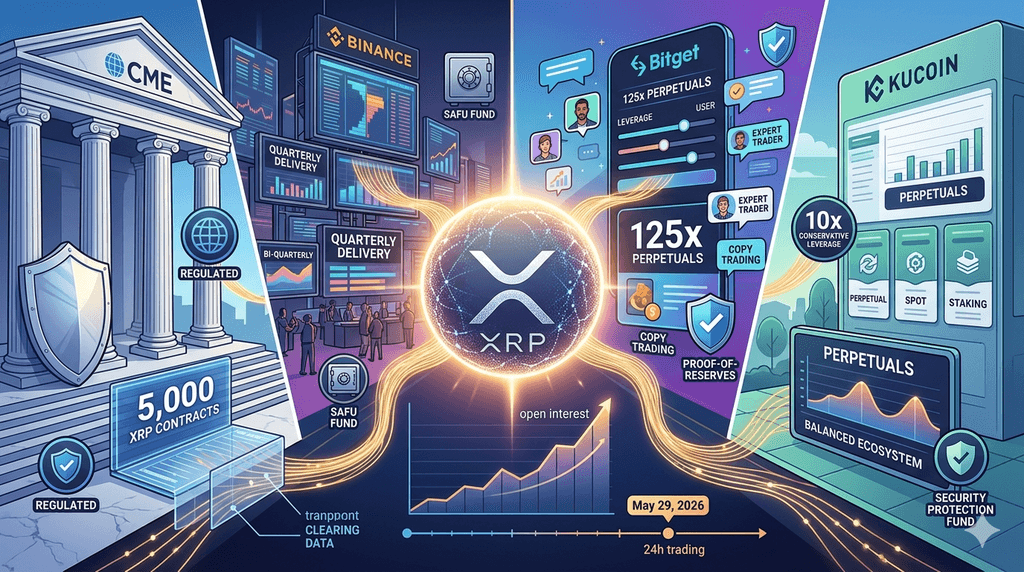
XRP futures trading has entered a new era in 2026, driven by institutional adoption and expanded product offerings. The question for traders is no longer whether to trade XRP futures, but which platform best serves individual needs. From CME's regulated contracts to Binance's quarterly delivery futures and Bitget's high-leverage perpetuals, the options span a wide spectrum of trading styles and risk appetites.
Understanding the differences between these platforms matters more than ever. With CME committing $894.70 million and Binance committing $615.52 million to XRP futures markets since 2026, the liquidity dynamics continue shifting. This guide examines the leading exchanges for XRP futures trading in 2026, analyzing fees, leverage options, security, and which traders each platform serves best.
Understanding XRP Futures: What Traders Need to Know
XRP futures contracts derive value from the underlying XRP cryptocurrency, but the mechanics differ significantly from holding XRP directly. Futures allow traders to speculate on price movements without owning the underlying asset, use leverage to amplify positions, and hedge existing holdings against downside risk.
Two primary types of futures exist in the XRP market:
-
Perpetual contracts have no expiration date, allowing positions to remain open indefinitely through funding rate adjustments
-
Delivery contracts expire on specific dates, requiring settlement in XRP or cash at expiration
The choice between these structures fundamentally affects trading strategy.
CME launched XRP futures in 2025, bringing institutional-grade products to the market. These quarterly contracts offer regulated trading with transparent pricing and clearinghouse guarantees. The CME XRP futures market has grown to approximately $800 million in open interest, attracting institutional participants who previously lacked compliant access to XRP derivatives.
Binance dominates the delivery futures segment, offering quarterly and bi-quarterly XRP contracts. These products suit traders who need physical delivery or prefer defined expiration timelines. Binance's delivery futures maintain high liquidity, with tight bid-ask spreads during active trading sessions.
Bitget and KuCoin focus on perpetual contracts, offering continuous trading without expiration concerns. These platforms appeal to traders who prefer flexibility and want to avoid rollover costs associated with rolling quarterly contracts.
CME Group: The Institutional Standard
CME Group represents the most regulated option for XRP futures trading. As the world's largest derivatives exchange, CME brings institutional credibility and regulatory compliance that crypto-native platforms cannot match.
CME Group offers XRP futures in two contract sizes: a standard contract of 50,000 XRP and a Micro contract of 2,500 XRP. At prevailing market prices near $1.44, these represent notional values of roughly $72,000 and $3,600 respectively, making them suitable for institutional traders and high-net-worth individuals who require substantial yet regulated exposure to XRP. The minimum tick size is $0.0005 per XRP, delivering a tick value of $25 for the standard contract and $1.25 for the Micro contract.
The institutional advantages are substantial. CME clearinghouse guarantees eliminate counterparty risk. Monthly and quarterly financial reporting provides transparency. Regulatory oversight from the Commodity Futures Trading Commission ensures market integrity. These factors matter for institutional allocators and family offices requiring compliant trading infrastructure.
However, CME carries notable limitations that traders should consider: large contract size excludes smaller traders, minimum position too large for effective risk management, and limited leverage options.
Fees at CME fall in the mid-range for institutional clearing. While cheaper than some crypto-native platforms for large trades, the fee advantage diminishes for smaller position sizes. The primary value proposition lies in regulatory compliance rather than cost efficiency.
Traders choosing CME typically prioritize regulatory compliance and institutional credibility over flexibility and leverage. hedge funds, registered investment advisors, and institutional trading desks constitute the core user base.
Binance: Depth and Flexibility
Binance maintains the deepest liquidity in XRP futures, particularly for delivery contracts. The exchange offers multiple expiration dates including quarterly and bi-quarterly contracts, providing flexibility for various trading strategies.
The XRP quarterly futures contract trades with standard specifications suitable for most position sizes. Liquidity concentrates in the front-month contracts, with declining volume in farther expirations. This liquidity pattern ensures competitive execution for active trading strategies.
Binance futures fees start at 0.02% for maker orders and 0.05% for taker orders (for standard volumes). These rates can be further reduced via VIP tiers (based on trading volume) and by holding/paying with BNB. The fee structure is competitive in the industry.
Leverage for XRP futures can reach up to 75x (depending on position size), allowing significant amplification but carrying substantial risk of liquidation. Users can choose isolated margin mode to protect other positions from losses in a single contract.
Security measures include the Secure Asset Fund for Users (SAFU), which covers user funds in extreme breach scenarios. Two-factor authentication, anti-phishing codes, and withdrawal whitelist requirements provide account-level security. The exchange has historically maintained strong security records, though past incidents highlight ongoing security challenges in the crypto exchange space.
The primary concern for traders involves regulatory uncertainty that cannot be ignored:
-
Binance faces ongoing regulatory scrutiny in multiple jurisdictions
-
The exchange has withdrawn from certain markets in response to regulatory pressure
-
Traders should consider jurisdictional risk when allocating significant capital
Traders choosing Binance typically prioritize liquidity depth and product variety. Active trading strategies requiring tight spreads and multiple contract expirations benefit most from Binance's offerings. The platform suits experienced traders comfortable with crypto-native exchange environments.
Bitget: High Leverage and Accessibility
Bitget has emerged as a leading platform for XRP perpetual futures, particularly among retail traders seeking high leverage options. The platform's focus on copy trading and social trading features differentiates its offering from competitors.
XRP perpetual contracts on Bitget offer leverage up to 125x, though such high leverage carries substantial risk of rapid liquidation. More conservative leverage of 10-25x suits most trading strategies, providing position amplification without extreme liquidation risk. The funding rate determines the cost of maintaining perpetual positions, fluctuating based on market conditions.
Maker fees start at 0.02% with taker fees at 0.06%, matching industry standards for major perpetual platforms. The fee structure remains competitive, though high-frequency trading costs can accumulate significantly at these rates.
The copy trading feature allows followers to replicate expert trader positions automatically. This functionality attracts newer traders seeking to learn from experienced participants. The social trading community provides educational value beyond pure trading execution.
Security infrastructure includes proof-of-reserves verification, protecting user funds against exchange insolvency. Two-factor authentication, withdrawal address whitelisting, and anti-phishing measures provide account security. Bitget has maintained a clean security record relative to some competitors.
The platform's regulatory positioning remains somewhat ambiguous. Bitget operates globally with varying degrees of regulatory compliance across jurisdictions. Traders should assess local regulatory status before trading.
Bitget suits traders prioritizing leverage accessibility and social trading features. Newer traders benefit from copy trading functionality. High-leverage strategies align with Bitget's product focus.
KuCoin: Balanced Offering
KuCoin provides a balanced approach to XRP futures trading, combining competitive fees with moderate leverage options and reasonable security measures. The platform serves as a middle-ground option between institutional-focused CME and high-leverage crypto-native alternatives.
XRP perpetual futures on KuCoin typically offer/default to 10x leverage (with max up to 75x), which is more conservative than many competitors providing 75-125x on major pairs. This approach helps protect newer traders from rapid liquidation while still offering meaningful position amplification. Margin calling thresholds generally provide an adequate buffer in most market conditions.
Trading fees align with industry standards at 0.02% maker and 0.06% taker. VIP tier discounts further reduce fees for high-volume traders, delivering meaningful savings for active strategies and rewarding consistent trading activity.
Security infrastructure includes the KuCoin Insurance Fund, covering user assets in breach scenarios. Two-factor authentication, login alerts, and withdrawal verification provide account-level protection.
The exchange offers a diverse product ecosystem beyond futures, including spot trading, staking, and lending. This integration suits traders seeking multiple strategies within a single platform.
Jurisdictional coverage includes most major markets, though regulatory status varies by region. Traders should verify local accessibility before account creation.
KuCoin suits traders seeking balanced exposure without extreme leverage. Mid-range position sizes and moderate leverage suit most retail trading strategies.
How to Trade XRP Futures on KuCoin
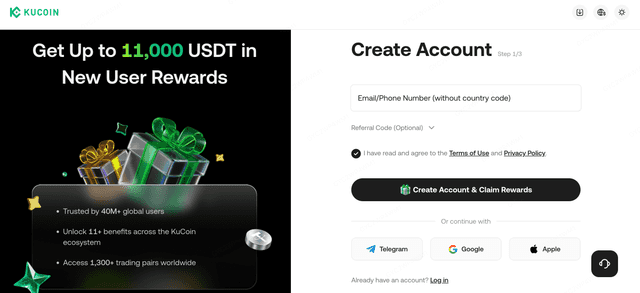
Step 1: Account Creation and Verification
Register for a KuCoin account through the website or mobile application. Complete identity verification to access full trading capabilities and higher withdrawal limits. The verification process typically completes within minutes for standard documentation.
Step 2: Fund Your Account
Deposit XRP or USDT to your futures wallet. The platform supports both cross-margin and isolated margin modes. Transfer funds from spot wallet to futures wallet before placing trades. Ensure sufficient margin balance to open positions with desired leverage.
Step 3: Execute Your Trade
Navigate to XRP futures markets and select the desired contract. Choose perpetual or delivery contracts based on trading strategy. Select leverage level, position size, and order type. Market orders execute immediately at current prices. Limit orders wait for price targets.
Step 4: Position Management
Monitor positions through the futures dashboard. Set stop-loss and take-profit levels for risk management. Track funding rate costs for perpetual positions. Close positions partially or entirely based on market conditions and trading plans.
Conclusion
The best XRP futures exchange depends entirely on trader profile and priorities. CME serves institutional participants requiring regulatory compliance and credible clearing. Binance provides deep liquidity for active trading strategies. Bitget offers accessible high-leverage options for experienced retail traders. KuCoin delivers balanced functionality for general futures trading.
The market continues evolving with regulatory clarity improving in some jurisdictions while remaining uncertain in others. CME's institutional entrance validates XRP futures as an established derivative product. Competition among exchanges benefits traders through improved features and competitive pricing. The diversity of options ensures suitable platforms exist for various trading styles and risk tolerances.
XRP futures represent established derivative products rather than experimental offerings. The growth in open interest and institutional participation signals market maturation. Traders should assess individual requirements against platform characteristics, prioritizing security, regulatory status, and suitable leverage levels. Position sizing and risk management matter more than platform selection, as even the best platform cannot compensate for improper risk handling.
FAQs
Q: What is the difference between XRP perpetual futures and delivery futures?
A: Perpetual futures have no expiration date and require funding rate adjustments to maintain positions. Delivery futures expire on specific dates with settlement in XRP or cash. Perpetual contracts suit strategies requiring continuous exposure. Delivery contracts suit strategies requiring physical settlement or defined expiration timelines.
Q: How much capital is required to trade XRP futures?
A: Capital requirements vary significantly across platforms. CME requires approximately $7,000 per contract at 5,000 XRP per contract. Crypto-native platforms allow smaller positions with leverage. A $1,000 account can trade meaningful XRP futures positions on most platforms with appropriate leverage.
Q: Is trading XRP futures risky?
A: XRP futures carry substantial risk, particularly with leverage. Leveraged positions can experience rapid liquidation during volatile market movements. The risk profile exceeds spot XRP holdings. Only traders with high risk tolerance and appropriate risk management should use significant leverage.
Q: Can retail traders access CME XRP futures?
A: CME XRP futures require significant capital per contract, limiting retail accessibility. Most retail traders find crypto-native platforms more accessible due to smaller minimum positions. The regulatory benefits primarily serve institutional participants.
Q: Which platform offers the lowest fees for XRP futures?
A: Major platforms show similar fee structures. Maker fees at 0.02% and taker fees at 0.06% represent industry standards. VIP discounts reduce fees for high-volume traders. Fee differences between platforms rarely exceed fractions of percentage points.