

Zcash ASIC Mining Explained: Hardware, Power, Noise and Cloud Mining
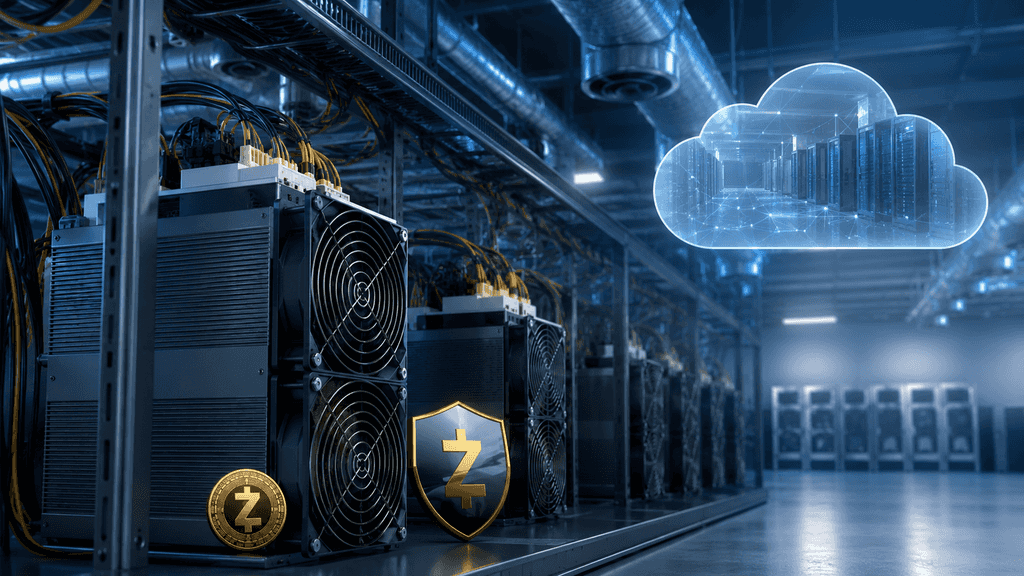
Can you still mine Zcash with a laptop or gaming computer? For most beginners, this is the wrong starting point. The official Zcash mining guide states that current network difficulty requires an ASIC to mine ZEC competitively.
An ASIC is specialized hardware built for a specific workload. It can provide far more efficient Equihash mining than a general-purpose CPU or GPU, but ownership comes with capital cost, noise, heat, high continuous power demand, networking, pool setup and maintenance. Understanding those requirements explains why many users compare hardware ownership with hosted or cloud mining instead of trying to run a machine at home.
Quick answer Modern ZEC mining is dominated by specialized Equihash ASIC hardware. Owning a miner gives direct control, but it also makes the owner responsible for procurement, power, cooling, noise, networking, pool configuration, uptime, repairs and obsolescence. Cloud mining replaces hardware ownership with a managed hashrate service, while the user still pays hashrate and electricity fees and remains exposed to mining and market risk.
What Is a Zcash ASIC Miner?
ASIC stands for application-specific integrated circuit. Unlike a CPU or GPU that can perform many kinds of computing, an ASIC is designed for a narrow task. In Zcash mining, that task is producing Equihash solutions efficiently.
Zcash originally attracted CPU and GPU miners, but the hardware market evolved. ASICs now outperform general-purpose hardware at the network's current difficulty. This does not mean every ASIC is economical; model efficiency, purchase price, power cost and network conditions still matter.
Why Mining Hardware Is Only the First Cost
|
Cost layer
|
What the beginner sees
|
What is easy to miss
|
|
Hardware
|
ASIC purchase price
|
Shipping, import, power supply, spare parts and resale risk
|
|
Electricity
|
Price per kWh
|
Continuous load, tariffs, deposits and infrastructure upgrades
|
|
Cooling
|
Fans on the machine
|
Ventilation, hot-air removal, climate and dust control
|
|
Operations
|
Turn the machine on
|
Network, firmware, pool setup, monitoring, downtime and repairs
|
|
Hosting
|
Monthly service fee
|
Contract terms, custody, relocation, maintenance and counterparty risk
|
Mining economics are commonly grouped into capital expenditure, operating expenditure and revenue. The machine is the capital expense. Electricity, hosting and maintenance are recurring operating expenses. Mining output is variable revenue—not a fixed repayment of the equipment cost.
Noise, Heat and Power: The Home-Mining Reality
The official Zcash guide compares ASIC noise with a vacuum cleaner and warns that multiple machines can strain home wiring or fuse boards. The comparison is useful because it turns an abstract specification into a living-space problem: a machine is loud, hot and designed to run continuously.
-
Noise is continuous, not occasional. A garage or spare room may still transmit sound to nearby rooms or neighbors.
-
Heat must leave the space. Without ventilation, room temperature rises and machine stability can deteriorate.
-
Power draw is sustained. Household circuits may not be designed for one or more high-load devices operating 24/7.
-
Dust and humidity affect reliability. Industrial sites control the environment more carefully than most homes.
-
Downtime has an opportunity cost. A machine that is offline is not contributing hashrate while fixed costs may continue.
Safety note Do not treat an ASIC like an ordinary computer. Anyone considering home deployment should verify electrical capacity, ventilation, fire safety, local rules and noise impact with qualified professionals.
The Setup Work Beginners Often Underestimate
-
Source a compatible Equihash ASIC and power supply.
-
Prepare suitable power, ventilation, network connectivity and physical security.
-
Connect the machine and identify it on the local network.
-
Configure firmware, pool address, worker name and payout address.
-
Choose a pool and understand its fee and payout method.
-
Monitor hashrate, temperature, rejected shares, uptime and payouts.
-
Handle cleaning, failures, repair logistics and eventual hardware replacement or resale.
Each step is manageable for an experienced operator. Together they create a meaningful barrier for a user who only wants exposure to mining output rather than a second job operating hardware.
Owning, Hosting or Cloud Mining: What Changes?
|
Dimension
|
Own an ASIC
|
Hosted ASIC
|
Cloud mining
|
|
Hardware ownership
|
You own it
|
You own it; host operates it
|
You purchase hashrate service
|
|
Upfront commitment
|
Usually high
|
Hardware plus setup/hosting
|
Plan-based; can be smaller
|
|
Power and cooling
|
You manage
|
Host manages facility
|
Provider manages infrastructure
|
|
Maintenance
|
You manage
|
Defined by hosting agreement
|
Provider manages machines
|
|
Control
|
Highest
|
Shared with host
|
Limited to product choices
|
|
User fees
|
Hardware + electricity + operations
|
Hardware + hosting + electricity
|
Hashrate fee + electricity fee
|
|
Key risk
|
Hardware and operating risk
|
Hardware plus host risk
|
Service, network and market risk
|
No path is universally best. Hardware ownership offers more control but demands expertise and capital. Hosting outsources the physical environment but not necessarily ownership risk. Cloud mining offers the lowest operational burden, but the user must review the service terms, fee structure, output assumptions and provider transparency.
How ZEC Cloud Mining Works Without Owning an ASIC
With cloud mining, the provider deploys and operates real mining machines. The user purchases an allocated amount of hashrate for a defined period. The service distributes mining output under its payout rules and charges the stated hashrate and electricity fees.
KuMining provides a dedicated Mining Account for daily output and electricity records. Beginners can use Lite Mode to start from a budget, while Pro Mode allows direct selection of hashrate and duration. After purchasing hashrate, electricity fees are prepaid into the Mining Account and deducted during mining.
What is removed You do not need to buy, install, cool, network or repair the ASIC yourself.
What remains You still pay for hashrate and electricity, actual output can vary, and the value of ZEC can rise or fall.
Who Might Prefer Each Route?
Hardware ownership may fit users who:
-
Have access to low-cost power and a suitable industrial or isolated space.
-
Understand ASIC selection, electrical infrastructure, networking and pool configuration.
-
Can accept hardware depreciation, repairs and resale uncertainty.
-
Want direct control and are prepared to operate continuously.
Cloud mining may fit users who:
-
Want mining exposure without owning or maintaining equipment.
-
Prefer a plan-based budget over a full hardware purchase.
-
Value daily output records and a simpler account workflow.
-
Understand that lower operational complexity does not mean guaranteed profit.
Beginner Red Flags to Avoid
-
Guaranteed-return language or a fixed-profit promise.
-
No clear explanation of the hashrate fee and electricity fee.
-
No identifiable plan duration, start condition or output record.
-
An estimate presented as if it were a withdrawable balance.
-
Pressure to buy immediately without a risk notice or product terms.
-
Claims that cloud mining removes network difficulty or price risk.
Frequently Asked Questions
Can I mine Zcash with a GPU in 2026?
The official Zcash mining guide says current network difficulty requires an ASIC for ZEC mining. A GPU may run software, but it is generally not competitive with specialized Equihash hardware.
Can I run a Zcash ASIC at home?
It may be technically possible, but noise, heat, sustained power demand, wiring, ventilation and local rules must be assessed first. Home suitability should not be assumed.
Does cloud mining mean electricity is free?
No. The provider manages the physical power operation, while the user pays the electricity fee defined by the plan. On KuMining, electricity is prepaid and deducted from the Mining Account.
Do I own a mining machine with cloud mining?
Normally you purchase a hashrate service rather than ownership of a specific device. Read the applicable product terms for the exact legal and operational structure.
Is ZEC cloud mining risk-free?
No. Output and value can be affected by network difficulty, block rewards, service terms, electricity costs and ZEC price volatility.
What should I compare before choosing a plan?
Compare hashrate in the same unit, duration, total fee structure, payout method, start time, electricity rules, output assumptions and risk disclosure.
Final Takeaway
The central question is not simply whether an ASIC can mine ZEC. It is whether you want to own and operate the full physical system behind that hashrate. For many beginners, the machine price is only the visible part of the decision.
Start Mining with KuMining Explore ZEC mining with KuMining if you want managed hashrate without buying an ASIC. Review the current plan, fees, electricity rules and risk notice before purchasing. Explore KuMining