

Overview of Global Cryptocurrency Regulatory Acts and Implementing Countries
2026/04/03 09:20:43
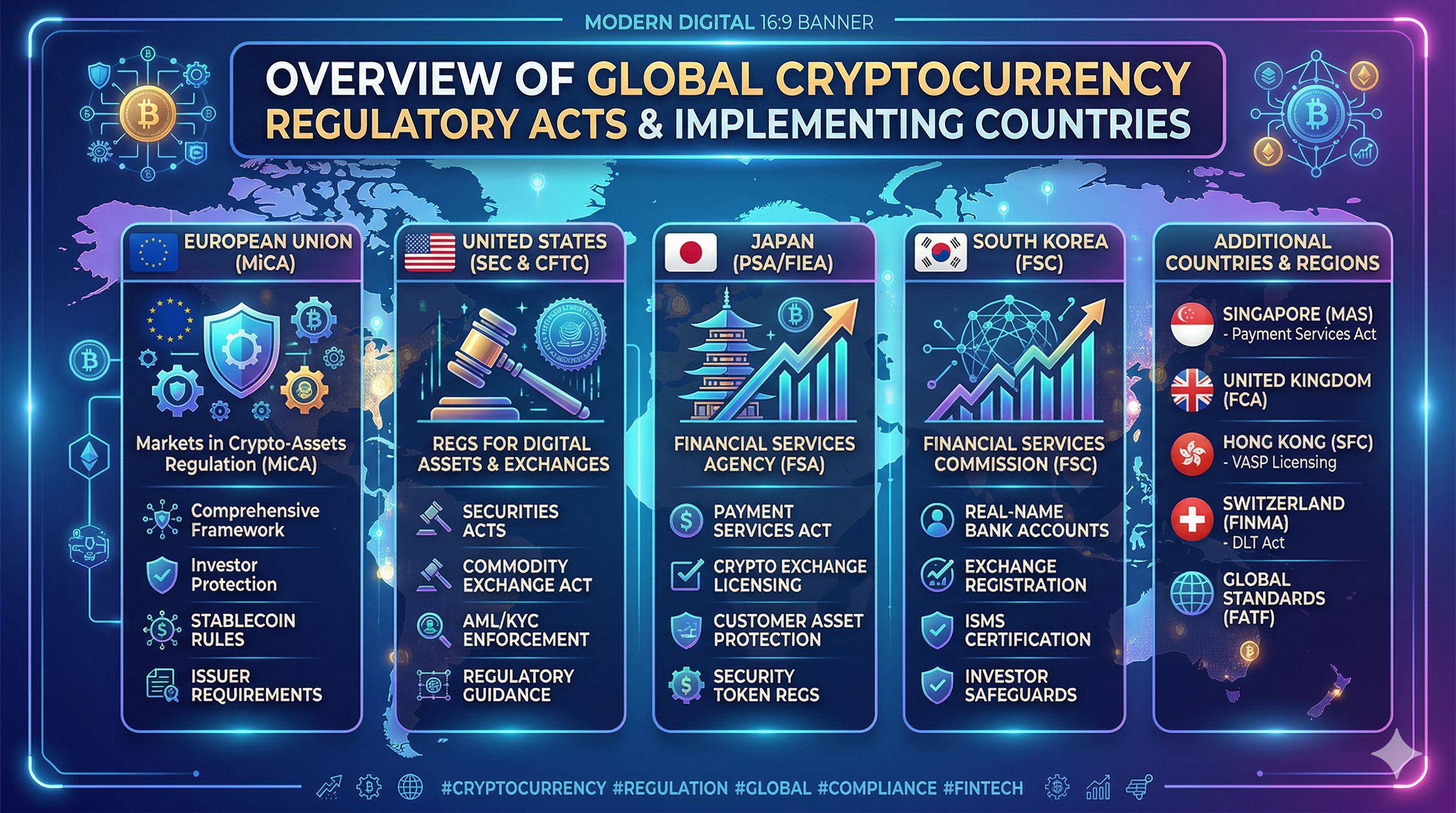
Global cryptocurrency regulation is no longer fragmented guesswork, it is growing into a structured, competitive ecosystem where countries are shaping financial power through policy design. Drawing from the 2026 PwC global report, this article explores how major economies are not just regulating crypto, but strategically positioning themselves as hubs for innovation, capital, and digital finance dominance.
A Turning Point: Crypto Regulation Becomes Global Reality
The year 2026 marks a decisive shift in how governments treat cryptocurrency. What was once a loosely monitored digital experiment is now being integrated into formal financial systems across dozens of jurisdictions. According to PwC’s latest global report, regulatory frameworks now span over 58 countries, signaling that crypto is no longer operating in a legal gray zone but is becoming embedded in national economic strategies.
This shift is not happening in isolation. Global financial institutions, including central banks and regulatory bodies, are pushing for alignment. The Financial Stability Board has already warned that inconsistent rules across countries create systemic risks, especially given crypto’s borderless nature.
What makes this moment particularly significant is the change in tone. Governments are no longer asking whether crypto should be regulated, they are deciding how aggressively they want to compete in the space. Some nations are moving fast to attract innovation, while others are tightening controls to mitigate risk.
The result is a global race. Regulation is no longer just about compliance, it is about positioning. Countries that get it right could become the financial hubs of the next decade, while those that hesitate risk being left behind in a digitizing economy.
The PwC Report: What It Actually Reveals (Not What Headlines Say)
The 2026 PwC global crypto report does not present a simple narrative of “more regulation.” Instead, it reveals a nuanced and uneven landscape where progress varies widely between jurisdictions. The report covers 58 countries and shows that while many have introduced frameworks, the depth and enforcement of these rules differ significantly.
One of the most important insights is that regulatory clarity is increasing, but consistency is not. Some countries have comprehensive legal structures covering licensing, taxation, and stablecoins, while others are still in early consultation stages. This uneven development creates both opportunities and risks for global businesses.
Another main takeaway is the growing importance of tax transparency. Governments are expanding reporting requirements and sharing data across borders, making crypto transactions far more visible to authorities than in previous years.
Perhaps the most overlooked insight is how regulation is shaping business models. Crypto firms are no longer just adapting to rules, they are restructuring operations, relocating headquarters, and redesigning products based on regulatory environments.
In short, the PwC report shows a critical transition: crypto is moving from a technology-driven industry to a policy-shaped ecosystem, where regulation directly influences innovation, competition, and market structure.
Europe’s MiCA Framework: The First True Unified Crypto Law
The European Union has taken one of the most decisive steps in crypto regulation through its Markets in Crypto-Assets (MiCA) framework. Unlike fragmented national policies, MiCA introduces a unified rulebook across all EU member states, making it one of the most comprehensive crypto regulatory systems in the world.
MiCA’s strength lies in its scope. It covers everything from licensing requirements for crypto service providers to rules governing stablecoins and consumer protection. This level of standardization reduces uncertainty for businesses operating across borders within the EU.
However, the rollout has not been entirely smooth. Transitional periods allow existing firms to operate under national rules until mid-2026, creating temporary inconsistencies in enforcement.
What makes MiCA particularly influential is its global impact. Other jurisdictions are closely watching its implementation as a potential blueprint. By setting clear standards, the EU is effectively exporting its regulatory philosophy to the rest of the world.
In practical terms, MiCA is not just about compliance, it is about market access. Companies that meet its requirements gain entry to one of the largest economic regions globally, making it a powerful incentive for alignment.
The United States: From Enforcement to Framework Building
The United States has undergone a notable shift in its approach to crypto regulation. After years of relying heavily on enforcement actions, policymakers are now moving toward clearer frameworks that define how digital assets should be classified and regulated.
One of the most significant developments is the introduction of structured legislation around stablecoins, such as the GENIUS Act. This law requires stablecoins to be backed by reserves, bringing them closer to traditional financial instruments. At the same time, regulators are redefining asset classifications. Recent guidance suggests that many digital assets may fall outside strict securities definitions, reducing compliance burdens for certain projects.
This shift reflects a broader strategy. Rather than restricting innovation, the U.S. is attempting to create an environment where crypto can integrate with existing financial systems.
However, uncertainty remains. Regulatory responsibilities are still divided between agencies, and policy direction can change with political leadership. Despite this, the U.S. remains one of the most influential players, with its decisions shaping global regulatory trends.
Asia’s Power Play: Singapore, Hong Kong, and the Race for Dominance
Asia has emerged as one of the most dynamic regions in crypto regulation, with financial hubs like Singapore and Hong Kong leading the charge. These jurisdictions are not just regulating crypto, they are actively competing to attract businesses and capital.
Singapore has established a rigorous licensing regime that balances innovation with strict compliance standards. Its approach focuses on risk management, particularly in areas such as anti-money laundering and stablecoin oversight. Hong Kong, meanwhile, is positioning itself as a regional crypto hub by introducing new licensing frameworks for exchanges and exploring regulations for derivatives and lending.
What sets Asia apart is its strategic intent. Rather than viewing crypto as a risk, these jurisdictions see it as an opportunity to strengthen their roles in global finance.
This proactive stance is attracting major industry players and fostering innovation. However, it also raises the stakes. As competition intensifies, regulatory decisions are becoming tools of economic strategy rather than purely protective measures.
Middle East Momentum: UAE and Bahrain’s Strategic Advantage
The Middle East is quickly becoming one of the most crypto-friendly regions globally. Countries like the United Arab Emirates and Bahrain have introduced licensing frameworks designed to attract digital asset companies and investors. These frameworks often include regulatory sandboxes, allowing companies to test new products under supervision. This approach encourages innovation while maintaining oversight.
The UAE, in particular, has positioned itself as a global hub by offering clear guidelines and supportive infrastructure. Its strategy is straightforward: attract talent, capital, and innovation by providing certainty. This model is proving effective. Many crypto firms are relocating to the region, drawn by its regulatory clarity and business-friendly environment.
The Middle East’s rise shows a broader trend, regulation is no longer just about control. It is a competitive tool that countries use to shape their economic futures.
Africa’s Emerging Role: Regulation Meets Inclusion
Africa’s approach to crypto regulation is shaped by a unique set of challenges and opportunities. Countries like South Africa are developing frameworks that aim to balance innovation with financial inclusion.
Crypto adoption in Africa is driven largely by practical needs, such as cross-border payments and protection against currency volatility. This makes regulation particularly important, as it directly affects access to financial services.
South Africa, for example, has moved toward formal recognition of crypto assets, introducing licensing requirements for service providers. This marks a shift from informal use to structured oversight.
What makes Africa’s regulatory journey interesting is its focus on real-world impact. Unlike more developed markets, where regulation often targets institutional players, African policies are closely tied to everyday financial use cases.
As frameworks continue to grow, the region could become a testing ground for how crypto can support economic development and financial inclusion on a large scale.
Taxation: The Silent Driver of Crypto Regulation
While headlines often focus on trading rules and licensing, taxation is becoming one of the most powerful forces shaping crypto regulation. According to PwC, tax authorities are significantly expanding reporting requirements and cross-border data sharing.
This increased visibility changes everything. Transactions that were once difficult to track are now being monitored more closely, reducing opportunities for tax evasion. At the same time, differences in how countries classify crypto, whether as property, currency, or financial assets, create complexity for businesses operating internationally.
For companies, this means that compliance is no longer optional. Tax considerations are now central to operational decisions, influencing where businesses locate and how they structure transactions. In many ways, taxation is doing what regulation alone could not, forcing alignment between crypto activities and traditional financial systems.
The Global Problem: Fragmentation Still Exists
Despite significant progress, global crypto regulation remains fragmented. Different countries apply different rules, creating inconsistencies that complicate cross-border operations. This fragmentation is not just inconvenient, it creates systemic risks. Gaps in regulation can be exploited by illicit actors, undermining trust in the broader ecosystem.
Efforts are underway to address this issue. International bodies like the Financial Action Task Force are pushing for standardized rules, including the implementation of the Travel Rule for monitoring transactions.
However, achieving global alignment is challenging. Each country has its own priorities, economic conditions, and political considerations. For now, fragmentation remains one of the biggest obstacles to the growth of the crypto industry. Until it is resolved, businesses will need to navigate a complex and constantly changing regulatory space.
Stablecoins: The Center of Regulatory Attention
Stablecoins have become a focal point for regulators worldwide. Their potential to function as digital money makes them both valuable and risky.
Governments are particularly concerned about reserve backing and financial stability. Laws like the GENIUS Act in the United States require stablecoins to be backed by real assets, reducing the risk of collapse. At the global level, regulators are working to align standards. The Financial Stability Board has identified stablecoins as a key area requiring coordinated oversight.
The attention on stablecoins reflects their growing importance. As they become more integrated into payment systems, their regulation will play a critical role in shaping the future of digital finance.
Institutional Adoption: Regulation as a Catalyst
One of the most important outcomes of increased regulation is the rise of institutional adoption. As rules become clearer, traditional financial institutions are entering the crypto space in greater numbers. This shift is transforming the industry. Crypto is no longer seen purely as a speculative asset, it is becoming part of mainstream financial infrastructure.
Regulation plays a key role in this transition. By reducing uncertainty, it encourages investment and innovation. At the same time, institutional involvement brings new challenges, including increased scrutiny and higher expectations for compliance.
Overall, regulation is acting as both a constraint and a catalyst, shaping the next phase of crypto’s evolution.
Conclusion: Regulation Is Now Strategy
Crypto regulation has entered a new phase. It is no longer just about controlling risk, it is about shaping the future of finance. Countries are using regulation to compete, attract investment, and define their roles in a digital economy. The PwC report makes it clear that this trend will only accelerate in the coming years.
The question is no longer whether crypto will be regulated. The real question is which countries will lead, and which will follow.
FAQs
1. What is the main goal of crypto regulation?
To protect investors, prevent financial crime, and integrate digital assets into the broader financial system.
2. Which regions are leading in crypto regulation?
The EU, United States, Singapore, Hong Kong, and the UAE are among the leaders.
3. Why is regulation important for crypto adoption?
It builds trust, attracts institutional investors, and reduces uncertainty.
4. What is MiCA?
A unified crypto regulatory framework implemented by the European Union.
5. Is global crypto regulation consistent?
No, significant differences still exist between countries.
Disclaimer
This content is for informational purposes only and does not constitute investment advice. Cryptocurrency investments carry risk. Please do your own research (DYOR).