

What Is USDGO? OSL and Anchorage Digital’s Regulated Stablecoin for Enterprise Payments
2026/06/20 10:05:00
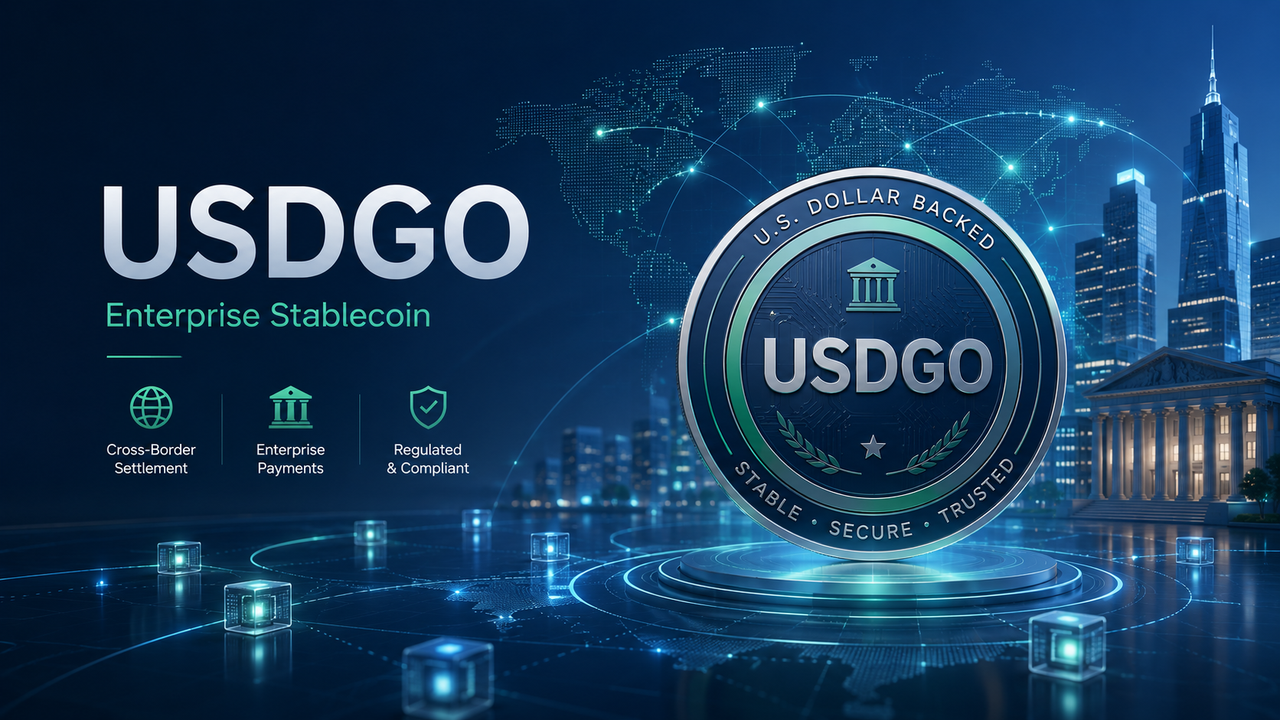
USDGO is an enterprise-grade U.S. dollar-pegged stablecoin designed for compliant institutional transactions, on-chain settlement, treasury management, and business payments. Launched by OSL Group and issued by Anchorage Digital Bank N.A., USDGO is positioned as a regulated digital dollar for companies, professional investors, and financial institutions that need faster and more transparent capital movement.
Unlike speculative cryptocurrencies, USDGO is not designed to increase sharply in price. Its purpose is to maintain a stable value close to one U.S. dollar while allowing users to transfer dollar-based value across blockchain networks. This makes USDGO part of a growing stablecoin market where digital dollars are moving beyond crypto trading and into real-world financial infrastructure.
USDGO first launched on Solana with an initial US$50 million minted and deployed. OSL later reported that USDGO’s circulating supply surpassed US$100 million and reached US$130 million in April 2026, showing early growth in enterprise-focused stablecoin adoption. Since stablecoin market data changes quickly, readers should always check current circulating supply, trading volume, exchange listings, and reserve reports before making any decision.
The main story behind USDGO is its regulatory-first structure. It combines Anchorage Digital Bank’s U.S. federally regulated issuance and custody infrastructure with OSL Group’s branding, operations, and distribution network, especially for institutional users in Hong Kong and the Asia-Pacific region.
What Is USDGO and Why Does It Matter?
USDGO is best understood as a digital U.S. dollar built for blockchain-based settlement. It combines the stability of fiat currency with the speed, programmability, and global reach of blockchain infrastructure. For businesses and institutions, this type of stablecoin can be useful because it allows dollar value to move across digital networks without the same volatility associated with Bitcoin, Ethereum, or other crypto assets.
1. USDGO Meaning: A U.S. Dollar-Pegged Stablecoin
USDGO is a fiat-collateralized stablecoin, meaning it is designed to be backed 1:1 by U.S. dollar reserves and high-quality liquid assets. In simple terms, one USDGO is intended to represent one U.S. dollar in tokenized form.
Stablecoins like USDGO are important because they provide a more predictable way to move value on-chain. Instead of exposing users to large price swings, USDGO is designed to keep its value close to $1. This makes it useful for payments, settlement, liquidity management, and treasury operations.
Key points about USDGO include:
-
USDGO is a U.S. dollar-pegged stablecoin.
-
It is designed to maintain a 1:1 value with the U.S. dollar.
-
It is issued by Anchorage Digital Bank N.A.
-
OSL Group manages branding, operations, and distribution.
-
It first launched on Solana.
-
It targets enterprises, institutions, and professional investors.
-
It is backed by high-quality liquid assets, including U.S. Treasuries.
-
It is designed for compliant on-chain payments and settlement.
USDGO is not designed like a normal altcoin. Its value proposition is not based on price appreciation. Instead, it is based on stability, regulatory structure, reserve transparency, payment utility, and institutional adoption.
2. Why USDGO Is Built for Institutions, Not Retail Speculation
USDGO is mainly positioned for enterprise and institutional use cases. Many stablecoins are widely used for retail trading, DeFi activity, and exchange liquidity. USDGO has a different angle because it focuses on compliant settlement, professional investors, corporate treasury needs, and cross-border business payments.
For USDGO, the main question is not whether its price can increase. Since it is a stablecoin, its goal is to remain close to $1. The more important question is whether it can maintain its peg, build liquidity, gain exchange support, and become useful for real enterprise payments.
For USDGO, success depends on:
-
Peg stability near $1
-
Reserve quality and transparency
-
Market liquidity
-
Institutional confidence
-
Payment integrations
-
Exchange listings
-
Stablecoin-to-fiat settlement access
-
Regulatory clarity
-
Real-world transaction volume
This makes USDGO part of a broader shift in the stablecoin market. Stablecoins are no longer only tools for crypto traders. They are increasingly becoming payment and settlement infrastructure for companies, fintech platforms, exchanges, and financial institutions.
3. Why USDGO Matters in the Stablecoin Market
USDGO matters because the stablecoin market is becoming more competitive and more regulated. Enterprises do not only need fast transactions. They also need trusted issuers, transparent reserves, anti-money laundering controls, custody standards, and reliable connections between blockchain networks and traditional finance.
USDGO reflects several important stablecoin trends:
-
Stablecoins are moving beyond crypto trading.
-
Enterprises are exploring blockchain-based payment rails.
-
Regulated stablecoin issuance is becoming more important.
-
Stablecoins are being used for treasury and liquidity management.
-
Asia-focused payment infrastructure is becoming a key growth area.
-
Institutions want transparent and compliant digital dollar tools.
-
Blockchain networks are becoming settlement infrastructure for real-world finance.
In this sense, USDGO is not simply another dollar token. It is part of the wider move toward regulated digital dollar infrastructure for enterprise payments, institutional settlement, and global business finance.
How USDGO Works: Issuer, Backing, and Solana Infrastructure
USDGO works by representing U.S. dollar value on a blockchain network. The token is issued through Anchorage Digital Bank N.A., while OSL Group supports its market distribution and enterprise adoption. This issuer-distributor structure is one of USDGO’s main differentiators because it connects U.S. federal banking oversight with Asia-focused digital asset distribution.
1. Anchorage Digital Bank and OSL Group Partnership
Anchorage Digital Bank N.A. acts as the regulated issuer and custodian behind USDGO. Anchorage is described as the first federally chartered crypto bank in the United States, which gives USDGO a stronger regulatory foundation than many stablecoins that rely on less formal oversight structures.
OSL Group manages USDGO’s branding, operations, and distribution. This gives stablecoin a stronger connection to Hong Kong and the Asia-Pacific market, where professional investors, digital asset platforms, and enterprise payment providers are increasingly exploring regulated stablecoin solutions.
This partnership model matters because it bridges two financial environments. Anchorage brings U.S. federal regulatory infrastructure, while OSL brings Asia-focused market access and institutional distribution. Together, they create a cross-border model for regulated stablecoin adoption.
For enterprise users, the issuer and distributor matter because stablecoins are not only technical assets. They are financial instruments that depend on trust, liquidity, reserve quality, custody, and operational controls.
When evaluating USDGO, institutions may consider:
-
Who issues the stablecoin
-
What assets back the token
-
Whether reserves are transparent
-
Whether third-party attestations are available
-
Whether custody is handled by a regulated institution
-
Whether AML and compliance standards are applied
-
Whether the stablecoin can support fiat settlement
2. USDGO Reserve Backing and Compliance Structure
USDGO is designed to be fully backed by high-quality liquid assets such as U.S. Treasury securities. This reserve model is important because stablecoin users need confidence that the token can maintain its dollar peg.
Reserve quality is one of the most important factors in stablecoin trust. If a stablecoin is used for corporate settlement or treasury management, businesses need to know that the token is supported by liquid and transparent reserve assets.
USDGO’s reserve and compliance structure focuses on:
-
1:1 U.S. dollar backing
-
High-quality liquid reserve assets
-
U.S. Treasury securities
-
Reserve transparency
-
Third-party attestation reports
-
Regulated issuance infrastructure
-
Anti-money laundering and compliance standards
-
Custody through Anchorage Digital Bank N.A.
This structure is especially important for professional investors and enterprise users. Companies do not want uncertainty around the assets they use for payments, settlement, or liquidity management. If a stablecoin is used for real payment flows, confidence in reserves becomes a core requirement.
3. Why USDGO First Launched on Solana
USDGO first launched on Solana, a blockchain known for fast transactions and low network costs. This choice matters because stablecoins used for enterprise payments need efficient settlement. If a stablecoin is slow or expensive to transfer, it becomes less useful for corporate payments, treasury movement, and institutional trading.
Solana can support USDGO by offering:
-
Fast settlement
-
Low transaction fees
-
High transaction capacity
-
Efficient stablecoin transfers
-
Support for 24/7 on-chain liquidity
-
Better conditions for high-volume payment activity
For cross-border payments and treasury movement, speed matters. Businesses may need to move funds between partners, platforms, and markets quickly. A stablecoin deployed on a fast blockchain can reduce waiting times compared with traditional settlement channels.
USDGO may also expand to more blockchain networks in the future. A multi-chain strategy could increase accessibility, improve wallet support, and make the stablecoin more useful across exchanges, payment platforms, and institutional workflows. However, every new blockchain also brings technical, custody, security, and compliance considerations.
USDGO Use Cases for Enterprise Payments and Institutional Settlement
USDGO is designed for business use cases, not retail speculation. Its core purpose is to support compliant and efficient capital movement for enterprises, professional investors, trading platforms, and financial institutions. This includes cross-border payments, corporate settlement, treasury operations, institutional trading, and stablecoin-to-fiat settlement.
1. Cross-Border Payments and Corporate Settlement
One major use case for USDGO is cross-border payments. Traditional international transfers can be slow, expensive, and dependent on multiple banks or payment intermediaries. Payments may also be affected by banking hours, time zones, compliance checks, and currency conversion friction.
A stablecoin like USDGO can help move dollar-based value on-chain with faster settlement and more flexible payment timing. For businesses operating across Asia and global trade corridors, this can improve payment efficiency and reduce settlement delays.
USDGO may support cross-border payments by offering:
-
Faster international transfers
-
24/7 blockchain-based settlement
-
Easier movement of dollar liquidity
-
Lower settlement friction
-
More efficient business-to-business payments
-
Better support for Asia-focused payment corridors
Corporate settlement is another important use case. Businesses often need to settle payments between vendors, suppliers, platforms, subsidiaries, and customers. Traditional settlement can involve delays, reconciliation problems, and liquidity inefficiencies.
For corporate users, USDGO may support:
-
Vendor payments
-
Supplier transactions
-
Platform settlements
-
Marketplace payouts
-
Business partner transfers
-
Digital asset settlement
-
Cross-platform liquidity movement
USDGO can serve as a dollar-pegged settlement asset that allows companies to move value without taking exposure to crypto price volatility.
2. Treasury Management and Stablecoin-to-Fiat Settlement
Treasury management is another key part of USDGO’s value proposition. Companies that operate globally often need to manage liquidity across different markets, platforms, and banking relationships. USDGO can provide a digital dollar tool for moving working capital more quickly within approved business workflows.
This does not mean USDGO replaces traditional bank accounts. Instead, it can work as an additional settlement and liquidity tool for companies that already use digital asset infrastructure.
USDGO may support treasury teams by helping with:
-
Faster movement of working capital
-
On-chain dollar liquidity
-
More flexible settlement timing
-
Liquidity transfers between platforms
-
Digital asset treasury operations
-
Stable-value storage for short-term operations
-
Better coordination between fiat and digital asset workflows
Stablecoin-to-fiat settlement is also important. Enterprises may use stablecoins for speed and transparency, but they still need to connect digital dollars back to traditional fiat systems. This bridge is essential because businesses still pay salaries, taxes, rent, invoices, and operating costs in fiat currency.
USDGO’s value will depend on how well it can support both sides of this system: on-chain settlement and off-chain fiat connectivity.
3. Institutional Trading and 24/7 On-Chain Liquidity
USDGO may also be useful for institutional trading and liquidity management. Stablecoins are widely used by exchanges, market makers, and professional traders because they allow fast movement between crypto assets and dollar-denominated liquidity.
For example, trading pairs such as BTC/USDGO can help support digital asset settlement by allowing users to move between Bitcoin exposure and dollar-pegged liquidity. This type of trading pair can be useful for professional investors who need stable settlement assets within digital asset markets.
Potential institutional use cases include:
-
BTC/USDGO trading settlement
-
Exchange liquidity management
-
Market-making operations
-
Institutional capital movement
-
Stablecoin trading pairs
-
Digital asset treasury balancing
-
On-chain liquidity management
-
24/7 capital movement across platforms
The key challenge is liquidity. To become widely useful in trading and settlement, USDGO needs enough market depth, exchange support, fiat on/off-ramps, and transaction volume.
USDGO Market Outlook, Risks, and Conclusion
USDGO enters a competitive stablecoin market dominated by larger and more established players. However, its positioning is different from many retail-focused stablecoins. Instead of competing only on exchange trading volume, USDGO focuses on regulated issuance, reserve transparency, institutional distribution, and enterprise payment utility.
1. USDGO Market Outlook
USDGO’s long-term success will depend on adoption, not price appreciation. Since USDGO is designed to stay close to $1, the most important indicators are liquidity, usage, reserve reporting, exchange support, payment integrations, and institutional trust.
USDGO showed early growth after launch. It began with an initial US$50 million minted on Solana, and OSL later reported that circulating supply surpassed US$100 million and reached US$130 million in April 2026. Live market data may change quickly, so current figures should always be checked before publication.
Important growth signals to watch include:
-
Circulating supply growth
-
Trading volume
-
Exchange listings
-
Reserve attestation updates
-
Payment platform integrations
-
Corporate adoption
-
Professional investor usage
-
Stablecoin-to-fiat settlement support
-
Blockchain network expansion
-
Real-world payment volume
A stablecoin’s long-term strength usually comes from trust and usage. If USDGO can build both, it may become a more important regulated stablecoin option for enterprise payments and institutional settlement.
2. Key Risks of USDGO
USDGO has a regulated structure, but it is not risk-free. Users should review the main risks before using it.
-
Liquidity risk: Low trading volume may make buying or selling USDGO harder.
-
Reserve risk: Users should check whether reserve reports and attestations are updated regularly.
-
Redemption risk: Access to U.S. dollar redemption may depend on platform, region, and user eligibility.
-
Regulatory risk: Future stablecoin rules could affect how USDGO is issued, traded, or used.
-
Blockchain risk: Network issues on Solana or future supported chains could affect transfers.
-
Adoption risk: USDGO needs real enterprise usage, exchange support, and payment integrations to grow.
-
Competition risk: Larger stablecoins already have deeper liquidity and wider adoption.
For businesses, the key question is whether USDGO is reliable, compliant, liquid, and easy to integrate into payment or settlement workflows.
Conclusion
USDGO is an important example of how the stablecoin market is evolving. It shows a shift from simple crypto trading tools toward regulated digital dollar infrastructure for enterprise payments, institutional settlement, treasury management, and cross-border capital movement.
Its launch on Solana gives USDGO access to fast and low-cost blockchain settlement, while its issuer-distributor model connects U.S. federal banking oversight with Asia-focused digital asset distribution. This dual-compliance structure may become more important as businesses and professional investors look for stablecoins that combine speed, transparency, regulatory clarity, and real-world payment utility.
Overall, USDGO’s future will depend on liquidity, reserve transparency, institutional adoption, exchange support, payment integrations, and real-world transaction volume. If it can build deeper market usage and stronger enterprise partnerships, USDGO may become a meaningful player in the regulated stablecoin and enterprise digital payments market.
FAQs About USDGO
Why can USDGO trade slightly above or below $1?
USDGO is designed to stay close to $1, but small price differences can happen because of market liquidity, exchange demand, trading volume, and timing between buyers and sellers. For any stablecoin, users should check live market data before trading or using it for settlement.
How can users verify USDGO reserve transparency?
Users can review USDGO reserve attestations, issuer updates, and official disclosures from Anchorage Digital or OSL Group. Reserve reports are important because they help users understand whether the stablecoin is supported by liquid assets and whether transparency standards are being maintained.
Can USDGO be redeemed for U.S. dollars?
Redemption access may depend on the platform, user eligibility, jurisdiction, and account type. Institutional or approved users may have different redemption options than retail users. Before using USDGO, users should check the official redemption terms from supported platforms or service providers.
Why does circulating supply matter for USDGO?
Circulating supply shows how many USDGO tokens are currently available in the market. A growing supply may suggest increasing usage, but it should be reviewed together with trading volume, liquidity, reserve reports, and real payment activity.
Is USDGO the same as USDG, USDC, or USDT?
No. USDGO is a separate stablecoin with its own issuer, reserve structure, distribution model, and market focus. USDC, USDT, USDG, and USDGO may all be dollar-pegged stablecoins, but they differ in regulation, liquidity, adoption, supported chains, and business use cases.
What should businesses check before using USDGO?
Businesses should review reserve transparency, liquidity, redemption access, regulatory eligibility, supported exchanges, wallet compatibility, custody options, and fiat settlement channels. For enterprise use, operational reliability is just as important as the stablecoin’s dollar peg.
Can USDGO be used outside Asia?
USDGO has strong Asia-Pacific positioning through OSL Group, but blockchain-based stablecoins can be accessed through supported platforms depending on local regulations and availability. Users should always check whether USDGO is supported in their region before using it.
What could help USDGO grow in the stablecoin market?
USDGO’s growth may depend on deeper liquidity, more exchange listings, stronger institutional partnerships, payment integrations, multi-chain expansion, and consistent reserve transparency. Real business usage will be more important than short-term market attention.
Disclaimer
The information provided on this page may originate from third-party sources and does not necessarily represent the views or opinions of KuCoin. This content is intended solely for general informational purposes and should not be considered financial, investment, or professional advice. KuCoin does not guarantee the accuracy, completeness, or reliability of the information, and is not responsible for any errors, omissions, or outcomes resulting from its use. Investing in digital assets carries inherent risks. Please carefully evaluate your risk tolerance and financial situation before making any investment decisions. For further details, please consult KuCoin’s Terms of Use and Risk Disclosure.