

Musk’s Master Plan: The Strategic Role of Dogecoin in the Xchat Ecosystem
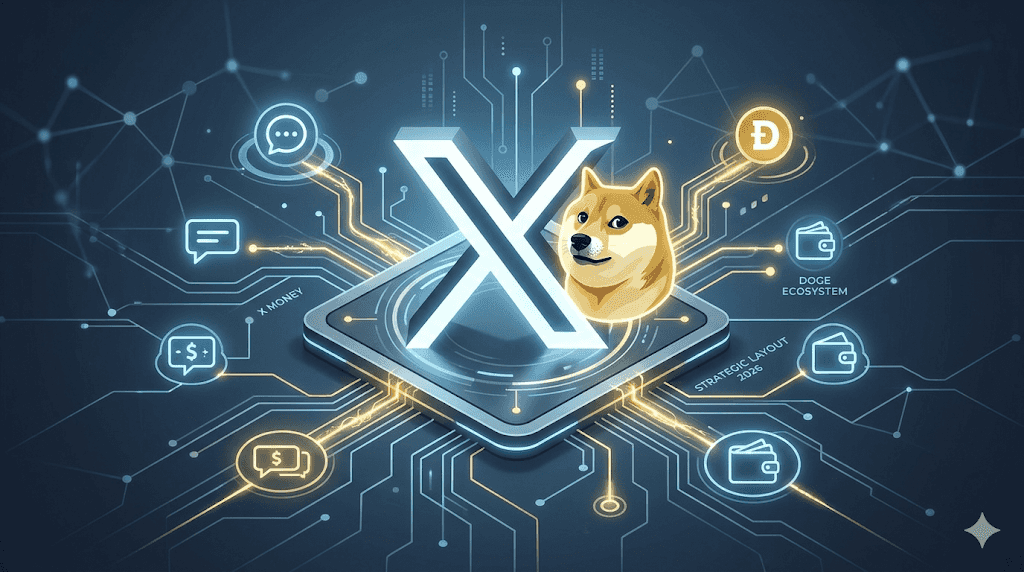
Will Elon Musk’s "Everything App" ultimately crown Dogecoin as the global standard for digital cash? The market is watching with bated breath.As the X Money (X Payments) financial ecosystem rolls out its comprehensive public testing in 2026, the former meme coin is facing its most critical strategic opportunity. Although the initial launch of the X platform remains centered on fiat-based peer-to-peer (P2P) transfers, market expectations suggest that a seamless future integration of Dogecoin as a supplementary channel into Xchat could offer low-cost micropayments and creator-tipping solutions to over 600 million users worldwide. This potential strategic integration could fundamentally eliminate the friction of cross-border fiat settlements, driving Dogecoin's transformation from a speculative asset into an indispensable medium of value exchange within the internet's largest social economy.
Key Takeaways
-
X Money launched its April 2026 public beta strictly as a regulated, fiat-only peer-to-peer USD transfer infrastructure.
-
Analysts view Dogecoin as a compelling candidate for future Xchat microtransactions due to its low fees and fast settlement.
-
The launch of the 21Shares Dogecoin ETF (TDOG) on Nasdaq has compressed volatility and established deep market liquidity.
-
Dogecoin’s fixed annual inflation prevents long-term stagnation, making it behaviorally superior to Bitcoin for continuous, high-volume tipping.
-
Independent open-source milestones like RadioDoge use radio-satellite gateways to theoretically extend decentralized commerce to internet-deprived, unbanked regions.
The Strategic Role of Dogecoin in Xchat and X Money
While X Corporation’s long-awaited financial ecosystem, X Money (X Payments), commenced its public beta testing in April 2026 as a fiat-only system, market analysts continue to view Dogecoin as a compelling candidate for future integration. As Xchat expands its end-to-end encrypted messaging, the ecosystem will eventually require a friction-free utility asset to support global microtransactions. If integrated down the line, Dogecoin’s minimal network fees could theoretically allow X to bypass traditional credit card processing friction, enabling users to seamlessly send fractions of a cent to content creators. This anticipated alignment holds the potential to introduce X's 600 million monthly active users to Web3 financial rails.
The mid-2026 rollout of X Money confirms that the platform is prioritizing strict legal compliance before experimenting with digital assets. X has already secured money transmitter licenses in over 40 U.S. states, establishing a regulated foundation through partnerships with traditional giants like Visa and Cross River Bank. While the current infrastructure relies entirely on USD for peer-to-peer transfers and high-yield balances, crypto proponents argue for a "dual-rail" hypothesis. In this scenario, traditional fiat would handle localized, compliant commerce, while an asset like Dogecoin could serve as a decentralized alternative for cross-border tipping, avoiding the latency and high costs associated with traditional legacy banking conversion.
Elon Musk’s vision to transform X into a Western equivalent of WeChat hinges on a crucial ideological shift toward decentralized architecture. Unlike centralized, state-monitored payment systems, a future-proof Xchat ecosystem could leverage open-source blockchains to foster a freer creator economy. If X eventually permits direct tipping via the Dogecoin network, transactions would be settled transparently on-chain. This structural upgrade would not only protect global creators from localized banking outages but would also provide a unified, currency-agnostic medium of exchange for an increasingly globalized social economy.
Why Dogecoin? Tokenomics and Technical Feasibility
Dogecoin’s fixed annual inflation of 5.256 billion coins serves as a strategic asset for a transacting currency, naturally disincentivizing excessive hoarding to promote active velocity within digital economies. While retail investors often view the absence of a maximum supply cap as a structural weakness, macroeconomic theory dictates that a functional medium of exchange requires mild predictable inflation to prevent liquidity stagnation. If a platform like Xchat utilized Bitcoin for micro-tipping, users would face an economic disincentive to spend an asset that characteristically appreciates due to absolute scarcity. In contrast, Dogecoin's built-in "slow tax" of approximately 3.4% annual inflation perfectly aligns with the behavioral economics required for high-volume creator economies, continuous tipping, and microtransactions.
The underlying technical architecture of the Dogecoin network provides the structural throughput required to support large-scale social media interactions. Operating on a 1-minute block time, Dogecoin offers significantly faster settlement periods than legacy Proof-of-Work chains. Furthermore, its utilization of the Auxiliary Proof of Work (AuxPoW) consensus mechanism merged with Litecoin allows network miners to secure the Dogecoin ledger simultaneously without expending additional energy overhead. According to technical sentiment across cryptographic communities, this long-standing merged mining model grants Dogecoin a massive computational security moat, rendering the network highly resilient against 51% exploits even if speculative payment volumes scale up drastically.
Market infrastructure is increasingly shifting Dogecoin's profile from a purely speculative vehicle to a structurally sound asset class. On-chain data highlighted by Phemex in late April 2026 revealed that whales absorbed roughly $330 million in DOGE during a tight consolidation phase. While this aggressive accumulation was primarily catalyzed by institutional milestones, including the launch of the 21Shares Dogecoin ETF (TDOG) on Nasdaq, it also reflects growing anticipation surrounding future payment network integrations. As regulated institutional channels and merchant-side tools like the Dogecoin Foundation's GigaWallet expand, DOGE's transactional profile is gradually evolving into a multi-tiered narrative: hold, speculate, and transact.
Institutional Plumbing: ETFs and Market Maturity
The introduction of Dogecoin spot ETFs and institutional investment products in early 2026 has initiated a structural shift toward market maturity, establishing a regulated framework for the asset class. With the 21Shares Dogecoin ETF (TDOG) actively trading on the Nasdaq, alongside inflows tracked across Grayscale’s cryptocurrency product suite, Dogecoin is progressively transitioning away from its historical reliance on pure retail speculation. While early institutional assets under management (AUM) remain modest—with total Dogecoin ETF cumulative inflows hovering near $9.6 million as of late April 2026—this institutional plumbing introducing professional market makers is vital. It lays the long-term groundwork for tighter bid-ask spreads, which would theoretically be required if large-scale merchants or platform ecosystems ever seek to hedge or convert digital asset treasuries into fiat.
These regulated financial wrappers serve as a critical stabilizing anchor against the digital asset's historically volatile price discovery. By offering wealth managers, registered investment advisors (RIAs), and traditional brokerage accounts a compliant gateway to hold spot exposure, the ETF market creates a more predictable, institutionalized source of demand to absorb the network’s fixed annual mining emission. Professional market makers and algorithmic arbitrageurs continuously realign the exchange-traded price with underlying spot liquidity, achieving a degree of volatility compression previously unseen in meme-adjacent assets. Should Elon Musk's overarching social application eventually activate Web3-based micropayments, this structural evolution ensures that the underlying utility token has a resilient, institutionalized order-book architecture capable of supporting continuous corporate transactional weight.
| Market Metric (May 2026) | Dogecoin Network Data | Impact on X Ecosystem |
| Current Price Support | $0.09 - $0.10 Range | Establishes an affordable entry price for micro-tipping if web3 integrations are finalized. |
| Whale Accumulation | $330 Million (7 Days) | Driven by Nasdaq ETF listings, signaling the deep external liquidity needed for |
| Annual Inflation Rate | ~3.4% (5.256B DOGE) | Prevents long-term stagnation, offering the ideal behavioral economics for high-velocity spending in |
| Block Time Settlement | 1 Minute | Provides the sub-network latency required to process high-volume peer-to-peer social transactions. |
The Synergies Between Xchat Privacy and Crypto Payments
The conceptual convergence of Xchat’s end-to-end encryption and Dogecoin’s open-source ledger provides an intriguing blueprint for modern financial communication. Industry analyses from platforms like MEXC highlight that as Xchat rolls out its secure, encrypted direct messaging infrastructure, it naturally decouples communication from transactional processing. Under this theoretical integration, even though a public blockchain ledger like Dogecoin transparency records the movement of tokens on-chain, the conversation detailing the commercial intent, context, and identities behind the transaction remains fully protected within X’s encrypted messaging layer, shielding sensitive user conversations from external network sniffers.
This architectural duality presents a stark contrast to the aggressive data-harvesting models utilized by legacy payment processors. Standard fiat digital wallets frequently log comprehensive transactional metadata, purchasing intent, and geographic locations to monetize via third-party advertiser profiles. Utilizing a neutral, leaderless blockchain like Dogecoin as a potential supplementary payment rail offers an alternative. While X Corporation must maintain strict compliance, anti-fraud, and KYC standards under its state money transmitter licenses, the underlying payment routing itself executes on a global decentralized network, preventing third-party traditional banking intermediaries from unilaterally weaponizing or tracking users' off-platform financial behavior.
Furthermore, this synergy unlocks powerful possibilities for secure group collaboration and creator monetization within the social economy. As Xchat expands its capacities to support large-scale group networks, the frictionless nature of Dogecoin allows communities to pool micro-tips or crowdfund global initiatives directly within the application interface. Rather than replacing necessary compliance frameworks, this seamless blend of encrypted communication and low-cost value transfer demonstrates how a Web2 social giant can progressively adopt Web3 rails, elevating X from a standard social utility into a highly integrated "everything app."
RadioDoge and Global Financial Inclusion
The development of the RadioDoge protocol by the Dogecoin Foundation introduces an innovative paradigm for global financial inclusion, specifically targeting regions lacking reliable internet infrastructure. Rather than relying on traditional 5G data plans or legacy cellular towers, RadioDoge leverages low-cost, reliable wireless technology to facilitate peer-to-peer asset transfers. Ecosystem reports highlight that by utilizing basic radio transceivers, this open-source infrastructure lowers the economic barrier to entry, offering a theoretical framework where underserved communities can interact with blockchain financial systems entirely offline.
While market speculation frequently conflates this technology with direct on-satellite deployment, Dogecoin core developers have clarified that RadioDoge operates strictly as a terrestrial mesh network. In this architecture, an offline user broadcasts a transaction via radio waves to a localized regional hub. This hub, equipped with a Starlink satellite terminal, serves as the backhaul gateway that routes the radio-transmitted data back onto the live global Dogecoin blockchain. This dual-layer approach allows users in remote geographical zones to secure self-custody and transfer value, insulating them from broken localized telecom monopolies or unstable regional banking infrastructure.
As of mid-2026, the Dogecoin Foundation is progressively moving RadioDoge from conceptual proof-of-concept milestones into controlled, volunteer-led trial deployments within developing economies. Although the project is independent of current corporate social media frameworks like X Money, its underlying capability to facilitate internet-free transactions establishes a unique technological moat. If large-scale application ecosystems eventually seek true global interoperability, open-source innovations like RadioDoge and the foundation's merchant-side GigaWallet provide the essential structural tools to bridge the digital divide for the unbanked world.
Analyzing the 2026 Dogecoin Market Dynamics
Dogecoin's extended consolidation within the $0.09 to $0.10 price range throughout April and May 2026 highlights a structural shift in its market architecture, moving away from the highly volatile, celebrity-driven cycles of 2021. Instead of retail-led momentum spikes, the current price action is characterized by quiet, methodical accumulation from institutional and high-net-worth entities. Market intelligence from platforms like Phemex notes that the $0.090 to $0.095 zone has formed a durable bid floor. This price stability is largely credited to the deep liquidity introduced by regulated financial wrappers, most notably the launch of the 21Shares Dogecoin ETF (TDOG) on Nasdaq, which has provided continuous buying pressure to absorb localized spot market sell-offs.
The evolving landscape of digital payments continues to heavily influence the predictive models used by blockchain analysts. In mid-March 2026, the mere announcement that X Money (X Payments) was moving closer to its public beta phase triggered a sharp, speculative 10% surge in Dogecoin’s price, illustrating the market's intense sensitivity to Elon Musk's financial ecosystem. While the actual April 2026 rollout of X Money focused strictly on traditional fiat peer-to-peer infrastructure, forward-looking traders continue to price in the potential for future Web3 integration. Analysts project that if even a fraction of X's 600 million monthly active users eventually adopt Dogecoin for native Xchat micro-tipping, the resulting transactional velocity would dramatically alter the asset's utility profile, driving the current long-term accumulation thesis.
However, market participants must remain acutely aware of the broader macroeconomic pressures shaping the digital asset ecosystem in mid-2026. Despite independent ecosystem narratives and speculative tailwinds from the social media space, Dogecoin remains tightly bound to global liquidity cycles dictated by Federal Reserve monetary policies, quantitative tightening, and persistent energy inflation. The critical metric for Dogecoin’s long-term sustainability is its ongoing transition from a high-beta, speculative risk asset to a reliable, high-velocity medium of exchange. If broader peer-to-peer merchant tools mature alongside platform integrations, Dogecoin is well-positioned to capture capital seeking alternatives to the eroding purchasing power of inflationary fiat currencies.
Should You Trade Dogecoin (DOGE) on KuCoin?
Trading Dogecoin on KuCoin provides a secure, high-liquidity gateway to navigate the
You can seamlessly execute your approach through three primary avenues:
-
Position Accumulation: Buy Dogecoin directly on KuCoin to secure your spot holdings as the asset builds a firm macro foundation amid rising global financial interest.
-
Volatility Trading: Utilize KuCoin’s advanced Spot Trading interface to capture rapid price actions triggered by broader crypto market cycles and corporate payment updates with millisecond execution speeds.
-
Optimized Yield Generation: Deploy your idle assets via KuCoin Earn to accumulate passive rewards on your DOGE holdings, compounding your portfolio while waiting for long-term institutional adoption.
With instant access to deep liquidity and real-time market order books, KuCoin positions you to effectively manage risks and opportunities in the 2026 digital asset ecosystem.
Conclusion
The structural evolution of Dogecoin throughout 2026 highlights its progressive transition from an internet meme toward a foundational candidate for the future of social finance. By pairing Dogecoin's low transaction fees, predictable fixed inflation, and fast block times with emerging social and communications networks, the cryptographic community continues to showcase solutions for the long-standing friction surrounding global microtransactions. While the April 2026 public beta of X Money (X Payments) remains strictly anchored to traditional fiat P2P systems, forward-looking market dynamics suggest that any future Web3 integration into end-to-end encrypted frameworks like Xchat would establish a capital-efficient alterative to legacy credit card processors.
The macro landscape of mid-2026 further solidifies this utility-driven narrative. Backed by the historical launch of regulated wrappers like the 21Shares Dogecoin ETF (TDOG) on the Nasdaq, Dogecoin has secured deep institutional order-book liquidity and an unexpected layer of volatility compression. Simultaneously, open-source engineering milestones like the Dogecoin Foundation's RadioDoge protocol and GigaWallet gateway demonstrate how hybrid radio-satellite networks can theoretically bridge the digital divide for the world's unbanked, creating an accessible medium of exchange independent of localized telecom monopolies.
As major social applications strive to build comprehensive "everything apps," Dogecoin's battle-tested network stands as a highly liquid, decentralized engine positioned at the intersection of cultural adoption and scalable digital commerce.
FAQs
Why is Dogecoin considered a superior candidate for potential Xchat payments compared to Bitcoin?
Dogecoin is highly favored by crypto analysts because its minimal transaction fees and fast one-minute block times make it economically viable for microtransactions. Bitcoin has primarily evolved into a high-fee, "digital gold" store of value, making it structurally and behaviorally unsuitable for sending fractions of a cent as a high-velocity social media tip.
What is the reality of the X Money beta launch in 2026?
Launched in April 2026, the X Money (X Payments) public beta is a regulated peer-to-peer digital payment system integrated directly into the X platform. Supported by money transmitter licenses in over 40 U.S. states and a strategic network with partners like Visa and Cross River Bank, the initial rollout is strictly a fiat-only infrastructure designed for high-yield balances and traditional USD transfers, though forward-looking markets heavily speculate on future Web3 expansions.
Does Dogecoin have a maximum supply cap?
No, Dogecoin does not have a hard maximum supply cap. It issues a fixed amount of exactly 5.256 billion new coins every year. This creates a predictable, mildly inflationary model that macroeconomists note encourages active circulation and continuous tipping rather than speculative, stagnant hoarding.
How does the RadioDoge project interact with large-scale applications?
Developed independently by the Dogecoin Foundation, RadioDoge utilizes terrestrial mesh radio waves and Starlink satellite backhaul gateways to process transactions entirely offline. While it is not integrated into corporate platforms like Xchat, this technology serves as an open-source tool enabling users in remote, internet-deprived regions to access the decentralized global ledger without cellular data infrastructure.
Are there Dogecoin ETFs available to investors in 2026?
Yes, institutional Dogecoin investment products are fully live. Regulated vehicles like the 21Shares Dogecoin ETF (TDOG) actively trade on the Nasdaq, introducing professional market makers and algorithmic arbitrage. This institutional plumbing has successfully compressed historical volatility and established a resilient liquidity floor for the asset class throughout 2026.
Disclaimer:This content is for informational purposes only and does not constitute investment advice. Cryptocurrency investments carry risk. Please do your own research (DYOR).