

Is Now a Good Time to Buy Bitcoin?Evaluating the Market, Risks, and Strategies
2026/03/25 16:18:02
The cryptocurrency market is famous for its dramatic price swings and relentless news cycles. As we move through early 2026, navigating the aftermath of Bitcoin's historic 2025 peak and its subsequent multi-month pullback, both seasoned investors and newcomers find themselves asking the exact same question: should I buy Bitcoin now? It is a perfectly valid concern, as trying to perfectly time the top or bottom of a volatile market is notoriously difficult.
In this comprehensive guide, we will analyze current market conditions, break down the macroeconomic factors driving digital assets, and help you determine how this asset fits into your personal risk profile.
Key Takeaways
-
Evaluating your long-term investment horizon is far more effective than chasing short-term price action.
-
Periodic market corrections and pullbacks are standard in crypto market cycles and are often viewed by long-term investors as strategic accumulation zones.
-
While Bitcoin ETFs offer a familiar gateway for traditional brokerage users, directly owning Bitcoin provides true decentralization, self-custody, and 24/7 trading capabilities.
-
Given the inherent volatility of digital assets, financial experts generally recommend keeping cryptocurrency allocation to a small, conservative percentage of your overall portfolio.
-
If you choose to enter the market, utilizing a globally recognized, high-liquidity exchange like KuCoin ensures a secure and seamless purchasing experience.
Understanding the Current Market
To determine whether the current market presents a favorable entry point, you must first separate short-term market noise from long-term market structure. Bitcoin is inherently volatile, and price corrections are a standard feature of its ecosystem, not a bug.
As highlighted in recent 2026 market analyses by platforms like Yahoo Finance and TradingView, sudden drops in Bitcoin's price frequently trigger panic among retail traders. For context, after reaching an all-time high of roughly $126,000 in October 2025, Bitcoin experienced a deep correction, stabilizing in the $68,000 to $71,000 range by March 2026. However, experienced market participants often view these corrections as healthy resets.
According to March 2026 data from TradingView and SoSoValue, U.S. spot Bitcoin ETFs registered massive net inflows of approximately $2.5 billion in a single month, largely driven by funds like BlackRock's IBIT. This indicates that major Wall Street players are "buying the dip" and treating current price levels as an accumulation zone, rather than panicking.
Bitcoin historically moves in cyclical patterns. Zooming out to look at the multi-year chart often provides a clearer picture of the primary trend than looking at daily or weekly price action. The current consolidation phase following a major macroeconomic peak is typical behavior for this asset class.
Ultimately, whether now is a good time to buy depends entirely on your investment timeline. If you are hoping to turn a quick profit in a matter of weeks, current volatility poses a significant risk. Conversely, if your time horizon spans five to ten years, current daily fluctuations become much less relevant compared to Bitcoin's observable institutional backing and scarcity model. Instead of asking if the current hour or day is the absolute best time to buy, investors are better served by asking if current prices offer reasonable value based on the asset's historical performance and continuous adoption.
Key Factors Driving Bitcoin's Value Today
If you want to understand whether Bitcoin is a worthwhile purchase today, you must look at the macro catalysts driving its value in 2026. The market has matured significantly, transitioning from a retail-driven speculative asset into an institutional-grade store of value. Here are the primary factors currently anchoring Bitcoin's price:
The Unprecedented Success of Spot ETFs
The approval of Spot Bitcoin ETFs fundamentally changed the landscape. As of early 2026, these funds have accumulated over $90 billion in Assets Under Management (AUM). We are no longer just seeing passive investment. Traditional banking giants like Morgan Stanley are actively filing to launch their own Bitcoin ETFs. This consistent, structured institutional inflow creates a durable price floor that did not exist in previous market cycles.
Post-Peak Consolidation
Following the historic 2025 cycle peak where Bitcoin briefly surged past the $120,000 mark, the market has entered a structural consolidation phase, currently trading in the $60,000 to $70,000 range. For institutional investors, this deep retracement is not a sign of failure, but rather a healthy liquidity sweep, a period where short-term speculators exit, allowing long-term holders to accumulate at a "discount" before the next macroeconomic shift.
Macroeconomic Environment and Inflation
Bitcoin was birthed out of the 2008 financial crisis as a hedge against fiat currency devaluation. In 2026, as central banks continue to grapple with shifting interest rates and persistent inflation concerns, both retail and institutional capital are increasingly utilizing Bitcoin as a digital safe haven, rotating capital away from traditional assets like gold.
Pros and Cons of Investing in Cryptocurrencies
Even with massive institutional adoption, Bitcoin remains a unique asset class with its own distinct set of risks and rewards. If you are debating whether to hit the buy button, you must weigh these pros and cons against your personal financial goals.
Pros of Buying Bitcoin:
Absolute Scarcity: Unlike fiat currencies that central banks can print endlessly, Bitcoin has a hard cap of 21 million coins. This mathematically verifiable scarcity makes it one of the most robust hedges against inflation in modern finance.
Institutional Validation: With BlackRock, Fidelity, and major Wall Street banks aggressively entering space in 2026, the existential threat of Bitcoin being banned or going to zero has been drastically minimized.
Unmatched Liquidity and Accessibility: The cryptocurrency market never sleeps. Unlike traditional stock markets, you can buy, sell, or transfer your Bitcoin globally 24 hours a day, 7 days a week, 365 days a year.
Cons of Buying Bitcoin:
Extreme Price Volatility: Bitcoin is infamous for its aggressive price swings. It is not uncommon for the asset to lose 30% to 50% of its value during a bear market or a sharp pullback. If you panic during short-term drops, this asset may not be for you.
Regulatory Uncertainty: While the U.S. has provided more clarity through ETF approvals, global regulations are still fragmented. New tax laws, reporting requirements, or strict policies in major global economies can trigger sudden market reactions.
Security Responsibilities: If you choose to hold your own Bitcoin rather than using an ETF or a secure exchange, you are 100% responsible for your private keys.
Direct Bitcoin Ownership vs. Bitcoin ETF: Which is Better to Buy?
With Wall Street fully embracing digital assets by 2026, investors now face a crucial structural decision: should you buy actual Bitcoin, or should you invest in a Spot Bitcoin ETF? While both avenues offer exposure to Bitcoin's price action, they operate on entirely different financial rails and serve fundamentally different types of investors.
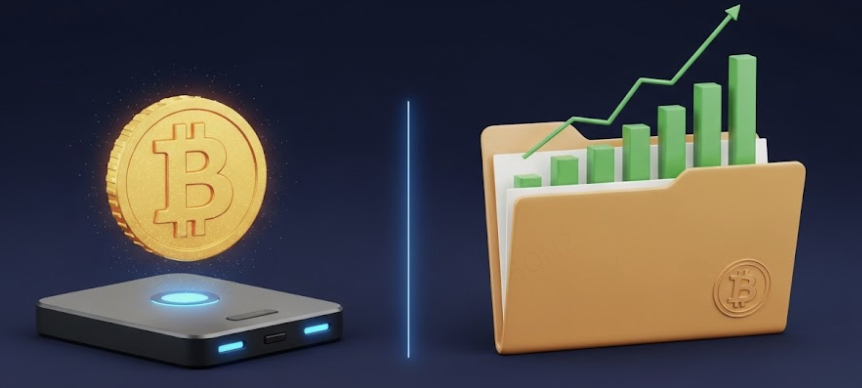
Before deploying your capital, it is essential to understand the trade-offs between traditional brokerage products and true digital asset ownership.
The Case for Bitcoin ETFs
Spot Bitcoin ETFs (such as BlackRock's IBIT or Fidelity's FBTC) have bridged the gap between traditional finance and cryptocurrency.
The primary appeal of an ETF is convenience. You can buy exposure to Bitcoin through your existing traditional brokerage account, meaning it can easily be tucked into tax-advantaged retirement accounts like an IRA or 401(k). You also do not need to worry about managing crypto wallets, seed phrases, or private keys.
The most glaring flaw of an ETF is the lack of actual ownership—you own a share of a fund, not the underlying Bitcoin itself. Furthermore, ETF investors are subject to annual management fees that eat into long-term profits. Most importantly, ETFs are restricted to traditional stock market hours. Because the crypto market is famously volatile on weekends, ETF holders are completely paralyzed and unable to react to major Sunday market movements until the opening bell on Monday.
The Case for Direct Bitcoin Ownership
For crypto purists and active investors, the ethos of Bitcoin is "not your keys, not your coins." Direct ownership means utilizing a cryptocurrency exchange to purchase the actual, native BTC asset.
When you own actual Bitcoin, no bank, fund manager, or government entity can freeze your account or dictate how you use your funds. You can transfer your wealth globally in minutes or move it into cold storage (hardware wallets) for ultimate, decentralized security.
Unlike ETFs, the native cryptocurrency market never closes. Direct ownership allows you to trade, take profits, or buy the dip 24 hours a day, 7 days a week, 365 days a year.
For those opting for direct ownership, the platform you use matters immensely. Utilizing a tier-one, globally recognized cryptocurrency exchange like KuCoin provides the optimal gateway. Buying Bitcoin directly on KuCoin not only offers significantly lower trading fees compared to traditional ETF expense ratios, but it also provides a highly liquid spot market, advanced trading tools, and the flexibility to truly own your digital assets.
Ultimately, if you simply want hands-off price exposure within a traditional retirement portfolio, an ETF is a viable tool. However, if you want absolute control over your wealth, the ability to trade 24/7, and true participation in the decentralized economy, direct ownership via a secure exchange remains the superior choice.
How Much Should You Allocate to Bitcoin?
Deciding how to buy Bitcoin is only half the battle, deciding how much to buy is where true risk management comes into play. Despite the influx of Wall Street capital and the maturation of the market in 2026, Bitcoin remains a highly volatile, emerging asset class. It is not a replacement for a traditional retirement account, an emergency fund, or a diversified portfolio of stocks and bonds.
Before allocating funds to cryptocurrencies, it is essential to consider them from a rigorous risk management perspective. Here's how modern investors allocate their funds to Bitcoin:
The 1% to 5% Rule
For the vast majority of retail investors, financial advisors generally recommend keeping cryptocurrency exposure to a conservative 1% to 5% of your total investment portfolio.
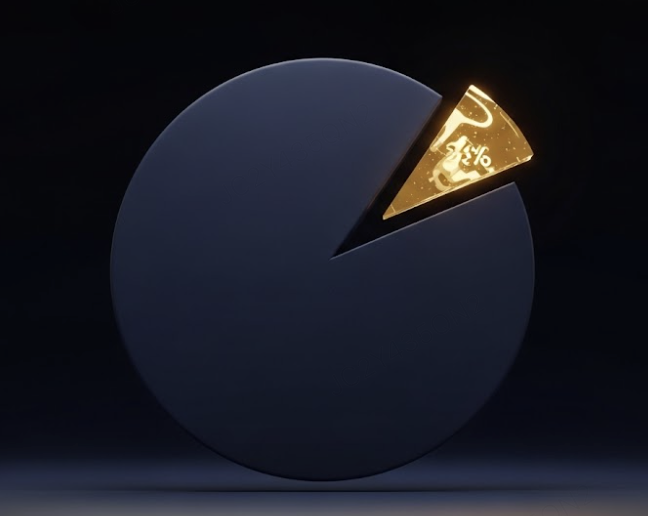
This percentage is rooted in the concept of asymmetric risk and return. Because Bitcoin has historically offered massive annualized returns compared to traditional equities, even a minimal 2% allocation can significantly boost your portfolio's overall performance during a bull market. Conversely, if the cryptocurrency market experiences a severe multi-year winter, a 2% loss will not catastrophically derail your long-term financial goals or retirement plans.
Dollar-Cost Averaging (DCA)
When investors ask, "Should I buy Bitcoin now?", they are usually agonizing over whether the current price is the absolute bottom. To eliminate this psychological stress, experienced investors utilize a strategy called Dollar-Cost Averaging (DCA).
Instead of taking a large lump sum of cash and trying to perfectly time the market on a single day, DCA involves investing a fixed dollar amount at regular intervals regardless of the current price.
For example, instead of buying $5,000 worth of Bitcoin today, you might set up an automated purchase of $100 every week for 50 weeks.
When the market dips, your $100 buys more Bitcoin. When the market surges, your $100 buys slightly less. Over time, this strategy smooths out extreme volatility, lowers your average entry price, and completely removes the emotional anxiety of trying to time the bottom.
Assessing Your Personal Risk Profile
Your allocation should reflect your personal financial reality. A 25-year-old investor with decades until retirement and a high risk tolerance might lean toward the 5% mark. A 60-year-old nearing retirement who relies on capital preservation might opt for 1% or avoid digital assets entirely.
Never invest money into Bitcoin that you might need to access for short-term living expenses within the next two to three years. If you have evaluated your risk tolerance, determined your safe allocation percentage, and are ready to execute your strategy, the final step is choosing a secure platform to make your purchase.
How to Buy Bitcoin (BTC) Securely on KuCoin
If you have evaluated the macroeconomic landscape, established your risk tolerance, and decided to proceed with direct cryptocurrency ownership, the final step is execution. Because liquidity, low fees, and security are paramount when handling digital assets, utilizing a globally established cryptocurrency exchange is the smartest route.
KuCoin provides a streamlined, highly liquid environment for investors to acquire Bitcoin. Based on their official documentation, here is the exact step-by-step process to execute your purchase securely:
Step 1: Create a Free Account To begin, you must register on the KuCoin website or mobile app. You can sign up using either a valid email address or a mobile phone number.
Step 2: Verify Your Identity and Secure Your Account Before depositing capital, you need to secure your profile. Immediately enable Two-Factor Authentication and set a trading password. Next, complete the standard Know Your Customer identity verification process. Completing KYC is a mandatory security measure that protects the platform against fraud while unlocking higher daily deposit and withdrawal limits for your account.
Step 3: Choose Your Funding Method KuCoin offers multiple flexible gateways to fund your account. Depending on your region, you can:
-
Deposit Fiat: Use a credit card, debit card, Apple Pay, Google Pay, or direct bank transfers to bring traditional currency onto the platform.
-
Use Third-Party Channels: Utilize integrated fiat-to-crypto gateways like Banxa or Simplex.
-
Deposit Crypto: If you already own digital assets like USDT or USDC in another wallet, you can transfer them directly into your KuCoin Funding Account.
Step 4: Execute Your Bitcoin Purchase Once your account is funded, you are ready to buy. For a comprehensive visual breakdown of this process, you can refer to KuCoin's official guide on how to buy Bitcoin. Depending on your experience level, you can choose two main paths:
-
Fast Trade (For Beginners): This is the simplest interface. It allows you to instantly purchase BTC using your linked fiat payment methods without navigating complex trading charts.
-
Spot Market (For Advanced Investors): If you transferred stablecoins, you can navigate to the Spot Trading terminal. Here, you can select the BTC/USDT trading pair and set specific "Market Orders"or "Limit Orders".
Step 5: Safely Store Your Assets The moment your order is filled, your Bitcoin will automatically appear in your KuCoin wallet. If you plan to trade actively or participate in KuCoin's earning products, keeping your funds on the exchange provides maximum agility. However, if you are a long-term investor holding a substantial amount, you always have the freedom to withdraw your Bitcoin from KuCoin to a private, non-custodial hardware wallet for ultimate cold-storage security.
Conclusion
There is no universal answer to the question, "should I buy Bitcoin now?" because the decision relies entirely on your personal time horizon and risk tolerance. While the 2026 market presents a maturing landscape with massive institutional ETF adoption and established cyclical pullbacks, cryptocurrencies remain inherently volatile. Instead of trying to perfectly time the absolute market bottom, successful investors focus on strict risk management, keeping their exposure to a conservative percentage, and utilizing Dollar-Cost Averaging (DCA) strategies. If you are ready to take control of your financial future, you can check the live Bitcoin (BTC) price and start building your digital asset portfolio securely today.
FAQs
Is it too late to buy Bitcoin?
No. While the early days of buying a full coin for a few dollars are over, Bitcoin's deep integration into traditional Wall Street portfolios in 2026 indicates that it is cementing its status as a global, macroeconomic store of value. For investors with a multi-year time horizon, many analysts consider Bitcoin to still be in its broader adoption phase.
What happens to Bitcoin during a recession?
Bitcoin's behavior during an economic downturn is complex. Initially, it may experience sell-offs alongside tech stocks as investors panic and rush to cash. However, because it has a strictly capped supply of 21 million coins, institutions increasingly treat it as a hedge against central bank money printing and fiat currency devaluation over the long term.
Can I buy a fraction of a Bitcoin?
Absolutely. You do not need to buy a whole Bitcoin to start investing. If you only want to invest $50, you can easily do so by accessing the highly liquid BTC/USDT spot market on an exchange to accumulate fractions over time.
What is the difference between a Spot Bitcoin ETF and holding actual BTC?
An ETF allows you to buy shares of a fund that tracks Bitcoin's price through a traditional brokerage account, but you are subject to annual management fees and strict stock market hours. Holding actual BTC on an exchange or in a hardware wallet means you have true ownership, no ongoing expense ratios, and the ability to trade 24/7.
How much money should I invest in crypto as a beginner?
Financial experts generally recommend allocating only a conservative 1% to 5% of your total investment portfolio to highly volatile assets like cryptocurrencies. This strict risk management strategy ensures that a severe market downturn will not ruin your overall financial health, while still allowing you to capture the significant upside during bull markets.