

How End-Users Can Protect Themselves from Protocol-Level Exploits in 2026
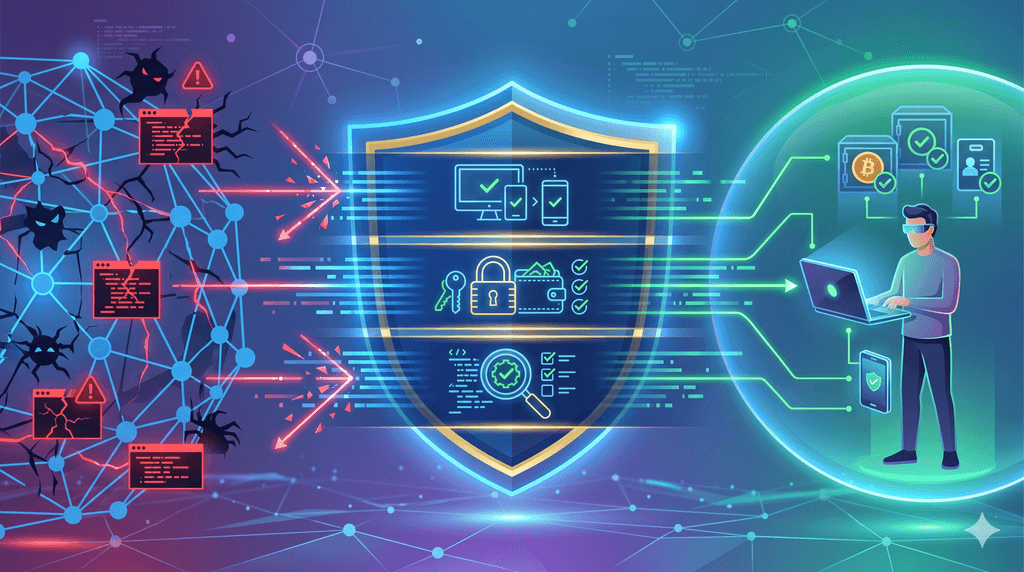
Here is a number that should stop you cold: DeFi protocols have already lost more than $750 million to hacks and exploits in 2026 — and the year is not even half over. Two attacks alone — Kelp DAO's $292 million bridge exploit and Drift Protocol's $285 million governance compromise — account for the majority of those losses. And in both cases, ordinary users with funds deposited in these protocols lost everything within minutes.
So can end-users actually protect themselves from protocol-level exploits? Yes — meaningfully, practically, and without advanced technical knowledge. The answer lies not in trusting any single protocol to be secure, but in building layered personal defenses that limit your exposure before an exploit even happens. This guide breaks down exactly how.
Key Takeaways
-
DeFi losses exceeded $750 million in the first four months of 2026, driven by Kelp DAO ($292M), Drift Protocol ($285M), Step Finance ($27M), and dozens of smaller incidents.
-
Protocol-level exploits increasingly target bridges, oracle systems, and admin key governance — not just smart contract code. Users cannot prevent these attacks but can control their exposure to them.
-
The single most actionable user defense is token approval hygiene: revoking unlimited and unused approvals regularly using tools like Revoke.cash.
-
Hardware wallets protect private keys but cannot protect funds already deposited in a DeFi protocol — a critical distinction most users misunderstand.
-
A three-wallet structure (cold storage, hot wallet, interaction wallet) dramatically reduces the blast radius of any single exploit.
-
DeFi insurance protocols, on-chain monitoring tools, and bridge exposure audits are emerging as essential components of a modern crypto security stack.
Understanding What "Protocol-Level Exploit" Actually Means
The Three Attack Categories Dominating 2026
Not all DeFi hacks are the same, and understanding the difference matters enormously for how you defend yourself.
Losses in 2026 reflect a broader shift from purely technical exploits to more complex attacks targeting operations, access controls, and cross-protocol systems. In the Drift Protocol breach, the issue was not a smart contract flaw but an operational compromise — attackers used social engineering to gain admin key access, whitelist a fake token as collateral, and drain $285 million in minutes.
Most DeFi hacks in 2026 are caused by smart contract vulnerabilities such as reentrancy bugs, oracle manipulation, and flawed permission controls, especially in newly launched or poorly audited protocols. But the largest losses — at Kelp DAO and Drift — came from governance and infrastructure failures, not code bugs.
The three categories end-users need to understand are:
Smart contract bugs — flaws in protocol code that allow unauthorized fund movement. These are detectable through audits but not always caught in advance.
Oracle manipulation — attackers distort the external price data that protocols rely on, enabling them to borrow against artificially inflated collateral. In the Drift exploit, the attacker minted a low-liquidity fake token, wash-traded it to inflate its apparent price, used a compromised admin key to whitelist it as collateral, and drained the protocol's real assets against it — all in a matter of hours.
Bridge and cross-chain infrastructure failures — bridges have produced more than $2.8 billion in cumulative losses since 2022, representing roughly 40% of all value hacked in Web3. Bridge TVL hit $21.94 billion as of March 2026, making them the highest-value single-point-of-failure targets in DeFi.
Why Hardware Wallets Alone Are Not Enough
A hardware wallet protects your private keys — but not funds you have already deposited into a DeFi protocol, which are subject to that protocol's security. When Drift Protocol was drained, users holding a Ledger or Trezor still lost every dollar they had deposited in Drift's vaults. The wallet kept their keys safe. The protocol did not keep their funds safe.
This is the most important distinction in DeFi security, and the one most users get wrong.
The Core Defense Framework: Five Layers You Need in 2026
Layer 1 — Wallet Architecture: Separate Your Risk Buckets
The most effective structural defense is using multiple wallets for different purposes, so a single exploit never reaches your full balance.
DeFi security in 2026 starts before any deposit reaches a protocol. One wallet should not do everything. Keep long-term holdings in one wallet that you do not connect to random apps. For larger balances, use hardware-backed storage. Keep only the amount needed for day-to-day use in the wallet you connect to.
The recommended three-wallet structure looks like this :
| Wallet Type | Purpose | What Goes Here |
| Cold Wallet (Hardware) | Long-term storage | Main holdings: BTC, ETH, SOL you are not actively using |
| Hot Wallet | Active DeFi interaction | Working capital for approved protocols only |
| Interaction Wallet | Testing new protocols | Minimal funds — use this for any unknown dApp |
For any portfolio exceeding $1,000 in value, a hardware wallet is not optional. It is the minimum acceptable security standard in 2026. A hardware wallet keeps your private keys completely offline. Even if your computer is infected with malware or you accidentally connect to a malicious website, the attacker cannot extract your private keys. Transactions must be physically confirmed on the device itself.
The interaction wallet is the most underused tool in personal DeFi security. New, unaudited dApps are high-risk. Even if the team is not malicious, smart contract bugs can create exploitable approvals. Research before you connect, and use a separate interaction wallet with minimal funds for testing new dApps — never your main storage wallet.
Layer 2 — Token Approval Hygiene: Revoke What You Don't Use
Token approvals are the largest hidden attack surface in crypto. Every time you interact with a DeFi protocol, you grant it permission to move your tokens — sometimes an unlimited amount, indefinitely.
Approval-based phishing and exploits caused over $200 million in losses in 2024–2025, often through dormant permissions users forgot existed. A wallet that has interacted with DeFi for a year may have 50+ active approvals, many unlimited in scope.
On January 25, 2026, SwapNet's smart contract flaw let an attacker invoke arbitrary calls and drain unlimited token approvals from user wallets. In total, $13.4 million was stolen from users who had used SwapNet and never revoked their approvals. The project warned users to revoke dangerous allowances immediately.
Revoke.cash is the standard tool for approval management. Connect your wallet to see all active approvals across multiple chains and revoke with one click. Use Revokescout for approvals visible directly in Blockscout explorers. Monthly approval audits should be treated as routine hygiene — not an emergency response.
The rules are simple:
-
Never approve unlimited token amounts when a specific amount will do.
-
Revoke approvals immediately after using any new, unaudited, or temporary protocol.
-
Disconnecting a wallet from a dApp does not revoke token approvals — you must revoke them explicitly.
Layer 3 — Bridge Exposure Reduction
Cross-chain bridges are the most dangerous infrastructure in DeFi for ordinary users. The Kelp DAO exploit was a bridge exploit. Every major multi-hundred-million-dollar DeFi loss in 2026 has involved bridge infrastructure.
Limit your exposure to bridged and wrapped assets. Check if protocols you use depend on third-party bridges for their collateral backing. Consider holding native assets on regulated exchanges when you are not actively using DeFi.
The practical steps are:
Minimize time spent in bridged positions. If you bridge assets to a Layer 2 for yield farming, bridge back when not actively earning. Prolonged exposure to bridged collateral increases your time at risk.
Check what bridges back your collateral. If you are depositing rsETH, cbETH, or any wrapped token as collateral in a lending protocol, understand which bridge holds the backing. When Kelp DAO was exploited, rsETH's backing across more than 20 networks was immediately in doubt — causing Aave, SparkLend, and Fluid to freeze markets and users to lose access to their collateral positions simultaneously.
Prefer native assets where possible. Holding BTC, ETH, or SOL directly eliminates bridge risk entirely for those holdings.
Layer 4 — Protocol Due Diligence Before Depositing
Not every protocol deserves your funds. A rigorous vetting process before depositing can save you from preventable losses.
Choose audited platforms: prefer projects with recent third-party audits and active security teams. Unverified contracts are high risk. Watch contract versions: make sure you are using the latest version of a dApp and that bridging contracts are verified. Pause/unpause history can hint at a previous incident.
Look for these green flags before depositing:
-
A recent audit from recognized firms (CertiK, Trail of Bits, OpenZeppelin, Chainalysis)
-
An active bug bounty program with meaningful rewards
-
A timelock on admin governance changes — protocols without timelocks can be drained immediately after a key compromise, as Drift demonstrated
-
A track record of at least six months without major incidents
-
A clear and active security team that communicates promptly on social channels
Red flags that should stop you before depositing include anonymous teams with no track record, no audit reports, unusually high APY with no clear source of yield, and admin keys that can be changed without delay.
Layer 5 — Real-Time Monitoring and Incident Response
Speed is critical during a DeFi exploit. The Kelp DAO emergency pause took 46 minutes. In those 46 minutes, $292 million was drained. For users, the goal is to withdraw before a protocol is fully compromised — which requires knowing an attack is underway.
Follow project announcements on social media and security alert channels. React quickly if a warning emerges — pause trades or transfer out funds immediately.
Useful monitoring tools include:
-
DefiLlama — tracks TVL changes in real time; a sudden sharp TVL drop is often the first public signal of an exploit
-
PeckShield and SlowMist on X — security firms that publicly announce exploits within minutes of detection
-
Hexagate and protocol Discord servers — real-time threat detection systems used by protocols themselves, with public announcement channels
If you suspect a protocol has been exploited, act fast: withdraw your funds immediately if the protocol is still operational; revoke all token approvals associated with that protocol; move your remaining assets to a different wallet if you think your wallet may be compromised; document everything and report the incident to the community.
Device and Operational Security: The Human Layer
Wallet security depends heavily on device security. A compromised laptop or phone can expose browser sessions, saved credentials, wallet extensions, and the signing flow itself. That risk remains relevant even when the protocol is legitimate and the contract code is sound. Use a clean device for crypto activity. Remove extensions you do not need. Keep software updated. Avoid random downloads.
The Step Finance hack is the clearest 2026 case study for this risk. Step Finance lost $27 million following a phishing-related compromise of treasury access — attackers compromised an executive's device, likely via phishing or social engineering, and used stolen private keys to drain the protocol's wallets. This was not a smart contract bug — it was a human being tricked into giving attackers access.
Never clone untrusted GitHub repositories. Never mine crypto and use a wallet on the same device. Ideally use a dedicated device for signing transactions. Watch for clipboard malware replacing wallet addresses. Even hardware wallets can be compromised if the device itself is infected.
DeFi Insurance: The Last Line of Defense
DeFi insurance cannot prevent exploits — but it can reimburse losses when they occur, fundamentally changing the risk calculus for larger positions.
Look for protocols with bug bounty programs. Insurance vaults or coverage can reimburse losses from certain exploits. Leading DeFi insurance providers including Nexus Mutual and InsurAce offer coverage for smart contract failures and, in some cases, bridge exploits — though coverage terms vary significantly and users should verify exactly what each policy covers before paying premiums.
For positions above $10,000 in any single DeFi protocol, DeFi insurance is worth evaluating as a standard component of risk management — not an afterthought.
How KuCoin Reduces Your Protocol-Level Exposure
One of the most underappreciated defenses against protocol-level exploits is simply holding assets on a regulated, security-audited centralized exchange rather than in permissionless DeFi protocols — at least for funds you are not actively putting to work. Native assets on centralized exchanges eliminate bridge risk entirely. Holding BTC, ETH, or SOL directly on a reputable exchange means you are not exposed to smart contract bugs, bridge failures, or oracle manipulation.
KuCoin has processed over $1.25 trillion in trading volume and maintains a comprehensive security infrastructure — including cold wallet storage for the vast majority of user assets, two-factor authentication, anti-phishing codes, and an active security team. For traders who want to participate in the markets created by DeFi narratives — from liquid restaking tokens to DePIN infrastructure — without taking on protocol-level smart contract risk, KuCoin's spot and futures markets offer deep liquidity across hundreds of crypto assets with custodial protections that DeFi protocols simply cannot match.
💡 Tips: New to crypto? KuCoin's Knowledge Base has everything you need to get started.
Conclusion
The $750 million already lost to DeFi exploits in 2026 is not evidence that DeFi is broken — it is evidence that most users are participating without adequate personal defenses. Protocol security is the developer's responsibility. Limiting your exposure to protocol failures is yours.
The framework is clear. Use a three-wallet structure to isolate your risk buckets. Audit and revoke token approvals monthly using Revoke.cash. Minimize time spent in bridged positions and avoid protocols with unverified bridge dependencies. Vet protocols for audit history, timelocks, and active security teams before depositing. Monitor DeFi security channels in real time and have a withdrawal plan ready. Consider DeFi insurance for larger positions.
DeFi security in 2026 still comes down to repeatable habits. Separate wallets by purpose. Verify domains and token contracts. Keep approvals tight. Use a clean device. Test unfamiliar routes with a small amount first. Before every transaction, check the domain, check the contract, read the approval scope, and confirm the route.
No single measure eliminates DeFi risk entirely. But layering these defenses dramatically reduces your probability of waking up to a drained wallet — and in a year that has already produced two $285M+ exploits, that layering is not optional.
FAQs
Does revoking a token approval on Revoke.cash cost money?
Yes, revoking an approval requires an on-chain transaction, which means paying gas fees. On Ethereum mainnet, this typically costs between $1–5 depending on network congestion. On Layer-2 networks like Arbitrum or Base, the cost is usually a few cents. The fee is trivial compared to the risk of leaving unlimited approvals open to a potentially compromised contract.
If I use a hardware wallet, can a DeFi protocol exploit still drain my funds?
A hardware wallet protects your private keys from remote theft. It cannot protect funds you have already deposited into a DeFi protocol, which are subject to that protocol's security. Once assets are deposited into a smart contract vault — as they were in Drift Protocol — those funds are controlled by the protocol's code, not your hardware wallet. Hardware wallets protect self-custodied assets, not protocol deposits.
What is a timelock and why does it matter for protocol safety?
A timelock is a governance mechanism that enforces a mandatory delay — typically 24–72 hours — between an admin decision and its on-chain execution. Without a timelock, a compromised admin key can immediately drain a protocol. With a timelock, users have a window to notice the malicious governance change and withdraw their funds before it executes. The absence of a timelock was a critical contributing factor in the Drift Protocol exploit.
How do I know if a DeFi protocol's collateral depends on a vulnerable bridge?
Check the protocol's documentation and token pages on CoinGecko or DeFiLlama for information on which assets are accepted as collateral and what backs them. If a protocol accepts rsETH, wETH, or any token with "w" (wrapped) prefixes, search for which bridge holds the backing reserves. The Kelp DAO exploit brought bridge-related risk back into view — cross-chain transfers still carry more risk than a simple swap on a familiar chain, with more steps, more dependencies, and more room for user error.
Disclaimer: This article is for informational purposes only and does not constitute financial or investment advice. Cryptocurrency investments carry significant risk. Always conduct your own research before trading.