

TON Token Renamed to Gram: Pavel Durov Revives Original Name in 'Make TON Great Again' Push
2026/06/06 12:00:00
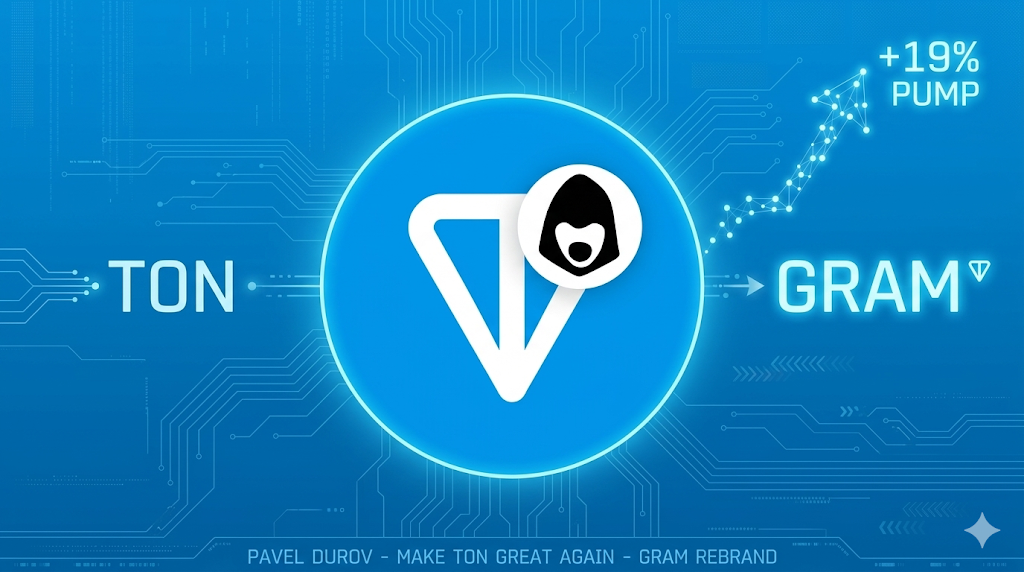
Did you know the native token of The Open Network surged 19 percent in a single day after reclaiming a name abandoned six years ago? Toncoin is officially returning to its original identity, Gram, following an announcement from Telegram founder Pavel Durov in early June 2026. This transition requires no technical token swap and marks the fourth phase of the ambitious "Make TON Great Again" roadmap.
By reviving the Gram name, Telegram signals renewed confidence in navigating global regulatory landscapes while deeply integrating blockchain payments for its 950 million users.
What Does the Gram Rebranding Mean for The Open Network?
The rebranding to Gram represents a deeply symbolic homecoming and a massive assertion of regulatory confidence by Telegram leadership. According to a June 2026 announcement by Pavel Durov, the network is restoring the original 2018 whitepaper identity. This cosmetic change reclaims the historical narrative of the project, while the blockchain itself remains named The Open Network.
Returning to the 2018 Roots
Gram was the initial designation chosen for Telegram's internal digital currency before regulatory roadblocks forced a massive corporate retreat. Reclaiming this specific name signals that the project has finally outgrown the legal shadows of its 2020 settlement with the United States government. Durov framed this transition as starting a brand new chapter for the ecosystem. The move definitively erases the artificial distance previously placed between the Telegram messaging application and the independent blockchain network.
Technical Execution Without Token Swaps
The transition structurally requires zero user action, completely avoiding the severe security risks typically associated with massive token migration bridges. The smart contract infrastructure remains completely untouched; only the public ticker and cosmetic naming conventions update at the interface level. Every single balance, wallet address, and decentralized finance position stays exactly where it currently is. This seamless approach prevents malicious actors from exploiting the confusion often surrounding mandatory token swaps.
Regulatory Context and SEC History
This bold rebranding directly confronts the heavy legal baggage generated during the historic 1.7 billion dollar initial coin offering in 2018. The Securities and Exchange Commission successfully halted the original Gram distribution in 2019, ultimately forcing Telegram to pay an 18.5 million dollar penalty. Adopting the Gram name in 2026 indicates that Telegram leadership believes the token is now an established commodity rather than an unregistered security offering.
Pavel Durov's 'Make TON Great Again' Roadmap
The "Make TON Great Again" initiative is a comprehensive seven-step strategic roadmap designed to completely dominate the decentralized messaging and payments sector. Durov personally championed this roadmap to rapidly upgrade the network infrastructure ahead of massive consumer adoption cycles. The Gram rebranding serves explicitly as the fourth step in this aggressive technological sequence. By executing these upgrades, Telegram ensures the blockchain can mathematically handle the massive transaction volume.
Step One: Catchain 2.0 Sub-Second Finality
Catchain 2.0 successfully introduced sub-second block finality to the network in April 2026, completely eliminating frustrating transaction delays for retail users. This consensus mechanism upgrade ensures that blockchain transfers feel as instantaneous as sending a standard text message. High-speed finality is absolutely mandatory for processing millions of micro-transactions within mobile mini-applications seamlessly. By fundamentally solving the latency problem, the network positioned itself to directly compete with traditional payment processors like Visa.
Step Two: Aggressive Transaction Fee Reductions
The network aggressively slashed its base transaction fees by roughly six times, making decentralized finance accessible to users in emerging markets. High network fees historically prevent retail users from engaging with smart contracts or trading small token balances. This massive fee reduction directly encourages users to utilize blockchain for daily purchases rather than just long-term speculative holding. The economic adjustment guarantees that operating decentralized applications remains highly profitable for developers.
Step Three: Telegram Becomes the Primary Validator
Telegram officially absorbed the role of primary network validator in May 2026, ending the era of the independent TON Foundation driving the project. This structural takeover securely anchors the blockchain directly to the massive corporate infrastructure of the messaging application itself. By staking millions of its own tokens, Telegram provides unparalleled cryptographic security and financial alignment to the decentralized ledger. The market overwhelmingly rewarded this centralization of accountability with massive capital inflows.
Step Four: Reviving the Gram Identity
Reviving the Gram identity serves as the highly anticipated public-facing milestone following the initial three deeply technical infrastructure upgrades. The transition will execute gradually over a three-week period starting in early June 2026 to ensure complete ecosystem synchronization. Durov specifically launched a community vote to legitimize this cosmetic shift, receiving an overwhelming 80 percent approval from staked token holders. Steps five through seven remain undisclosed, intentionally maintaining high speculative interest.
Market Reaction: How the Price of TON Responded
The cryptocurrency market responded violently to the rebranding announcement, instantly recognizing the immense long-term value of the Telegram integration. According to June 2026 data from CoinMarketCap, the asset surged 19 percent within hours of Durov's initial Telegram post. This immediate capital influx pushed the token price from $1.83 to an impressive local high of $2.26. The aggressive price action proves that narrative-driven catalysts remain an incredibly powerful force in digital asset trading.
Immediate Price Surge and Resistance Levels
The token successfully shattered heavy psychological resistance at $2.00, establishing a completely new trading range for the early summer session. After hitting the $2.26 peak, profit-taking temporarily pulled the asset back to the $2.07 support level. Traders recognize this consolidation as highly healthy behavior following an explosive, news-driven vertical rally. If bulls can maintain strict control above the $2.10 threshold, technical analysts project a rapid continuation toward previous all-time highs.
Technical Indicators and On-Chain Momentum
Technical indicators overwhelmingly signal strong continued bullish momentum across all major short-term trading timeframes. The Moving Average Convergence Divergence line comfortably crossed above the signal line, confirming intense institutional accumulation during the recent price dip. Furthermore, 24-hour spot trading volumes exploded past 575 million dollars, more than doubling the volume recorded in the prior session. This massive expansion in absolute liquidity validates the legitimacy of the recent upward price breakout.
| Market Metric | Pre-Announcement (May 2026) | Post-Announcement (June 2026) |
| Asset Price | $1.83 | $2.26 (Peak) |
| 24-Hour Trading Volume | ~$250 Million | ~$575 Million |
| 30-Day Performance | 0.39 | 0.58 |
The Future Integration of Gram into Telegram's Ecosystem
Integrating Gram entirely into the core messaging application is the ultimate commercial objective of the reorganized Open Network leadership team. Telegram plans to transform the token into the default reserve currency for the entire internal digital economy. This strategy instantly grants the cryptocurrency unmatched utility, completely bypassing the arduous user acquisition phase that cripples traditional blockchain startups. The rebranding makes the digital asset feel native, intuitive, and seamlessly connected to the user experience.
Scaling Payments to 950 Million Users
Deploying an internal digital currency to an active base of 950 million users requires unprecedented network stability and frictionless interface design. Users will soon utilize Gram balances to purchase premium subscriptions, tip content creators, and buy exclusive username collectibles directly in-chat. This massive distribution channel guarantees immediate global liquidity and constant daily transaction velocity for the blockchain. Telegram is effectively building a sovereign digital economy entirely insulated from traditional banking gateways.
Mini-Apps and Decentralized Infrastructure
The Telegram mini-app ecosystem heavily relies on frictionless blockchain integration to monetize lightweight games and decentralized finance tools. Developers can easily deploy HTML5 applications directly inside the chat interface, using smart contracts to process instant user payments. The Gram token acts as the perfect universal medium of exchange for these permissionless applications. This frictionless onboarding pipeline is rapidly making Telegram the absolute dominant portal for global Web3 consumer adoption.
Exploring the Telegram Mini-App Economy
The Telegram mini-app economy represents the most explosive growth vector for the newly rebranded Gram token ecosystem. These lightweight HTML5 applications operate entirely within the standard chat interface, completely bypassing cumbersome traditional app stores. Developers utilize these environments to build highly engaging financial tools and social games that reach consumers directly. The seamless integration guarantees that independent creators can monetize their massive global audiences instantly using decentralized blockchain rails.
Monetizing HTML5 Games and Utilities
Monetizing simple games and utility applications becomes remarkably efficient when utilizing native cryptocurrency infrastructure. Developers bypass the exorbitant thirty percent taxation fees heavily enforced by legacy corporate app monopolies. The blockchain natively processes millions of micro-transactions, allowing users to purchase in-game digital items for fractions of a cent. This frictionless financial model fundamentally empowers independent software teams to generate massive sustainable revenue without relying on intrusive advertising networks.
The Viral Growth of Tap-to-Earn Mechanics
Tap-to-earn gaming mechanics successfully onboarded tens of millions of new users into the ecosystem during the early months of 2026. These simple interactive games reward users with fractional digital assets simply for engaging with the application daily. Because the rewards distribute directly to the integrated Telegram wallet, users instantly experience the tangible value of decentralized finance. This viral growth loop aggressively drives absolute daily active user metrics to unprecedented historical highs.
Onboarding Traditional Web2 Consumers
Onboarding traditional internet consumers requires completely abstracting the complex realities of modern cryptography. Telegram removes all technical friction by automatically deploying seamless custodial digital wallets for its users upon activation. Everyday consumers interact with blockchain without ever securing a seed phrase or manually calculating network gas limits, while retaining the freedom to upgrade to self-custodial infrastructure later. This unparalleled user experience completely bridges the massive divide between legacy digital platforms and the complex decentralized finance sector.
Comparing Gram to Other Layer-1 Blockchains
Comparing Gram to legacy Layer-1 blockchains reveals a massive architectural advantage specifically engineered for unparalleled retail distribution. While Ethereum prioritizes absolute decentralization and maximum security, it struggles immensely to process massive transaction volumes affordably. Conversely, The Open Network utilizes a highly specialized infrastructure designed strictly to support the colossal throughput required by social media applications. Institutional analysts increasingly view this network as the premier execution layer for consumer-focused digital products.
Superior Scalability Through Dynamic Sharding
Dynamic sharding provides the foundational technical mechanism that allows the blockchain to process an effectively infinite number of simultaneous transactions. The network mathematically splits its ledger into smaller parallel chains whenever transaction volume unexpectedly spikes. If traffic subsides, these temporary shards automatically merge back into the main chain to strictly conserve computational energy. This elastic scalability absolutely guarantees that the network will never suffer the catastrophic congestion that routinely cripples older blockchains.
Processing Speed Versus Ethereum and Solana
Processing speed metrics heavily favor The Open Network when compared directly to industry giants like Ethereum and Solana. Following the recent Catchain 2.0 upgrade, the network securely settles massive transaction batches in less than a single second. While Solana offers impressive theoretical speeds, it frequently suffers from severe network outages during periods of intense algorithmic trading volume. Telegram infrastructure proves remarkably resilient, maintaining flawless uptime despite processing millions of simultaneous retail transfers globally.
Network Centralization Concerns Addressed
Network centralization concerns dominate the critical discourse surrounding Telegram assuming the role of primary network validator in May 2026. Purists argue that true decentralization requires thousands of entirely independent node operators to completely secure the cryptographic ledger. However, leadership counters this specific argument by prioritizing absolute network stability over ideological purity. Staking massive corporate reserves guarantees that the infrastructure remains robust enough to protect the financial assets of nearly one billion active global users.
Institutional Interest in the Revived Token
Institutional interest aggressively accelerated immediately following the public announcement regarding the Gram rebranding initiative. Massive hedge funds and venture capital firms view the token as a highly liquid proxy investment for Telegram broader corporate success. Because Telegram remains a private corporation, traditional finance investors cannot purchase public equity shares on standard legacy stock exchanges. Consequently, accumulating the native digital asset provides the absolute best method to capture the financial upside of this messaging monopoly.
Venture Capital Inflows During 2026
Venture capital inflows heavily targeted the broader ecosystem throughout early 2026, funding hundreds of independent decentralized application teams. Top-tier investment firms aggressively deployed hundreds of millions of dollars to build robust decentralized exchanges and advanced lending protocols directly on the network. This massive external financial support validates the underlying technical architecture and guarantees long-term development sustainability. Elite software engineers are rapidly migrating to the ecosystem to capture these highly lucrative venture capital grants.
| Institutional Metric | Importance to Gram Ecosystem | Future Outlook |
| Venture Capital | Funds decentralized application development | High sustained growth expected |
| Private OTC Trading | Prevents massive spot market volatility | Deep liquidity ensures price stability |
| Exchange-Traded Funds | Unlocks legacy retirement account capital | Potential regulatory approval by 2027 |
Analyzing the Risks of Returning to the Gram Brand
Returning to the controversial Gram brand introduces severe optical risks regarding future international regulatory friction. While the technical structure of the network is now fully decentralized, global financial watchdogs closely monitor Telegram aggressive expansion into digital payments. The original 2018 legal battles strictly defined the token as security during its presale phase. Reviving this specific name intentionally dares regulators to reassess the current compliance status of the entire ecosystem.
United States Regulatory Scrutiny
The United States Securities and Exchange Commission maintains broad authority to investigate digital asset issuers that closely intertwine with massive corporate entities. Although the new Gram is simply a rebranded label for the existing utility token, the historical legal baggage is impossible to ignore. Telegram must meticulously prove that its current validator dominance does not constitute centralized control over the ledger. Any hint of regulatory intervention could instantly trigger massive institutional sell-offs across the cryptocurrency sector.
Exchange Listing and Ticker Transitions
Coordinating a massive ticker transition across dozens of independent cryptocurrency exchanges presents a significant logistical nightmare for the development team. Centralized exchanges must temporarily halt trading and update their database architectures to reflect the new nomenclature accurately. This three-week phased rollout inevitably causes mild market fragmentation and temporary liquidity imbalances across different trading platforms. The foundation must aggressively communicate with market makers to prevent severe price slippage during this delicate transition period.
How to trade on KuCoin Gram (TON) token?
Trading the newly rebranded Gram token on KuCoin provides immediate, secure access to the rapidly expanding Telegram digital economy. KuCoin fully supports massive ecosystem transitions, maintaining robust security for your digital assets during this multi-week nomenclature upgrade.
To trade the asset, users can follow these standard procedures:
-
Navigate to the "Spot Trading" section.
-
Search for the asset using the search bar.
-
Select the preferred trading pair, such as USDT, to execute buy or sell orders.
KuCoin features remarkably deep liquidity and advanced trading tools to help you capitalize on the strategic volatility generated by the network roadmap. Open your KuCoin account today to effortlessly integrate Telegram's native currency directly into your modern cryptocurrency portfolio.
Conclusion
The historic decision by Pavel Durov to rename the native token back to Gram fundamentally solidifies Telegram absolute control over The Open Network. By executing this deliberate rebranding in early June 2026, the project aggressively reclaims its original identity while intentionally brushing off the regulatory fears of the past. This transition requires no technical token migration, eliminating the severe security risks typically associated with massive blockchain overhauls.
The market overwhelmingly validated this strategic move, triggering a massive 19 percent price surge that propelled the asset to local highs. As the fourth step in the ambitious "Make TON Great Again" roadmap, the Gram revival directly follows critical upgrades to transaction speed and network fees. Telegram is clearly positioning this digital currency to serve as the default financial foundation for its 950 million global users. While regulatory uncertainties naturally persist, the seamless integration of blockchain technology directly into the world's most dynamic messaging platform guarantees unprecedented consumer adoption.
FAQs
Why was the Gram token originally banned in 2020?
The Gram token was effectively banned in 2020 after the United States Securities and Exchange Commission sued Telegram for conducting an unregistered securities offering. The regulatory agency argued that the 1.7 billion dollar initial coin offering violated strict investor protection laws. Telegram ultimately settled the lawsuit, returned 1.2 billion dollars to early investors, paid an 18.5 million dollar penalty, and completely abandoned the original blockchain project.
Do I need to swap my old Toncoin for the new Gram?
No, you absolutely do not need to swap your old Toncoin for the new Gram token under any circumstances. The transition is purely a cosmetic rebrand at the smart contract interface level. Your wallet balances, addresses, and decentralized finance positions will remain entirely unchanged. Centralized exchanges and digital wallets will automatically update the token ticker over a phased three-week transition period.
What is the "Make TON Great Again" roadmap?
The "Make TON Great Again" roadmap is a seven-step strategic initiative designed by Pavel Durov to massively upgrade the underlying network infrastructure. The roadmap actively accelerates blockchain transaction capacity, lowers operational fees, and deeply integrates the ledger directly with Telegram massive user base. Rebranding the native token to Gram represents the fourth completed step in this aggressive technological sequence.
What is Catchain 2.0 and why does it matter?
Catchain 2.0 is an advanced consensus mechanism upgrade deployed on The Open Network in April 2026 to drastically improve transaction speeds. It successfully introduced sub-second block finality, meaning cryptocurrency transfers are now mathematically verified and settled almost instantly. This immense speed upgrade is absolutely mandatory to support the millions of daily micro-transactions generated by the Telegram mini-app ecosystem.
Will the blockchain network also change its name?
No, the underlying blockchain network will definitely not change its name during this massive cosmetic transition. The decentralized ledger will permanently remain named The Open Network, preserving its established brand identity within the broader infrastructure sector. Only the native utility cryptocurrency asset is changing its specific public designation from Toncoin back to the historically significant Gram moniker.
Disclaimer:This content is for informational purposes only and does not constitute investment advice. Cryptocurrency investments carry risk. Please do your own research (DYOR).