

The Gram Wallet in Telegram: Durov Launches the Largest Non-Custodial Wallet in History
2026/07/24 10:42:00
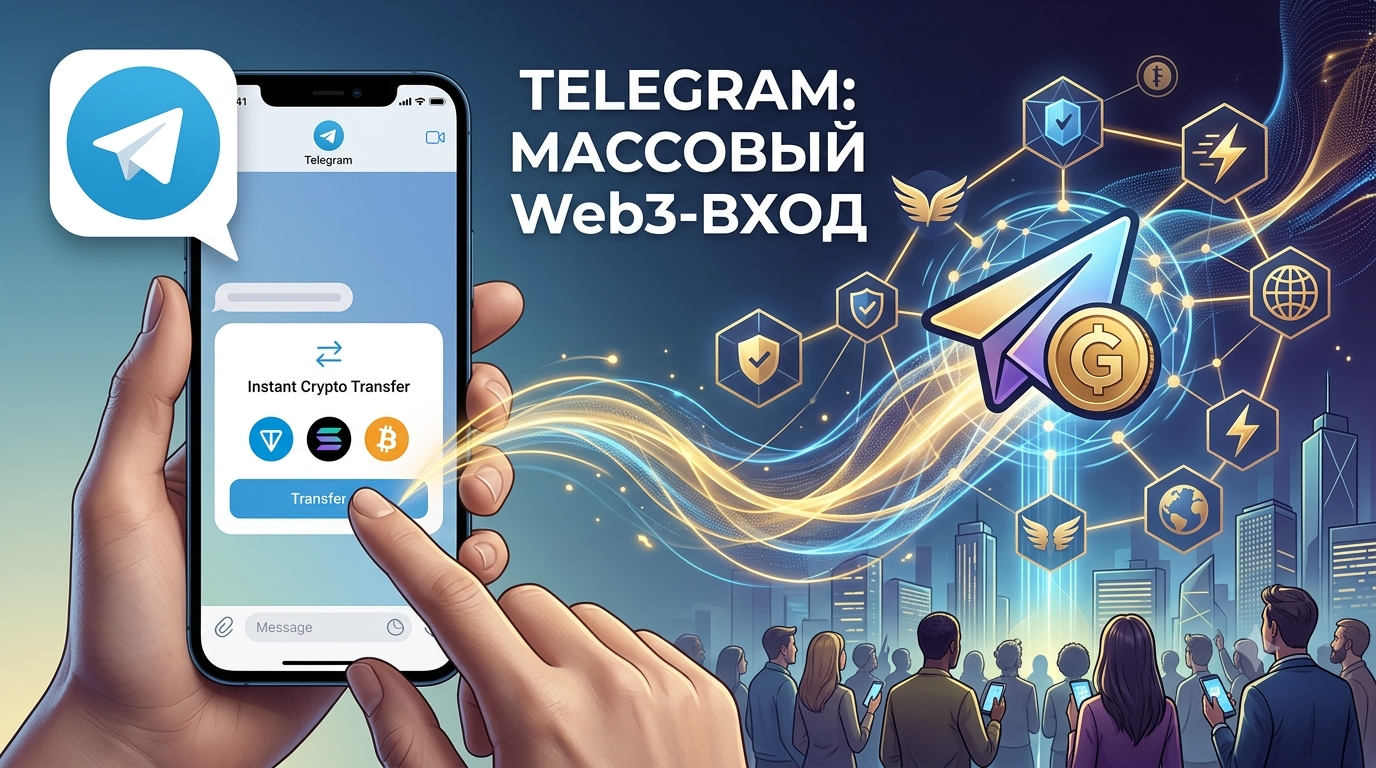
More than a billion Telegram users could gain access to cryptocurrency without a single extra tap — that's what the largest non-custodial wallet rollout in blockchain history may look like this summer. Pavel Durov has announced that Telegram's own non-custodial wallet, Gram, will be built into every Telegram app: crypto transfers will become instant and free for the messenger's entire user base. This isn't a separate app or a bot — it's a core feature available to every Telegram user by default. Below we break down exactly what Durov announced, how the Gram wallet differs from familiar crypto wallets, and what opportunities and risks this opens up for the market.
What exactly did Durov announce about the Gram wallet?
Durov has promised to build Telegram's own non-custodial Gram wallet into every Telegram app as early as this summer. According to him, this will be the largest launch of its kind in history — instant, fee-free crypto transfers will become available to an audience of more than a billion people. The exact launch date, the list of supported coins, and the geographic rollout have not yet been disclosed.
A non-custodial format means only the owner has access to the funds: all keys are held by the user, who bears sole responsibility for their assets. Setting up such a wallet requires no identification or personal data — this is its key difference from custodial solutions, where responsibility for holding funds is shared between the owner and a third party such as an exchange or broker, and those intermediaries typically require user verification. Classic examples of non-custodial wallets include hot wallets like MetaMask and Trust Wallet, which require an internet connection, as well as hardware cold wallets like Ledger and Trezor.
If a user loses the recovery phrase needed to restore access to a non-custodial wallet, no one — including the developer company itself — can recover the funds. A standalone Gram Wallet app is already available for Android and supports the TON, Ethereum, Solana, TRON, BNB Chain, and several other blockchains — the new feature in the main Telegram app appears to be a natural extension of this product.
It's important to understand the difference between the new Gram product and the Wallet service that has long existed in the Telegram menu. Wallet is a product of The Open Platform, a third-party project not directly affiliated with the Telegram team, even though the developers have integrated it into the messenger's interface. Behind the company is Andrei Rogozov, the former head of VKontakte, who joined the project in 2022. Wallet operates as a custodial service backed by a legal entity, with user requirements similar to those applied by crypto exchanges: for example, access to Wallet can be blocked over a transaction with a sanctioned platform or an illegal darknet marketplace. This is precisely why the launch of an official non-custodial wallet from Telegram itself looks like a fundamentally different step — the company is offering an option where the user fully controls their own keys rather than entrusting them to a third-party service that requires mandatory verification.
How is the Gram wallet connected to the renaming of the TON token?
Telegram has used the name Gram once before — and the decision to bring it back is no accident. In early June 2026, Durov announced the renaming of the TON blockchain's token from Toncoin to Gram, while the name of the blockchain network itself, TON, remained unchanged. The transition took about three weeks and required no action from coin holders — there was no token swap; balances simply began displaying under the new ticker.
Telegram used the name Gram back in 2018 for its first blockchain project, Telegram Open Network, for which the company raised roughly $1.7 billion from investors. However, in 2019 the U.S. Securities and Exchange Commission launched proceedings, ruling that the tokens were unregistered securities. Following a settlement in 2020, Telegram returned about $1.2 billion to investors and paid an $18.5 million fine, after which the project was shut down and development was taken over by the open-source community under the name TON Foundation.
The return of the Gram name in 2026 is a symbolic gesture signaling that Durov has personally taken charge of the network's development: this spring he announced that Telegram had become TON's largest validator, and that the TON Foundation is no longer the project's main driving force. The token renaming is the fourth of seven announced steps in Durov's roadmap to revive the network; the remaining three steps have not yet been disclosed.
Durov's announcement about integrating the wallet into Telegram apps coincided with an update to the TON ecosystem's official website, wallet.ton.org, where the new wallet was named Gram Wallet. The Gram Wallet mobile app itself launched back in June and, according to developers at My Wallet (formerly MyTonWallet), was conceived as an expanded version of the future wallet to be integrated directly into Telegram. Durov himself provided no links or technical details, limiting his post to a general announcement on his channel.
Why could Telegram become the entry point for a billion users into Web3?
The Web3 industry has long lacked a simple way to reach a mass audience — and Telegram's built-in wallet may solve this problem better than any other product on the market. Classic wallets like MetaMask require installing a browser extension, managing a seed phrase on your own, and understanding basic blockchain principles — a high barrier to entry for the average user. The Gram wallet, built directly into a messenger already used by more than a billion people, removes that barrier: cryptocurrency becomes as natural a feature as sending a message or a sticker.
A similar effect has already played out with TON mini-apps. According to industry reports, the X Empire project alone attracted more than 36 million users and helped create over 18 million TON wallets — and that's just one of dozens of similar apps. TON mini-apps launch instantly inside a chat, with no download and no need to switch to a browser, and their user retention rates are notably higher than those of typical decentralized apps, simply because people already open Telegram every day for entirely different reasons.
If even a small fraction of Telegram's audience starts regularly using the built-in wallet, the effect on the entire crypto industry could be comparable to the rise of mobile banking. That's why Durov's announcement triggered an immediate market reaction: the Gram token rose roughly 7% on the news, climbing from about $1.36 to above $1.50. As of 7:00 PM Moscow time on July 21, GRAM ranked 21st among the largest cryptocurrencies on CoinMarketCap, with a market cap of more than $4.16 billion. Notably, back in May, after Durov's statement about Telegram's significant role in the TON ecosystem, the token's price nearly doubled, but by July 20 that gain had almost entirely evaporated — another reminder that such announcements tend to deliver only short-term momentum rather than a guarantee of sustained growth.
How did the tap-to-earn game boom pave the way for a mass-market wallet?
The TON ecosystem has already familiarized hundreds of millions of Telegram users with basic cryptocurrency operations — and that's exactly what makes launching the built-in wallet a less risky step than it might otherwise seem. The wave of tap-to-earn games like Notcoin and Hamster Kombat in 2023–2024 turned the simple act of tapping a screen into a way of getting acquainted with blockchain: users grew accustomed to connecting a wallet, earning tokens for activity, and participating in airdrops, often without even realizing they were completing full-fledged blockchain transactions.
By 2026, the TON mini-app ecosystem has grown far beyond tap-based games: it now includes DEXs, lending platforms, NFT marketplaces, and channel monetization tools. According to market analysts' estimates, Telegram mini-apps generated more than $1 billion in transaction volume in 2025. It is precisely this user base, already familiar with basic crypto operations, that will become the first audience for the new built-in Gram wallet.
Notably, the Gram token has previously seen far higher valuations: its all-time high of $8.25 was recorded in June 2024 at the peak of tap-to-earn game mania. The current price, in the range of a dollar and a half, remains well below that peak, and market participants note that the token's long-term moving average still points to a downward trend — meaning the real effect on the token's price will depend not on the announcement itself, but on how many users actually start using the wallet after launch.
Beyond games, the TON mini-app ecosystem includes financial services that have already familiarized users with more complex operations than simply tapping a screen. Decentralized exchanges and lending services within Telegram let users swap assets and earn yield without leaving the messenger, while marketplaces like Fragment allow buying and selling digital collectibles and usernames on the TON blockchain. This broad range of use cases means the built-in Gram wallet isn't launching into a vacuum — it's launching into an already-established infrastructure with millions of active wallets and clear, familiar use cases.
What risks does Telegram's built-in non-custodial wallet carry?
A mass-market non-custodial wallet inside a messenger creates several categories of risk that the industry has yet to resolve. The first issue is regulatory. In many jurisdictions, companies providing cryptocurrency transfer services are required to meet anti-money-laundering standards: screening counterparties against sanctions lists, monitoring suspicious activity, and in some cases disclosing sender and recipient information for transfers. Regulators in various countries, including in the EU and the US, are tightening requirements in 2026 specifically around transfers to self-custodied wallets not tied to exchanges, and a built-in product with an audience of more than a billion people will inevitably find itself under such scrutiny.
The second issue is compliance at the network infrastructure level. Since Telegram itself has become TON's largest validator, responsibility for the network's stability and its compliance with regulatory requirements across different countries now rests partly with the company, rather than with a distributed community of developers as it did before.
The third category of risk is technical security. Rolling out a wallet with automatic key generation to a massive audience is a complex engineering challenge: any flaw in the security system could potentially affect not thousands but hundreds of millions of accounts at once. Moreover, the non-custodial format means responsibility for safeguarding the recovery phrase rests entirely with the user — the company simply cannot restore access if the phrase is lost, meaning the risk of losing funds to phishing or user carelessness will grow in proportion to the size of the audience.
Address screening deserves particular attention. Current compliance approaches in the crypto industry require platforms to check counterparties against sanctions lists and monitor transfers to wallets not linked to exchanges, especially when the transfer amount exceeds a certain threshold. For a built-in wallet with an audience of more than a billion people, building such a real-time screening system is a challenge of an entirely different scale than for a single crypto exchange with a few million clients. Telegram has not yet disclosed exactly what compliance mechanisms will apply to transfers through Gram, and this remains one of the biggest open questions surrounding the entire project.
How does the Gram wallet differ from traditional crypto wallets?
| Parameter | Traditional wallet (e.g., MetaMask) | Telegram's built-in Gram wallet |
| Installation | Separate extension or app | Already built into an app used daily |
| Barrier to entry | Requires understanding seed phrases, gas, networks | Interface functions like an ordinary messenger feature |
| Starting audience | Existing crypto users | More than a billion Telegram users |
| Transfer fees | Depend on network congestion | Advertised as zero for basic transfers |
| Supported networks | Usually a single ecosystem | TON, Ethereum, Solana, TRON, BNB Chain, and others |
The table shows that Gram's main advantage isn't technological — it's distributional: cryptocurrency becomes available where people already spend their time, rather than somewhere they need to go out of their way to visit.
How to trade Gram (TON) on KuCoin?
Investors looking to gain exposure to this trend don't need to wait for the built-in wallet to launch — the Gram token is already trading on major exchanges, including KuCoin. Before opening a position, it's worth weighing both the potential for audience growth and the asset's current volatility: since the rename to Gram, the token has both rallied on news and pulled back noticeably over the course of July.
To start trading Gram on KuCoin, you'll need to register an account and complete basic identity verification — a standard requirement for regulatory compliance. After funding your account, you can buy Gram on the spot market, use staking services for passive income, or open a leveraged position on the futures market if your strategy calls for more active trading. KuCoin also regularly adds mini-apps and educational materials related to the TON ecosystem, which is useful for anyone who wants to dig deeper into the project before committing funds.
Keep in mind that cryptocurrencies remain a highly volatile asset class, and announcements like wallet integrations have historically triggered short-term price spikes that were later partially or fully reversed. A sensible approach is to treat participation in the TON and Gram project as part of a diversified portfolio rather than a bet on a single announcement.
Conclusion
Durov's announcement about embedding the non-custodial Gram wallet into every Telegram app could become one of the most significant events in the history of cryptocurrency's mass adoption. This isn't about new technology — non-custodial wallets have existed for years — it's about distribution: access to cryptocurrency will reach an audience measured in the billions, one that already carries Telegram in its pocket every day.
The groundwork for the launch is already in place: the renaming of the TON token to Gram, Telegram's status as the network's largest validator, and years of mini-apps and tap-to-earn games have familiarized hundreds of millions of people with the basics of blockchain. At the same time, a built-in wallet of this scale will inevitably face heightened regulatory scrutiny worldwide, compliance challenges, and security risks that don't yet have ready-made solutions.
For investors and traders, the key question isn't the announcement itself, but how many users actually activate the wallet and start using it after launch. That figure — not lofty phrases like "the largest launch in history" — will determine whether Gram ultimately lives up to the market's expectations in the long run.
Frequently Asked Questions
1. When exactly will the Gram wallet launch on Telegram?
No exact date has been announced yet. Durov has said the launch will happen "this summer," but the company has not disclosed specific dates, a list of countries, or the range of supported coins.
2. Will users need to complete verification to use the Gram wallet?
No official requirements have been announced. The standalone Gram Wallet app allows for additional security to be linked through a Telegram account, but it does not itself require KYC verification for basic use.
3. How is Gram different from the existing Wallet already in Telegram?
Wallet is a custodial service run by third-party developer The Open Platform, requiring verification and able to block access over suspicious transactions, similar to a crypto exchange. Gram is Telegram's own non-custodial wallet, planned for rollout across all versions of the app globally, with a focus on free, instant transfers without verification rather than buying assets with fiat currency.
4. Will the launch of the Gram wallet affect the price of the TON token?
In the short term, similar announcements have already triggered price swings of 7–19%, but sustained price growth will depend on the actual number of active wallet users rather than the launch itself. The token's long-term moving average currently still points to a downward trend.
5. Is it safe to store cryptocurrency in a messenger's built-in wallet?
The non-custodial format means the keys are held by the user rather than by Telegram, which reduces the risk of centralized theft of funds by the company or a third party. At the same time, responsibility for safeguarding the recovery phrase and protecting the device from phishing rests entirely with the user.