

Zcash Price Prediction 2026: Why ZEC Just Hit a New Multi-Year High
Introduction
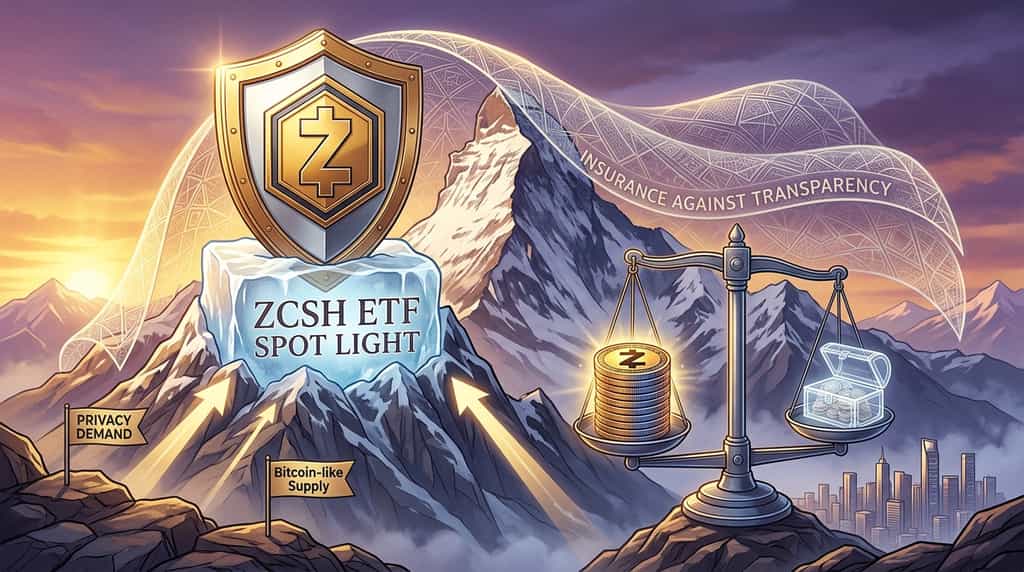
Zcash (ZEC) just printed its strongest price in nearly a decade. According to market data on September 6–7, 2026, ZEC traded near $1,180–$1,230 after an intraday high around $1,245–$1,257, lifting market cap toward $20 billion. That move answers the core question immediately: the rally is not a random altcoin spike. It is being driven by the first U.S. spot Zcash ETF, a renewed privacy narrative, and a Bitcoin-like supply design that many investors now treat as insurance against Bitcoin’s transparent ledger.
This Zcash price prediction article explains why ZEC broke four figures, what recent data actually shows, and which levels matter next. It is a market briefing, not a guarantee of future returns.
Why Did Zcash Price Hit a New Multi-Year High?
ZEC broke four figures because institutional access, privacy demand, and short covering arrived at the same time. According to CryptoBriefing on September 6, 2026, Zcash climbed from roughly $16 in 2024 to above $1,000, a gain exceeding 6,300% from those lows. The market listed an all-time high of $1,247 dated September 6, 2026.
The single largest catalyst was Grayscale’s spot Zcash ETF, ticker ZCSH, listed on August 25, 2026. The product gave brokerage investors regulated exposure to ZEC without self-custody. According to reports on September 4, the ETF had already gathered about $362 million in AUM. Price confirmation followed quickly. Market data shows ZEC closing September 6, 2026 at $1,228.32 after a high of $1,245.88.
The 2026 breakout is the first broadly traded four-digit print in eight years and eight months, which is why analysts and trackers are calling it a new cycle high.
What Is Driving the Current ZEC Rally?
Three forces are driving the current ZEC rally: ETF inflows, a privacy-as-insurance thesis, and derivatives liquidations. Each force is visible in data from August and early September 2026.
How Did the Grayscale Zcash ETF Change Demand?
The ETF turned ZEC from a niche privacy coin into a brokerage-accessible asset. Grayscale framed ZCSH as a satellite holding with Bitcoin-like scarcity plus optional privacy. Grayscale Research argued Zcash has second-mover advantages Bitcoin lacks: financial privacy in an era of AI surveillance, cross-chain reach, and active work on future cryptographic risks.
That product launch sits inside a larger August breakout. The strongest leg higher began with the August 19 market-wide move that carried ZEC toward $900 before the September extension above $1,200.The historical rows show ZEC still near $508 on August 18 and already above $800 by August 22.
Why Do Investors Call Zcash Insurance Against Bitcoin?
Zcash serves as insurance against Bitcoin because Bitcoin’s ledger is public and Zcash can hide sender, recipient, and amount. Entrepreneur Naval Ravikant’s framing — Bitcoin is insurance against fiat, Zcash is insurance against Bitcoin — remains the cleanest version of that thesis. Bitcoin protects purchasing power, while Zcash protects transactional identity.
The practical mechanism is the shielded pool. The shielded ZEC rose for three consecutive weeks to 4.85 million tokens, the highest level since June and up from a recent low of 4.32 million. That is the insurance layer in action. Once coins move into shielded addresses, observers can see value leave a transparent chain, but they cannot map the destination with ordinary chain analytics.
The insurance case also reflects Bitcoin’s custodial concentration. A large share of BTC now sits at exchanges, ETFs, and public companies. In that structure, ZEC is not a replacement for Bitcoin’s monetary policy. It is an exit ramp if transparency, surveillance, or custody risk becomes the dominant concern.
How Much Did Short Liquidations Amplify the Move?
Short liquidations amplified the final push through $1,000. On September 6, 2026, CoinGlass data showed about $46 million in ZEC short liquidations over 24 hours, the highest among all cryptocurrencies that day. And short liquidations spiked again as ZEC broke $1,000 for the first time in a decade.
Open interest also expanded with price. The Coin Republic reported ZEC open interest at a new high of $2.15 billion as the token printed $1,029. That combination — ETF cash demand plus leveraged short covering — is why the last leg looked parabolic rather than orderly.
What Risks Could Invalidate a Bullish ZEC Outlook?
A bullish ZEC outlook can fail if privacy demand, ETF flows, or protocol confidence reverse. The first risk is valuation stretch. A token that gained more than 130% in 30 days may correct without any change in the long-term thesis.
The second risk is protocol history. Developers had earlier disclosed and patched a flaw that could have minted counterfeit coins invisibly. A June disclosure around the Orchard pool triggered an emergency remediation and a sharp sell-off. The market has since looked through that event, but supply-integrity questions remain part of Zcash’s risk file.
The third risk is regulatory and exchange access. Privacy coins still face listing, banking, and compliance friction even when the policy tone is less hostile than it was in prior cycles. A softer U.S. stance has helped the tape. That help can fade if enforcement focus returns.
The fourth risk is the insurance thesis itself. Zcash only functions as insurance against Bitcoin if users actually shield coins. Transparent ZEC looks like a scarce proof-of-work asset with a 21 million cap. Shielded ZEC is the product that completes the Naval Ravikant framing. If shielded balances stall, the premium can compress.
How to Buy and Trade ZEC on KuCoin
You can buy and trade ZEC on KuCoin through a standard spot market order in minutes. Create or log in to a KuCoin account, complete identity verification, and fund the account with USDT or another supported asset. Open the ZEC/USDT spot pair, choose a market order for immediate execution or a limit order if you want a specific entry, and confirm the trade.
Trade the Setup on KuCoin and Enter the Prize Pool
When a market narrative is in motion, the next step is not only to decide the view, but to place it where liquidity, tools, and extra incentives line up. KuCoin’s KuLeague (Fall Season 2026) futures trading competition runs from August 31 to September 21, 2026 (UTC+8) and offers a 400,000 USDT prize pool, split across a Team Battle (100,000 USDT), a Solo PnL Contest (60,000 USDT), and a Grand Lucky Draw (240,000 USDT).
Trade $500 in a day to unlock a daily spin with a 100% prize rate. Use the same positions you would take for the story above — and compete for rewards at the same time:

Conclusion
Zcash’s September 2026 breakout is a liquidity event with a narrative attached. Spot price near $1,200, a session high cluster around $1,250, and a market cap near $20 billion mark the first broadly traded four-digit print in almost a decade. The proximate cause is Grayscale’s ZCSH ETF. The deeper cause is the market’s decision to price ZEC as scarce, Bitcoin-like money with an optional privacy layer.
The working Zcash price prediction into year-end 2026 is not a single number. Published technical and scenario work clusters between a defensive hold of the $1,000 handle and upside extensions toward $1,500, $2,200, or $2,500 if inflows and shielded usage continue. Overbought oscillators, a prior protocol scare, and a large gap back to August support all argue against treating the last green candle as a permanent floor.
Zcash still serves as insurance against Bitcoin for users who want cryptographic privacy instead of a transparent trail. That thesis is strongest when coins actually move into shielded addresses. The ETF made the trade easier. The chart made it louder. The next test is whether demand persists after the first wave of short covering is gone.
FAQs
Did Zcash really set an all-time high in September 2026?
Some market trackers recorded a September 6, 2026 high near $1,247–$1,257 and labeled it an all-time high for their dataset. Longer historical series still show a thin 2016 launch spike above $3,000. The 2026 print is the first widely traded four-digit price in nearly a decade.
What is the most important catalyst behind the ZEC surge?
The most important catalyst is Grayscale’s spot Zcash ETF, ZCSH, launched on August 25, 2026. Subsequent AUM figures in the $360–$463 million range show institutions could buy the theme through a brokerage product.
Can ZEC reach $2,000 in 2026?
Yes, it can if the August–September structure holds. Crypto Patel’s cup-and-handle target near $2,200 and FXEmpire’s triangle target near $2,500 are the main published maps. Those outcomes require continued ETF demand and no major risk-off shock.
Why do people say Zcash is insurance against Bitcoin?
They say it because Bitcoin’s ledger is public. Zcash can hide transaction details with zero-knowledge proofs. Naval Ravikant’s line — Bitcoin is insurance against fiat, Zcash is insurance against Bitcoin — is the short version of that hedge.
Is ZEC still scarce after this rally?
Yes. Maximum supply remains 21 million coins, with about 16.9 million circulating as of late August and early September 2026. The next halving is expected in November 2028. Scarcity alone does not set price, but it is still part of the monetary design.
Disclaimer: This article is for informational purposes only and does not constitute financial, legal, or investment advice. Always conduct your own research before interacting with digital assets.