

July 2026 Fed Rate Decision: Kevin Warsh Expected to Hold as Hike Odds Remain at 38%
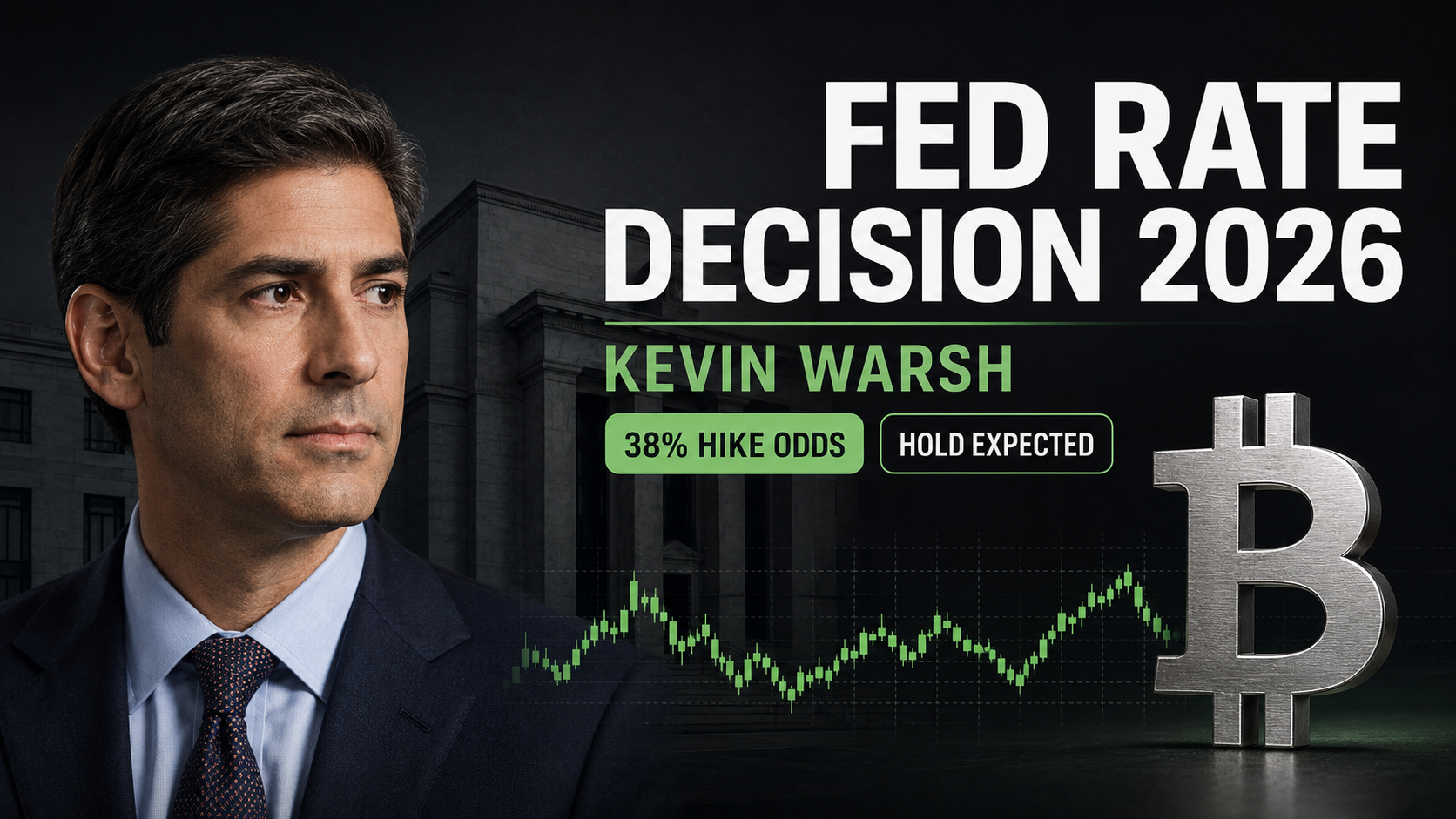
The July 2026 Federal Reserve decision has created a striking divide between economic forecasts and financial-market pricing. All 104 economists surveyed by Reuters expected the Federal Open Market Committee to keep the federal funds target range unchanged at 3.50% -- 3.75%, yet fed funds futures assigned approximately a 38% probability of a 25-basis-point increase in the referenced pre-decision market snapshot. The contrast does not mean futures traders collectively expect a hike. It means markets continue to assign a substantial value to the risk of a surprise as investors assess persistent inflation, volatile oil prices and a divided outlook inside the Fed.
The FOMC is scheduled to announce its decision at 2:00 p.m. Eastern Time on July 29, followed by Chairman Kevin Warsh’s press conference at 2:30 p.m. ET. A rate hold remains the most likely outcome, but it would not settle the debate over monetary policy for the rest of 2026. Investors will examine the vote, policy statement and Warsh’s comments for evidence about whether September could bring higher rates. Because futures probabilities change continuously, the 38% figure should be understood as a time-specific market estimate rather than an official Fed forecast.
Kevin Warsh Expected to Support a Rate Hold at the July 2026 FOMC Meeting
Economist Consensus and the June FOMC Vote Favor a Hold
The strongest evidence supporting a July 2026 Fed rate hold is the breadth of the economist consensus and the committee’s most recent decision. Every respondent in the Reuters survey forecast that the target range would remain at 3.50%–3.75% in July, while 78 of the 104 economists expected no change through the end of 2026. The FOMC also voted 12–0 to maintain rates at its June meeting, demonstrating that officials could agree on the immediate decision even though their expectations for later meetings differed. A unanimous economist forecast does not guarantee the outcome, but it establishes that a surprise hike would require the Fed to move earlier than virtually every surveyed forecaster expects. At only his second meeting as chairman, Warsh has an additional reason to seek a decision that commands broad committee support instead of forcing an increase before officials have reached a durable agreement on the need for further tightening.
Why Kevin Warsh May Wait for More Economic Evidence
The labor market gives Warsh and the FOMC room to wait without suggesting that the economy is already in a severe downturn. US nonfarm payrolls increased by only 57,000 in June, and employment gains for April and May were revised down by a combined 74,000. At the same time, unemployment remained relatively stable at 4.2%, average hourly earnings continued to rise and layoffs did not indicate a sudden collapse in demand for workers. This combination points to slower hiring rather than a clear recession or an overheating labor market. Raising rates immediately could place additional pressure on employment, while waiting would allow policymakers to study more inflation and jobs reports before the September meeting. Natixis Investment Managers strategist Mabrouk Chetouane has similarly argued that Warsh may wait until later in the year before increasing rates if the labor market remains solid and inflation pressure spreads more clearly into core prices.
A July Rate Hold Would Not Signal a Dovish Fed Pivot
Keeping rates unchanged should not automatically be interpreted as the beginning of monetary easing. Warsh has emphasized that the Federal Reserve will not tolerate persistently elevated inflation, and a pause can remain consistent with a restrictive policy stance when borrowing costs are already at 3.50%–3.75%. The more important question is whether the committee describes current policy as sufficiently restrictive or signals that additional tightening may be needed. A unanimous hold with patient language would suggest that policymakers want several more months of evidence, while multiple dissents in favor of a hike would reveal stronger internal pressure for action in September. Warsh could therefore support the consensus decision in July while using the press conference to preserve the Fed’s flexibility and reinforce its commitment to price stability.
Why Fed Rate Hike Odds Remain at 38% Despite Inflation and Oil Risks
The approximately 38% Fed rate-hike probability reflects uncertainty surrounding the timing of monetary tightening rather than a market consensus for an immediate increase. Fed funds futures incorporate several possible outcomes as well as hedging demand, liquidity conditions and risk premiums. The probability can therefore remain significant even when most forecasters select a hold as the single most likely result. Investors are balancing recent signs of disinflation against inflation measures that remain above target, unpredictable energy markets and policy projections showing meaningful support for higher rates later in 2026.
Cooling US Inflation Reduces Immediate Fed Rate Hike Pressure
The June Consumer Price Index provided the strongest data-based argument against an immediate increase. Headline CPI declined 0.4% from May as the energy index fell 5.7%, bringing the annual inflation rate down from 4.2% to 3.5%. Core CPI, which excludes food and energy, was unchanged during the month and slowed from 2.9% to 2.6% year over year. These figures suggest that some earlier price pressure has begun to ease, reducing the need for the Fed to respond before confirming that the improvement is sustainable. However, the central bank’s preferred Personal Consumption Expenditures Price Index remained more elevated in May, with headline PCE inflation at 4.1% and core PCE at 3.4%. The June PCE report is scheduled for release one day after the FOMC decision, leaving policymakers without their latest preferred inflation reading and strengthening the case for waiting rather than acting on incomplete evidence.
Oil Price Volatility Keeps Inflation Risks Elevated
Energy prices remain an important threat to the inflation outlook because sustained increases can spread beyond gasoline and utility bills. Higher crude prices raise transportation, manufacturing, aviation and distribution expenses, allowing an initial supply shock to affect food, consumer goods and services. The Fed cannot produce additional oil or resolve geopolitical disruptions, so it is unlikely to raise rates in response to every short-lived crude-price movement. The policy risk becomes more serious if higher energy costs persist, influence wage demands or encourage businesses to pass expenses into core prices. Recent oil-price reversals reduced some immediate inflation concern, but continuing geopolitical uncertainty prevents investors from assuming that energy costs will keep falling. The 38% rate-hike probability partly reflects the possibility that renewed supply disruption could reverse the improvement in headline inflation and force policymakers to respond sooner than expected.
FOMC Projections Keep September 2026 Rate Hike Odds Alive
The June Summary of Economic Projections revealed a much closer policy division than the unanimous rate decision suggested. Of the 18 submitted federal funds rate paths, nine indicated at least one increase before the end of 2026, eight showed no change and one anticipated a cut. The median year-end projection was 3.8%, broadly consistent with one quarter-point increase from the midpoint of the current target range. These forecasts do not bind officials to a particular decision, but they demonstrate that support for tighter policy is already substantial. A July hold could therefore represent a delay rather than the end of the hiking debate. By September, the FOMC will have received additional inflation, employment and wage data, giving officials a stronger basis for deciding whether persistent price pressure justifies an increase.
How the Fed Rate Decision Could Affect Bitcoin, Crypto and Global Markets
The Fed decision can affect financial markets through Treasury yields, the US dollar, liquidity expectations and investor risk appetite. Because investors usually establish positions before an FOMC meeting, markets react to the difference between the actual message and the outcome already reflected in prices. A widely expected hold can still produce a large move if the policy statement is unusually hawkish or dovish, while a surprise increase may generate a smaller response if traders had already hedged heavily against it.
1. Bitcoin Price Could React to Treasury Yields and the US Dollar
Bitcoin’s post-FOMC direction may depend more on the two-year Treasury yield and the US Dollar Index than on the rate announcement in isolation. Lower expected policy rates can reduce Treasury yields and weaken the dollar, potentially improving demand for Bitcoin by making cash and short-term government debt relatively less attractive. A more restrictive outlook can have the opposite effect by supporting the dollar, increasing the opportunity cost of holding non-yielding assets and tightening financial conditions. This relationship is not mechanical: Bitcoin may rise after a hawkish decision if the outcome was already priced in, or decline after a hold if traders expected softer guidance. Institutional flows, options positioning, geopolitical demand and crypto-specific news can also outweigh the immediate monetary-policy effect.
2. Altcoins and Crypto Leverage Could Amplify FOMC Volatility
Altcoins generally have lower liquidity and higher speculative sensitivity than Bitcoin, which can cause them to experience larger percentage moves around major macroeconomic announcements. If the Fed delivers a more restrictive message than expected, leveraged long positions may be reduced or liquidated, accelerating declines across smaller crypto assets. Softer guidance could produce a rapid rebound as traders rebuild risk exposure, although a rally driven mainly by short covering may fade without sustained spot demand. Perpetual-futures funding rates, open interest, liquidation data and stablecoin exchange flows can help distinguish genuine capital inflows from leverage-driven volatility. DeFi markets may also respond because changes in government-bond yields alter the competition between traditional cash returns and on-chain lending opportunities.
3. US Stocks and Treasury Bonds May Set Global Risk Direction
Treasury bonds and US equities are likely to provide the clearest indication of how traditional markets interpret the decision. Technology and other growth companies are particularly sensitive to changes in long-term yields because higher discount rates reduce the present value of expected future earnings. A restrictive FOMC message could push yields higher and pressure expensive equity valuations, while a less hawkish outlook could support bonds and growth stocks by lowering expected financing costs. Bank shares may respond differently because higher rates can improve lending margins but may also increase credit risk and funding stress. Crypto investors can compare Bitcoin with the two-year and ten-year Treasury yields, the Nasdaq and the dollar to determine whether price movements reflect a broad macroeconomic repricing or developments limited to digital assets.
4. Gold, Forex and Emerging Markets Face Different Fed Scenarios
Gold, currencies and emerging-market assets may react through separate transmission channels. Higher US yields and a stronger dollar can reduce gold’s relative appeal because the metal does not generate income, but safe-haven demand may continue to provide support during periods of geopolitical or financial uncertainty. Emerging-market currencies could face pressure if a restrictive Fed outlook attracts capital toward dollar-denominated assets and raises refinancing expenses for governments and businesses with US-dollar debt. A softer policy signal could ease some of that pressure by weakening the dollar and improving global liquidity conditions. Oil-importing economies may be especially vulnerable when high energy costs and tight US monetary policy occur simultaneously, whereas some commodity exporters could receive partial protection from stronger resource revenue.
5. Post-FOMC Signals May Matter More Than the Initial Price Move
The first Bitcoin, stock or currency movement after the announcement may not represent the market’s final interpretation. Algorithmic orders, options hedging and leveraged liquidations can create rapid price changes that reverse during Warsh’s press conference or the following trading session. More reliable confirmation would come from sustained changes in Treasury yields, the dollar, equity-index futures, Bitcoin spot volume and crypto derivatives positioning. Investors should also examine the FOMC vote split and any changes in language about inflation, employment and future policy. A reaction supported across several markets is more likely to reflect a genuine shift in monetary expectations than an isolated price spike lasting only a few minutes.
A July rate hold remains the leading expectation, but the decision’s significance extends beyond whether the target range changes immediately. Warsh’s guidance will help determine whether markets treat the pause as a prolonged policy position or preparation for possible tightening in September. For Bitcoin and other risk assets, the most important outcome will be how the decision changes Treasury yields, the dollar, leverage and global liquidity, not simply whether the Fed selects “hold” or “hike” on July 29.
Conclusion
The July 2026 Fed rate decision is expected to leave interest rates unchanged, with Kevin Warsh likely to support the FOMC consensus rather than push for an immediate increase, but the approximately 38% market-implied rate-hike probability shows that investors have not dismissed the risk of tighter policy. A July hold would shift attention toward September and the conditions that could justify future action, including persistent core inflation, renewed oil-price pressure and continued economic resilience. For Bitcoin, crypto and global markets, the most important signals will come from Warsh’s guidance, the FOMC vote split, Treasury yields and the US dollar rather than the headline decision alone. A hawkish hold could tighten financial conditions and increase market volatility, while a more patient message could improve risk sentiment. The July meeting should therefore be viewed as an important step in the Fed’s 2026 policy path, not the final resolution of the rate-hike debate.
Frequently Asked Questions
1. What Does a 25-Basis-Point Fed Rate Hike Mean?
A 25-basis-point rate hike means the Federal Reserve increases its target interest rate by 0.25 percentage points. It directly changes the benchmark for overnight lending between banks and can indirectly influence credit-card rates, business loans, adjustable-rate mortgages, savings yields and other borrowing costs. The effect is not identical across every financial product because lenders also consider credit risk, funding expenses, loan duration and market competition when setting customer rates.
2. Will the Fed Release a New Dot Plot at the July 2026 FOMC Meeting?
No. The Federal Reserve does not publish its Summary of Economic Projections or interest-rate dot plot after every FOMC meeting. The July 2026 meeting is not scheduled to include new projections, so investors must rely on the June dot plot, the July policy statement and Kevin Warsh’s press conference. The next scheduled projection update is expected with the September meeting, when officials can revise their forecasts using newer inflation, employment and economic-growth data.
3. What Is the Difference Between the Fed’s Target Range and the Effective Federal Funds Rate?
The federal funds target range is the policy corridor selected by the FOMC, while the effective federal funds rate is the volume-weighted average rate banks actually pay when lending reserve balances to one another overnight. The Federal Reserve uses administered rates and open-market operations to keep the effective rate inside its chosen range. Small daily differences between the target and effective rates are normal and do not mean the Fed has changed monetary policy.
4. Why Does the Federal Reserve Prefer PCE Inflation Over CPI?
The Fed generally prefers the Personal Consumption Expenditures Price Index because it covers a broader range of household spending, incorporates expenditures made on consumers’ behalf and adjusts more readily when people substitute one product for another. CPI remains important because it is timely and closely reflects many direct household expenses, but its category weights are constructed differently. Policymakers examine both measures, along with wages, producer prices and inflation expectations, rather than relying on a single inflation report.
5. Can the Federal Reserve Change Interest Rates Between Scheduled Meetings?
Yes, the Federal Reserve can change interest rates between scheduled FOMC meetings when extraordinary economic or financial conditions require an urgent response. Such moves are rare because unscheduled action can intensify uncertainty and may signal that policymakers view the situation as severe. Any intermeeting change would still require an official policy decision and public announcement. Under normal conditions, the Fed prefers scheduled meetings because they provide time to assess data and communicate its reasoning clearly.
6. What Is the Difference Between a Hawkish Hold and a Dovish Hold?
A hawkish hold occurs when the Fed leaves rates unchanged but warns that inflation remains too high or that future increases may be necessary. A dovish hold also keeps rates steady but emphasizes weaker growth, lower inflation or rising employment risks, suggesting that tightening is less likely. Markets distinguish between them by examining the statement, vote split and press-conference language. Two meetings can therefore produce the same rate decision but generate very different reactions across bonds, currencies, equities and crypto.
7. When Are FOMC Meeting Minutes Released, and Why Do They Matter?
FOMC minutes are normally published about three weeks after a scheduled policy decision. They provide a detailed summary of the economic discussion, policy alternatives and range of opinions expressed during the meeting, although they are not a word-for-word transcript and do not identify every speaker. The minutes can reveal concerns or disagreements that were not obvious in the shorter policy statement, helping analysts evaluate whether support for a later rate increase or an extended hold is strengthening.
Disclaimer: This article is for informational purposes only and does not constitute financial or investment advice. Markets are volatile; always conduct your own research.