



What Is Collateral in DeFi? A 2026 Guide to Roles, Types, and Risks
2026/04/28 10:48:02
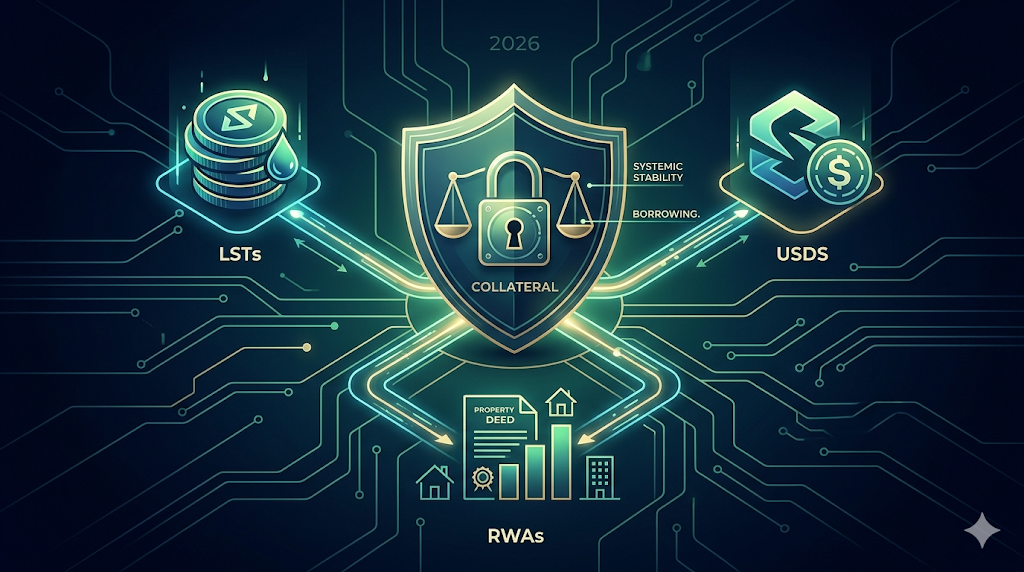
In the current financial landscape, collateral serves as the essential engine of decentralized finance (DeFi), acting as a mechanical substitute for traditional trust. It is the digital value locked within a smart contract to guarantee a debt, allowing users to borrow capital without needing a credit score or a centralized bank's approval. As the ecosystem has matured, the role of collateral has shifted from simply parking assets to utilizing yield-bearing instruments and tokenized real-world assets to maximize capital efficiency.
By removing the human element from lending, collateralized protocols ensure that every transaction is backed by verifiable on-chain value. This shift has turned DeFi into a high-performance alternative to legacy banking. In today's market, managing your collateral effectively is the difference between a high-yield strategy and sudden liquidation.
Key Takeaways
-
Collateral is the mechanical substitute for traditional credit scores, enabling anonymous, permissionless lending through smart contracts.
-
In 2026, the market has pivoted to productive collateral, where LSTs and LRTs earn staking rewards even while securing a loan.
-
Under the CLARITY Act, tokenized Real-World Assets (like T-bills) now provide a stabilized, institutional-grade foundation for decentralized borrowing.
-
The transition from DAI to USDS has established a new canonical stablecoin collateral, featuring automated yield wrappers like sUSDS.
-
DeFi relies on over-collateralization and automated liquidation engines to prevent bad debt, ensuring the system remains solvent without human intervention.
Defining Collateral in the 2026 DeFi Ecosystem
Collateral is defined as the digital skin in the game that powers the decentralized economy. Technically, it is the process of locking an asset within a smart contract to guarantee the performance of a debt or a contractual obligation. While traditional finance relies on credit scores and personal history to assess risk, DeFi uses verifiable value.
In this permissionless environment, collateral acts as the ultimate trust-replacement mechanism. It ensures that even if a borrower remains completely anonymous, the protocol is protected by the tangible assets held in escrow.
The Foundation of Permissionless Finance
Today, the definition of collateral has expanded beyond simple cryptocurrency tokens. Under the CLARITY Act, collateral now represents a broad spectrum of value, ranging from native tokens like Bitcoin and Ethereum to tokenized real-world assets (RWAs) like Treasury bills.
Trustless Architecture: Because collateral is held by code rather than a centralized custodian, there is no human risk involved in the storage or release of the assets.
Instant Finality: If a contractual obligation is met, the smart contract releases the collateral instantly. Conversely, if the value of collateral falls too low, the contract executes liquidation without the need for a legal process.
The Standard of Over-Collateralization
Because digital assets are traded 24/7 and can experience rapid price shifts, the DeFi standard remains over-collateralization. This means you must pledge more value than you intend to borrow.
For example, to borrow 1,000 USDS (the upgraded stablecoin from the Sky protocol), a user might be required to deposit $1,500 worth of Ethereum. This extra $500 acts as a "volatility buffer." If the price of Ethereum drops, the protocol still has enough value to cover the debt, protecting the system's overall solvency.
The Shift Toward Dynamic Collateral
In earlier versions of DeFi, collateral just sat idle in a vault. Today, the most sophisticated protocols utilize Liquid Staking Tokens (LSTs) as collateral. This allows the assets to remain productive, earning network rewards and interest, while simultaneously serving as security for a loan. This dual-utility model has become the primary driver of capital efficiency in the modern decentralized market.
How Collateralized Loans Work: Mechanics
The mechanics of a loan are governed by immutable code rather than human oversight. When you deposit collateral into a protocol like Aave V3 or the Sky Protocol, the smart contract immediately calculates your borrowing capacity and monitors the safety of your position in real-time. Understanding these underlying metrics is essential for preventing automated liquidations.
The Loan-to-Value (LTV) Ratio
The LTV ratio defines the maximum amount you can borrow against a specific asset. These ratios are highly specialized. For example, highly liquid assets like USDS or wstETH may have an LTV of 80%, meaning $1,000 of collateral allows you to borrow up to $800.
More volatile or "Siloed" assets in Isolation Mode may have much lower LTVs to protect the protocol from localized price crashes. Some advanced protocols now utilize Efficiency Mode, which allows for much higher LTVs (up to 97%) when the collateral and the borrowed asset are closely correlated, such as borrowing USDS against USDC.
The Health Factor (HF)
The Health Factor is the primary real-time safety metric for your loan. It represents the numeric gap between your current collateral value and the point at which your loan becomes under-collateralized.
To calculate the Health Factor, protocols use the following formula:
HF = [∑ (Collateral_i × LiquidationThreshold_i)] / (Total Debt + Accrued Interest)
-
HF > 1: Your position is safe.
-
HF < 1: Your position is eligible for liquidation.
Smart Contract Enforcement & Liquidation
If your Health Factor drops below 1.0, the smart contract's enforcement phase begins. Because there is no legal department to call you for a margin check, the system relies on third-party liquidators (often automated bots).
Trigger: The price of your collateral drops, pushing the HF below 1.0.
Incentive: The protocol offers your collateral at a discount (typically 5%–10%) to anyone who can repay your debt.
Execution: A liquidation bot pays off your loan and "claims" your discounted collateral as a reward.
Result: The protocol remains solvent, the liquidator earns a profit, and the borrower loses a portion of their assets.
In 2026, the Sky Protocol has further refined this mechanism through the Sky Allocator system. Integrated with advanced risk modules, it enables soft liquidations by gradually converting a portion of collateral into the borrowed asset within a specific price range. This stabilizes the position without triggering a total market sell-off.
The Evolution of Collateral Types
The current ecosystem categorizes collateral into three primary tiers: volatile blue-chips, productive yield-bearing assets, and tokenized real-world assets.
Volatile Blue-Chips: The Liquidity Foundation
Bitcoin (BTC), Ethereum (ETH), and Solana (SOL) remain the most widely accepted forms of collateral. Their deep liquidity and global recognition make them the pristine assets of the decentralized world. However, their role has evolved. Instead of holding raw tokens, many institutional desks now use these as the base layer for more complex strategies. Their primary value lies in their resistance to censorship and their status as the most battle-tested assets in the 2026 market.
Productive Collateral: LSTs and LRTs
The most significant shift in 2026 is the dominance of Liquid Staking Tokens (LSTs) and Liquid Restaking Tokens (LRTs). Assets like stETH (Lido) or eETH (Ether.fi) allow users to earn a native staking yield of 3%–5% even while those assets are locked in a loan.
This creates a scenario where collateral effectively pays its own interest. If you borrow against ETH, your capital is lazy. If you borrow against stETH, your capital is productive. In the current high-velocity market, using non-productive assets as collateral is increasingly seen as a missed opportunity.
Real-World Assets (RWAs) and the CLARITY Act
The CLARITY Act provided the legal framework necessary to bring traditional financial instruments on-chain. In 2026, we see a massive influx of tokenized Treasury bills, corporate debt, and even gold-backed tokens serving as DeFi collateral.
Stability: These assets provide a low-volatility floor that crypto-native tokens often lack.
Institutional Entry: Major funds now use tokenized T-bills as collateral to mint decentralized stablecoins, allowing them to move between traditional and decentralized markets without exiting the blockchain.
The Sky Protocol and USDS
The transition of MakerDAO to the Sky protocol has introduced USDS as a cornerstone of collateral landscape. Unlike its predecessor (DAI), USDS is designed for extreme modularity. It is backed by a diverse basket of decentralized assets and regulated RWAs, making it one of the most resilient collateral types available. The Sky Upgrade has also introduced sUSDS, a staked version that further increases the utility of stable collateral by offering built-in reward features.
Collateral Comparison
| Collateral Type | Typical LTV (2026) | Liquidation Threshold | Primary Benefit |
| Blue-Chip (BTC/ETH) | 70% – 80% | 85% | Highest Liquidity |
| LSTs (stETH/wstETH) | 75% | 80% | Native Staking Yield |
| RWAs (T-Bills/Gold) | 90% | 95% | Price Stability |
| Sky Protocol (USDS) | 85% | 90% | Low Volatility/High Utility |
The diversification of collateral types has made the DeFi ecosystem significantly more resilient. By balancing the high-growth potential of volatile tokens with the stability of RWAs and the productivity of LSTs, modern borrowers can construct portfolios that are both secure and capital-efficient.
The Role of Collateral in Market Stability
In the decentralized economy, collateral does not just secure individual loans; it functions as the primary stabilization mechanism for the entire market. In the absence of central banks or government bailouts, DeFi relies on a distributed backstop of over-collateralized assets to ensure protocol solvency. This system maintains balance through automated enforcement, even during periods of high price volatility.
Solvency and the Automated Liquidation Engine
The solvency of a protocol depends on its ability to cover its liabilities at all times. Collateral provides this assurance by acting as a pool of liquid value that the protocol can claim if a borrower’s position becomes risky.
Self-Healing Infrastructure: When prices drop, 2026 liquidation engines (such as those powered by the Sky Protocol or Aave V4) automatically trigger sell-offs. These distributed liquidators are bots that compete to repay risky debt in exchange for discounted collateral. This process ensures that "bad debt" is purged before it can threaten the protocol's liquidity.
The Backstop Module: Many 2026 protocols include a secondary safety layer, often called a Safety Module or Backstop. If a mass liquidation event fails to cover all debt, a portion of the protocol's native tokens is automatically sold or slashed to bridge the gap, protecting lenders and stablecoin holders.
The Stabilization Effect of RWAs
One of the most significant changes in 2026 is the inclusion of tokenized Treasury bills and corporate bonds as a primary collateral layer.
Low-Beta Anchors: Unlike volatile assets like Ethereum, tokenized T-bills maintain a stable value. By including these in the collateral basket for USDS, the Sky Protocol has created a stabilized "floor" that absorbs the shocks of crypto-native market crashes.
Counter-Cyclical Liquidity: During market downturns, institutional capital often flows into these RWA-backed collateral pools, providing the liquidity needed to keep lending rates stable when other markets are freezing.
Containing Contagion: Isolation and Siloed Borrowing
The DeFi market has largely moved away from "universal collateral" models that allowed any asset to back any loan. To prevent one failing token from crashing an entire protocol, developers have implemented Siloed Borrowing and Isolation Modes.
Risk Containment: Under this structure, a new or high-risk asset can only be used as collateral to borrow specific, low-risk stablecoins. It cannot be used as collateral for other volatile assets. This firewalling of risk prevents a localized collapse (such as a 2026 altcoin exploit) from triggering a systemic liquidation cascade across the entire ecosystem.
Circuit Breakers: Regulatory frameworks have encouraged the adoption of on-chain circuit breakers. These tools can temporarily pause liquidations or borrowing for a specific asset if an oracle detects irrational price gaps or a sudden loss of liquidity, giving the market time to stabilize and preventing false liquidations.
Leverage and Capital Efficiency
Collateral also acts as the fuel for market liquidity. By allowing users to re-collateralize their positions, using Liquid Staking Tokens (LSTs) as collateral to borrow more assets, DeFi increases the total volume of capital available for trading.
Risks and Management: Liquidations and Bad Debt
While collateralized lending provides the backbone of the decentralized economy, it also introduces systemic risks that can escalate rapidly during market stress. In the DeFi environment, the primary concern for both users and protocols is not just the loss of individual assets, but the emergence of bad debt, a scenario where the value of locked collateral no longer covers the outstanding loan.
The Mechanism of Automated Liquidation
The first line of defense against insolvency is the liquidation engine.
The Liquidation Penalty: To attract liquidators, protocols offer under-collateralized assets at a discount. In April 2026, most major lending hubs like Sky and Aave have standardized these penalties between 5% and 12%, depending on the asset's liquidity profile.
Cascading Liquidations: If a large amount of collateral is sold off simultaneously, it can suppress the market price of that asset, triggering further liquidations for other users. This phenomenon, often called a liquidation cascade, can lead to extreme price volatility even if the underlying protocol remains technically secure.
Bad Debt and the 2026 KelpDAO/Aave Incident
The most critical risk in DeFi is the creation of bad debt. This occurs when an asset's price drops so quickly, or its liquidity vanishes so completely, that liquidators cannot sell the collateral for enough to repay the lenders.
The April 18, 2026 KelpDAO exploit serves as a landmark case study for this risk. An attacker used unbacked rsETH (drained via an RPC poisoning attack) as collateral to borrow approximately $236 million in WETH and wstETH from Aave V3. Because the collateral was essentially "worthless" from the start, the liquidation engine could not recover the borrowed funds, leaving Aave with an estimated $123 million to $230 million in bad debt.
Recovery and the DeFi United Bailout
The management of bad debt has become a collaborative effort. Following the KelpDAO incident, Aave service providers launched DeFi United on April 23, 2026. This cross-protocol relief fund aims to raise 100,000 ETH to restore the backing of the ecosystem. This shift toward "coordinated bailouts" represents a maturing industry that prioritizes systemic confidence over individual protocol isolation.
Oracle Risk and Manipulation
Another significant management challenge is oracle risk. Protocols rely on price feeds from providers like Chainlink to determine the value of collateral. To mitigate this, the CLARITY Act mandates stricter risk management standards for intermediaries. Protocols are increasingly adopting:
Circuit Breakers: Automatically pausing liquidations or borrowing during abnormal oracle behavior.
Isolation Mode: Restricting new or experimental assets so they can only serve as collateral for a limited pool of assets, preventing an exploit in one area from infecting the entire protocol.
The Role of AI in Risk Monitoring
In response to these complex threats, many traders utilize autonomous agents like Clawdbot to monitor their collateral health in real-time. These agents analyze on-chain liquidity, whale movements, and bridge security to provide early warning signals before a liquidation event occurs. By integrating AI-driven oversight, users can manage the inherent risks of DeFi with the same precision as institutional desks.
Optimizing Collateral on KuCoin
On a centralized exchange, the concept of collateral is often referred to as Margin. By understanding the specific margin modes and risk metrics available on KuCoin, traders can maximize their capital efficiency in the 2026 market.
KuCoin provides two distinct ways to manage your collateral, each suited to a different risk appetite:
Cross-Margin Mode: In this setting, your entire account balance serves as a shared collateral pool for all open positions. This is the most capital-efficient method because profits from one successful trade automatically support the margin requirements of a struggling position.
Isolated Margin Mode: This mode restricts collateral to a specific trading pair. If you open a leveraged position on an emerging asset found in GemSPACE, your risk is limited to the funds allocated to that specific trade. This firewalling of capital prevents a sudden price drop in a volatile altcoin from affecting your primary holdings.
Monitoring the Risk Rate
To maintain a safe position on KuCoin, you must monitor your Risk Rate. This metric functions similarly to the DeFi Health Factor but is expressed as a percentage. KuCoin calculates the Risk Rate using the following formula:
Risk Rate = (Total Liabilities / Margin Balance) × 100%
Professional traders typically aim to keep their Risk Rate below 60% to provide a sufficient buffer against the sudden volatility seen in the current market.
Automated Collateral Management with Trading Bots
In the fast-moving ecosystem, manual margin management is often insufficient. KuCoin’s suite of AI Trading Bots, including the Spot Grid and Smart Rebalance bots, can automate your collateral strategy.
Conclusion
The role of collateral in the decentralized economy has evolved from a simple security deposit into a sophisticated financial instrument. In 2026, the integration of productive LSTs, regulated RWAs under the CLARITY Act, and the modular architecture of the Sky Protocol has created a more resilient and efficient system.
Whether you are borrowing against tokenized T-bills or managing a leveraged portfolio on KuCoin, the core principle remains the same: collateral is the foundation of trust in a permissionless world. By mastering these tools and understanding the underlying risks of liquidation and bad debt, you can navigate the 2026 DeFi landscape with confidence and precision.
FAQs
What is the Health Factor in DeFi?
It is a numeric representation of how close your position is to liquidation. A health factor below 1.0 triggers an automated sell-off of your collateral.
Can I use my staked assets as collateral?
Yes, most protocols accept Liquid Staking Tokens (LSTs) like stETH, allowing you to earn staking rewards while your assets are locked in a loan.
What happens during a Liquidation Cascade?
This occurs when falling prices trigger liquidations, which then flood the market with sell orders, further lowering prices and triggering more liquidations in a feedback loop.
How does the Sky Protocol handle USDS collateral?
The Sky Protocol uses a decentralized reserve system to back USDS with a mix of crypto-native assets and tokenized RWAs.
How are collateralized loans taxed?
Under 2026 standards, borrowing against your crypto is generally not a taxable event, but liquidations are treated as a sale and may trigger capital gains taxes.
Disclaimer:This content is for informational purposes only and does not constitute investment advice. Cryptocurrency investments carry risk. Please do your own research (DYOR).