

What Impact Will the Middle East Situation Have on Crypto Space?
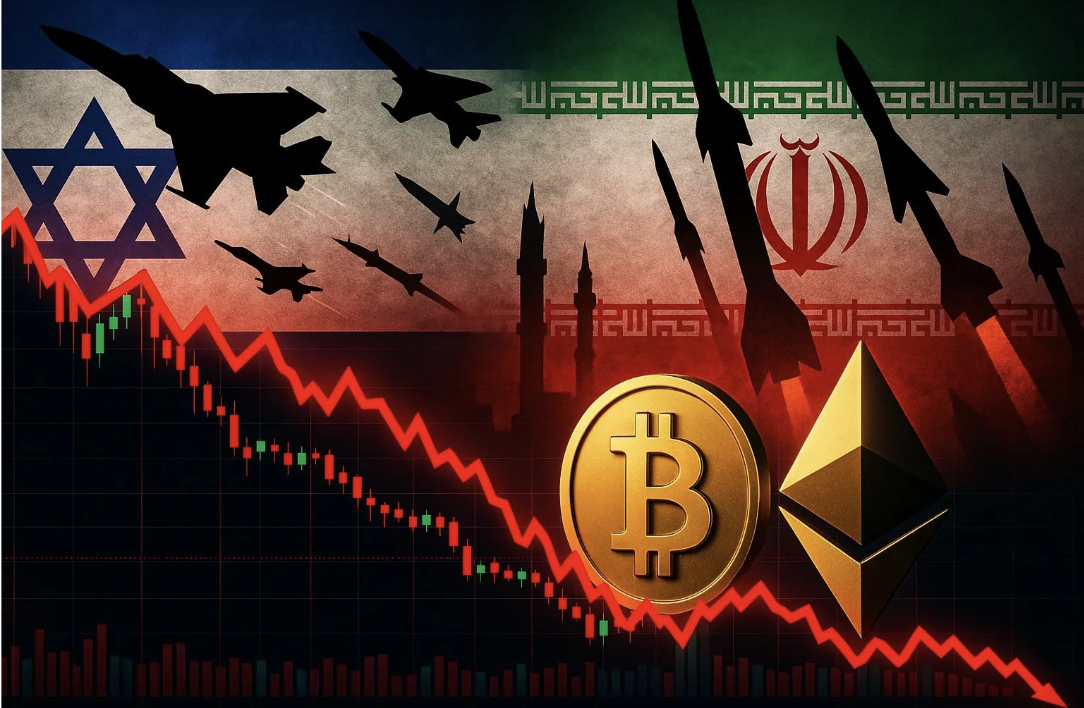
Explore how geopolitical tensions in the Middle East influence cryptocurrency markets, including Bitcoin, oil prices, inflation, and investor behavior.
Abstract Statement
Geopolitical tensions in the Middle East have historically influenced global financial markets through energy price shocks, inflationary pressures, and shifts in investor sentiment. As cryptocurrencies mature into a recognized asset class, these dynamics increasingly affect the crypto space, shaping price volatility, adoption trends, and Bitcoin’s rising role as a potential hedge or risk asset.
Concept of the Link Between Geopolitics and Crypto Markets
The Middle East remains one of the most strategically significant regions in the global economy, primarily due to its dominance in oil production and its control over key trade routes such as the Strait of Hormuz. Any instability in this region tends to ripple across global markets, affecting commodities, currencies, and investor sentiment. Historically, these shocks have influenced traditional assets like equities and bonds, but in recent years, cryptocurrencies have become increasingly sensitive to such developments.
As digital assets grow in adoption and institutional relevance, they are no longer isolated from macroeconomic forces. Events in the Middle East now influence not only oil prices but also broader financial conditions that directly impact the crypto market. The interconnected nature of today’s financial system means that geopolitical tensions can trigger a chain reaction—starting from energy markets and ending in crypto price movements.
According to the International Monetary Fund, geopolitical tensions can significantly impact global financial stability, which indirectly affects emerging asset classes like cryptocurrencies.
How Geopolitical Shocks Transmit Into Financial Markets
Geopolitical shocks do not affect markets in isolation; they move through a well-established chain of economic reactions. The first point of impact is often the energy market. Disruptions in oil supply or fears of conflict escalation can drive prices higher. These rising costs then filter into the broader economy, increasing production expenses and pushing inflation upward.
As inflation rises, central banks respond by tightening monetary policy, typically through interest rate hikes. This reduces liquidity in financial systems, making capital more expensive and less available for investment. Risk assets, including cryptocurrencies, are particularly sensitive to these changes in liquidity conditions.
This transmission mechanism explains why crypto markets often react indirectly to geopolitical events. It is not the conflict itself that moves Bitcoin or Ethereum prices, but rather the economic consequences that follow.
Understanding this chain, oil to inflation, inflation to rates, rates to liquidity, is essential for interpreting crypto market reactions during periods of geopolitical stress.
Oil Prices and Their Ripple Effect on Crypto
Oil remains one of the most critical commodities in the global economy, and the Middle East plays a central role in its production and distribution. When tensions rise in the region, oil prices often spike due to fears of supply disruptions. These price increases have far-reaching implications beyond the energy sector.
Inflation plays a complex role in crypto markets. On one hand, Bitcoin is often viewed as a hedge against inflation due to its fixed supply. On the other hand, rising inflation can lead central banks to tighten monetary policy, which typically reduces liquidity in financial markets and negatively impacts risk assets, including cryptocurrencies.
Data from the U.S. Energy Information Administration highlights how geopolitical disruptions in oil-producing regions have historically led to price volatility, influencing broader financial markets.
Higher oil prices contribute to inflation by increasing transportation and manufacturing costs. This, in turn, affects consumer spending and business investment, slowing economic growth. For financial markets, the key impact comes through liquidity conditions. As inflation rises, central banks tighten policy, reducing the amount of capital available for speculative investments.
Bitcoin as Digital Gold: Safe Haven or Risk Asset?
One of the most debated questions is whether Bitcoin acts as a safe-haven asset during geopolitical crises. Traditionally, assets like gold have served this role. Bitcoin, often referred to as “digital gold,” is increasingly being tested under similar conditions.
During some geopolitical events, Bitcoin has shown resilience, attracting inflows as investors seek alternatives to traditional financial systems. However, in other cases, it has behaved more like a high-risk asset, declining alongside equities.
Research from CoinDesk and Glassnode suggests that Bitcoin’s role is still evolving, with its behavior depending largely on market context and liquidity conditions.
Inflation, Interest Rates, and Crypto Liquidity
Geopolitical instability often leads to inflationary pressures, particularly when energy prices rise. Central banks, such as the Federal Reserve, may respond by increasing interest rates to control inflation.
Bitcoin is frequently described as a hedge against inflation due to its fixed supply of 21 million coins. In theory, this scarcity should protect its value during periods of currency debasement. However, real-world data presents a more complex picture.
During certain inflationary periods, Bitcoin has performed well, attracting investors seeking alternatives to fiat currencies. In other cases, it has behaved more like a high-risk asset, declining alongside equities. This inconsistency shows the evolving nature of Bitcoin’s role in financial markets.
One explanation is that Bitcoin’s behavior depends on the broader macroeconomic environment. In times of moderate inflation with strong liquidity, it may act as a hedge. However, when inflation leads to aggressive monetary tightening, Bitcoin tends to suffer due to reduced liquidity.
This dynamic shows the indirect but powerful influence of Middle Eastern geopolitics on crypto through macroeconomic channels.
Insights from Glassnode suggest that Bitcoin’s correlation with traditional assets shifts over time, highlighting its hybrid nature as both a speculative and store-of-value asset.
Market Volatility and Investor Psychology
Geopolitical tensions often trigger sharp increases in market volatility. In the crypto space, this volatility is amplified due to the market’s relatively smaller size and higher speculative activity.
Investor psychology plays a crucial role during such periods. Fear and uncertainty can lead to panic selling, while sudden recoveries may trigger fear of missing out (FOMO). These emotional responses can cause rapid price swings.
Reports from Chainalysis indicate that geopolitical events often lead to spikes in trading volume and volatility in crypto markets.
Risk-On vs Risk-Off: Where Crypto Truly Sits
One of the most important questions for investors is whether cryptocurrencies are risk-on or risk-off assets. In practice, they have shown characteristics of both, depending on market conditions.
During periods of economic stability and strong liquidity, crypto behaves like a risk-on asset, rising alongside equities. However, during times of extreme uncertainty, some investors view Bitcoin as a hedge, leading to temporary inflows.
This dual identity creates complexity in predicting market behavior. Correlation data often shows Bitcoin moving in tandem with technology stocks, particularly during liquidity-driven cycles. However, geopolitical shocks can temporarily disrupt these correlations.
Understanding where crypto sits in the risk spectrum is essential for interpreting its reaction to Middle Eastern tensions.
Capital Flight and Crypto Adoption
In regions affected by conflict or economic instability, individuals may turn to cryptocurrencies as a means of preserving wealth or transferring funds across borders. This phenomenon, known as capital flight, can drive increased adoption of digital assets.
Cryptocurrencies offer advantages such as accessibility, portability, and resistance to censorship. In situations where traditional banking systems are disrupted, these features become particularly valuable.
Fortunately, the World Bank has noted that digital financial tools, including cryptocurrencies, are increasingly used in regions experiencing economic or political instability.
Sanctions and the Role of Crypto in Global Finance
Sanctions are a common tool in geopolitical conflicts, and the Middle East has been a focal point for such measures. These restrictions can limit access to traditional financial systems, prompting interest in alternative channels like cryptocurrencies.
While crypto can provide a degree of financial flexibility, its role in sanctions evasion is complex and often overstated. Blockchain transparency makes large-scale evasion difficult, but smaller transactions may still occur.
Regulatory bodies, including the Financial Action Task Force, continue to monitor and develop frameworks to address these challenges.
Energy Costs and Crypto Mining
Rising energy prices have a direct impact on cryptocurrency mining, particularly for proof-of-work networks like Bitcoin. Mining operations require significant electricity, and increased costs can reduce profitability.
In response, miners may relocate to regions with cheaper energy or adopt more efficient technologies. This can lead to shifts in the global distribution of mining activity.
According to the Cambridge Centre for Alternative Finance, energy costs are one of the most significant factors influencing mining operations globally.
Stablecoins and Demand for Financial Stability
During periods of geopolitical uncertainty, stablecoins often see increased demand. These digital assets are pegged to fiat currencies, providing a relatively stable store of value within the crypto ecosystem.
Stablecoins enable users to remain within the crypto market without exposure to extreme volatility. They also facilitate cross-border transactions, making them useful in times of financial disruption.
This growing reliance on stablecoins highlights their role as a bridge between traditional finance and decentralized systems.
Institutional Investors and Risk Reassessment
Institutional investors play an increasingly important role in the crypto market. During geopolitical crises, these investors often reassess their risk exposure, which can lead to significant capital inflows or outflows.
Large-scale movements by institutional players can amplify market trends, contributing to both rallies and downturns. Their behavior is often influenced by macroeconomic conditions, including those shaped by Middle Eastern developments.
Regulatory Implications and Global Policy Shifts
Geopolitical tensions can accelerate regulatory developments in the crypto space. Governments may introduce new policies to address concerns related to financial stability, security, and illicit activity.
These regulatory changes can have both positive and negative effects. While increased oversight may enhance trust and adoption, it can also create barriers for innovation.
Long-Term Implications for Crypto Adoption
Despite short-term volatility, geopolitical instability may contribute to the long-term growth of cryptocurrencies. As individuals and institutions seek alternatives to traditional systems, the appeal of decentralized assets may increase.
This trend suggests that while conflicts may create immediate challenges, they could also drive broader adoption and innovation in the crypto space.
Conclusion: A Complex but Defining Relationship
The Middle East situation underscores the complex relationship between geopolitics and cryptocurrency markets. From oil price shocks and inflation to investor behavior and regulatory changes, the impact is multifaceted.
While cryptocurrencies are still developing, their growing integration into global financial systems means they are increasingly influenced by macroeconomic and geopolitical factors. At the same time, their unique properties, such as decentralization and accessibility, position them as potential tools for navigating uncertainty.
Ultimately, the impact of Middle Eastern geopolitics on crypto will depend on how these dynamics continue to evolve, as well as how the industry adapts to an increasingly interconnected and unpredictable global space.
FAQ: Middle East Tensions and Crypto
Q1: How do Middle East conflicts affect crypto prices?
A1: Conflicts often trigger oil price spikes, inflation, and market volatility, which can indirectly influence cryptocurrency liquidity and prices.
Q2: Is Bitcoin a safe haven during geopolitical crises?
A2: Bitcoin sometimes acts like “digital gold,” but it can also behave as a risk asset depending on liquidity and macro conditions.
Q3: Can crypto bypass sanctions or financial restrictions?
A3: Partially, crypto offers flexibility, but blockchain transparency and regulatory monitoring limit large-scale evasion.
Q4: Why do stablecoins see increased demand in crises?
A4: Stablecoins provide stability within crypto markets and facilitate cross-border transactions during periods of financial uncertainty.
Q5: Will Middle East instability boost long-term crypto adoption?
A5: Potentially, as people and institutions seek decentralized alternatives to traditional financial systems and hedges against instability.