

Visa’s $7B Stablecoin Milestone: Now Settling Across 9 Blockchains Worldwide
2026/06/25 15:22:00
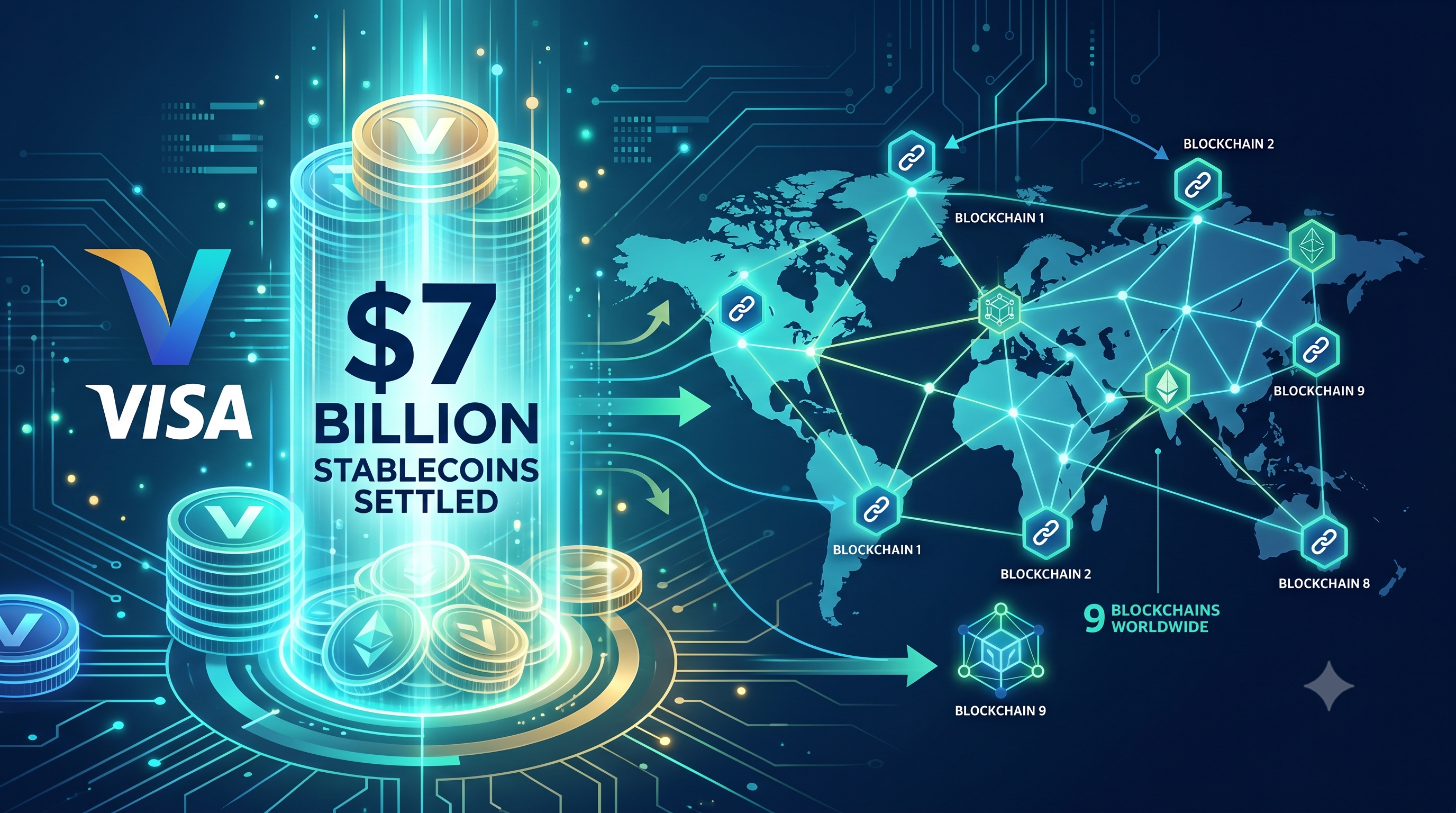
Visa’s announcement in late April 2026 marked a notable step in the evolution of digital payment infrastructure. The payments giant expanded its stablecoin settlement pilot to support nine blockchains and reported a $7 billion annualized run rate, reflecting 50% quarter-over-quarter growth. This development demonstrates how stablecoins are transitioning from experimental tools to practical components in global settlement processes. By offering issuers and acquirers the ability to settle obligations using stablecoins like USDC across diverse networks, Visa provides a unified layer that addresses fragmentation in blockchain ecosystems.
The move builds on earlier pilots and regional expansions, underscoring growing institutional comfort with blockchain-based rails for handling real-world payment flows. Visa’s multi-chain stablecoin settlement expansion to nine blockchains with a $7 billion annualized run rate positions the company as a key facilitator in integrating stablecoins into established financial systems, enhancing efficiency, liquidity access, and operational flexibility for partners worldwide without disrupting core payment experiences.
Visa’s Multi-Chain Expansion Strategy Delivers Practical Settlement Flexibility
The addition of five new blockchains, Arc, Base, Canton, Polygon, and Tempo, to Visa’s existing support for Avalanche, Ethereum, Solana, and Stellar creates a robust framework for stablecoin settlements. Each network brings distinct strengths tailored to different use cases. For instance, Base offers high-performance, low-cost transactions suitable for agentic commerce, while Canton emphasizes configurable privacy features critical for regulated institutional flows. Polygon delivers high-throughput infrastructure ideal for global payments, Arc focuses on programmable money aligned with real-world activity, and Tempo prioritizes efficient liquidity movement. This selection allows partners to choose networks based on specific needs such as speed, cost, privacy, or ecosystem liquidity, all while relying on Visa for consistent settlement processing.
The approach reduces the complexity associated with managing multiple blockchain environments independently. As of the April 2026 update, the pilot reflects live operational volume rather than projections, with partners already utilizing these rails across regions, including Latin America, Europe, Asia-Pacific, and the Middle East and Africa. Earlier USDC settlement expansion to U.S. banks further demonstrates progress toward broader accessibility. This infrastructure supports more than 130 stablecoin-linked card programs operating in over 50 countries, enabling seamless connections between on-chain assets and traditional merchant acceptance. By maintaining a common settlement layer, Visa helps financial institutions and fintechs streamline treasury operations, minimize conversion frictions, and improve capital efficiency. The $7 billion run rate, up significantly from prior quarters, indicates tangible adoption momentum driven by demand for faster, always-available settlement options that operate seven days a week in many cases.
How the $7 Billion Run Rate Reflects Real Institutional Adoption Trends
Reaching a $7 billion annualized stablecoin settlement run rate represents concrete progress in embedding blockchain rails into Visa’s core operations. This figure, achieved with 50% growth from the previous quarter, stems from actual transaction settlements by participating issuers and acquirers rather than hypothetical projections. It highlights increasing reliance on stablecoins for handling VisaNet obligations, particularly where traditional banking cycles introduce delays or higher costs. Partners benefit from near real-time finality on supported chains, allowing more frequent settlement cycles and better liquidity management. For context, the broader stablecoin market maintained a circulating supply of around $315 billion in early 2026, with transaction volumes in the trillions annually, illustrating the scale at which these assets operate. Visa’s program captures a portion of this activity within its network, serving as a bridge for institutions transitioning select flows on-chain.
The growth direction aligns with wider industry patterns where stablecoins facilitate efficient cross-border movements and treasury functions. Issuers can settle directly in USDC coin or other supported stablecoins, reducing the need for intermediate fiat conversions and associated risks. This capability extends to stablecoin-linked cards, where consumer spending remains familiar while backend processes leverage blockchain advantages. Analysts have noted the potential for such innovations to contribute to revenue diversification, even if current volumes remain a modest share of Visa’s overall activity. The multi-chain design further supports resilience, as liquidity pools across ecosystems can be accessed more readily, helping partners navigate varying market conditions. The run rate serves as a benchmark for how traditional payment networks are adapting to decentralized technologies while preserving reliability and scale.
Key Blockchains Powering Visa’s Stablecoin Settlement Capabilities
Visa’s nine supported blockchains collectively address a wide spectrum of technical and operational requirements. Established networks like Ethereum provide deep liquidity and smart contract functionality, Solana delivers high speed and low fees for high-volume use, Avalanche supports rapid finality, and Stellar excels in cross-border efficiency. Newer additions enhance these foundations: Base, powered by Coinbase, prioritizes performance for everyday on-chain interactions; Polygon optimizes for cost-effective, scalable payments; Canton introduces privacy controls suited to capital markets compliance; Arc, from Circle, emphasizes programmable integration with real economic activity; and Tempo focuses on streamlined liquidity flows. This diversity enables partners to route settlements according to priorities such as transaction costs, confirmation times, or regulatory alignment.
For example, privacy-focused institutions may favor Canton, while high-throughput retail-oriented programs lean toward Polygon or Base. The unified Visa layer abstracts away much of the interoperability challenge, presenting a consistent interface regardless of the underlying chain. This setup has facilitated expansions in stablecoin-linked card programs and direct settlements with banks. Live usage across multiple regions confirms the infrastructure’s readiness for production environments. As stablecoin supply and activity continue expanding, with total market volumes showcasing substantial real-world utility, Visa’s approach positions it to accommodate further growth without being limited to single-chain dependencies. Partners gain flexibility to adapt as new networks mature or liquidity shifts, supported by Visa’s global reach and security standards.
Stablecoin-Linked Cards Expand Reach Through Multi-Chain Settlements
Stablecoin-linked card programs, now exceeding 130 across more than 50 countries, leverage Visa’s settlement capabilities to connect digital asset balances with traditional spending networks. Users spend stablecoins indirectly through cards, while issuers and acquirers handle backend settlements on supported blockchains. This model preserves consumer familiarity and merchant acceptance while introducing efficiency gains on the financial institution side. Settlements in USDC or similar assets allow for quicker fund availability and reduced operational overhead compared to legacy rails. Regional rollouts in Latin America, Europe, Asia-Pacific, and other areas have demonstrated practical viability, with additional U.S. bank integrations strengthening domestic capabilities.
The multi-chain support ensures programs can tap into optimal liquidity pools, minimizing slippage or delays. Partnerships, such as those enabling self-custody options or global card accessibility, further broaden utility. For businesses and freelancers receiving payouts, or consumers managing crypto holdings, these programs offer convenient on-ramps and off-ramps. The $7 billion run rate partly reflects volume from these linked programs, where settlement innovation supports scalability. As more issuers participate, the ecosystem matures, potentially influencing how payment volumes flow between traditional and digital domains. Visa’s infrastructure handles the complexity, allowing focus on product development and user experience.
Operational Efficiencies Gained from Blockchain-Based Settlement Rails
Blockchain settlements in Visa’s pilot deliver measurable improvements in speed and cost for participating entities. Traditional settlement cycles often span days with intermediary involvement, whereas supported chains enable near-instant finality and 24/7 processing. This reduces capital tied up in transit and lowers associated fees. Partners report streamlined treasury management, as stablecoin inflows and outflows align more closely with business needs. For cross-border activities, the elimination of multiple correspondent banks simplifies flows and mitigates FX risks through dollar-denominated stable assets. The pilot’s growth to nine chains provides redundancy and choice, helping mitigate network-specific congestion or outages.
Institutions benefit from programmable features on certain chains, enabling automated compliance or conditional transfers. Integration with existing VisaNet processes ensures minimal disruption, with settlements feeding directly into reconciliation. The 50% quarterly increase in run rate suggests accelerating efficiencies as more volume shifts to these rails. Fintechs and payment providers utilize the system to enhance service offerings, such as faster merchant payouts. These advancements contribute to a more responsive global payments infrastructure.
Liquidity Management Advantages in a Fragmented Blockchain Landscape
Access to liquidity across nine blockchains via a single settlement provider represents a significant advantage in today’s multi-chain environment. Different networks host varying depths of stablecoin liquidity, and Visa’s approach allows partners to select the most suitable without building custom bridges. This reduces fragmentation risks and operational burdens. For example, high-activity chains like Solana or Base offer abundant liquidity for certain transactions, while others provide specialized features. The common layer ensures seamless orchestration, improving overall capital efficiency.
As stablecoin markets expand, with total supply hovering near $315 billion, efficient access becomes increasingly valuable for managing reserves and flows. Issuers can optimize based on real-time conditions, enhancing resilience against volatility in any single ecosystem. This setup supports broader adoption by lowering barriers for institutions wary of blockchain complexity. Regional pilots have shown how such flexibility aids in local market adaptations. The result is more robust treasury strategies aligned with global commerce demands.
Partner Perspectives Highlight Demand for Reliable On-Chain Integration
Feedback from blockchain partners underscores the value of Visa’s expansion. Leaders from networks like Arc, Base, Canton, Polygon, and Tempo emphasize how collaboration addresses performance, privacy, scalability, and liquidity needs. These statements reflect growing confidence in stablecoins as practical tools for real-time settlement, treasury management, and programmable commerce. Institutions increasingly appreciate the ability to connect blockchain infrastructure with regulated financial environments, where compliance, transparency, and operational reliability remain paramount.
The pilot’s momentum validates the broader move toward hybrid systems that combine the trust of traditional payment networks with the efficiency and flexibility of blockchain technology. Such partnerships are accelerating practical use cases across card programs, cross-border payments, B2B settlement flows, and merchant services. They also encourage greater interoperability between networks, reducing friction for enterprises adopting digital assets. Continued dialogue between Visa, financial institutions, and blockchain developers helps ensure that evolving technical standards, regulatory expectations, and liquidity requirements remain aligned as adoption expands across global payment ecosystems.
Cross-Border Payment Improvements Driven by Stablecoin Rails
Stablecoin settlements enhance cross-border capabilities by offering speed and predictability absent in many legacy systems. Visa’s multi-chain pilot supports efficient movement of value internationally, benefiting merchants, remitters, and businesses. Reduced settlement times and transaction costs improve cash flow management, operational efficiency, and overall competitiveness. Integration with existing payment networks maintains broad acceptance while modernizing backend processes without requiring significant changes to the user experience.
This development aligns with the growing utility of stablecoins in global trade, e-commerce, treasury management, and remittance markets. As more institutions explore blockchain-based payment solutions, the ability to settle across multiple networks provides greater flexibility and resilience. Partners can leverage this infrastructure to access new markets, streamline international transactions, reduce foreign exchange friction, and gain meaningful competitive advantages in an increasingly digital global economy.
Interoperability Focus Shapes Visa’s Long-Term Blockchain Approach
Emphasizing interoperability across chains positions Visa to handle future ecosystem developments and evolving market demands. The nine-chain support mitigates single-point dependencies, reduces operational bottlenecks, and fosters greater adaptability as blockchain infrastructure continues to mature. This strategy simplifies integration for partners building in diverse environments, allowing businesses to leverage the networks that best suit their needs without sacrificing settlement efficiency. As stablecoin activity expands across multiple ecosystems, the need for a unified settlement framework becomes increasingly important. Visa’s role as a trusted intermediary helps provide secure, scalable connections between on-chain and off-chain financial systems, bridging traditional payment networks with blockchain-based infrastructure.
The expansion also strengthens liquidity accessibility by enabling participants to move value more efficiently across supported networks. This can reduce settlement friction, improve transaction speed, and enhance capital efficiency for issuers, acquirers, and payment providers. Ongoing initiatives are focused on improving programmability, automation, and accessibility, enabling more sophisticated payment use cases.
Market Context and Broader Stablecoin Ecosystem Dynamics
High transaction activity, particularly in Asia and established chains, drives demand for reliable settlement options. Visa captures and channels part of this into its network, complementing rather than competing with core card volumes. The pilot demonstrates maturity in bridging sectors. Continued growth in linked programs and settlements signals sustained interest. Beyond transaction volume, the expansion highlights how major financial institutions are increasingly viewing stablecoins as practical infrastructure rather than speculative assets.
Businesses engaged in cross-border payments, treasury management, and digital commerce are seeking faster and more flexible settlement mechanisms that can operate across multiple blockchain ecosystems. By supporting a wider range of networks, Visa reduces friction for partners that may be active on different chains while maintaining familiar operational standards. This interoperability strengthens the utility of stablecoins in real-world financial applications and expands access to liquidity across markets. As regulatory frameworks continue to develop and institutional participation grows, initiatives such as Visa’s multi-chain settlement network could play an important role in accelerating adoption, improving efficiency, and reinforcing confidence in blockchain-based payment solutions worldwide.
Financial Institutions Adopting Stablecoin Strategies
Financial institutions gain powerful tools for modernization through Visa’s expanding stablecoin settlement capabilities. By enabling direct settlements, flexible blockchain selection, and seamless card integrations, Visa allows banks, payment providers, and fintech firms to develop more efficient and innovative financial products. Faster settlement times reduce reliance on traditional intermediaries, helping institutions lower operational costs while improving liquidity management. The ability to choose from multiple blockchain networks also provides greater flexibility in tailoring solutions to specific business and regional requirements. Beyond efficiency gains, risk management can improve through shorter settlement cycles, enhanced transparency, and reduced counterparty exposure.
Financial institutions can also explore programmable payment features, including automated settlements and smart contract-based processes, while continuing to operate within established regulatory and compliance frameworks. Visa’s reported $7 billion annualized stablecoin settlement run rate further reinforces confidence in the growing viability of blockchain-based payment infrastructure. As adoption expands, more institutions may be encouraged to participate, accelerating innovation across the payments ecosystem. This evolution offers a meaningful competitive advantage by enhancing operational efficiency, expanding service capabilities, and improving customer experiences in an increasingly digital financial environment.
Conclusion
Visa’s achievement of a $7 billion annualized stablecoin settlement run rate across nine blockchains illustrates a pragmatic advancement in payment infrastructure. By combining multi-chain flexibility with established network strengths, the company facilitates meaningful efficiencies for issuers, acquirers, and end users. This integration supports stablecoin growth within regulated, scalable frameworks, contributing to more responsive global commerce. Ongoing developments will likely build on this foundation, reinforcing connections between traditional finance and blockchain technologies.
FAQs
What does Visa’s $7 billion stablecoin settlement milestone indicate about the maturity of blockchain in payments?
Visa’s pilot reaching this run rate with live volume across nine diverse blockchains shows that stablecoin settlements have moved beyond testing into operational use by financial institutions and fintech partners. The 50% quarterly growth and support for over 130 card programs in 50+ countries demonstrate practical benefits like faster processing and better liquidity management, integrated into Visa’s global network while maintaining security and compliance standards familiar to traditional finance. This setup allows institutions to handle settlements more efficiently without overhauling existing systems.
Which blockchains does Visa now support for stablecoin settlements following the April 2026 expansion?
The nine networks include established ones like Ethereum, Solana, Avalanche, and Stellar, plus newer additions Arc (by Circle), Base (by Coinbase), Canton (privacy-focused), Polygon, and Tempo. Each offers tailored advantages in speed, cost, privacy, or liquidity, enabling partners to optimize based on specific needs, while Visa provides a consistent settlement experience across them all. This multi-chain strategy addresses ecosystem fragmentation effectively.
How do stablecoin settlements benefit issuers and acquirers working with Visa?
Issuers and acquirers gain from quicker fund availability, reduced intermediary costs, 24/7 processing on many chains, and access to broader liquidity pools. This supports improved cash flow, lower operational friction, and the ability to offer enhanced services like stablecoin-linked cards. The unified Visa layer simplifies management of multiple blockchains, allowing focus on core business activities while leveraging blockchain efficiencies.
What role do stablecoin-linked cards play in Visa’s overall strategy?
These cards enable consumers to spend stablecoin balances anywhere Visa is accepted, with settlements handled on-chain by issuers. The programs, active in numerous countries, combine familiar card experiences with backend innovations, driving volume into the settlement pilot and expanding utility for crypto holders. They represent a key bridge for mainstream adoption.
How does this development fit into the larger stablecoin market?
With stablecoin supply around $315 billion and substantial transaction volumes, Visa’s program channels part of this activity into regulated, scalable rails. It complements high on-chain usage by providing institutional-grade connections, supporting growth in payments, remittances, and treasury functions across regions.
Are there risks or considerations for institutions adopting these settlement options?
Institutions should evaluate network-specific risks, liquidity variations, and integration requirements while ensuring alignment with regulatory obligations. Visa’s infrastructure incorporates security and compliance elements, but partners must conduct thorough due diligence. The pilot’s design emphasizes choice and reliability to mitigate fragmentation challenges.
What might future expansions of Visa’s stablecoin program involve?
Potential areas include additional blockchains, more fiat-pegged stablecoins, broader geographic availability, and enhanced features for programmability or AI-driven commerce. Continued partner collaborations and volume growth will shape priorities, maintaining focus on interoperability and institutional needs.
How can individuals or businesses engage with related stablecoin opportunities?
Users can explore trading and holding relevant assets on established platforms. For example, KuCoin offers convenient access to major stablecoin markets and ecosystem tokens tied to supported chains like Ethereum or Solana, providing practical ways to participate in the broader ecosystem while monitoring developments in Visa’s integrations.
Disclaimer: This content is for informational purposes only and does not constitute investment advice. Cryptocurrency investments carry risk. Please do your own research (DYOR).