

The World's First Bitcoin Nation: Where Does El Salvador Stand in 2026?
2026/03/30 16:00:00
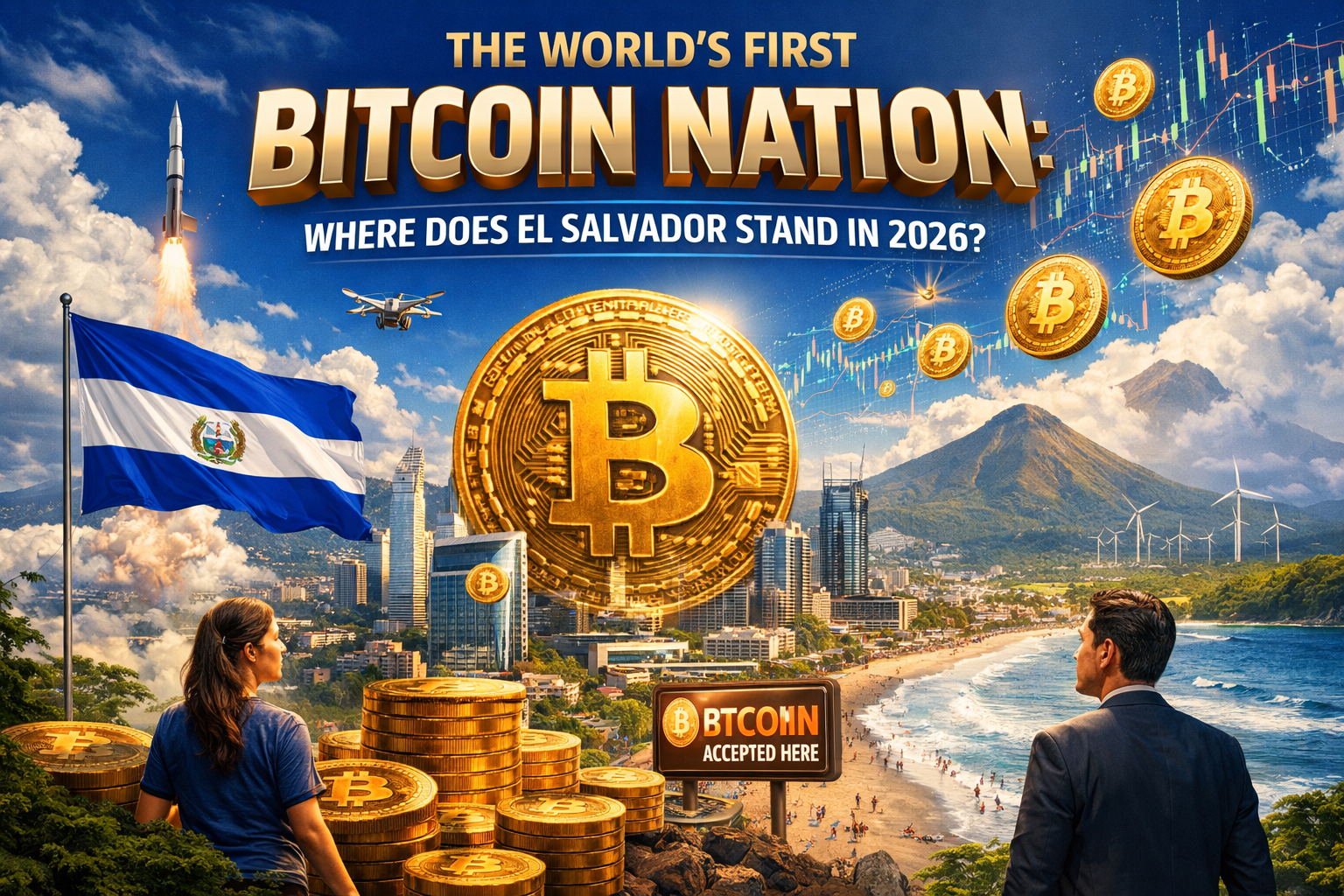
As we cross into 2026, the global financial community continues to monitor El Salvador, the first country to adopt Bitcoin as legal tender. This comprehensive analysis explores how President Nayib Bukele’s "Bitcoin Experiment" has evolved from a controversial legislative gamble into a multifaceted national strategy. We examine the current state of El Salvador's economy, its treasury, and its technological future.
In the following sections, we will dive deep into the El Salvador Bitcoin status, the performance of the Chivo Wallet, and how the Volcano Bonds are shaping the nation's 2026 economic landscape.
Key Takeaways
-
Fiscal Resilience: The national BTC treasury (6,000+ BTC) is in substantial profit, acting as a sovereign wealth fund that offsets traditional debt pressures.
-
Tourism as a Catalyst: Tourism has seen a 300% increase in specific sectors, largely driven by the "Bitcoin Beach" branding and crypto-nomad friendly laws.
-
The AI Pivot: El Salvador has successfully expanded its "Bitcoin energy" infrastructure to power AI data centers, diversifying its tech economy.
-
Financial Inclusion: While USD remains the daily medium, over 75% of the population now has access to digital financial tools, up from 30% in 2021.
-
Infrastructure Reality: The Volcano Bonds have moved from "vaporware" to active funding for geothermal energy expansion.
Why Did El Salvador Take the Leap?
To understand the 2026 reality, we must revisit the catalysts of 2021. El Salvador was a nation trapped in a cycle of dependency, using the US Dollar as its primary currency since 2001, which left its monetary policy at the mercy of the US Federal Reserve.
President Nayib Bukele’s Grand Vision: Financial Inclusion and De-dollarization
President Bukele’s move was born from necessity. In 2021, only 30% of El Salvador’s population had access to traditional bank accounts. This meant 70% of the population was "unbanked," forced to operate entirely in physical cash, which limited their ability to save, borrow, or participate in the global economy.
Furthermore, the country was heavily reliant on remittances from the US, which accounted for roughly 25% of the GDP. By using Bitcoin and the Lightning Network, the government aimed to bypass the high fees (often exceeding 10-20%) charged by intermediaries like Western Union and MoneyGram, potentially putting hundreds of millions of dollars back into the pockets of Salvadoran families.
Core Pillars of the 2021 Bitcoin Law
The legislation was radical not just for its content, but for its speed of implementation. The core pillars included:
-
Dual Legal Tender: Bitcoin and the USD coexist, allowing citizens to choose their preferred medium.
-
$30 Incentive: The government gave $30 in BTC to every citizen who downloaded the Chivo Wallet, the state-sponsored digital wallet.
-
Mandatory Acceptance: Article 7 required businesses to accept Bitcoin if they had the technological capacity, a point that sparked significant international debate regarding economic freedom.
Comparative Impact Table (2021 vs. 2026)
| Metric | Pre-Bitcoin (2020) | Post-Bitcoin (2026 Est.) |
| Annual Tourism Arrivals | 1.2 Million | 3.8 Million |
| GDP Growth Rate | ~2% | ~3.5% |
| Banking/Digital Wallet Access | 30% | 75% (including Chivo/Lightning) |
| Remittance Fees | 10% - 25% | < 1% (via Lightning Network) |
| National BTC Holdings | 0 BTC | 6,000+ BTC |
| International Image | High-Risk/Unsafe | Tech Hub/Digital Nomad Mecca |
The "Three Faces" of El Salvador’s Current Bitcoin Status
As we navigate through 2026, the implementation of Bitcoin has revealed three distinct outcomes: the fiscal reality for the government, the practical reality for the citizens, and the physical reality of infrastructure development.
Fiscal Balance – Massive Losses or Long-term Gains?
By early 2026, the narrative of "Bukele losing taxpayer money" has largely flipped. During the bear market of 2022-2023, critics pointed to the "underwater" status of the national treasury. However, following the strategic "1 BTC a day" purchase program and the massive market rallies of 2024 and 2025, El Salvador’s treasury—estimated to hold over 6,000 BTC—is currently in a substantial unrealized profit state.
These gains haven't just sat on a balance sheet. The government has strategically liquidated portions of the profit to:
-
Fund Public Infrastructure: Building "Chivo Pets" (a state-of-the-art veterinary hospital).
-
Education Reform: Financing the "My New School" program to renovate thousands of schools.
-
Debt Management: Using the surplus to buy back sovereign debt, improving the country's credit standing despite IMF skepticism.
Public Adoption – Is the Chivo Wallet Still in Use?
The reality on the ground is more nuanced than the government's Twitter feed might suggest. While Bitcoin is legal tender, cash (USD) remains king for daily transactions like buying bread or paying for bus rides.
-
The Literacy Gap: Older generations and rural populations still find the volatility and technology intimidating. While the younger demographic in San Salvador uses Chivo or Strike for convenience, the "Abuelita" in the mountains still prefers the tangibility of the dollar.
-
The Utility Shift: Instead of a medium of exchange, many Salvadorans now view Bitcoin as a "savings account" (Store of Value). They hold their BTC during price surges and only convert to USD when they need to make a major purchase, effectively using Bitcoin as a hedge against inflation.
Infrastructure – "Bitcoin City" and Volcano Mining Progress
The much-anticipated Volcano Bonds (or "Eruption Bonds") were finally issued in late 2024 after years of regulatory fine-tuning. The proceeds have accelerated the geothermal mining facility at the Conchagua volcano.
While Bitcoin City is not yet the futuristic metropolis seen in early architectural renders, the transformation is visible. The basic infrastructure—roads, high-speed internet, and renewable energy grids—is actively being laid out. This area is becoming a "Special Economic Zone," attracting miners who seek 100% renewable, low-cost geothermal energy, which in turn provides the state with a consistent "green" revenue stream.
The Butterfly Effect: Impact on the National Economy
The adoption of Bitcoin acted as a "macro-signal" to the rest of the world. It signaled that El Salvador was open for business, tech-literate, and willing to defy conventional financial norms.
Tourism Explosion: The Mecca for Crypto Nomads
Bitcoin has been a marketing masterstroke for tourism. Since 2021, international arrivals have surged by over 30%, reaching record highs in 2025. This isn't just traditional tourism; it's the rise of the "Crypto Nomad."
-
El Zonte (Bitcoin Beach): Has transformed from a sleepy surf town into a high-end tech enclave.
-
The "Orange Pill" Effect: Thousands of Bitcoiners visit annually not just for the weather, but to spend their sats in a place where they are welcomed.
-
Investment: Many tourists have become residents, purchasing property and starting local businesses, further stimulating the local economy.
Friction with the IMF: Sovereignty vs. Credit Rating
The International Monetary Fund (IMF) remains the loudest critic of the El Salvador Bitcoin policy. The persistent use of Bitcoin has complicated El Salvador’s efforts to secure traditional lending. The IMF argues that Bitcoin poses risks to consumer protection, financial integrity, and fiscal stability.
However, the Bukele administration has countered this by pointing to the country's increased GDP growth and the fact that they have not defaulted on any payments. In 2026, El Salvador is proving that while international approval is helpful, digital asset reserves can provide a secondary layer of financial resilience that traditional models don't account for.
2024-2026 Evolution: From "Currency Experiment" to "National Tech Strategy"
The most significant change in the last two years has been the shift in focus. The government has realized that Bitcoin is the foundation, not the entire house.
The 2026 Pivot: Integration of Bitcoin and AI
In 2026, the strategy is no longer just about BTC. El Salvador has introduced tax-free incentives for AI developers, data centers, and tech hardware manufacturers. By combining the cheap geothermal energy (originally built for Bitcoin mining) with AI processing needs, the country is rebranding itself as the "Singapore of Central America."
Subtle Policy Shifts: From Mandatory to Voluntary
The "Mandatory Acceptance" (Article 7) is now enforced with more flexibility. The government has moved away from penalizing small vendors and focused on ensuring the national digital infrastructure (broadband and 5G) is robust enough for those who choose to use it. This "softening" has actually increased organic adoption.
The Global Perspective: Why Other Nations Are Watching
As an exchange platform, we see a growing trend of "copy-cat" legislation. Nations with high inflation or significant unbanked populations are studying El Salvador's Digital Assets Issuance Law (LEAD). This law created the National Commission of Digital Assets (CNAD), a regulatory body that provides a transparent framework for tokenization.
-
Tokenization of Assets: El Salvador is now exploring the tokenization of real estate and national debt, potentially opening up investment to a global retail audience through the same rails that support Bitcoin.
-
The Competitive Edge: By having a regulated, auditable framework for digital assets, El Salvador is attracting fintech startups that are tired of the "regulation by enforcement" seen in other major jurisdictions.
Conclusion: What Has the World Learned?
As we look at the El Salvador Bitcoin experiment 2026, the takeaway is clear: the integration of digital assets into a national economy is a marathon, not a sprint. While the country hasn't completely abandoned the US Dollar, it has successfully built a parallel financial system that offers its citizens a choice. The success of the project lies in the country's newfound ability to attract global capital, its 3.5% GDP growth, and its status as a pioneer in the digital asset space. El Salvador has transitioned from a country known for its past troubles to a nation that represents a bold, decentralized future.
FAQs
Q: Is Bitcoin still legal tender in El Salvador in 2026?
A: Yes, Bitcoin remains legal tender alongside the US Dollar. The government continues to support its use through the Chivo Wallet and tax incentives for Bitcoin-based businesses and tech investors.
Q: Can I travel to El Salvador and pay only in Bitcoin?
A: In tourist hubs like Bitcoin Beach (El Zonte) and major parts of San Salvador, yes. However, in rural areas, carrying some USD cash is still recommended for smaller vendors.
Q: Has the Volcano Bond been successful?
A: The Volcano Bonds were successfully issued in late 2024. The funds are currently being used to expand geothermal energy production and provide the infrastructure for Bitcoin mining and the burgeoning AI data center sector.
Q: Does El Salvador still give $30 in Bitcoin to citizens?
A: The initial $30 sign-up bonus was a one-time launch incentive in 2021. In 2026, the government focuses more on educational programs and providing high-speed internet to facilitate digital asset usage.
Q: Is it safe for crypto investors to move to El Salvador?
A: El Salvador has seen a significant decrease in crime rates since 2022. Combined with the "Bitcoin Law" and new tech-friendly tax exemptions, it has become a popular destination for crypto nomads and tech entrepreneurs.