

BTC Below Shutdown Price: How Miner Capitulation Triggers Crypto Chain Reactions
2026/03/28 10:16:55
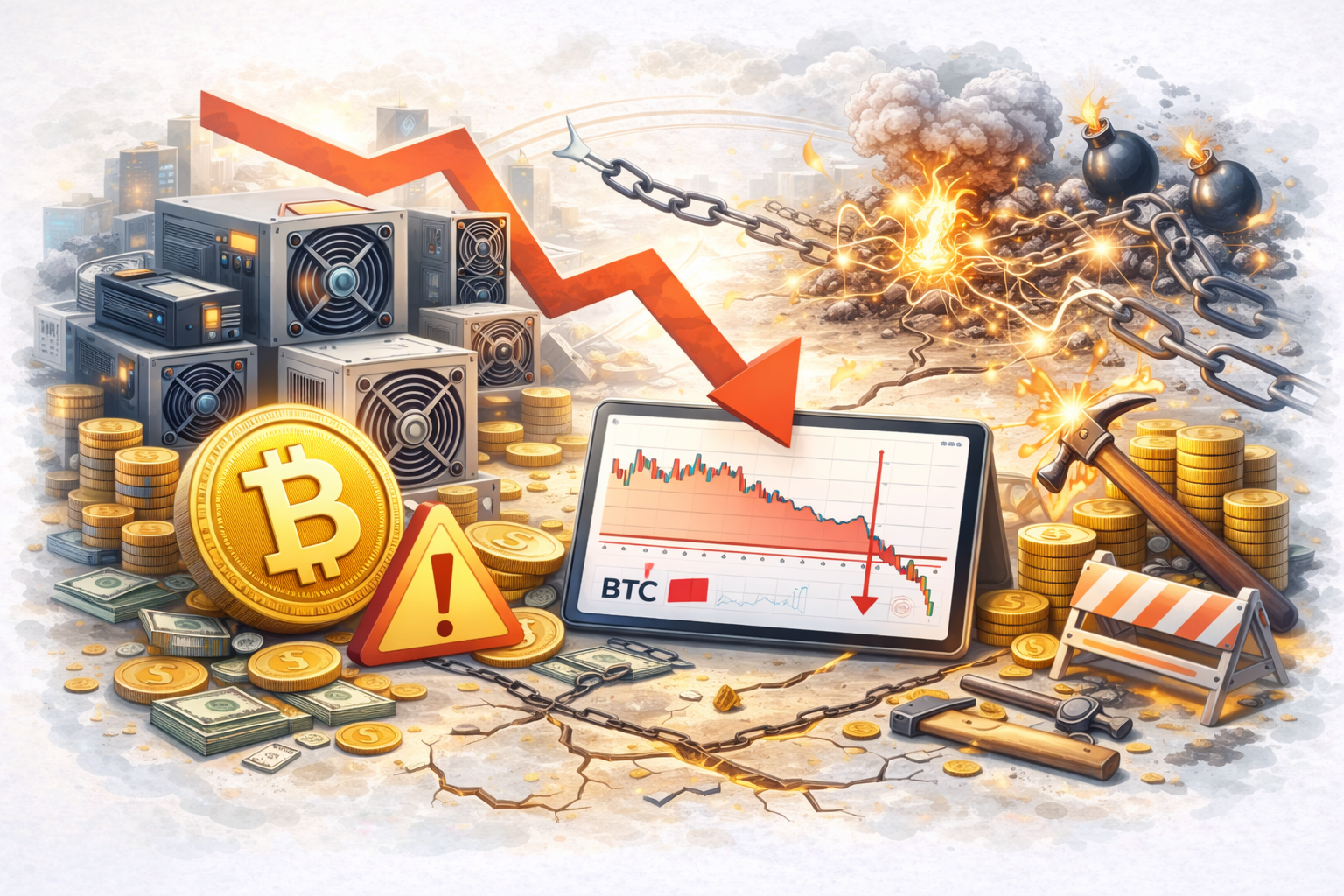
The Bitcoin network is a complex equilibrium of computational power, energy costs, and market valuation. When the price of Bitcoin falls significantly, the mining sector faces an existential crisis known as miner capitulation. This phenomenon occurs when the market value of the asset drops below the operational costs required to secure the network, forcing participants to make difficult decisions regarding their hardware and reserves.
Understanding the relationship between the Bitcoin shutdown price and network health is essential for navigating a crypto market crash. This guide explores how a sustained hashrate drop influences market liquidity and network security, providing a technical overview of the "break-even" dynamics that define the mining industry in March 2026.
Key Takeaways
-
The Bitcoin shutdown price represents the "break-even" point where a miner's electricity and operational costs exceed the value of the BTC produced.
-
In early 2026, the weighted average cash cost to produce 1 BTC is approximately $80,000, setting up a critical psychological and technical support zone.
-
Miner capitulation involves the forced liquidation of BTC reserves by struggling mining firms to cover ongoing operational expenses (OpEx).
-
A significant hashrate drop triggers a negative difficulty adjustment, an automatic network correction that eventually restores profitability for remaining miners.
-
Historically, the "purge" of inefficient miners has served as a reliable indicator of a cyclical market bottom, cleansing the network of high-cost operators.
-
Institutional involvement and publicly traded mining companies have introduced a new layer of financial resilience compared to previous market cycles.
The Mechanics of Miner Capitulation
Bitcoin mining is a business of margins. A miner's profitability is dictated by the "hashprice"—the expected value of 1 Terahash per second (TH/s) of hashing power per day. When a crypto market crash occurs, the revenue generated by this hashing power can fall below the cost of the electricity consumed to generate it. This creates a "profit squeeze" where fixed costs, such as debt service on hardware and data center hosting fees, must still be paid despite dwindling revenues.
During these periods, we observe selective shutdowns. Older, less efficient hardware, such as the Bitmain Antminer S19 series, often reaches its Bitcoin shutdown price much sooner than newer generations. In contrast, next-gen hardware like the S21 or SEALMINER series remains resilient due to lower energy consumption per TH/s. Those trading or accessing the token's markets must monitor these hashrate trends, as a sustained decline often precedes a shift in market sentiment.
Impact on the Crypto Ecosystem
A drop below the average production cost does not just affect miners; it ripples through the entire financial structure of the industry. The primary concern during a miner capitulation event is increased volatility. Miners are traditionally "long" Bitcoin, but when cash flows turn negative, they are forced to sell their "HODL" reserves. This secondary sell pressure can exacerbate a crypto market crash, leading to a cascading effect where lower prices trigger more liquidations.
Network Security and the Difficulty Ribbon
-
The 51% Attack Threshold: A common question is whether a 20% or 30% hashrate drop threatens network security. Bitcoin’s "Difficulty Ribbon" suggests that while hashrate may fall, the absolute security remains high due to the sheer scale of the network.
-
Difficulty Adjustments: Bitcoin’s protocol automatically adjusts every 2,016 blocks (roughly every two weeks). If hashrate drops, the difficulty falls, making it easier and cheaper for the remaining miners to find blocks.
-
Restoring Equilibrium: This mechanism ensures that the network remains functional and that block times stay near the 10-minute average, regardless of how many miners go offline.
Participants analyzing market data and trading pairs often view the negative difficulty adjustment as a sign that the "purge" is working. It effectively reallocates the block rewards to the most efficient players, stabilizing the industry.
Institutional M&A and Consolidation
The 2026 mining landscape is dominated by publicly traded entities with strong balance sheets. During periods of capitulation, these well-capitalized firms often engage in Mergers and Acquisitions (M&A). They acquire distressed assets, such as discounted mining rigs or power contracts, from smaller, inefficient farms. This consolidation leads to a more professionalized and financially stable network, though it also increases the concentration of hashrate among a few large organizations.
Historical Context: Is This Time Different?
To understand the 2026 capitulation, we must look at previous cycles. In the 2022 post-FTX environment, Bitcoin fell below its then-current production cost, leading to widespread bankruptcy among major mining firms. However, the current cycle features a "liquidity floor" provided by institutional ETFs. This institutional demand absorbs some of the selling pressure from miners, potentially shortening the duration of the capitulation phase.
For those seeking further reading and research resources, analyzing the "Hash Ribbons" indicator remains a popular method for timing these cycles. Historically, the recovery phase—where the hashrate begins to climb again—has been a precursor to significant price appreciation. The current weighted average cash cost of approximately $79,995 serves as the "line in the sand" for this cycle.
Conclusion: The "Purge" Before the Surge
The phase of miner capitulation is a healthy, albeit painful, part of the Bitcoin lifecycle. It functions as a market-driven "purge" that removes inefficient operators and forces a redistribution of hashrate to those with the lowest power costs and most efficient technology. While a price drop below the Bitcoin shutdown price creates short-term sell pressure and a noticeable hashrate drop, the network's self-correcting difficulty adjustment ensures long-term survival. As we move through March 2026, monitoring platform updates and announcements regarding mining hashrate and difficulty will be key to identifying the eventual recovery and the end of the crypto market crash cycle.
Create your free KuCoin account today to access over 700+ global crypto assets and the latest gems. Sign Up Now!
FAQs
What is the current average Bitcoin mining cost in 2026?
As of March 2026, reports indicate the weighted average cash cost to produce one Bitcoin is approximately $79,995. This figure includes electricity and immediate operational costs. However, highly efficient operations with access to renewable energy or industrial-scale subsidies may have a Bitcoin shutdown price closer to $65,000.
Does Bitcoin become less secure when miners shut down?
While a hashrate drop reduces the total computational work securing the network, Bitcoin remains the most secure decentralized network in the world. The automatic difficulty adjustment ensures that the network remains functional even if a significant percentage of hardware goes offline, maintaining the 10-minute block interval.
How long does a "Miner Capitulation" phase usually last?
Historically, these phases last between one to three months. The period typically ends once the "weak hands"—miners with high debt and high power costs—have fully liquidated their holdings and shut down their machines, allowing the hashrate and difficulty to stabilize at a lower, more profitable level.
Can I use the Hash Ribbons indicator to time my purchase?
The Hash Ribbons indicator is used by many traders to identify the end of a capitulation event. A "Buy" signal occurs when the 30-day Simple Moving Average (SMA) of hashrate crosses back above the 60-day SMA. This suggests that the hashrate drop has bottomed and miners are beginning to bring hardware back online.
Disclaimer: The information on this page may have been obtained from third parties and does not necessarily reflect the views or opinions of KuCoin. This content is provided for general informational purposes only, without any representation or warranty of any kind, nor shall it be construed as financial or investment advice. KuCoin shall not be liable for any errors or omissions, or for any outcomes resulting from the use of this information. Investments in digital assets can be risky. Please carefully evaluate the risks of a product and your risk tolerance based on your own financial circumstances. For more information, please refer to our Terms of Use and Risk Disclosure.