

Tariffs That Fuel US Inflation: Which Countries Matter Most for Crypto in 2026?
2026/04/22 16:21:02
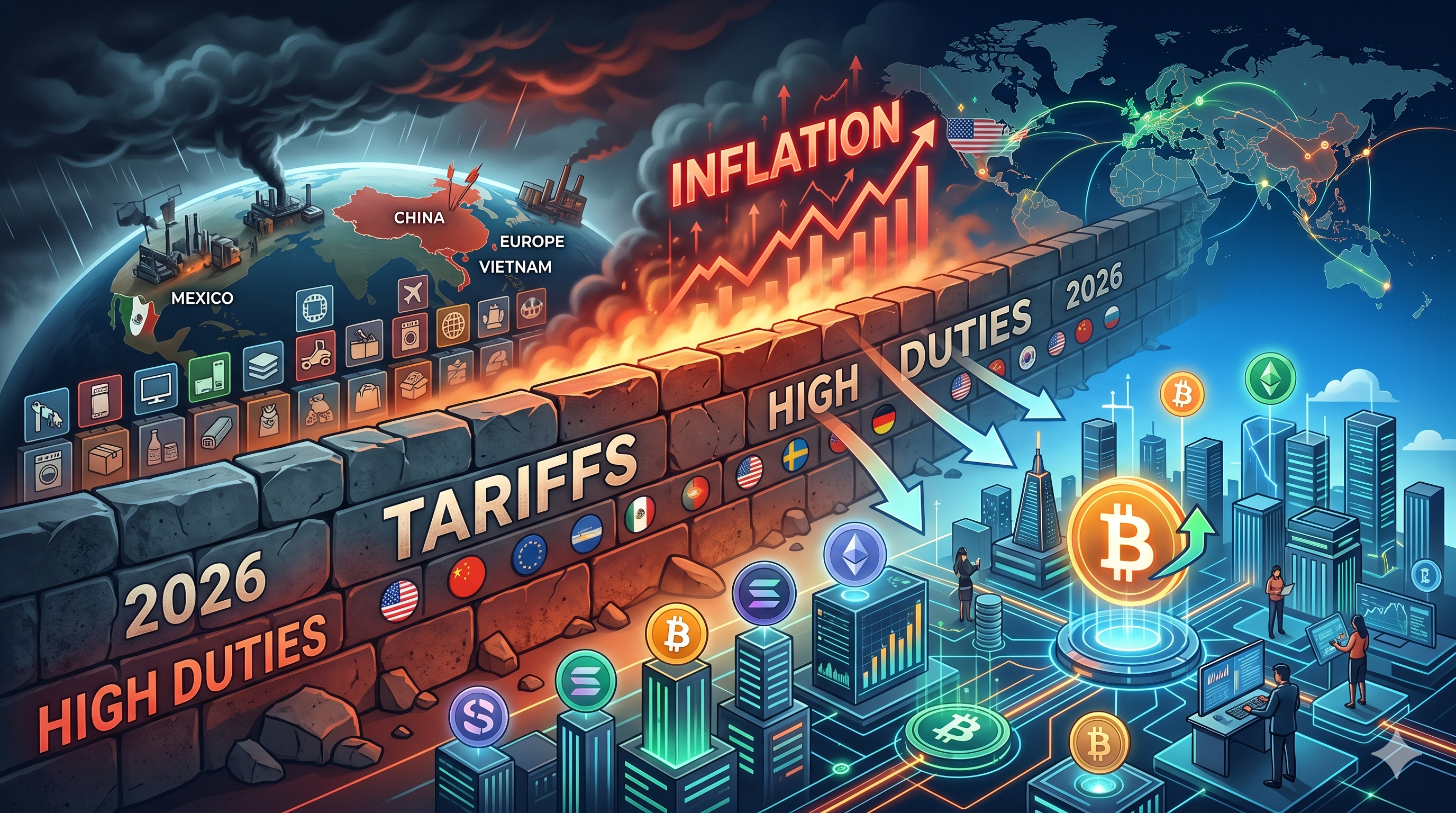
Higher U.S. tariffs in 2026 are reviving inflation pressure at the same time they are reshaping which countries matter most for global trade—and for crypto markets. China, Vietnam, India, the EU, Canada, and a cluster of Asian mining‑manufacturing hubs (Thailand, Malaysia, Indonesia) sit at the intersection of tariff‑driven price spikes, mining‑equipment costs, and portfolio‑level risk‑off waves that hit Bitcoin and altcoins hard.
In this environment, understanding which countries are most exposed to U.S. tariffs is no longer just a macro‑trade exercise; it is a direct input into crypto positioning.
Key Takeaways
-
U.S. inflation is expected to tick back up to about 2.7% in 2026, with tariffs playing a noticeable role as importers pass more costs to consumers.
-
Average effective U.S. tariff rates have jumped from roughly 2.2% in early 2025 to 10.3% in early 2026, adding meaningful pressure on goods‑price inflation.
-
China, Vietnam, India, and the EU are among the most tariff‑exposed trading partners, with rates often above 15–20% in 2026.
-
Higher tariffs can slow growth, keep inflation elevated, and tighten financial conditions, all of which tend to weigh on risk assets, including Bitcoin and altcoins.
-
Bitcoin and crypto markets have already shown sharp sell‑offs after tariff‑driven macro shocks, with multi‑billion‑dollar liquidations in leveraged positions.
-
Countries like China, Vietnam, Thailand, and Malaysia also matter for crypto because they supply ASIC mining hardware; tariffs on imports push up mining costs and squeeze miner margins in the U.S.
How Tariffs Are Pushing US Inflation Higher in 2026
In 2024–2025, U.S. inflation looked like it was grinding back toward the Fed’s 2% target, with PCE inflation settling around 2.6% by the end of 2025. Forecasts now show it re‑creeping toward 2.7% in 2026, not because of wage‑driven demand, but because of the lingering pass‑through of tariffs into consumer prices.
Businesses have been absorbing most of the tariff bite so far, often drawing down pre‑tariff inventory or delaying price hikes to avoid backlash. As those buffers fade in the first half of 2026, companies plan more explicit price increases, which will show up in core goods and import‑price indices. That dynamic is why many macro analysts see tariffs as a modest but persistent upside risk to inflation, even as labor‑market and monetary‑policy drivers appear more benign.
Which Countries Face the Heaviest U.S. Tariff Burden
U.S. tariff policy in 2026 no longer targets a single country; it casts a broad net over more than 70 partners, with layered “penalty” rates for nations deemed to run large trade deficits with the United States. The most notable clusters are:
-
China: Subject to very high‑level tariffs (peaking near or above 30–34% in some product categories) under Trump’s 2025–2026 tariff framework.
-
Vietnam: Faces targeted rates above 20%, sometimes as high as 46% on key exports, as the U.S. responds to what it views as excessive trade imbalance.
-
India and Brazil: Also hit with elevated tariffs (up to 25% and 10–10%+ plus additional duties, respectively), reflecting their sizable trade gaps with the U.S.
-
European Union: A 20% baseline duty on many goods, with threatened or enacted tit‑for‑tat measures that keep trade tensions elevated.finance.
-
Canada and Mexico: Previously shielded under USMCA, yet now facing 20–25% tariffs on many goods, signaling that even close partners are not exempt.
These tariffs are not symmetrical: some sectors (electronics, machinery, vehicles, textiles, and mining hardware) feel the pressure more acutely than others. For crypto markets, two channels matter particularly: consumer‑inflation‑driven Fed policy and macro risk‑off waves that ripple into digital assets.
Why Tariff‑Driven Inflation Matters for Crypto
Tariffs affect crypto only indirectly, but the path is clear and empirically visible:
-
Higher tariffs → higher import‑price inflation → Fed keeps rates higher longer or becomes more hawkish.
-
Tighter financial conditions → lower risk appetite → crypto (especially high‑beta altcoins) often sells off alongside equities.
-
Trade‑war headlines → macro uncertainty → leveraged positions in crypto markets face sharp liquidations.
In 2025, a spike in tariff‑related tensions briefly triggered a $19 billion crypto‑market liquidation wave, as traders rushed to unwind leverage when Trump floated 100% China‑focused tariffs. Those moves contributed to a roughly 26% drawdown in total crypto market cap between January and April 2025, underscoring how sensitive crypto is to macro‑risk shocks.
In 2026, that same playbook could play out whenever the U.S. announces new or heightened tariffs—especially on China, the EU, or other key partners.
China, Vietnam, and India: Tariff‑Sensitive Nodes for Crypto
China, Vietnam, and India occupy a unique position: they are among the heaviest tariffs targets, yet they also sit at the center of broader financial and tech‑supply‑chain flows that touch crypto.
-
China is the largest producer of Bitcoin mining hardware (ASICs), and Trump‑era export tariffs of 34–36% on Chinese‑made machines have already pressured U.S. miners’ return‑on‑investment math. When tariffs tighten further, miner margins compress, and hash‑rate‑dependent assets become more sensitive to energy‑cost and hardware‑cost shocks.
-
Vietnam serves as both a tariff‑target and a rising tech‑manufacturing hub; higher tariffs on Vietnamese electronics and components can indirectly feed into higher tech‑related inflation and, by extension, pressure on growth‑oriented assets like crypto.
-
India balances a 25% tariff hit with its own push into crypto‑friendly regulation; domestic volumes and on‑ramps can surge even as global risk‑off sentiment hits, creating a “divergent‑story” environment for India‑based crypto activity.
For traders, that means watching China‑ and India‑related headlines not just for FX and equities, but also for crypto‑specific shocks: mining‑cost repricings, ETF‑flow shifts, and sudden risk‑off moves in leveraged products.
Mining‑Hardware Supply Chains and Tariff Shocks
One of the least‑discussed but most tangible tariff‑crypto links is Bitcoin mining hardware. U.S. miners still rely heavily on ASICs produced in Asia, including China, Thailand, Malaysia, and Indonesia. When tariffs on those machines spike (up to 34–36% in 2025 proposals), the cost of building or upgrading a mining farm jumps sharply, reducing margins and discouraging new capital deployment.
The White House’s 2025‑style “reciprocal tariff” approach—10% baseline with much higher rates on selected countries—has already triggered a scramble among mining‑equipment brokers to pull forward deliveries before higher duties hit. In 2026, any extension or expansion of those tariffs would:
-
Raise capital‑expenditure barriers for U.S. and other tariff‑exposed miners.
-
Potentially accelerate hash‑rate consolidation toward low‑cost‑energy regions that also benefit from favorable regulatory environments (e.g., Kazakhstan, parts of the Middle East, and certain U.S.‑friendly states).
For crypto traders, this means that tariff news around Asian‑manufactured mining gear can quietly reshape the supply‑side structure of Bitcoin mining, which in turn affects mining‑token equities, hash‑rate‑linked derivatives, and long‑term BTC‑cost‑curve expectations.
Why Tariff‑Driven Uncertainty Fuels Crypto Volatility
Tariff policy is inherently political and often announced with little lead‑time, especially under the Trump administration’s “Liberation Day”‑style surprise‑tariff framework. That volatility magnetism spills directly into crypto:
-
Macro‑risk spikes push traders to deleverage, which often triggers cascading liquidations across BTC, ETH, and leveraged altcoins.
-
Correlations with equities tighten, so when trade‑war headlines hit the S&P 500, Bitcoin and major altcoins often move similarly in the short term.
-
Speculative altcoins and highly‑leveraged DeFi positions tend to correct more sharply than BTC when risk‑off sentiment hits, as capital retreats toward core assets.
In 2026, that pattern implies that each major tariff‑related headline—whether it targets China, the EU, Vietnam, or digital‑services‑tax‑focused retaliation—should be treated as a crypto‑volatility catalyst, not just a trade‑policy curiosity.
KuCoin: A Tactical Playbook for Tariff‑Linked Crypto Moves
In a world where tariffs are helping to revive inflation, reshape trade flows, and occasionally jolt crypto markets, having a platform that lets you adapt quickly becomes a strategic edge. KuCoin is one such venue, with a mix of deep liquidity, broad asset selection, and flexible tools that align naturally with tariff‑driven macro cycles.
Here is how KuCoin fits into a tariff‑sensitive 2026 environment:
-
Broad coin selection for thematic rotation
KuCoin lists over 700 coins, including many emerging altcoins that may benefit from reshaped supply chains, mining‑hardware‑adjacent narratives, or regional crypto‑adoption stories. When tariff‑driven inflation heats up and risk‑off sentiment hits, you can use KuCoin to rotate away from highly‑leveraged beta names into more established BTC/ETH or even into defi‑yield‑oriented tokens that may thrive in a higher‑rate, higher‑inflation regime.
Conversely, when trade tensions ease and Fed‑policy expectations brighten, KuCoin’s broad universe lets you re‑enter high‑beta altcoins earlier in the cycle, including projects tied to trade‑finance‑linked blockchains or mining‑related tokens.
-
Leverage, margin, and futures for macro positioning
KuCoin supports spot, margin, and futures trading, with leverage up to 10x on margin and 125x on perpetual futures for select pairs. Around tariff‑driven macro shocks (e.g., fresh China‑focused tariffs, EU‑US trade spats, or mining‑hardware‑tariff escalations), these tools let you:
-
Short Bitcoin or ETH on futures if you expect a risk‑off, liquidity‑tightening episode.
-
Use isolated margin on single altcoins to limit cross‑market damage if a leveraged bet on a tariff‑sensitive project goes wrong.Employ hedging strategies (e.g., short BTC/ETH futures against a long‑term spot position) as a way to manage volatility during tariff‑policy events.
-
Automated tools to weather tariff‑driven noise
KuCoin’s grid‑trading bots, DCA‑style strategies, and “Lite Mode” enhancements help traders avoid timing every tariff‑headline spike perfectly.
-
A grid bot can systematically trade BTC or ETH within a range around tariff‑related CPI or Fed‑comment events, profiting from volatility without having to call the exact top or bottom.
-
A DCA bot can accumulate BTC or core altcoins over time, smoothing out the impact of sudden tariff‑driven drawdowns and aligning with a longer‑term macro‑inflation‑hedge thesis.
-
Regulatory‑friendly geography and macro alignment
KuCoin operates in or near some of the most crypto‑friendly hubs of 2026, including the UAE, Singapore, and other innovation‑oriented jurisdictions. That matters because many of these hubs are actively positioning themselves as neutral‑zone financial nodes amid U.S.‑centric tariff and digital‑tax tensions.
For traders sensitive to U.S.‑driven macro shocks, that creates a compelling dynamic: you can express views on tariff‑driven inflation and Fed policy while doing so from a platform anchored in jurisdictions that are actively courting crypto capital.
In short, KuCoin does not just let you react to tariff‑driven shocks; it helps you build a repeatable playbook for navigating them.
How to Position Crypto If Tariffs Stay Elevated
Given that tariffs are likely to keep U.S. inflation slightly elevated in 2026 and trade tensions will persist, crypto traders should treat Bitcoin primarily as a macro‑risk asset rather than a pure “digital gold” safe haven, and be prepared for short‑term drawdowns whenever tariff headlines spark risk‑off waves. It is essential to watch China, Vietnam, the EU, and India closely, since each new round of tariffs on these partners can quickly ignite volatility in Bitcoin, Ethereum, and leveraged derivatives, often amplifying liquidations and cross‑market moves.
Around major tariff, CPI, and Fed announcements, leverage should be kept tightly controlled: use margin and futures more defensively, with tightened stop‑losses or partial hedges in place, rather than chasing aggressive directional bets. Instead of concentrating exposure on a single coin, consider diversified crypto‑asset baskets or systematic strategies such as grid‑trading bots, which can help smooth out returns in the choppy, tariff‑driven conditions expected throughout 2026.
Conclusion:
Tariffs that revive U.S. inflation in 2026 do not just raise the price of imported goods; they also reshape which countries matter most for crypto markets. China, Vietnam, India, the EU, Canada, and mining‑hardware‑manufacturing hubs form a kind of tariff‑sensitive golden ring around the global crypto ecosystem.
Higher tariffs can keep inflation and interest rates modestly elevated, tighten financial conditions, and repeatedly jolt risk appetite—each of which tends to weigh on Bitcoin and altcoins in the short term.
FAQs
How do US tariffs cause inflation and affect crypto markets?
Tariffs raise the cost of imported goods, which companies pass on to consumers, driving up the Consumer Price Index (CPI). Higher CPI signals persistent inflation to the Federal Reserve, which keeps interest rates elevated to combat it. High interest rates reduce liquidity and make safer assets like US Treasuries more attractive than volatile, non-yielding assets like Bitcoin — causing capital to flow out of crypto and into bonds.
Why does China matter most for crypto among all tariffed countries?
China has a dual impact on crypto. First, it is the primary source of Bitcoin ASIC mining hardware — three Chinese companies control 99% of global ASIC production. Tariffs on Chinese goods (currently 145%) directly raise mining costs, threatening US Bitcoin hashrate dominance. Second, China tariff escalation triggers the sharpest crypto sell-offs, with the October 2025 threat of 100% China tariffs producing a $19 billion single-day liquidation event.
What is the impact of tariffs on Bitcoin mining in 2026?
US mining costs have surged approximately 47% in 2026 due to stacked tariffs: a 21.6% duty on ASIC miners imported from Southeast Asian factories, plus new 25–50% Section 232 tariffs on steel, aluminum, and copper used in mining hardware and infrastructure. All-in production costs for publicly listed US miners averaged ~$74,600 per BTC in late March 2026 — already near or above the prevailing Bitcoin price.
How does the Iran conflict connect to both inflation and crypto in 2026?
The US-Iran conflict and subsequent Strait of Hormuz blockade sent Brent Crude above $120 per barrel, driving gasoline prices higher and pushing March 2026 CPI to 3.3% YoY. Simultaneously, Iran began accepting Bitcoin and stablecoins (USDT) as transit tolls for oil tankers passing through the Strait — creating a direct link between the world's most acute geopolitical crisis and on-chain crypto activity.
Which countries' tariff situations most directly threaten a crypto market crash?
China presents the highest acute crash risk — a full 100% tariff reactivation would likely trigger another large-scale liquidation event. The EU presents the highest systemic risk through global equity contagion. Canada and Mexico present the most persistent inflation risk through their deep integration into US consumer price categories including energy and manufactured goods.
Could tariffs ever be bullish for Bitcoin?
Yes — through two mechanisms. Short term, tariff pauses or deal announcements have historically produced sharp crypto rallies, as seen in May 2025 when a US-China truce pushed Bitcoin above $100,000. Long term, if tariff-driven inflation and dollar debasement become persistent, Bitcoin's scarcity properties become more compelling as a store of value. The geopolitical use of stablecoins and Bitcoin to circumvent sanctions-related financial restrictions also demonstrates real-world utility that could strengthen the long-run adoption narrative.
What crypto assets are most and least affected by tariff-driven volatility?
Bitcoin and large-cap altcoins like Ethereum see the largest absolute dollar swings but tend to recover more quickly due to institutional liquidity. DeFi tokens tied to on-chain activity fell 20% during peak 2025 tariff tensions. Stablecoins are the relative beneficiaries — stablecoin issuance jumped 5% during peak tariff stress as traders used them as fiat-volatility hedges, and USDT adoption is accelerating globally as emerging-market demand grows alongside geopolitical financial stress.
Disclaimer: This article is for informational purposes only and does not constitute financial or investment advice. Cryptocurrency investments carry significant risk. Always conduct your own research before making any investment decisions.