

UAE Halts Trade With Iran: What the Gulf Crisis Means for Oil Prices, Bitcoin and Crypto
2026/08/21 17:23:00
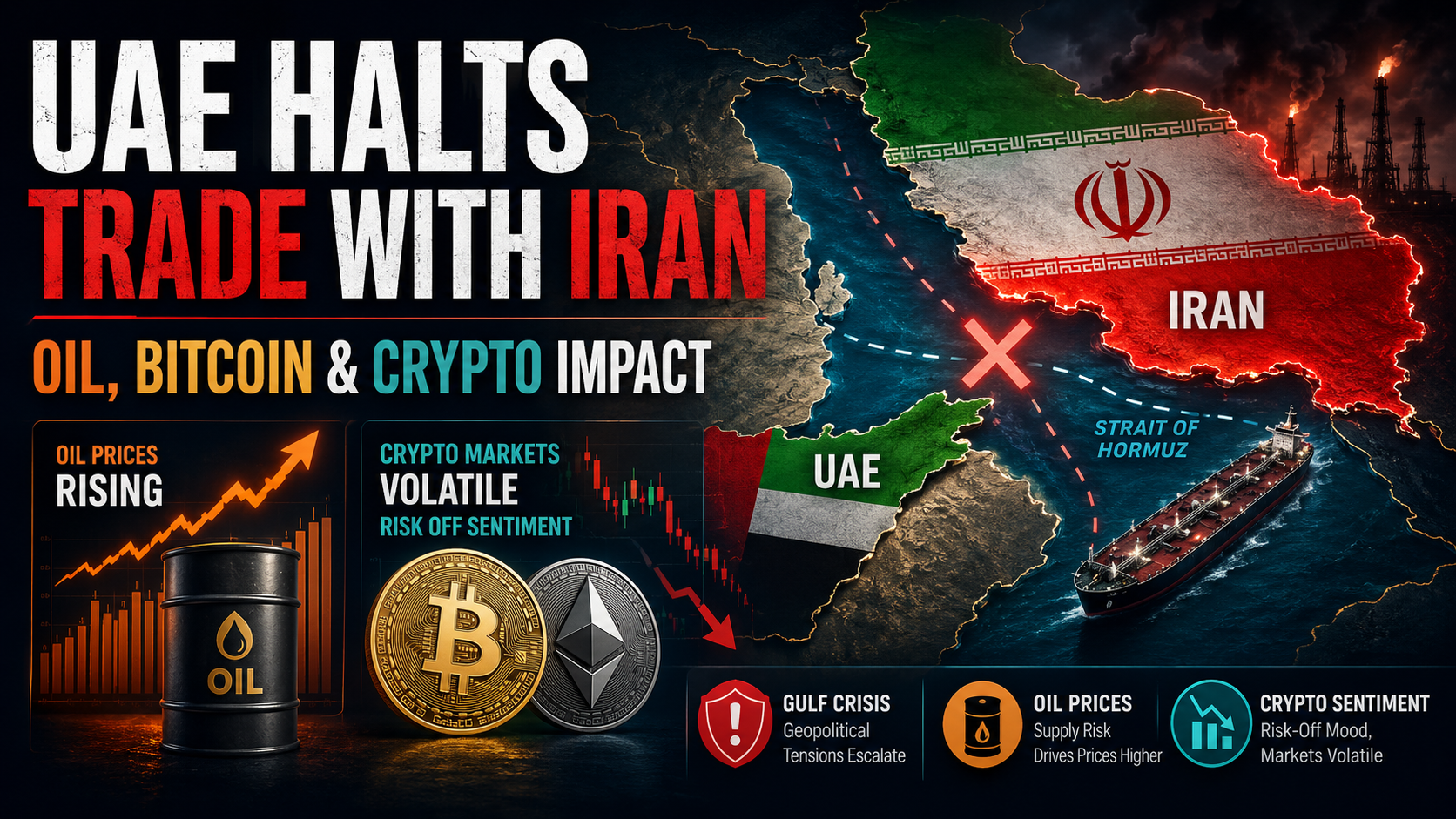
Rising UAE-Iran tensions are creating new uncertainty across global energy and financial markets, with investors closely watching oil prices, the Strait of Hormuz, Bitcoin, and the broader cryptocurrency market. The UAE’s suspension of trade and financial transactions with Iran comes at a sensitive moment for Gulf security, where any further escalation could affect commercial shipping, energy supplies, inflation expectations, and global investor sentiment. Because the Gulf is home to some of the world’s largest oil exporters, developments involving Iran and the UAE can quickly extend beyond regional politics and become a major issue for international markets.
For Bitcoin and crypto investors, the situation is particularly important because geopolitical tensions can influence digital assets through several channels at once. A sharp rise in Brent crude or WTI oil prices could increase inflation concerns and affect interest-rate expectations, while worsening geopolitical uncertainty could cause investors to reduce exposure to risk assets. At the same time, Bitcoin’s role as a decentralized monetary asset can attract attention during periods of financial instability. Understanding how the UAE-Iran Gulf crisis could affect oil prices, Bitcoin, Ethereum, altcoins, and the Strait of Hormuz is therefore essential for investors trying to assess what could happen next.
Why Did the UAE Suspend Trade With Iran?
The United Arab Emirates suspended trade and financial transactions with Iran after a sharp rise in Gulf tensions. The move followed UAE accusations that ballistic missiles launched from Iran threatened maritime traffic near Emirati territory, while Tehran denied the claims. The suspension affects trade, commercial exchanges, and financial transactions, raising concerns about regional security, shipping, and energy markets. It also signals a significant deterioration in relations between two countries that have maintained important commercial ties despite long-running political differences. For markets, the decision adds another layer of uncertainty at a time when investors are already closely watching developments across the Middle East.
The decision is especially significant because the UAE has been one of Iran’s most important trading partners. According to Reuters, the UAE supplied about 30% of Iran’s imports in 2024, worth roughly $21 billion, while around 13% of Iranian exports were linked to the UAE. A prolonged suspension could disrupt supply chains, cross-border payments, and Iran’s access to regional trade networks. Businesses that rely on Dubai as a re-export, logistics, and financial hub may also face higher costs, payment delays, and tighter compliance requirements. If restrictions remain in place for an extended period, the economic impact could spread beyond bilateral trade and affect companies across the wider Gulf region.
Why the UAE-Iran Trade Suspension Matters
The biggest concern is whether the UAE-Iran crisis remains an economic dispute or develops into a broader regional confrontation. Any escalation affecting Gulf shipping, oil infrastructure, commercial vessels, or the Strait of Hormuz could increase the risk of supply disruptions and push Brent and WTI crude prices higher. Rising energy prices could also add to global inflation pressures and influence expectations for interest rates and monetary policy. These developments matter for financial markets because higher inflation and tighter financial conditions can reduce investor appetite for risk. That could create additional volatility in Bitcoin, Ethereum, and the wider crypto market, especially if geopolitical tensions trigger large liquidations or a shift toward safer assets. Investors will therefore be watching Iran’s response, UAE policy decisions, shipping activity, oil prices, and diplomatic developments for signs that the crisis is stabilizing or becoming more serious.
How UAE-Iran Tensions Could Affect Oil Prices and the Strait of Hormuz
Oil markets are among the most exposed to any escalation in the Gulf. The Strait of Hormuz remains the central risk because disruptions to this critical shipping corridor could affect millions of barrels of daily energy exports and potentially push global oil prices higher.
Why the Strait of Hormuz Is Critical for Global Oil Prices
The Strait of Hormuz is one of the most important oil shipping routes in the world, which is why rising UAE-Iran tensions can quickly influence global crude prices. The narrow waterway connects major Gulf energy producers with international markets and carries a significant share of the world’s crude oil, petroleum products, and liquefied natural gas exports. According to the U.S. Energy Information Administration, around 20.9 million barrels per day of crude oil and petroleum products passed through the Strait of Hormuz during the first half of 2025, equal to roughly one-fifth of global petroleum-liquids consumption. Major exporters including Saudi Arabia, the UAE, Kuwait, Iraq, Qatar, and Iran depend heavily on Gulf shipping routes, making the strait a central point of vulnerability for global energy markets. When geopolitical tensions rise near Hormuz, oil traders often begin pricing in the possibility of vessel delays, military incidents, infrastructure damage, higher insurance costs, or temporary supply disruptions. Even if actual oil production remains unchanged, the perceived risk of disruption can increase the geopolitical risk premium in Brent crude and WTI oil prices, creating greater volatility across global commodity markets.
The potential impact becomes even more important because alternative export routes cannot fully replace the enormous volume of oil normally transported through Hormuz. Saudi Arabia and the UAE operate pipelines capable of bypassing the strait, but their available capacity is far smaller than total daily Hormuz oil flows. This means that a severe or prolonged disruption could leave millions of barrels of daily exports without an immediate alternative route to international buyers. Any reduction in Gulf oil shipments could tighten global supply, increase competition among refiners, and push Brent crude oil prices higher, particularly if inventories are already under pressure. Shipping companies may also demand higher risk premiums to operate near the Gulf, while insurers could increase war-risk charges for tankers crossing the region. These additional transportation and insurance costs can eventually feed into the final price of crude oil and refined fuels. For global investors, this is why headlines involving Iran, the UAE, Gulf shipping, and the Strait of Hormuz often trigger rapid market reactions even before a confirmed supply outage occurs.
How Escalating UAE-Iran Tensions Could Push Oil Prices Higher
If the UAE-Iran crisis escalates further, oil prices could face renewed upward pressure as markets reassess the probability of disruptions to Gulf energy exports. A diplomatic dispute alone may have a limited long-term effect on crude supply, but the market reaction could become much stronger if tensions begin affecting commercial vessels, ports, oil terminals, pipelines, or other energy infrastructure. Traders closely monitor any military activity near shipping lanes because even a temporary interruption can delay millions of barrels of oil destined for Asia, Europe, and other major consuming regions. A serious security incident could cause tanker operators to reroute vessels, delay departures, or temporarily suspend operations, potentially tightening physical supply. In that scenario, Brent crude and WTI prices could rise sharply as energy markets attempt to account for the increased probability of shortages. The size of any price move would depend on how severe the disruption becomes, how long it lasts, and whether producers such as Saudi Arabia or other OPEC members can increase output quickly enough to compensate for lost exports.
Higher oil prices would also create broader consequences for the global economy, making the UAE-Iran conflict and Strait of Hormuz risk relevant far beyond commodity traders. A sustained increase in crude prices can raise gasoline, transportation, manufacturing, and electricity costs, contributing to higher inflation in major economies. Rising inflation could influence the Federal Reserve and other central banks by reducing their ability to cut interest rates as aggressively as investors expect. That connection matters for financial markets because higher interest rates and bond yields can reduce liquidity and put pressure on stocks, Bitcoin, Ethereum, and other risk-sensitive assets. On the other hand, if diplomatic negotiations reduce tensions and shipping through Hormuz remains secure, some of the geopolitical premiums embedded in oil prices could disappear, potentially bringing Brent and WTI lower. Investors should therefore watch Strait of Hormuz shipping activity, Gulf maritime security, Iranian responses, UAE policy decisions, OPEC production signals, global oil inventories, and diplomatic developments to determine whether the current crisis remains contained or evolves into a more serious threat to global energy supplies.
What Does the Gulf Crisis Mean for Bitcoin and Crypto Markets?
The Gulf crisis could affect Bitcoin and cryptocurrency markets through oil prices, inflation, interest rates, liquidity, and investor risk appetite. Bitcoin’s response may differ from oil because crypto prices depend heavily on broader global financial conditions as well as geopolitical developments.
The Gulf crisis could have a significant impact on Bitcoin and the broader crypto market because geopolitical tensions often influence investor risk appetite, global liquidity, inflation expectations, interest rates, and the U.S. dollar. Unlike oil, which can react directly to fears of supply disruption in the Strait of Hormuz, Bitcoin and other cryptocurrencies are usually affected through a wider chain of financial-market reactions. If UAE-Iran tensions escalate and oil prices rise sharply, investors may initially move away from volatile assets such as Bitcoin, Ethereum, and smaller altcoins in favor of traditional safe-haven assets, cash, or government bonds. A major energy shock could also increase inflation expectations, particularly if higher crude prices raise transportation, manufacturing, and consumer costs across the global economy. Persistent inflation can influence the Federal Reserve and other central banks to keep interest rates higher for longer, potentially reducing liquidity in financial markets. Because Bitcoin and crypto prices are highly sensitive to liquidity, interest-rate expectations, institutional flows, and investor sentiment, a prolonged Gulf conflict could increase volatility even if the cryptocurrency sector is not directly involved in the geopolitical dispute.
At the same time, Bitcoin does not always behave like a traditional risk asset during periods of geopolitical uncertainty. Some investors increasingly view BTC as an alternative monetary asset because of its fixed supply, decentralized network, and independence from any single government or central bank. This can support the Bitcoin safe-haven narrative during periods of currency weakness, financial instability, or expectations of aggressive monetary stimulus. However, Bitcoin’s short-term reaction to geopolitical shocks is often inconsistent. During sudden market stress, leveraged traders may sell crypto positions to raise cash, causing rapid declines and large liquidations. If the crisis later encourages central banks or governments to support financial markets with easier monetary policy or additional liquidity, Bitcoin could recover and potentially benefit from improved risk appetite. As a result, investors evaluating the impact of the Gulf crisis on Bitcoin should focus not only on headlines from Iran and the UAE, but also on oil prices, Treasury yields, the U.S. dollar, global liquidity conditions, Bitcoin ETF flows, and central-bank policy expectations.
How Rising Oil Prices and Geopolitical Risk Could Affect Bitcoin, Ethereum and Altcoins
The relationship between oil prices and Bitcoin is particularly important during a Gulf crisis because a sustained energy-price shock can influence nearly every major macroeconomic factor that drives cryptocurrency markets. If disruption around the Strait of Hormuz pushes Brent crude and WTI significantly higher, rising fuel and transportation costs could strengthen inflation pressures across major economies. Higher inflation may lead investors to expect slower or fewer interest-rate cuts, which can support bond yields and make lower-risk assets more attractive compared with speculative investments. That environment can create headwinds for Bitcoin and Ethereum, while smaller altcoins may face even greater pressure because they generally have lower liquidity, higher volatility, and greater dependence on speculative demand. During a broad risk-off move, investors may reduce exposure to smaller tokens first, potentially causing Bitcoin dominance to rise even if BTC itself experiences short-term losses. Crypto derivatives markets can amplify these moves because heavily leveraged positions may be automatically liquidated when prices fall rapidly, increasing volatility across the entire digital-asset market.
However, the longer-term crypto reaction would depend heavily on how policymakers and financial markets respond to the crisis. If higher oil prices weaken global economic growth and eventually lead to lower interest rates, monetary stimulus, or increased liquidity, conditions could become more favorable for Bitcoin and other major cryptocurrencies. Institutional demand may also influence the outcome, particularly through spot Bitcoin ETF flows and large-scale investor positioning, which have become increasingly important drivers of BTC market behavior. Ethereum could follow Bitcoin’s direction while also responding to crypto-specific factors, whereas higher-risk altcoins may remain more vulnerable to changes in liquidity and sentiment. Investors should therefore avoid assuming that worsening Middle East tensions automatically mean Bitcoin will rise as a safe haven or fall as a risk asset. The more important question is how the UAE-Iran crisis affects oil prices, inflation, Federal Reserve expectations, the dollar, global liquidity, and market confidence. Those factors are likely to determine whether the Gulf crisis becomes primarily a short-term volatility event for crypto or develops into a broader macroeconomic catalyst for Bitcoin, Ethereum, and the global cryptocurrency market.
What Investors Should Watch Next: Oil, Bitcoin and Gulf Crisis Scenarios
The direction of oil, Bitcoin, and crypto markets will depend largely on whether tensions remain contained or begin disrupting Gulf energy supplies. Investors should monitor both geopolitical developments and financial-market indicators to distinguish short-lived volatility from a more serious macroeconomic shock.
Key Market Signals to Watch in the UAE-Iran Gulf Crisis
Investors tracking the UAE-Iran Gulf crisis should focus on a combination of geopolitical, energy, and financial-market indicators rather than reacting to headlines alone. The most important signals include Strait of Hormuz shipping activity, Brent crude and WTI oil prices, tanker traffic, war-risk insurance costs, UAE and Iranian policy statements, OPEC production decisions, U.S. sanctions, Treasury yields, the U.S. dollar, and Federal Reserve interest-rate expectations. Any disruption to shipping through the Strait of Hormuz could quickly increase the geopolitical risk premium in oil markets, while sustained gains in crude prices could raise inflation concerns and affect expectations for future rate cuts. For Bitcoin and crypto investors, additional indicators such as spot Bitcoin ETF flows, Bitcoin dominance, crypto liquidations, stablecoin liquidity, and institutional positioning can help show whether traders are moving toward or away from risk. Watching these factors together is essential because the Gulf crisis can affect crypto indirectly through oil prices, inflation, monetary policy, and global liquidity conditions.
Bullish and Bearish Scenarios for Oil, Bitcoin and Crypto Markets
The next major move in oil, Bitcoin, and crypto markets will likely depend on whether Gulf tensions de-escalate, remain contained, or develop into a wider regional confrontation. In a de-escalation scenario, secure shipping through the Strait of Hormuz could reduce fears of supply disruption and remove part of the geopolitical premium from Brent and WTI, while improved risk sentiment may support Bitcoin, Ethereum, and other digital assets. If tensions remain elevated without materially disrupting energy exports, oil prices could stay volatile while Bitcoin continues to respond more strongly to liquidity, interest-rate expectations, ETF demand, and broader macroeconomic conditions. The most bearish scenario for global markets would involve a serious disruption to Gulf oil flows, attacks on energy infrastructure, or restrictions on commercial shipping, which could push crude prices sharply higher and increase inflation expectations. That environment could initially pressure Bitcoin, Ethereum, and altcoins as investors reduce exposure to volatile assets, although a later shift toward easier monetary policy or stronger liquidity support could improve the outlook for crypto. For this reason, investors should treat the Gulf crisis as a developing macroeconomic risk and closely monitor whether geopolitical events begin to translate into sustained changes in energy supply, inflation, interest rates, and global market liquidity.
Conclusion
The UAE-Iran Gulf crisis has become an important issue for global investors because its potential consequences extend from regional trade to some of the world’s most critical energy routes. The immediate economic impact of suspended UAE-Iran trade is significant, but the larger market risk centers on whether tensions threaten shipping through the Strait of Hormuz or other Gulf energy infrastructure. A sustained disruption could tighten global oil supplies, push Brent and WTI prices higher, increase inflation pressures, and influence interest-rate expectations across major economies.
For Bitcoin, Ethereum, and the broader crypto market, the outlook is more complex. A sudden geopolitical shock could trigger risk-off selling and crypto liquidations, while longer-term changes in interest rates, global liquidity, institutional demand, and monetary policy could produce a different outcome. Investors should therefore avoid relying on a single geopolitical headline to predict Bitcoin’s direction. The most important signals will be whether Gulf tensions materially affect oil supply, inflation, bond yields, the U.S. dollar, Bitcoin ETF flows, global liquidity, and overall market confidence. As the situation develops, these indicators will help determine whether the crisis remains a temporary source of volatility or evolves into a larger macroeconomic event for global energy and cryptocurrency markets.
FAQs
Could the UAE-Iran crisis affect global inflation?
Yes. If Gulf tensions disrupt energy exports or raise shipping and insurance costs, oil and fuel prices could increase, adding pressure to transportation, manufacturing, and consumer prices. Persistent energy inflation can influence central-bank policy and financial-market expectations.
Why do crypto markets react to geopolitical conflicts?
Crypto markets often react because geopolitical crises can change risk appetite, liquidity, interest-rate expectations, and demand for the U.S. dollar. Bitcoin and altcoins may fall during an initial flight to safety, but their longer-term reaction depends on how the crisis affects monetary policy and global liquidity.
Is Bitcoin considered a safe-haven asset during a Gulf crisis?
Bitcoin is sometimes described as a digital safe-haven asset, but its behavior during geopolitical shocks is inconsistent. BTC can benefit from concerns about currency debasement or financial instability, yet it can also decline sharply when investors sell risky assets to raise cash.
Could higher oil prices hurt Bitcoin?
Higher oil prices can indirectly pressure Bitcoin if they increase inflation and lead investors to expect higher interest rates for longer. Tighter monetary conditions can reduce market liquidity, which is generally less favorable for Bitcoin, technology stocks, and other risk-sensitive assets.
Are altcoins more vulnerable than Bitcoin during geopolitical uncertainty?
Generally, yes. Smaller cryptocurrencies often have lower liquidity, higher volatility, and greater speculative exposure than Bitcoin. During periods of market stress, investors may reduce altcoin positions first, which can cause larger percentage declines and potentially increase Bitcoin dominance.
🔥 KuCoin Offers A More Stable Option in A Volatile Market
If you worry about the frequent ups and downs in the market, and pursue a more stable option to earn money passively, KuCoin is the right place to come:
Simple Earn: Deposit and withdraw tokens anytime, earning stable returns.
Kucoin Earn: Earn stable profits with professional asset management.
Hold to Earn: Earn rewards by holding assets in Funding, Trading, Margin, Futures, Mining, and Unified Accounts.
Staking: Unlock the earning potential of on-chain assets.
Advanced Investments: Advanced Investments offer a variety of structured products to help your money grow in any market.
Shark Fin: Principal Protection and Guaranteed Gains
Dual Investment: Buy low and sell high with transparent return calculations.
Snowball: High yields, with price protection.
Discount Buy: Buy crypto at discount prices.
KCS Loyalty: Level up to enjoy exclusive perks by staking ≥ 1 KCS.
KuCoin Wealth: Discover future value and begin your smart investing journey.
KCS Benefits: Hold and stake KCS to access benefits across the platform.
KCS Staking 2.0: Participate in KCS on-chain governance to earn yield.
Disclaimer: This content is for informational purposes only and does not constitute investment advice. Cryptocurrency investments carry risk. Please do your own research (DYOR).