

How a Prolonged High-Interest-Rate Environment is Reshaping Global Liquidity
2026/05/16 12:19:00
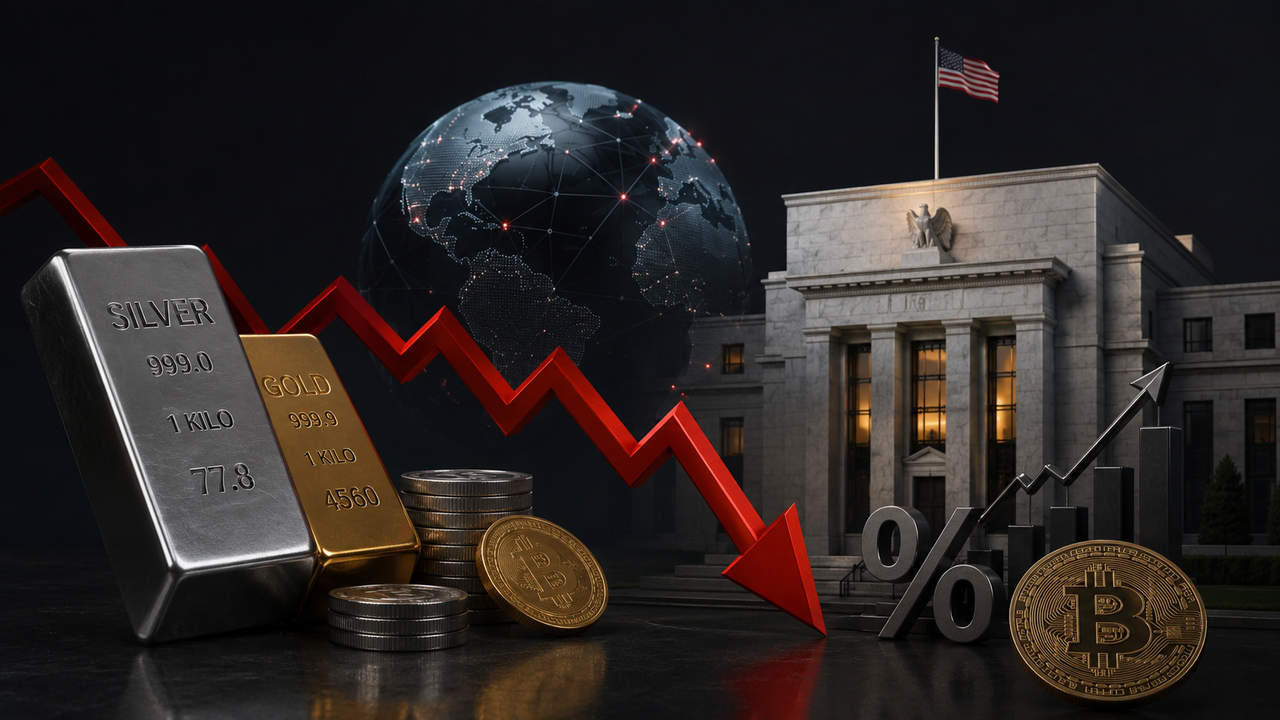
The global financial landscape is currently grappling with a severe liquidity contraction as recent data confirms that a prolonged high-interest-rate environment is reshaping global liquidity in 2026. With silver prices plummeting 6.5% and U.S. inflation hitting 3.8%, investors are forced to reconsider the stability of traditional and digital assets amidst aggressive monetary tightening and escalating geopolitical tensions.
This comprehensive analysis explores how a prolonged high-interest-rate environment is reshaping global liquidity across global financial markets, examining the direct impact on precious metals, energy costs, and cryptocurrency trading strategies.
Executive Summary: The 2026 Macro Shockwave
The mid-2026 market crash has sent ripples through every asset class, from the depths of the commodities pits to the height of the crypto sector. At the heart of this turmoil is a realization that inflation, once thought to be under control, has returned with a vengeance. The synergy between a prolonged high-interest-rate environment is reshaping global liquidity and a sudden spike in energy costs has created a "perfect storm" for investors.
Silver’s recent 6.5% daily drop serves as a canary in the coal mine, signaling that even assets with high industrial utility are not immune to the liquidity drain. As the U.S. Federal Reserve shifts its stance from a potential "pivot" to a "December hike," the cost of capital is reaching levels not seen in decades. For crypto exchanges and digital asset holders, this transition marks a pivotal era where "free money" has been replaced by a ruthless search for yield and safety.
The New Macro Reality: Why "Higher for Longer" is Now "Higher for More"
The narrative of "higher for longer" dominated the early 2020s, but in 2026, the market is facing "higher for more." This implies that central banks are not just keeping rates high; they are actively preparing for further increases to combat a second wave of inflation driven by supply chain fractures and war.
Analyzing the 3.8% CPI Spike: Why Inflation is Proving Sticky in Late 2026
The Consumer Price Index (CPI) report for April 2026 shocked the world by printing at 3.8%, a significant jump from the 3.3% recorded in March. This "stickiness" is primarily attributed to the rising costs of services and housing, which have become less sensitive to traditional interest rate hikes.
-
Energy Component: The energy index alone jumped 17.9%, a direct result of global shipping disruptions.
-
Wage-Price Spiral: Persistent labor shortages in key tech and manufacturing sectors continue to push wages higher, feeding back into consumer prices.
-
Expectation Anchor: Long-term inflation expectations are becoming "unanchored," forcing the Fed to maintain a hawkish stance despite slowing GDP growth.
PPI at 6%: Examining the Producer Price Surge and Its Impact on Corporate Margins
Wholesale inflation, as measured by the Producer Price Index (PPI), rose to a staggering 6% annually. This is the biggest monthly gain since 2022, indicating that the cost of production is skyrocketing. When producers face 6% inflation, they have two choices: absorb the loss or pass it on to consumers. Given the current leverage in global financial markets, most firms are opting to pass these costs on, ensuring that the prolonged high-interest-rate environment is reshaping global liquidity will persist well into 2027.
From Pivot to Hike: Why Markets are Now Pricing in a December Rate Increase
Earlier this year, the "pivot party" was in full swing, with traders betting on three to four rate cuts by year-end. Those dreams have evaporated.
-
Fed Funds Futures: Current pricing shows a 0% chance of a cut in 2026.
-
The December Hike: Over 65% of market participants now anticipate a 25-basis point hike in December to stifle the resurgent CPI.
-
Liquidity Trap: This shift in expectations has caused a massive sell-off in long-dated bonds, further tightening financial conditions and reducing the available cash flow for speculative crypto trading.
Global Financial Markets Under Pressure: The Mechanics of the Liquidity Squeeze
The mechanism by which a prolonged high-interest-rate environment is reshaping global liquidity is complex, involving the movement of trillions of dollars between banking systems, government debt, and risk-on assets like Bitcoin. When the cost of borrowing increases, the "velocity" of money slows down, leading to a visible squeeze in market depth.
The Strait of Hormuz Crisis: Geopolitical Black Swans Draining Market Capital
The closure of the Strait of Hormuz has become the ultimate "Black Swan" event of 2026. As a vital artery for global oil and gas, its disruption has sent Brent Crude soaring, which acts as an implicit tax on every consumer and business. This geopolitical tension forces capital out of "risky" tech stocks and into oil futures and cash, creating a vacuum in global financial markets.
The "Vacuum Effect": How 5% Treasury Yields are Siphoning Cash from Risk Assets
When U.S. Treasury yields hover at or above 5%, the "hurdle rate" for any other investment increases significantly. Why hold a volatile cryptocurrency or a non-yielding silver bar when the U.S. government offers a guaranteed 5% return? This "vacuum effect" is a primary reason why a prolonged high-interest-rate environment is reshaping global liquidity. It pulls the "marginal dollar" away from innovation and toward debt service.
Currency Devaluation: The Strong Dollar’s Toll on Emerging Market Liquidity
As rates rise in the U.S., the Dollar Index (DXY) tends to strengthen. This creates a nightmare scenario for emerging markets that have borrowed in USD. As their local currencies devalue, their debt-to-GDP ratios explode, forcing local central banks to hike rates even more aggressively, which further drains liquidity from the global pool.
The Precious Metals Meltdown: Silver’s $77.8 Floor and Beyond
The recent crash in silver to $77.8 per ounce is a historic moment. Precious metals are often viewed as a hedge against inflation, but they struggle in an environment of rising real yields. Because silver and gold provide no dividend or interest, they become "expensive" to hold when cash pays 5%.
Decoding Silver’s 6.5% Crash: Is Industrial Demand Decoupling from Price?
Silver is unique because it is both a financial asset and an industrial commodity. Despite the growing demand for silver in solar panels and 5G electronics, the financial sell-off has overwhelmed the physical demand.
-
Margin Deleveraging: Large institutional funds often use silver as collateral; when they face margin calls in other sectors, they sell their silver positions, leading to the 6.5% flash crash.
-
The $77.8 Support: Traders are watching this level closely. A break below $75 could trigger an algorithmic "sell-all" event that would spill over into the crypto markets.
Gold’s $4,560 Support Level: Analyzing the Opportunity Cost in a High-Rate Era
Gold has fared slightly better than silver but is still trending toward a weekly loss at $4,568.70. The opportunity cost of holding gold is the interest one could have earned in a high-yield savings account or money market fund. In 2026, that cost is too high for many institutional treasuries to ignore.
Crypto Liquidity in the Crosshairs: Digital Gold vs. Macro Reality
For a crypto exchange, understanding how a prolonged high-interest-rate environment is reshaping global liquidity is essential for survival. Cryptocurrency has often been touted as "Digital Gold," but in 2026, its correlation with traditional risk assets remains high. When liquidity dries up in the S&P 500 or the silver market, Bitcoin (BTC) and Ethereum (ETH) often follow suit as traders seek to raise cash.
Bitcoin's Correlation Shift: Does Digital Gold Still Hedge Against War-Driven Inflation?
The 2026 Iran-Israel-U.S. tensions have tested Bitcoin’s status as a safe haven. While it initially spiked during the onset of the Hormuz crisis, the subsequent interest rate hikes by the Fed have dampened its momentum.
-
Risk-Off Phase: During extreme liquidity crunches, Bitcoin trades more like a high-beta tech stock than a store of value.
-
Scarcity Value: Long-term "HODLers" continue to point to the 21 million supply limit as the ultimate hedge, but short-term liquidity is currently driven by macro-economic flows.
Stablecoin Velocity: Tracking On-Chain Liquidity During Commodity Volatility
Stablecoins like USDT and USDC are the "liquidity lifeblood" of crypto exchanges. During the silver crash, we observed a spike in stablecoin velocity as traders exited volatile positions into the safety of dollar-pegged assets. This on-chain data is a vital indicator; when stablecoin balances on exchanges rise while prices fall, it suggests a "wait and see" approach by whale investors.
Institutional De-risking: Lessons from the 2026 Precious Metals Exit
The exit of institutional money from silver and gold is a warning to the crypto industry. Large-scale institutions (the "Big Money") prioritize liquidity and capital preservation. If they are willing to dump silver—a metal with 5,000 years of history—at a 6.5% loss, they will not hesitate to de-risk their crypto portfolios if inflation continues to climb.
Survival Strategies for Traders in a Prolonged High-Interest-Rate Environment
Trading in a prolonged high-interest-rate environment is reshaping global liquidity requires a shift from "growth at all costs" to "capital preservation and strategic yield." At our crypto exchange, we emphasize the use of advanced tools to navigate these choppy waters.
Hedging Liquidity Risk: Utilizing Derivatives on Crypto Exchanges During Rate Hikes
Derivatives are no longer just for speculation; they are essential for hedging.
-
Shorting as a Hedge: Investors can use perpetual futures to short Bitcoin to offset the decline in their "cold storage" holdings.
-
Options Trading: Utilizing "Put" options allows traders to set a floor on their portfolio value, protecting against another silver-style 6.5% flash crash.
-
Volatility Indices: Monitoring crypto volatility indices can help traders predict when liquidity is about to dry up.
Asset Allocation: Balancing Non-Yielding Assets with High-Interest Stablecoin Vaults
In this environment, "cash is king," but "yielding cash" is better.
-
Dual Investment: Many exchanges now offer dual investment products that allow users to earn high APR on stablecoins while waiting to buy the dip on BTC.
-
Staking vs. Treasuries: Traders must compare the staking rewards of Proof-of-Stake (PoS) assets against the 5% risk-free rate of U.S. Treasuries. If a token's staking yield is only 4%, it is effectively "losing" value compared to the dollar.
Conclusion
In summary, the evidence from the 2026 commodities crash and the surge in U.S. inflation proves that a prolonged high-interest-rate environment is reshaping global liquidity by draining capital from speculative assets and non-yielding commodities. As silver breaks its support levels and the Fed eyes further hikes, the era of easy liquidity has officially ended. For participants in global financial markets, success now depends on the ability to manage margin risks, leverage stablecoin yields, and adapt to a world where the cost of capital remains permanently elevated.
FAQ:
Q: How does a prolonged high-interest-rate environment impact Bitcoin's price?
A: A prolonged high-interest-rate environment is reshaping global liquidity by increasing the opportunity cost of holding non-yielding assets. While Bitcoin is scarce, it often faces downward pressure when "risk-free" government bonds offer high yields, attracting capital away from the crypto sector.
Q: Why did silver fall 6.5% despite high inflation?
A: Although inflation usually helps metals, rising interest rates make holding silver more expensive. In global financial markets, if the interest rate exceeds the expected inflation hedge, investors sell silver to buy interest-bearing debt, leading to sharp price collapses like the one seen at $77.8.
Q: Can crypto exchanges provide liquidity during a market squeeze?
A: Exchanges facilitate liquidity through market makers and stablecoin reserves. However, when a prolonged high-interest-rate environment is reshaping global liquidity, the overall depth of the market can shrink, leading to wider bid-ask spreads and higher slippage for large trades.
Q: What is the "Digital Gold" argument in 2026?
A: The argument is that Bitcoin serves as a decentralized store of value. However, in a prolonged high-interest-rate environment is reshaping global liquidity, Bitcoin must compete with 5% Treasury yields. Its status as "Digital Gold" is currently being tested by macro-economic forces and geopolitical instability.
Q: Will the Fed cut rates if the economy slows down?
A: Not necessarily. If inflation remains above 3.5%, the Fed may prioritize price stability over growth. This means the prolonged high-interest-rate environment is reshaping global liquidity could persist even during a recession, creating a "stagflation" scenario for investors to navigate.