

DCA vs. Lump Sum: Which Strategy Wins in a Volatile Crypto Market?
2026/05/06 15:27:02
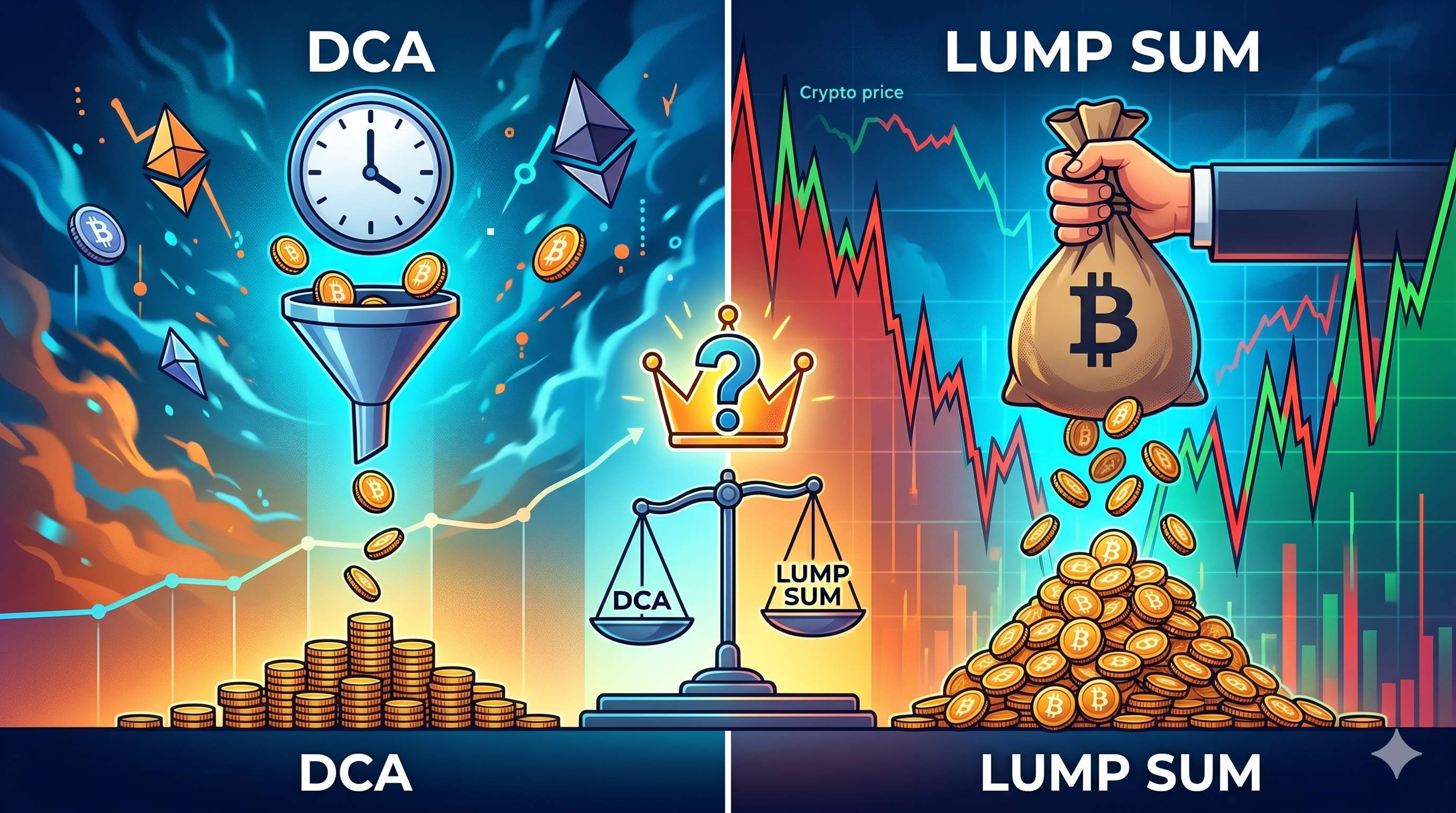
The age-old debate between Dollar-Cost Averaging (DCA) and Lump Sum investing has taken on a new intensity in the 2026 crypto market, where Bitcoin’s recent surge toward $78,911 and sharp intraday swings have left investors questioning their entry timing. Recent data from May 2026 reveals that while Bitcoin has gained roughly 10.04% year-to-date, it remains down nearly 38% from its 2025 all-time high, creating a prime environment for strategic selection.
To answer the main question: DCA is the clear winner for emotional stability and risk mitigation in 2026’s high-leverage environment, but Lump Sum remains the mathematically superior choice for those with high conviction during market bottoms. While a lump-sum investment at the February 2026 low of $60,057 would have yielded a staggering 26.85% return by May, the reality is that most investors cannot time these bottoms perfectly. For the average participant, DCA has historically ensured profitability in every rolling three-year window for Bitcoin since 2013, a trend that continues to hold true as of early 2026. This article explores why the current "leveraged washout" and macro chaos make your choice of strategy more critical than ever.
Key Takeaways
-
DCA Wins on Consistency: As of May 2026, every three-year DCA window in Bitcoin's history has resulted in profit, smoothing out the 3% daily volatility seen in recent weeks.
-
Lump Sum Wins on Momentum: In sustained rallies, like the 5.13% single-day jump seen in late April 2026, lump-sum investors capture the full move, whereas DCA investors "buy up" their average cost.
-
Volatility as an Asset: High volatility in 2026—driven by derivatives and leveraged trading—actually lowers the average entry price for DCA users during flash crashes.
-
Psychological Edge: DCA removes the "paralysis by analysis" common in May 2026’s neutral-to-cautiously-optimistic market sentiment.
-
The Ethereum Factor: DCA into Ethereum (currently testing $2,325 support) allows for compounded returns through 3% annualized staking rewards, acting like a dividend reinvestment plan.
What is DCA?
Dollar-Cost Averaging (DCA) is an investment strategy where you invest a fixed amount of money into a specific cryptocurrency at regular intervals, regardless of its current price. This method ensures that you buy more units when prices are low and fewer units when prices are high. As of May 2026, DCA has become the go-to "set-and-forget" strategy for retail investors looking to mitigate the impact of Bitcoin’s frequent 5% intraday price swings.
The primary goal of DCA is to reduce the "timing risk" associated with entering the market. Instead of trying to predict the absolute bottom—a feat that proved nearly impossible during the April 2026 liquidity crunch—investors spread their risk over weeks, months, or years. This results in an "average" entry price that reflects the broader market trend rather than a single, potentially ill-timed moment. It is a psychological hedge as much as a financial one, as it prevents investors from panicking during sudden "flash crashes" by viewing them as opportunities to lower their cost basis. By removing the emotional burden of "picking the perfect day," DCA allows investors to maintain long-term exposure to the digital asset class without constant monitoring.
What is Lump Sum?
Lump-sum investing is the practice of deploying your entire available investment capital into the market in a single transaction. In the context of 2026’s market dynamics, this means taking a large sum—such as a bonus or savings—and purchasing Bitcoin or Ethereum immediately at the prevailing market rate (e.g., the current $78,911 level). This strategy assumes that the asset price is currently at a low point or is about to enter a sustained upward trend.
The mathematical logic behind a lump sum is "time in the market beats timing the market." Because crypto assets have historically trended upward over long cycles, investing all your capital early allows every dollar to benefit from compounding growth from day one. Recent data from the first quarter of 2026 suggests that investors who executed a lump sum during the February dip at $60,057 outperformed DCA investors by over 15% during the subsequent recovery. However, this strategy requires high conviction and the financial cushion to withstand immediate, sharp drawdowns without selling. It is a high-conviction play often utilized by institutional players or whales who are less concerned with short-term price noise and more focused on capturing the full magnitude of a primary bull market move.
DCA: Turning 2026 Volatility into Your Best Friend
Dollar-Cost Averaging (DCA) is the superior strategy for the current May 2026 market because it systematically exploits the high intraday volatility (currently peaking at 5.95%) to lower your average cost basis. By committing a fixed amount of capital at regular intervals, you naturally buy more units of an asset like Bitcoin when prices dip toward the $68,000 support zone and fewer when it tests the $72,000 resistance.
Recent statistics from May 1, 2026, show that Bitcoin’s price performance has been a rollercoaster, with the CoinDesk Bitcoin Price Index gaining 2.60% in a single day after a period of consolidation. For a DCA investor, these fluctuations are not a threat but a mechanism. If you had invested $100 weekly starting in early 2026, you would have captured the February lows of $60,057 without the stress of trying to "catch the falling knife."
Why DCA Works in a Leveraged Market
The market structure in mid-2026 is heavily influenced by futures positioning and liquidations rather than just spot demand. This "leveraged" environment leads to sudden, sharp price drops.
-
Automated Discipline: Using tools like automated trading bots allows you to execute trades even when fear is high.
-
Mathematical Advantage: Because you spend a fixed dollar amount, you mathematically purchase more "cheap" crypto. For example, $500 buys 0.0083 BTC at $60,000, but only 0.0064 BTC at $78,000. Over time, your average price tends to be lower than the market average.
Lump Sum: The High-Conviction Power Play
Lump-sum investing generally outperforms DCA in markets with a sustained upward trend, making it the preferred choice for investors who believe May 2026 represents a long-term bottom before a rally toward $100,000. According to data from Titan Wealth International (April 2026), committing capital early in a bull phase maximizes the time your money spends in the market, allowing for greater compounded gains.
The Cost of Waiting
The primary risk of DCA in 2026 is "opportunity cost." If Bitcoin continues its recovery from the $78,391 level and breaks toward previous highs, a DCA investor would be forced to buy at progressively higher prices.
-
Early Exposure: A lump sum at the start of May would have participated in the 3.8% two-day stretch ending May 1st with 100% of the capital.
-
Simplicity: It eliminates the need for recurring fees and constant monitoring, provided the investor has the "stomach" to hold through a 10.46% year-to-date decline.
Comparing the Two Strategies: A 2026 Snapshot
To better understand which path to take, we can look at how these strategies would have performed during the volatile window of March to May 2026.
| Feature | Dollar-Cost Averaging (DCA) | Lump-Sum Investing |
| Ideal Market | Volatile or Bearish | Strongly Bullish |
| Risk of Regret | Low (Price drops are buying opportunities) | High (Price drops lead to immediate loss) |
| Average Cost | Smoothed over time | Fixed at entry |
| 2026 Performance | Profitable in all 3-year windows | Dependent on the specific entry day |
| Required Capital | Low (Small, recurring amounts) | High (Full amount upfront) |
Ethereum and the "Staking Bonus" in DCA
For those choosing DCA in May 2026, Ethereum (ETH) offers a unique structural advantage over Bitcoin due to its 3% annualized staking rewards. As ETH tests the key support level of $2,046 in early May, DCA investors can not only lower their entry price but also compound their holdings by locking their purchased coins into the network.
This creates a "Crypto DRIP" (Dividend Reinvestment Plan). If Ethereum’s price rises as predicted by the end of 2026, the DCA investor benefits from both the price appreciation of their original purchases and the appreciation of the "earned" staking rewards. This dual-earning potential makes Ethereum a prime candidate for automated, long-term DCA strategies.
Strategy Selection: Psychological vs. Mathematical Wins
The choice between DCA and Lump Sum in 2026 is often a battle between mathematical theory and human psychology. While historical data suggests that lump-sum investing wins roughly 66% of the time in traditional markets, the crypto market’s unique volatility—often seeing 5% swings in hours—favors the psychological peace of DCA.
The Behavioral Gap
Many investors who attempt a lump sum in the volatile May 2026 climate find themselves selling in a panic when they see an immediate 10% drawdown.
-
DCA reduces "Loss Aversion": Investors are less likely to abandon their plan during a "leveraged washout" because they view the drop as a chance to buy "on sale."
-
Lump Sum requires "Steel Nerves": With Bitcoin currently down 37.92% from its all-time high, a lump-sum investor must be prepared for the possibility that the market could test the $60,000 floor again.
Optimizing Your 2026 Entry Strategy
To maximize returns in today's market, many sophisticated investors are now using a "Hybrid Strategy": a large initial lump sum followed by recurring DCA. This ensures you have significant "skin in the game" if the market rallies toward geopolitical clarity in late May, while still protecting you against further volatility.
Tactical Considerations for May 2026
-
Monitor Support Levels: Bitcoin is currently testing a critical support zone at $68,000. A break below this could favor a more aggressive DCA approach.
-
Watch the "Smart Rebalance": Using automated tools to maintain a 50/50 split between BTC and ETH can capture gains from one asset to buy the other when it is underperforming.
-
Stay Informed on Macros: While crypto technicals suggest a bottom, macro headlines continue to drive "beta" reactions. Ensure your strategy accounts for sudden shifts in global liquidity.
Mastering Volatility with Advanced Tools
As the 2026 market continues to mature, the tools available for both DCA and Lump Sum investors have become incredibly sophisticated. For those looking to automate these strategies, KuCoin offers a suite of "Killer Features" designed specifically for volatile conditions. Their DCA Bot allows you to set precise intervals and amounts, ensuring you never miss a dip even while you sleep. For more active traders, the Spot Grid Bot takes DCA a step further by automatically buying low and selling high within a set range—effectively profiting from the "noise" of the market.
Whether you are looking to secure your assets with the $2 billion Trust Project transparency or seeking high-yield opportunities through Simple Earn, the platform provides a robust environment for any strategy. If you're feeling a bit more adventurous, the Infinity Grid Bot ensures you never fully "sell out" during a massive bull run, solving one of the biggest drawbacks of the traditional DCA method. Exploring these automated tools can turn a stressful trading day into a passive wealth-building journey.
💡Tips: New to crypto? KuCoin's Knowledge Base has everything you need to get started.
Conclusion
The battle between DCA and Lump Sum in the May 2026 crypto market doesn't have a one-size-fits-all answer, but the data points to a clear trend. For the vast majority of investors, Dollar-Cost Averaging wins because it bridges the gap between market theory and human emotion, turning Bitcoin's 3% to 6% daily volatility into a tool for wealth accumulation. By smoothing out the entry price during the current "leveraged washout," DCA users are better positioned to weather macro chaos than those who gamble on a single entry point.
However, for the high-conviction investor with a decade-long horizon, the current 37.92% discount from Bitcoin's all-time high presents a compelling case for a lump-sum entry. The key to success in 2026 is not just the strategy you choose, but the discipline to stick with it. Whether you utilize automated bots to handle the heavy lifting or manually manage your portfolio, the goal remains the same: staying in the market long enough to benefit from the eventual recovery. As institutional adoption and Web3 integration continue to rise, both strategies offer a path to potential prosperity—provided you manage your risks and keep your eyes on the long-term horizon.
FAQs
Is DCA better than Lump Sum during a Bitcoin bear market?
DCA is generally considered better during bear markets or prolonged consolidations because it allows you to continuously lower your average purchase price as the asset value declines. This prevents the "all-in" regret of a lump sum that could immediately drop in value.
How often should I execute a DCA trade in 2026?
Most data suggests that weekly or bi-weekly DCA strikes the best balance between reducing volatility impact and managing transaction fees. Daily DCA can be effective during hyper-volatile weeks but may result in higher cumulative trading costs.
Does Lump Sum investing work for altcoins like Solana or XRP?
Lump-sum investing in altcoins is significantly riskier due to their higher "Beta" and volatility compared to Bitcoin. While a lump sum can lead to massive gains during a breakout, the "washout" risk is much higher, making DCA a safer bet for high-volatility assets.
Can I lose money with a DCA strategy?
Yes, DCA reduces "timing risk," but it does not eliminate "market risk." If the underlying asset’s price continues to fall and never recovers to your average entry price, your total investment will result in a loss.
What is the "Martingale" strategy mentioned in 2026 trading?
The Martingale strategy is a more aggressive version of DCA where an investor doubles their investment amount as the price drops. While this lowers the average entry price much faster than standard DCA, it carries a much higher risk of capital depletion if the market does not rebound quickly.
Disclaimer: This article is for informational purposes only and does not constitute financial or investment advice. Cryptocurrency investments carry significant risk. Always conduct your own research before trading.