

Trezor vs. Ledger: Which Hardware Wallet Is Best in 2026?
2026/03/20 16:27:02
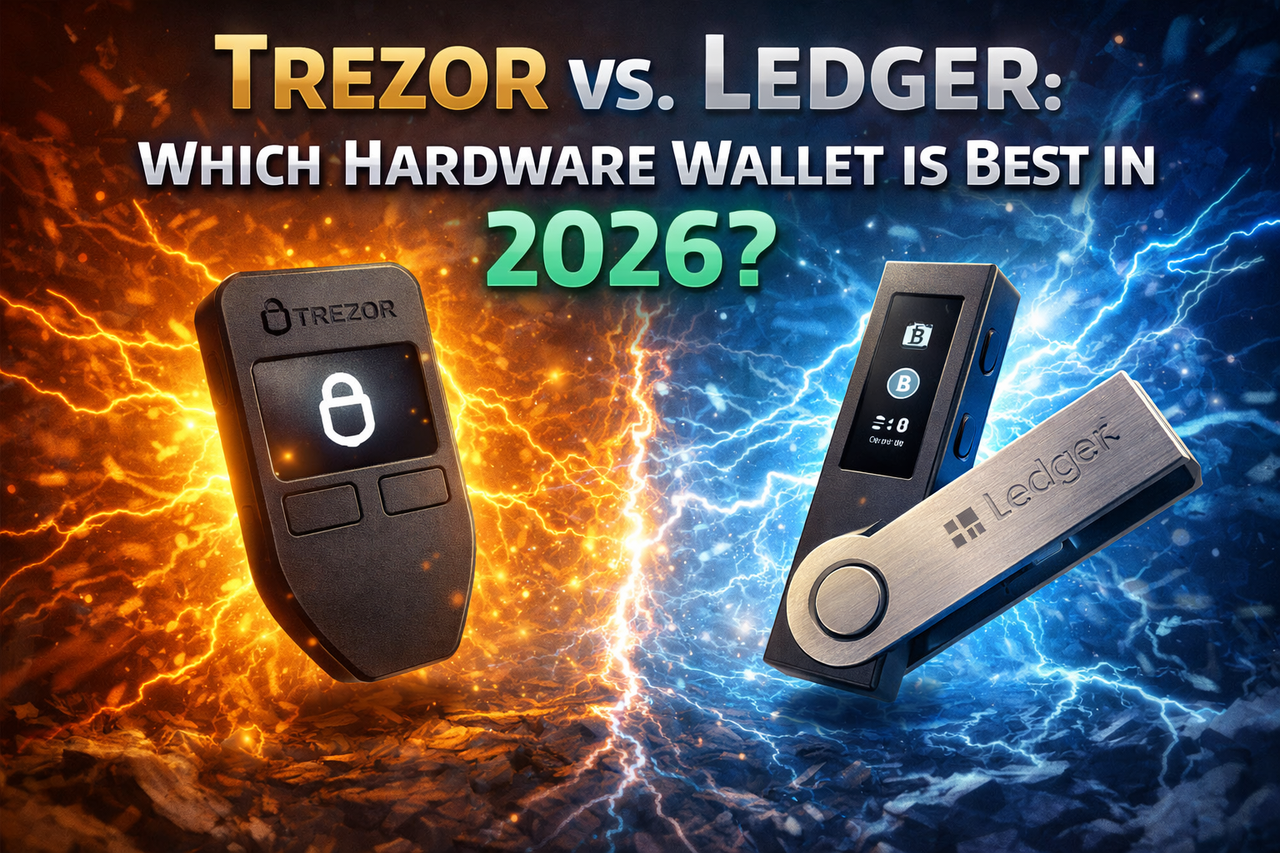
As crypto adoption skyrockets in 2026, securing your digital wealth is no longer optional; it's essential for anyone navigating the decentralized financial landscape. In this evolving environment, choosing between industry giants like Ledger vs Trezor remains one of the most significant decisions for ensuring the long-term safety of your cryptocurrency assets.
This comprehensive guide will break down the crucial differences, security architectures, and user experiences of both pioneering hardware wallet brands to help you confidently select the best cold storage solution for your needs. We examine their 2026 models and feature sets in depth.
Key Takeaways:
-
Self-Custody is Essential: Hardware wallets are critical for true ownership of your crypto, protecting assets from online hacks by storing private keys offline.
-
Ledger's Approach (2026): Ledger remains dominant by pairing its tamper-resistant Secure Element (SE) chip architecture with Bluetooth convenience and a polished, integrated software ecosystem via Ledger Live.
-
Trezor's Approach (2026): Trezor continues to champion open-source transparency, appealing to security purists with fully auditable code and advanced backup options like Shamir Backup.
-
Security Philosophies: The core distinction is closed-source hardware security (Ledger) versus open-source transparency (Trezor). Both are highly secure but offer different "peace of mind" architectures.
-
Usability vs. Pure Cold Storage: Ledger models are optimized for mobile, on-the-go security, while Trezor remains a strong contender for those prioritizing maximum offline control.
What is Hardware Wallet?
A hardware wallet, often referred to as a "cold wallet," is a dedicated, physical device designed for one primary purpose: to secure your cryptocurrency private keys in an offline environment. Unlike "hot wallets" (software applications running on your computer or smartphone), a hardware wallet generates and stores your keys on a secure chip that is never exposed to the internet.
In 2026, as sophisticated cyberattacks increase alongside crypto's value, the peace of mind offered by true self-custody is indispensable. You own the device, you control the keys, and you are your own bank.
How does Hardware Wallet work?
Hardware wallets operate on the principle of "air-gapped" transaction signing. Your private keys never leave the device. When you want to move funds, the transaction is sent to the wallet, signed internally using the stored key, and only the "signed" data is sent back to the internet-connected app to be broadcast to the blockchain.
This ensures that even if your computer or phone is infected with malware, the hacker cannot access your keys. The physical device usually requires a PIN and manual button confirmation for every transaction, adding a layer of physical security that software wallets simply cannot match.
What is Trezor?
Trezor, created by SatoshiLabs, was the first commercial hardware wallet to hit the market in 2013. Based in Prague, the company has built its reputation on the "Don't Trust, Verify" ethos. Every piece of Trezor's code is open-source, allowing the global security community to audit the software and hardware schematics for any potential vulnerabilities or backdoors.
Key Features of Trezor
In 2026, Trezor has shifted its focus toward its "Safe" series, which modernizes the user experience while maintaining strict security standards.
-
Trezor Safe 5 & 7: These flagship models feature large color touchscreens and haptic feedback, making it easier to verify complex addresses.
-
Tropic01 Secure Element: Unlike older models, the 2026 Safe line includes a secure element chip that is uniquely "transparent and auditable," bridging the gap between hardware hardening and open-source values.
-
Shamir Backup: A professional-grade backup system that allows you to split your recovery phrase into multiple "shares," ensuring that losing one part of your backup doesn't lead to a loss of funds.
-
Trezor Suite: A privacy-centric desktop and mobile app that integrates Tor, coinjoin, and native privacy tools to keep your transaction history anonymous.
Pros and Cons of using Trezor
Pros
-
Full Transparency: 100% open-source firmware and software.
-
Advanced Privacy: Native Tor and coinjoin support within Trezor Suite.
-
Quantum-Ready: The Safe 7 model is designed with future-proof cryptographic updates in mind.
Cons
-
Limited Mobile Support: While the Android app is robust, iOS functionality remains more restricted compared to Ledger.
-
Physical Footprint: The devices are slightly bulkier and lack the sleek "USB stick" feel of Ledger’s Nano line.
What is Ledger?
Ledger is a French-based security company that has become the most popular hardware wallet provider in the world. Ledger's philosophy centers on "Secure Element" chips—the same high-security tech found in passports and credit cards. They prioritize a seamless, mobile-first experience that integrates with the broader Web3 and NFT ecosystem.
Key Features of Ledger
Ledger’s 2026 lineup is designed for the modern user who wants to manage their portfolio from anywhere.
-
Ledger Stax & Flex: These premium devices feature curved E-Ink touchscreens, allowing users to view full transaction details with "Clear Signing" and even display their favorite NFTs on the lock screen.
-
EAL6+ Certified Secure Element: Ledger uses the highest industry-standard chips to prevent physical hardware attacks and key extraction.
-
Ledger Live: A "super-app" for crypto that allows for native staking, swapping, and buying directly through the interface with dozens of integrated partners.
-
Bluetooth Connectivity: Enables secure, wireless connection to iOS and Android devices for on-the-go management.
Pros and Cons of using Ledger
Pros
-
Unrivaled Asset Support: Supports over 5,500 coins and tokens natively.
-
Superior Mobile UX: The Ledger Live mobile app is the most polished in the industry.
-
Enterprise-Grade Hardware: Secure Element chips provide industry-leading physical protection.
Cons
-
Closed-Source Firmware: Users must trust Ledger’s internal security audits for the core operating system.
-
Recover Controversy: The optional "Ledger Recover" subscription service remains a point of contention for some privacy purists.
Key Comparison between Trezor and Ledger
When comparing Ledger vs Trezor in 2026, the choice usually comes down to your technical preference and lifestyle.
-
Security Architecture
-
Trezor uses an "auditable secure element," prioritizing the community's ability to verify the code. This is ideal for those who are skeptical of "black box" security.
-
Ledger uses proprietary, closed-source Secure Elements that are widely considered the gold standard for resisting physical tampering if the device is stolen.
-
Display and Usability
-
Ledger has moved toward the "Stax" and "Flex" form factors, which feel like mini-smartphones with E-Ink screens. These are excellent for reading long smart contract details.
-
Trezor uses color LCD touchscreens on its Safe 5 and 7 models. While vibrant, they consume more battery than E-Ink but offer a very familiar smartphone-like interface.
-
Ecosystem Integration
-
Ledger Live is a more comprehensive all-in-one platform for staking and NFTs. If you want to "do it all" in one app, Ledger is the winner.
-
Trezor Suite focuses on "clean" security. It is less cluttered and puts privacy features (like Tor) front and center, making it the choice for Bitcoin-heavy portfolios and privacy advocates.
Key Considerations before using Hardware Wallet
Before you migrate your funds from an exchange to a Ledger vs Trezor device, keep these expert tips in mind.
The Backup is the Wallet
The device is just a screen and a key; your Seed Phrase is your actual money. If you lose your device but have your 24 words, you can recover everything. If you lose your 24 words, even the manufacturer cannot help you. In 2026, many users are moving to Metal Seed Storage to protect against fire and water damage.
Buy Only from Official Sources
Supply chain attacks are a real threat. Never buy a used hardware wallet or purchase one from an unauthorized third-party seller on platforms like eBay. Always order directly from the official Ledger or Trezor websites to ensure the device hasn't been tampered with.
Verify on the Device Screen
Always verify the address on your hardware wallet's physical screen before confirming. Malware on your computer can change what you see on your monitor, but it cannot change what the hardware wallet displays. This "Trusted Display" is your final shield against phishing.
Summary
In the high-stakes world of digital assets, the debate of Ledger vs Trezor in 2026 essentially comes down to your personal security philosophy: physical resilience or open-source transparency. Ledger offers a sleek, mobile-friendly experience backed by a tamper-resistant Secure Element, making it the premier choice for active traders and multi-chain users. Trezor, with its unwavering commitment to auditable code and advanced privacy tools, remains the sanctuary for security purists and long-term holders. Regardless of which brand you choose, moving your assets from our exchange to a hardware wallet is the most critical step you can take toward true financial sovereignty and long-term peace of mind.
FAQs
Which wallet is easier for a total beginner?
Ledger is generally considered more beginner-friendly due to its Ledger Live app, which guides you through buying, staking, and managing NFTs in one interface. Trezor is also intuitive but appeals more to those who prefer a "minimalist" security approach.
Is Trezor or Ledger more secure against physical theft?
Ledger has a slight edge because of its EAL6+ Secure Element chip, which is specifically designed to prevent "key extraction" if someone has physical possession of the device. Trezor’s new Safe line also uses secure elements to close this gap.
Can I use my hardware wallet with my smartphone?
Yes. All Ledger models (via Bluetooth or USB) and newer Trezor Safe models (via USB-C or Bluetooth on Safe 7) can connect to mobile devices, though Ledger's iOS integration is currently more mature than Trezor's.
What happens if I lose my hardware wallet?
As long as you have your recovery seed phrase, your funds are safe. You simply buy a new device and enter your phrase to "restore" your wallet and access your coins on the blockchain.
Do I still need to use an exchange if I have a hardware wallet?
Yes. While hardware wallets allow for some swaps, central exchanges like ours provide the best liquidity and lowest fees for active trading. Use our exchange for your "hot" trading funds and your hardware wallet for your "cold" long-term savings.
Disclaimer: The information on this page may have been obtained from third parties and does not necessarily reflect the views or opinions of KuCoin. This content is provided for general informational purposes only, without any representation or warranty of any kind, nor shall it be construed as financial or investment advice. KuCoin shall not be liable for any errors or omissions, or for any outcomes resulting from the use of this information. Investments in digital assets can be risky. Please carefully evaluate the risks of a product and your risk tolerance based on your own financial circumstances. For more information, please refer to our Terms of Use and Risk Disclosure.