

KuCoin Ventures Weekly Report: Fed's Hawkish Pivot Sparks Record ETF Outflows, RWA Reshapes On-Chain Credit, and Capital Rushes into Prediction Markets
2026/06/30 10:59:00
1. Weekly Market Highlights
DeFi Lending and RWA Integration Accelerate: Aave Gains Traditional Institutional Endorsement as Kraken Deepens Its Expansion
Last week, despite continued pressure across the broader crypto market, institutional interest in RWA and the DeFi lending layer showed no signs of cooling. Aave Horizon continued to advance its institutional-grade RWA collateralized lending market, Standard Chartered issued a long-term bullish price target for AAVE, and Kraken was reported to be in potential deal discussions related to Aave after expanding its tokenized equities business. Together, these developments point to a clear trend: RWA is moving beyond “asset tokenization” toward a more functional financial stage where assets can be used as collateral, borrowed against, and integrated into on-chain yield generation.
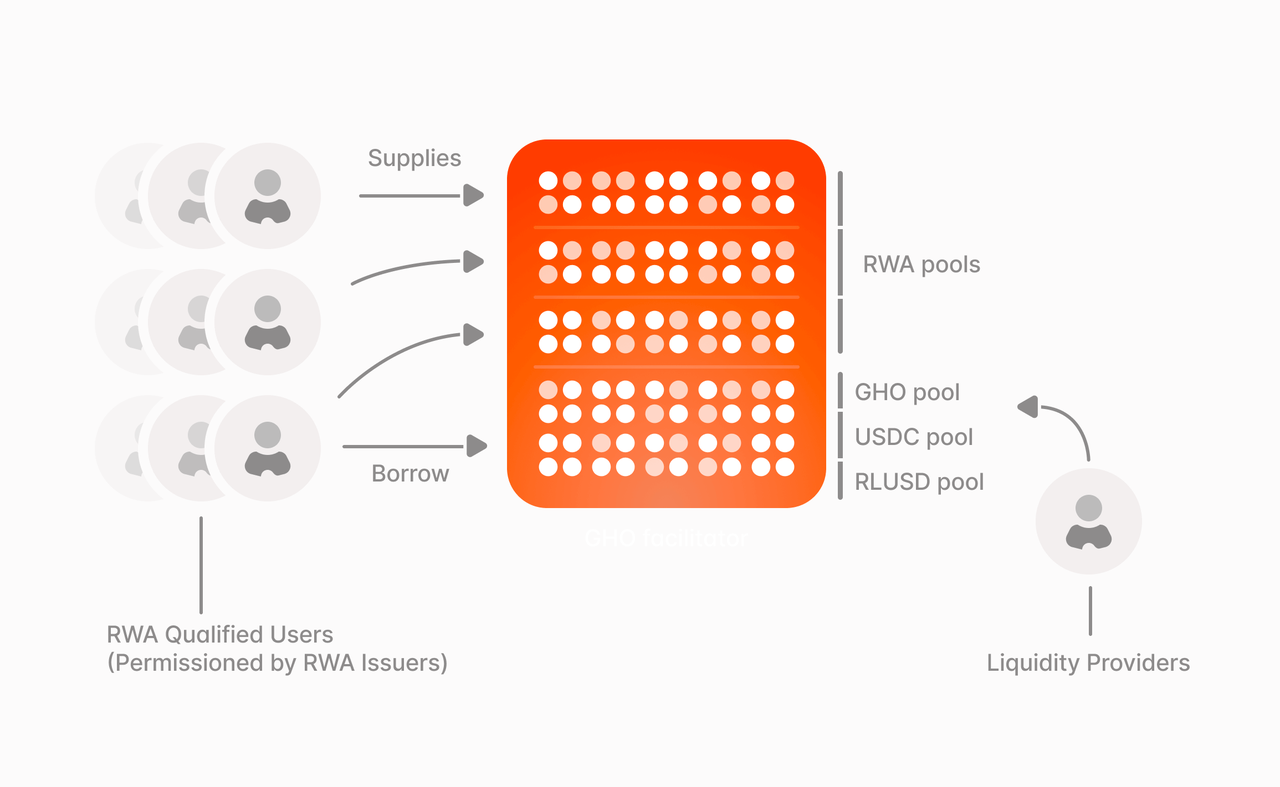
Aave Horizon is one of the most direct examples of DeFi lending protocols integrating with RWA. Its core design is not simply to add RWA assets for display, but to connect two types of demand through a hybrid structure. On one side, there is a permissioned RWA collateral layer, where qualified institutions can use tokenized Treasuries, tokenized funds, and other assets as collateral. On the other side, there is a permissionless stablecoin liquidity layer, where users can supply stablecoins such as USDC, RLUSD, and GHO to earn yield from institutional borrowers. Through this structure, RWA assets that were previously relatively static and less liquid begin to gain on-chain financing utility, while the collateral base of DeFi lending expands from crypto-native assets to real-world assets.
Data Source: Aave Official Website
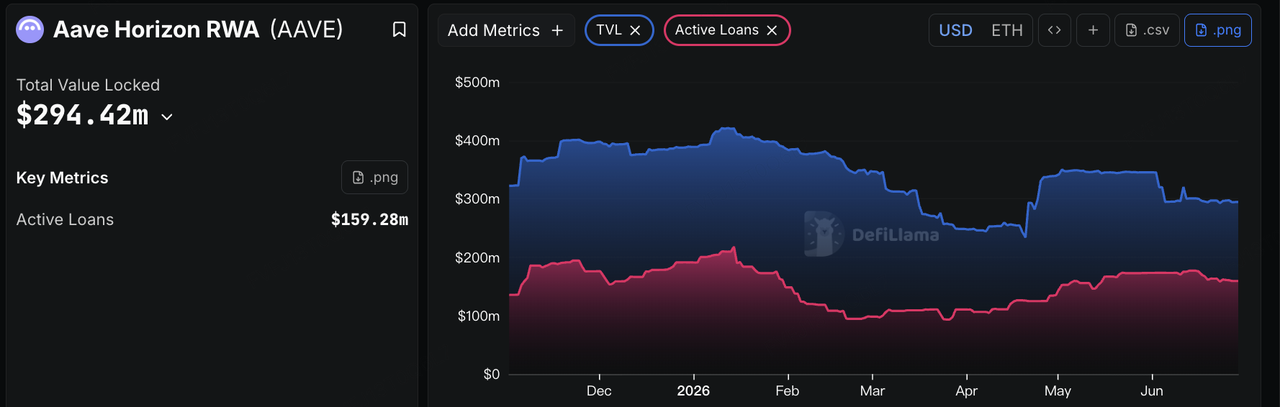
This shift addresses one of the core bottlenecks in the current RWA market: tokenizing an asset does not necessarily mean the asset can be used efficiently. Previously, RWA activity was largely centered on the issuance of tokenized Treasuries, money market funds, private credit, and similar assets, with market attention focused on custody, compliance, yield, and scale. For DeFi, however, the more important question is whether these assets can enter collateral, lending, refinancing, and yield-distribution processes. The significance of Horizon lies in turning RWA from static on-chain holdings into collateral that can participate in credit creation, pushing the RWA narrative from the issuance layer deeper into the on-chain lending layer. From a data perspective, Aave Horizon has already reached hundreds of millions of dollars in deposits within the RWA lending sector and has begun generating real borrowing demand, indicating that some tokenized assets are moving beyond static on-chain holdings and gradually entering collateralized financing and stablecoin lending scenarios.
Data Source: DeFiLlama
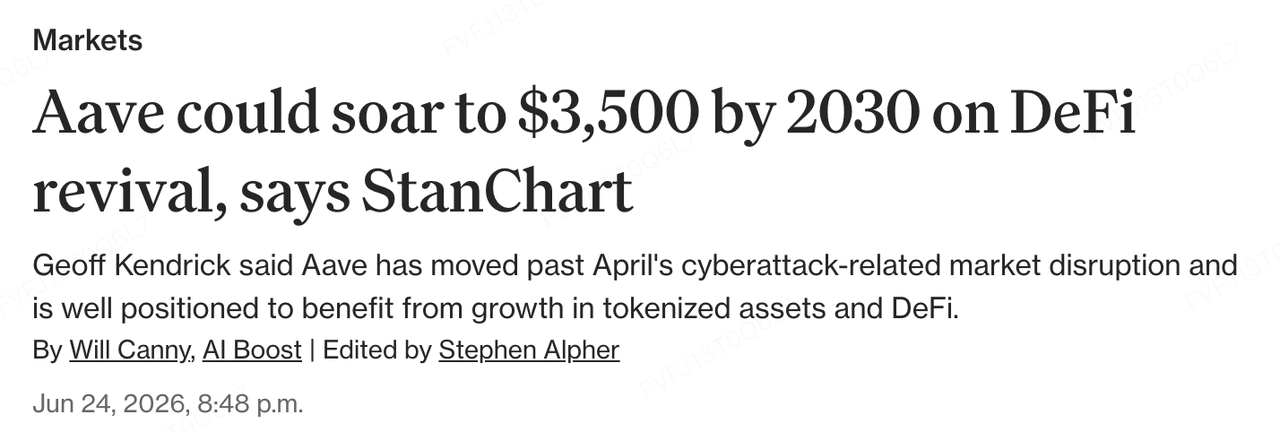
Traditional institutions are also taking a more explicit stance. Geoff Kendrick, Global Head of Digital Assets Research at Standard Chartered, recently initiated coverage of AAVE and set a year-end 2030 price target of $3,500. The core logic is not simply a bet on Aave’s short-term market share, but the view that stablecoin expansion, RWA tokenization, and rising usage of tokenized assets in DeFi will drive significant growth in active assets within DeFi. In other words, Standard Chartered’s bullish view on Aave is based on seeing it as a core spread and liquidity infrastructure layer for a future in which RWA and stablecoins increasingly enter on-chain lending markets. The significance of the report is not the short-term price target itself, but that a traditional bank is beginning to reassess the value of DeFi protocols through a framework closer to that used by financial institutions. Aave is no longer viewed only as a lending protocol dependent on crypto-native leverage cycles, but is increasingly being analyzed through the lens of “deposits, borrowing, net interest spread, and protocol revenue.”
Data Source: CoinDesk
Developments on the trading platform side are also worth noting. Kraken previously completed its acquisition of Backed Finance, further integrating the issuance, trading, and settlement capabilities behind xStocks. More recently, reports indicated that Kraken’s parent company, Payward, was evaluating a potential transaction to acquire around 15% of Aave Group at an estimated valuation of approximately $385 million. Although Aave’s founder later denied some key claims, including the idea of selling AAVE at a steep discount, and the transaction remains unconfirmed, the rumor still reflects the strategic interest of major crypto platforms in the DeFi lending layer and RWA infrastructure. For Kraken, tokenized equities, on-chain yield products, and potential protocol investments are jointly reinforcing its path from a trading venue toward a multi-asset financial front end.
Overall, the cases of Aave and Kraken show that the integration of RWA and DeFi is progressing from two directions. On one side, DeFi protocols such as Aave Horizon are absorbing institutional RWA collateral and stablecoin liquidity, turning real-world assets into part of the on-chain lending market. On the other side, trading platforms such as Kraken are expanding their positioning from exchanges into multi-asset financial gateways through tokenized equities, yield products, and potential protocol investments. The point of convergence is that the future value of RWA will not only depend on whether assets can be issued on-chain, but whether they can enter on-chain financial networks where they can be borrowed against, settled, composed, and used to generate yield.
That said, this trend remains at an early stage. Horizon’s permissioned collateral layer helps meet institutional compliance requirements, but the onboarding, valuation, redemption, and liquidity management of RWA collateral still require more mature risk-control mechanisms. Whether institutional borrowing demand can be sustained will also depend on the relative cost advantage of on-chain stablecoin financing compared with traditional funding channels. For DeFi protocols, the long-term value of RWA collateralized lending will depend not only on asset-scale growth, but also on whether they can generate stable, sustainable, and risk-controlled real borrowing demand.
Looking ahead, the key indicators for RWA and DeFi lending will shift from simple TVL to more financial metrics, including Aave Horizon’s deposit size, actual borrowing volume, collateral composition, stablecoin utilization, institutional borrowing costs, and demand for GHO, RLUSD, USDC, and other stablecoins in lending markets. If RWA assets can continue entering lending protocols such as Aave and Morpho and generate stable collateralized financing demand, the RWA narrative will move further from the asset issuance layer into on-chain credit markets and yield infrastructure.
2. Weekly Selected Market Signals
Record ETF Outflows & Leverage Shakeout, the Fed Turns Hawkish, and Capital Floods into Prediction Markets
Last week, US benchmark indices were broadly under pressure, with the S&P 500 dropping nearly 2% and the Nasdaq 100 tumbling over 4%. The retail-driven selloff in AI chip stocks revealed the destructive power of modern market speculation mechanisms when trends reverse. Currently, ETFs using derivatives to offer leveraged returns manage over $270 billion in assets globally. The mechanical buying and selling flows of these products likely amplified the broader market selloff recently. For instance, a leveraged fund tied to SpaceX plummeted about 40% right after its debut, leaving investors who chased the hype facing significant losses.
Tensions between the US and Iran showed signs of easing, with both sides agreeing to halt strikes and planning to resume talks in Qatar, focusing on issues like the Strait of Hormuz and ending the conflict. On the policy front, the US Treasury issued General License X, allowing Iranian oil sales to be settled in US dollars. Cooled by this fading safe-haven sentiment, Brent crude pulled back from its highs to hover around $72.50 a barrel.
Bank of America upgraded its global macro outlook: Despite geopolitical bumps, BofA raised its 2026 global GDP growth forecast to 3.2% and expects it to accelerate to 3.5% in 2027, driven by structural factors like the AI investment boom, robust US policies, and the Asian export cycle.
Data Source: coinmarketcap
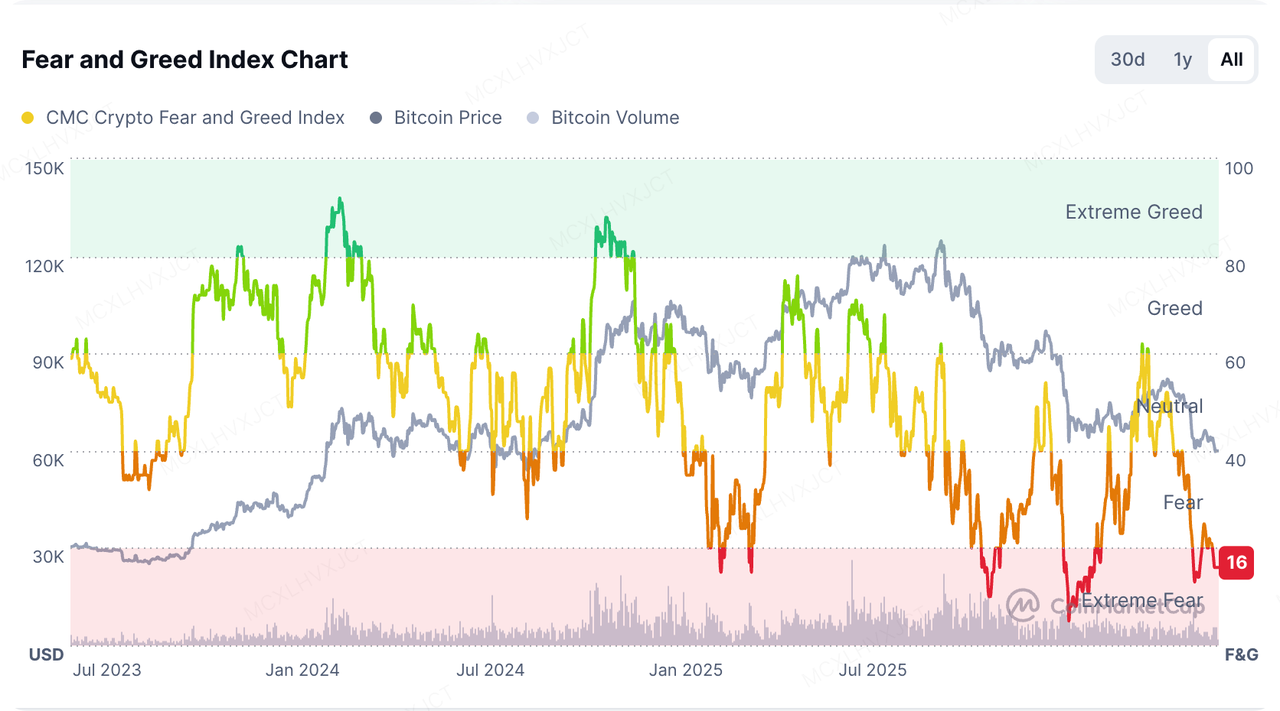
Crypto market panic persists, with the Fear and Greed Index dropping to 15 (near the all-time low of 5 set in February 2026). Capital has noticeably retreated into large-cap assets. Bitcoin's market dominance now stands at 58.1%, while the Altcoin Season Index is a mere 34, showing an extremely defensive market posture.
In the US stock market, the crypto-derivative leverage ecosystem tied to Strategy Inc. is under immense pressure. The long/short leveraged ETFs linked to it, launched in 2024, have plunged over 90% since inception, and its preferred stock, STRC, once fell below $71, deviating heavily from its $100 target price. This shows that under liquidity pressure, the repositioning of highly leveraged holders is significantly shaking secondary market confidence.
Looking at the macro liquidity model, the current market state might be fundamentally different from the systemic bear markets of 2018 and 2022, which were driven by "Fed tightening + M2 contraction." With the overall liquidity pool (Fed balance sheet expansion and M2 growth) still expanding, the current downturn leans more towards a distribution of high-level profit-taking, leverage flushes, and capital rotating into the AI sector.
Data Source: SoSoValue
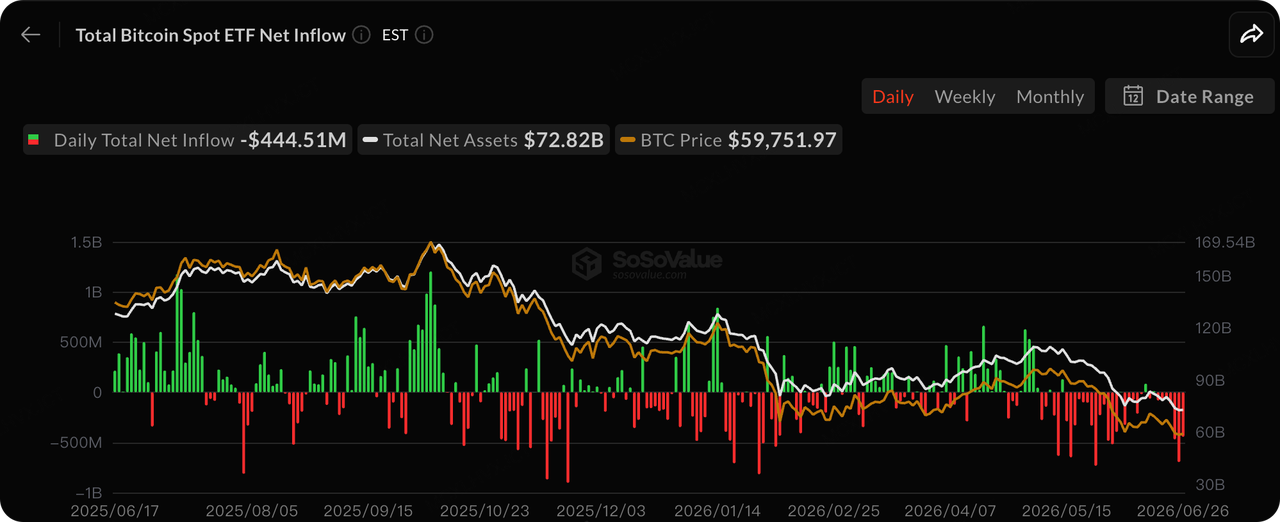
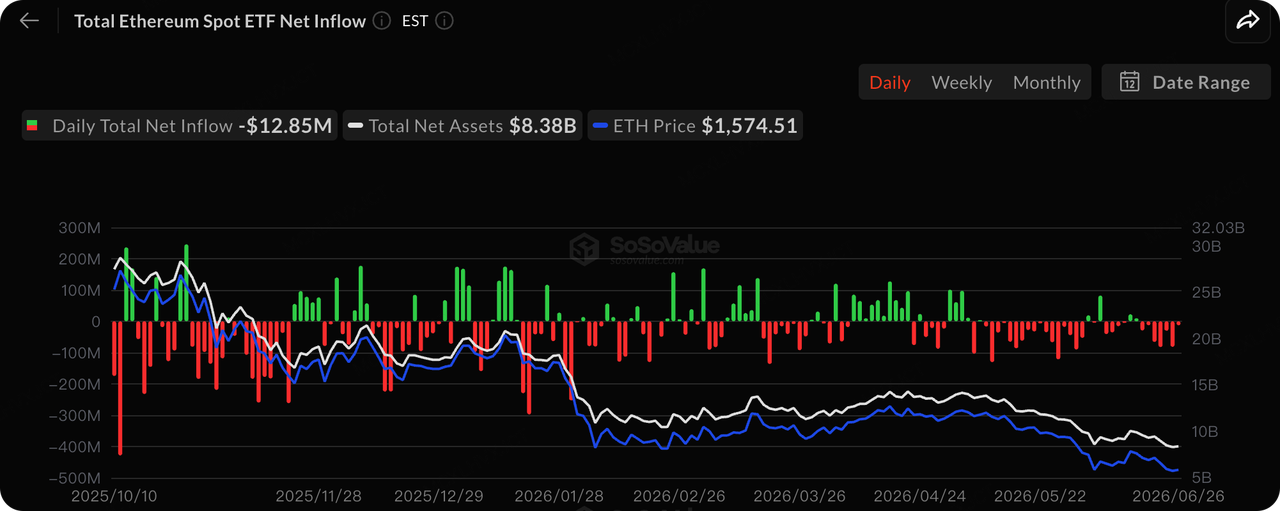
ETF capital, previously the core incremental buyer driving Bitcoin's price, has now definitively turned into an incremental seller. US spot Bitcoin ETFs have seen net outflows for the seventh consecutive week, with the latest weekly redemption hitting $1.79 billion (the second-highest in history). The rolling 20-day cumulative outflow reached $5.42 billion, marking the most severe capital bleed on record.
BlackRock's IBIT became the focal point of the selling pressure: IBIT set a record-long streak of seven consecutive weeks of net outflows, with a single-week outflow peaking at $860 million. Due to Bitcoin's recent price drop, the average retail investor is now sitting on a floating loss of about 40%, bringing the total cumulative outflows for Bitcoin ETFs this year to roughly $4.5 billion.
The capital flight is broad and prolonged, intensifying the long/short divide in the market. The bearish thesis argues that in a high-interest-rate and tight Fed policy environment, this is a systemic risk contraction, not just routine profit-taking. In the short term, ETF demand remains highly unstable, making it increasingly difficult to catch the absolute bottom.
Data Source: DeFiLlama
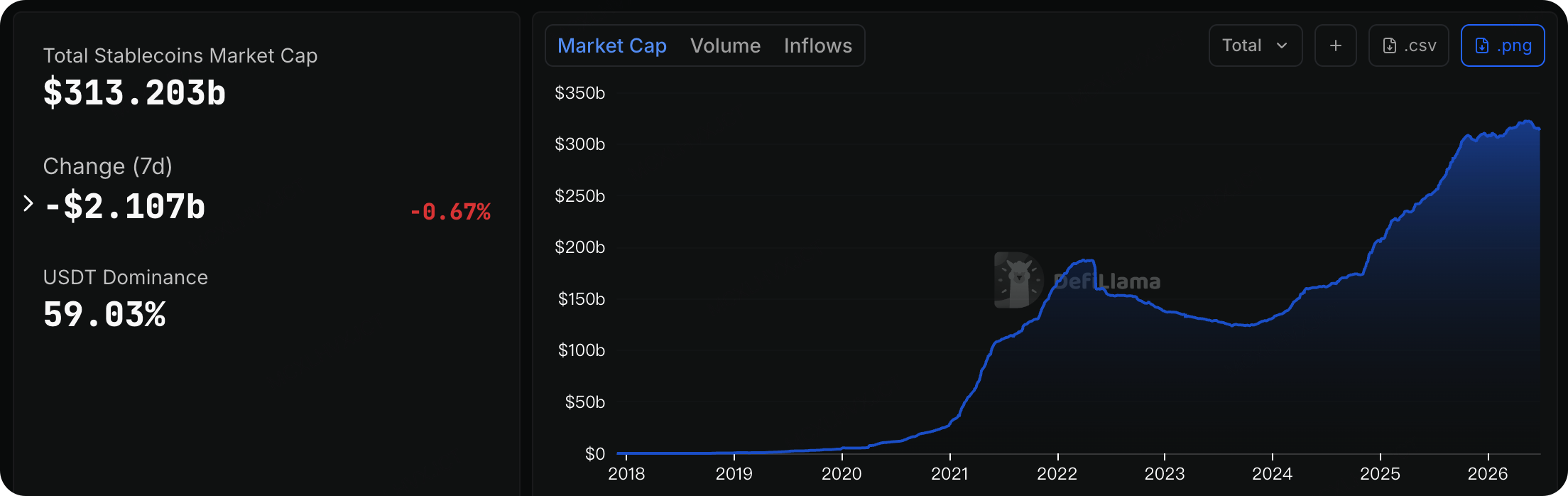
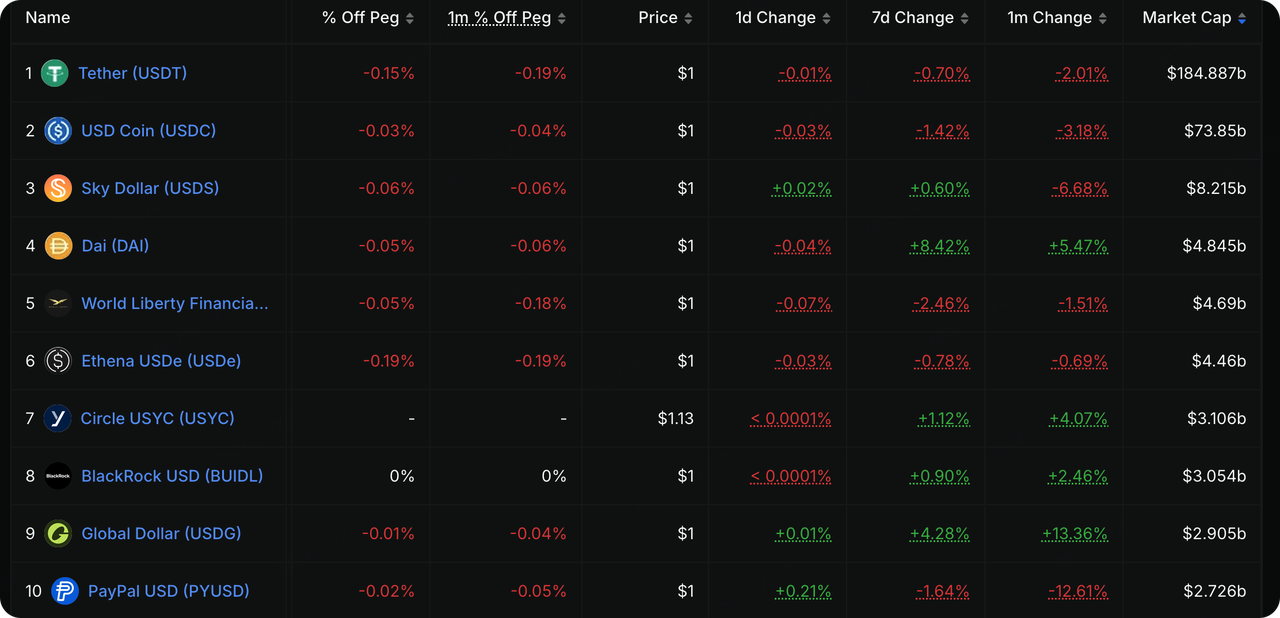
On-chain data shows the total market cap of stablecoins across the network currently sits at $313.20 billion, remaining in an absolute historical high range. However, over the past 7 days, the stablecoin market saw a minor net outflow of about $2.107 billion (-0.67%).
Traditional fiat stablecoins saw outflows, while yield-bearing and RWA assets attracted capital against the trend.USDT still holds absolute dominance at 59.03%, with a total market cap of $184.88 billion, seeing a slight 0.70% outflow over the past 7 days. USDC's market cap is $73.85 billion, down 1.42% over the same period. On-chain capital continues to rotate into assets with yield generation or high-credit traditional finance backing, reflecting a defensive strategy that balances risk aversion with profit-seeking.
Data Source: CME FedWatch Tool
Data Source: TradingView
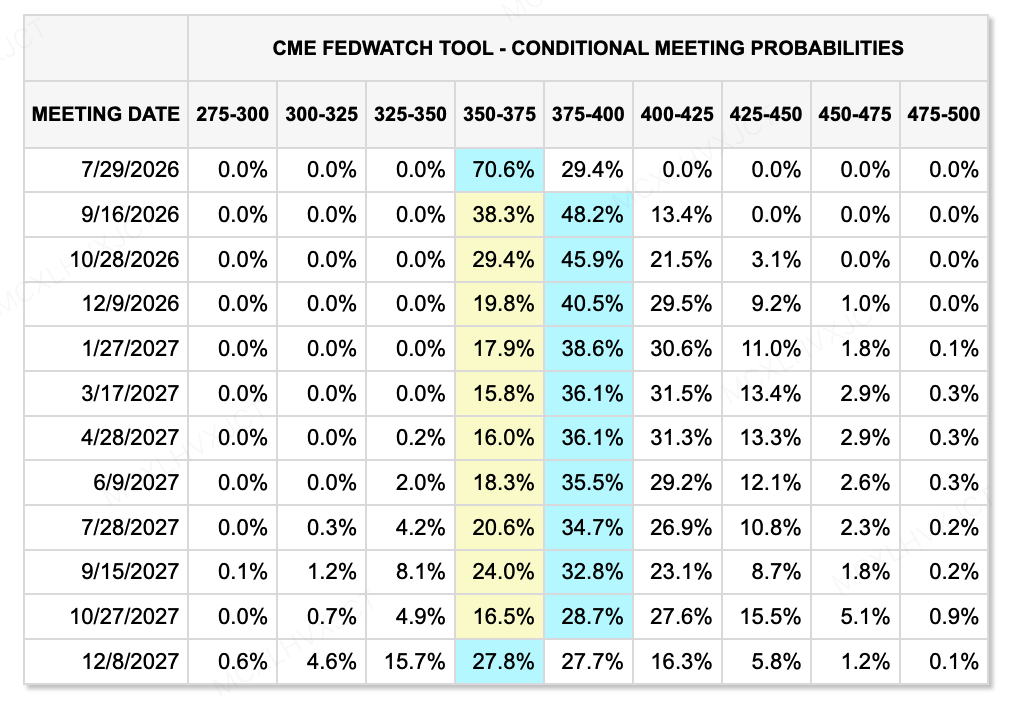
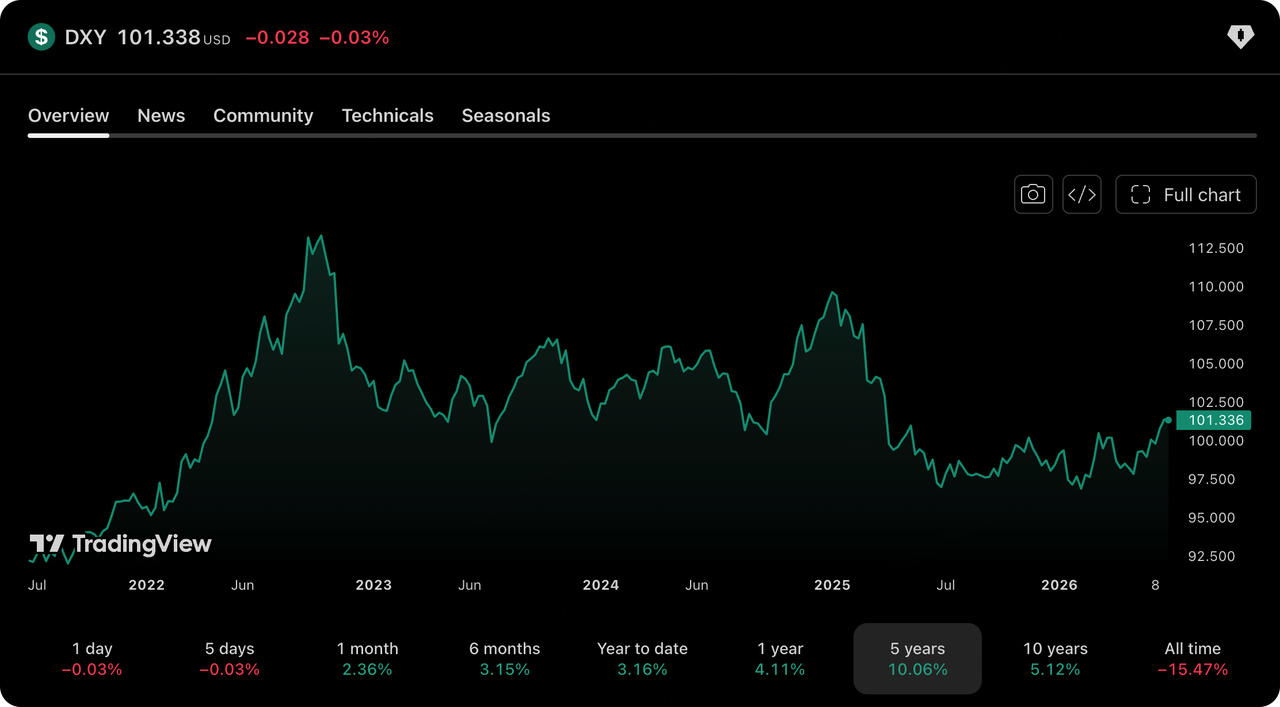
The new Fed's "hawkish" restructure and a stronger Dollar: The "Super Central Bank Week" dominated currency market trends. New Fed Chair Kevin Warsh kept rates unchanged at 3.5%-3.75% in his first FOMC meeting, but wiped out all forward guidance for rate cuts, pivoting to a purely data-driven approach. Fueled by nearly half of the officials betting on a rate hike this year on the dot plot and an upward revision to inflation forecasts (up to 3.6%), the US Dollar Index surged, establishing a clear phase of strength.
Non-US currencies under pressure amidst central bank tug-of-war: The strong dollar significantly suppressed non-US currencies. The USD/JPY firmly held the 160 mark ; the Bank of England held rates at 3.75% in a 7:2 vote, but the British Pound weakened short-term under the pressure of the Fed's hawkish expectations. Meanwhile, the PBOC conducted its first-ever 300 billion yuan overnight reverse repo operation, aiming to smooth out quarter-end funding volatility and gradually optimize short-end rate control。
Inflation shows strong stickiness: Richmond Fed President Tom Barkin warned that the PCE price index for May rose 4.1% year-over-year—the highest since April 2023—suggesting inflation is still too high. The ongoing buildout of AI infrastructure and shifts in corporate pricing logic are further contributing to inflation's persistence. Based on this, Bank of America analysts expect the Fed to hike rates three times starting this September, totaling 75 basis points.
Key Events to Watch This Week:
Since Friday (July 3) is a US holiday for Independence Day(), heavyweight economic data and core events are heavily concentrated between Tuesday and Thursday. Be alert for amplified market volatility during this window:
-
June 30 (Tuesday)
-
China Official Manufacturing/Non-Manufacturing PMI: The market forecasted the June Manufacturing PMI at 50.2 (previous: 50.0) and Services at 49.9 (previous: 50.1).
-
US May JOLTS Job Openings & Consumer Confidence: JOLTS is expected to drop to 7.28M from the previous 7.618M.
-
-
July 1 (Wednesday)
-
ECB Forum Peak: Four major central bank heads, including Fed Chair Warsh and ECB President Lagarde, will speak on the same stage. During this "data fog" period, this panel discussion will be the market's core window to gauge the global tightening path for the second half of the year.
-
US June ISM Manufacturing PMI: Market forecast is 53.7 (previous: 54.0)(). If the reading can stabilize in the expansion zone above 50, it will further validate macroeconomic resilience; if it unexpectedly falls below 50, it could act as a warning sign of economic instability.
-
US June ADP Employment Change: Forecasted at 118K added (previous: 122K), providing vital clues for the next day's NFP().
-
Eurozone Inflation: June CPI YoY (Forecast: 3.0%, Previous: 3.2%).
-
-
July 2 (Thursday)
-
Due to the holiday, the US June Non-Farm Payrolls (NFP) report will be released early on Thursday night at 20:30(). The market currently expects 114K seasonally adjusted jobs added (a significant cool-down from the previous 172K); the unemployment rate forecast remains unchanged at 4.3%.
-
Also released concurrently are US Initial Jobless Claims (Forecast: 220K, Previous: 215K). The temperature of the labor market will be the core determining factor for whether the Fed restarts its rate hike cycle in the fall.
-
Primary Market Funding Observations:
Data Source: CryptoRank
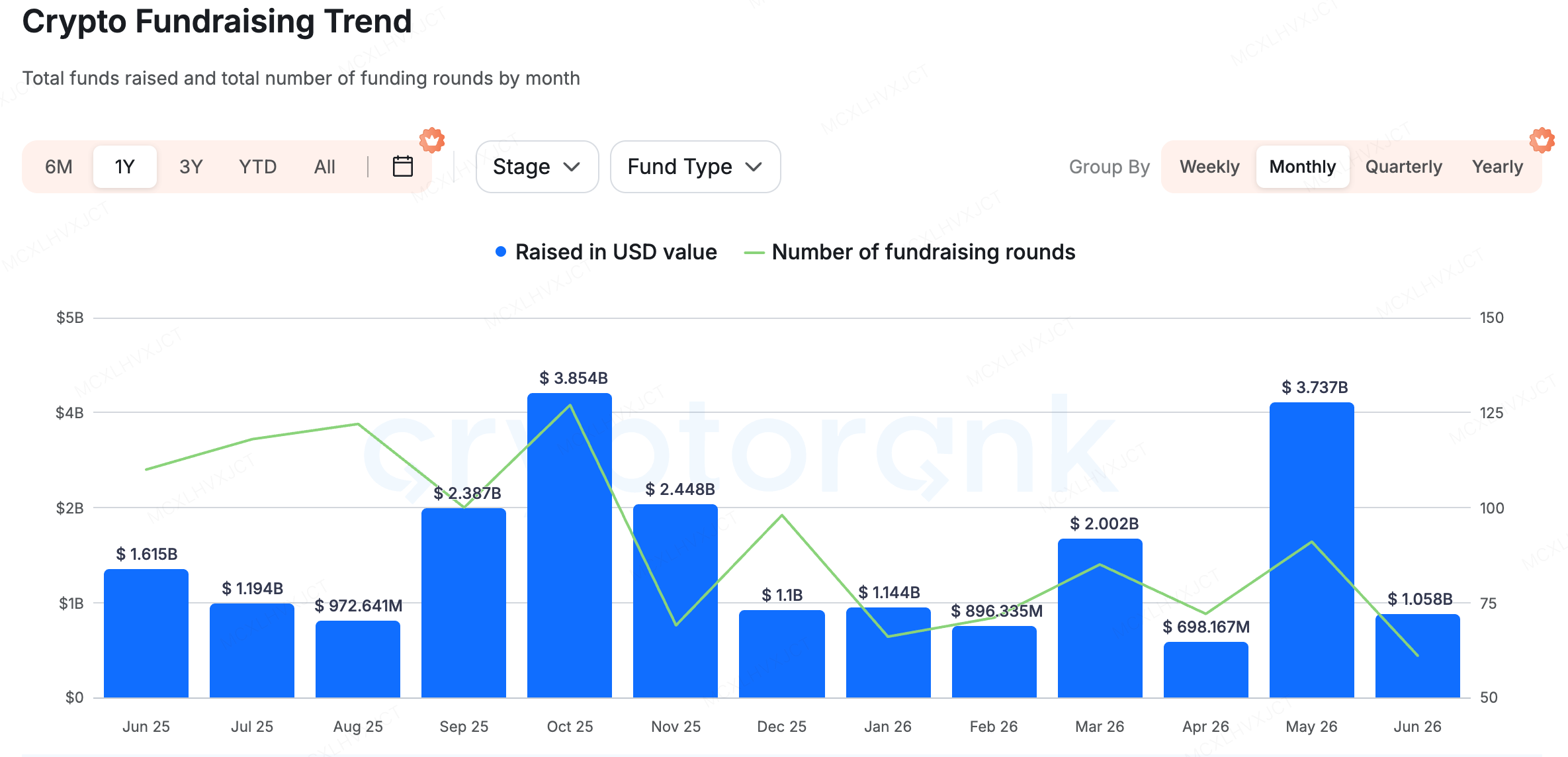
Total capital in the primary market rebounded slightly, continuing to show clear structural divergence. Large-scale funds are heavily concentrated in infrastructure, AI, and specific application tracks. Meanwhile, industry consolidation is accelerating, with multiple M&As happening recently. For example, on June 25, crypto platform Bitbank disclosed a massive $289 million M&A deal; additionally, Suilend and 250 Digital also completed M&As recently.
Following the mega-rounds raised by Polymarket and Kalshi, on June 24, sports prediction market app Onyx Oddsannounced the completion of a $20 million Series A, pushing the company's valuation to $220 million. This round was led by Kraken's parent company, Payward. This move further proves that against the backdrop of macro tug-of-wars and major sporting/election events, "information aggregation and event trading" is becoming a core sector heavily favored by both traditional finance and crypto-native capital.
Onyx Odds was founded in 2025 and is headquartered in New York. The platform initially started with a "free social sportsbook" model, primarily targeting US states where traditional sports betting hasn't been legalized. In its early product phase, it used a dual virtual currency system—Onyx Coins and Onyx Cash—for sports event predictions, where users could earn free Onyx Coins just by logging in and interacting daily. This format mirrors sweepstakes, where winners are chosen purely at random by a system or manually, requiring no skill. Under this compliance model, it legally operates in over 40 US states, covering mainstream sports like the NFL, NBA, and MLB.
In November 2025, Onyx Odds announced an exclusive strategic partnership with the prediction market Polymarket. By leveraging Polymarket to launch CFTC-regulated sports event contracts, it took a crucial step into the mainstream compliant prediction market.
Because Payward holds dual status as a CFTC-registered Futures Commission Merchant (FCM) and a Designated Contract Market (DCM), Onyx Odds plans to use Payward's fully licensed US derivatives tech stack to power its prediction market products, while also planning to embed crypto trading features directly within the Onyx app. For Onyx, this ecological binding saves years of time and the massive costs associated with independently applying for licenses and building a trading engine, granting them a much faster go-to-market lane.
Onyx Odds' trajectory reflects an ongoing trend in the prediction market space: using compliant derivatives as a shell to funnel massive sports and event betting traffic directly into the crypto trading ecosystem. This may very well become a major playbook for capturing retail and institutional liquidity in the next cycle.
About KuCoin Ventures
KuCoin Ventures, is the leading investment arm of KuCoin Exchange, which is a leading global crypto platform built on trust, serving over 40 million users across 200+ countries and regions. Aiming to invest in the most disruptive crypto and blockchain projects of the Web 3.0 era, KuCoin Ventures supports crypto and Web 3.0 builders both financially and strategically with deep insights and global resources.
As a community-friendly and research-driven investor, KuCoin Ventures works closely with portfolio projects throughout the entire life cycle, with a focus on Web3.0 infrastructures, AI, Consumer App, DeFi and PayFi.
Disclaimer This general market information, possibly from third-party, commercial, or sponsored sources, is not legal, compliance, financial, or investment advice, an offer, solicitation, or guarantee. We make no express or implied representations or warranties regarding its accuracy, completeness, or reliability, and disclaim liability for any resulting losses. Investments/trading are risky; past performance doesn't guarantee future results. Users should research, judge prudently, and take full responsibility. Please consult professional legal, tax, or financial advisors if necessary.