

AWS Heatwave Halts Coinbase and Kite AI Agent Payments
2026/05/14 17:30:02
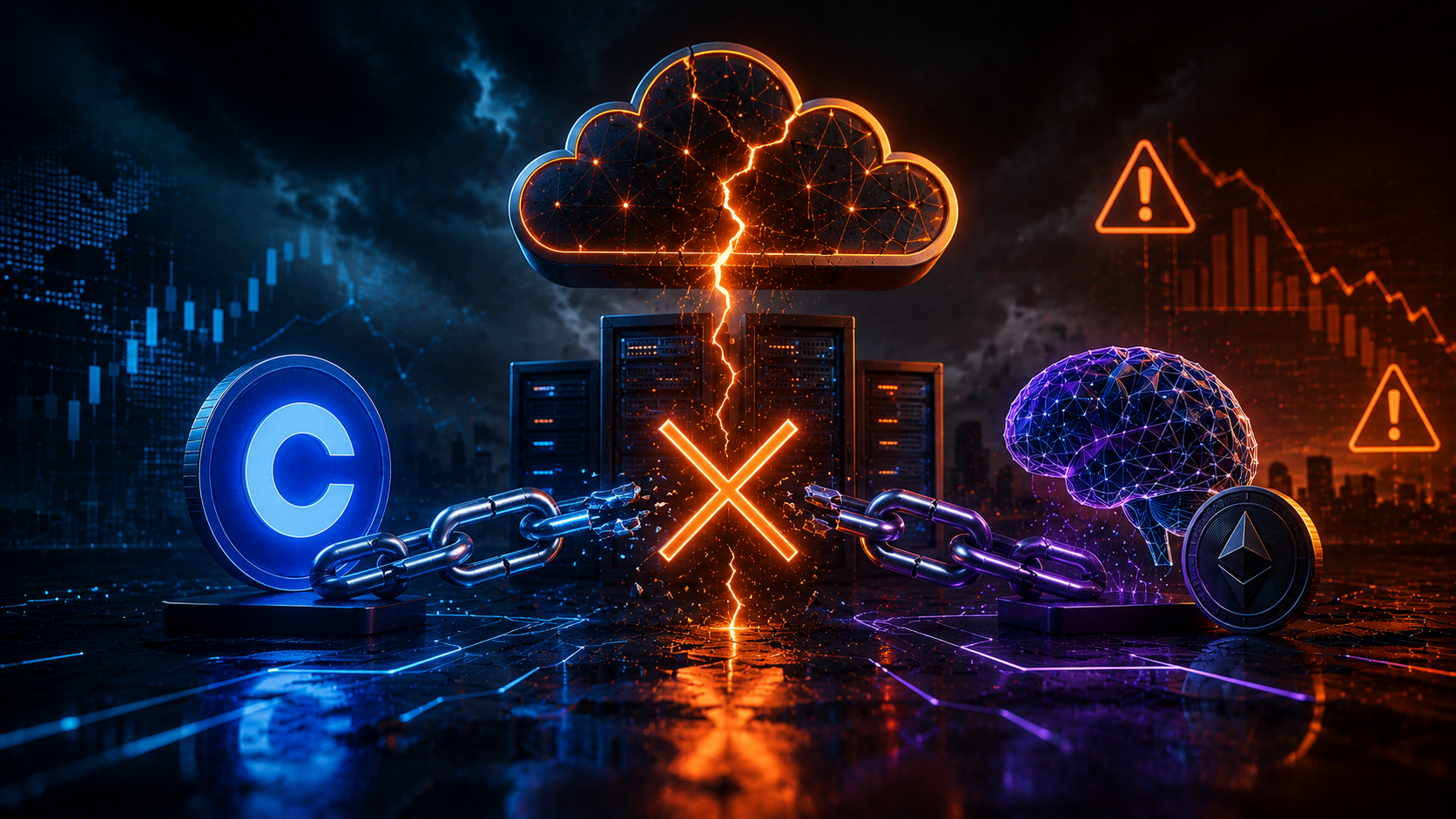
When an AWS data center in Northern Virginia experienced a "thermal event" on May 7, 2026, the resulting kite ai agent payment failures exposed the hidden centralization within decentralized autonomous commerce. This data-center overheating triggered a multi-hour coinbase trading halt and paralyzed the cloud orchestration layers that on-chain autonomous agents require for off-chain signing and negotiation—kite ai agent—how it works, what they change, and where the risks lie—is the focus of the analysis below.
Key takeaways
-
AWS confirmed the US-EAST-1 Availability Zone "thermal event" occurred on May 7, 2026.
-
Coinbase trading was suspended or restricted for approximately 4–7 hours during the incident.
-
Kite Agent Passport integrations experienced stalled autonomous payouts on May 7–8, 2026.
-
The AWS outage first began at 17:25 PDT (00:25 UTC) on May 7, 2026.
-
Hardware damage from overheating necessitated manual snapshot restores for some cloud instances.
What is kite ai agent?
kite ai agent defined: An autonomous software entity on the Kite network that uses on-chain passports to execute payments and negotiate commerce via cloud-hosted APIs.
A kite ai agent is an autonomous participant in a decentralized autonomous commerce ecosystem that handles everything from product discovery to payment settlement. These agents operate using the Kite Agent Passport, which functions as a programmable on-chain identity and wallet with predefined spending caps. While the settlement happens on a blockchain, the "brain" of the agent often resides on cloud infrastructure like AWS to handle the heavy computational load of AI negotiation and Google’s Agent Protocol 2 (AP2) discovery.
You can research AI tokens on KuCoin to see how the market values infrastructure projects that support these autonomous entities. An easy way to visualize a kite ai agent is to think of it as a digital personal assistant that has its own credit card and the authority to shop for you. If the assistant's "office" (the AWS data center) loses power or burns out, the assistant cannot check its calendar or use its phone to confirm a purchase, even if the money is still in its bank account.
History and market evolution
The intersection of AI and blockchain has moved rapidly from theoretical whitepapers to production environments that depend heavily on hyperscale cloud providers.
-
April 29, 2026: The Kite mainnet officially launched on Avalanche, introducing the Agent Passport for production-level on-chain autonomous agents.
-
May 7, 2026: A thermal event at the AWS Northern Virginia data center caused widespread EC2 and EBS impairments starting at 17:25 PDT.
-
May 8, 2026: Coinbase restored full trading operations after several hours of "Cancel-Only" mode caused by the same cloud infrastructure failure.
► First detection of AWS US-EAST-1 thermal event: 17:25 PDT — Network World, May 2026 ► Estimated Coinbase downtime: 4–7 hours — LinkedIn reporting, May 2026
Current analysis
Technical analysis
The coinbase trading halt and the subsequent restriction of order matching on May 7, 2026, created a noticeable thinning of order-book depth across major pairs. On KuCoin's BTC/USDT chart, traders observed that liquidity remained stable on venues not reliant on the affected AWS availability zone, highlighting the benefit of geographic and infrastructure diversity. Based on KuCoin's trading data, periods of localized exchange downtime often lead to temporary price discrepancies between platforms, as arbitrage bots hosted on the same failing cloud regions go offline simultaneously. You can monitor live crypto prices on KuCoin to track how market depth recovers following global infrastructure shocks.
Macro and fundamental drivers
The fundamental driver behind the recent ai agent payment chain failures is the industry's heavy reliance on a few concentrated cloud providers.
► Outage impact on US-EAST-1 AZ: Multiple Availability Zones — ITPro, May 2026
When AWS US-EAST-1 fails, it doesn't just stop website traffic; it halts the discovery and negotiation protocols used by AI agents to authorize payments. In May 2026, the disruption of Agent Protocol 2 (AP2) APIs meant that even though the Kite blockchain was functional, the agents could not "reach" the chain to sign transactions. This event has sparked a macro-level debate regarding the need for cloud infrastructure failure fallbacks, such as decentralized relayer networks.
Comparison
The May 2026 incident provides a clear comparison between "fully on-chain" operations and "cloud-orchestrated" autonomous agents. A fully on-chain smart contract is immune to AWS data-center overheating because it runs across thousands of decentralized nodes; however, it lacks the AI-driven negotiation capabilities of a kite ai agent. Conversely, cloud-orchestrated agents offer high performance and complex reasoning but are vulnerable to single points of failure in the cloud infrastructure failure model. This trade-off between "intelligence" and "resilience" is the central challenge currently facing the AI agent sector.
Participants who prioritize absolute uptime and censorship resistance may find simple on-chain smart contracts more suitable; those focused on complex automated commerce and AI-driven negotiation may prefer the kite ai agent model. KuCoin's analysis of AI infrastructure provides a deeper look into how developers are balancing these competing priorities.
Future outlook
Bull case
By Q3 2026, the May 2026 AWS outage could be viewed as a catalyst for the "decentralized brain" movement. If the Kite project and others successfully deploy multi-region failovers and decentralized relayer networks by September 2026, the AI agent ecosystem will emerge significantly more resilient. This hardening of the ai agent payment chain would likely increase institutional trust in autonomous commerce.
Bear case
By December 2026, if AI agent developers continue to rely on single-region cloud deployments, the risk of a systemic "payment blackout" remains high. A second major thermal event or a targeted attack on hyperscale cloud regions by late 2026 could lead to a loss of merchant confidence, stalling the adoption of decentralized autonomous commerce for years.
Conclusion
The AWS thermal event of May 2026 served as a wake-up call for the entire crypto and AI sectors, proving that on-chain assets are only as accessible as the off-chain infrastructure supporting them. While the kite ai agent provides a glimpse into the future of autonomous commerce, the recent outages confirm that geographic and provider redundancy are mandatory, not optional. As the industry shifts toward more resilient, multi-cloud architectures, the focus will remain on ensuring that a single data-center failure never again halts global trading or agent payments. To stay updated on infrastructure developments, check KuCoin's latest platform announcements.
FAQ
Why did the AWS thermal event affect the kite ai agent payments?
The kite ai agent relies on off-chain cloud infrastructure for its "reasoning" and negotiation functions. When the AWS US-EAST-1 data center overheated in May 2026, the APIs and discovery protocols (AP2) that these agents use to sign and send transactions to the blockchain became unavailable, effectively freezing their ability to pay.
How long was the coinbase trading halt during the May 2026 outage?
The coinbase trading halt lasted approximately 4 to 7 hours, beginning late on May 7, 2026. During this window, the exchange entered "Cancel-Only" and restricted modes while recovering from the AWS infrastructure failure, which had impaired its order-matching and API systems in the Northern Virginia region.
What is the kite ai agent passport used for?
A kite ai agent passport is an on-chain identity and wallet system that allows an AI agent to prove its identity and execute payments. It includes programmable spending caps and security controls, ensuring that the agent can participate in autonomous commerce within strictly defined financial boundaries set by its owner.
Can autonomous agents work without AWS or cloud providers?
While agents can theoretically work without centralized cloud providers, modern on-chain autonomous agents like Kite require significant computational power for AI tasks that current blockchains cannot handle natively. This creates a dependency on cloud services like AWS or Google Cloud for the agent's complex decision-making processes.
What are the common causes of defi hacks and outages in 2026?
Beyond code vulnerabilities, the most common causes of outages in 2026 are infrastructure-related, such as the AWS thermal event. When decentralized protocols rely on centralized cloud zones for their front-ends, relayers, or oracles, they remain susceptible to physical data-center failures like overheating or power loss.
Disclaimer: The information on this page may have been obtained from third parties and does not necessarily reflect the views or opinions of KuCoin. This content is provided for general informational purposes only, without any representation or warranty of any kind, nor shall it be construed as financial or investment advice. KuCoin shall not be liable for any errors or omissions, or for any outcomes resulting from the use of this information. Investments in digital assets can be risky. Please carefully evaluate the risks of a product and your risk tolerance based on your own financial circumstances. For more information, please refer to our Terms of Use and Risk Disclosure.