

Korea Single-Stock Leveraged ETF Trading Volume Plummets After New Regulatory Rules
2026/08/09 11:12:00
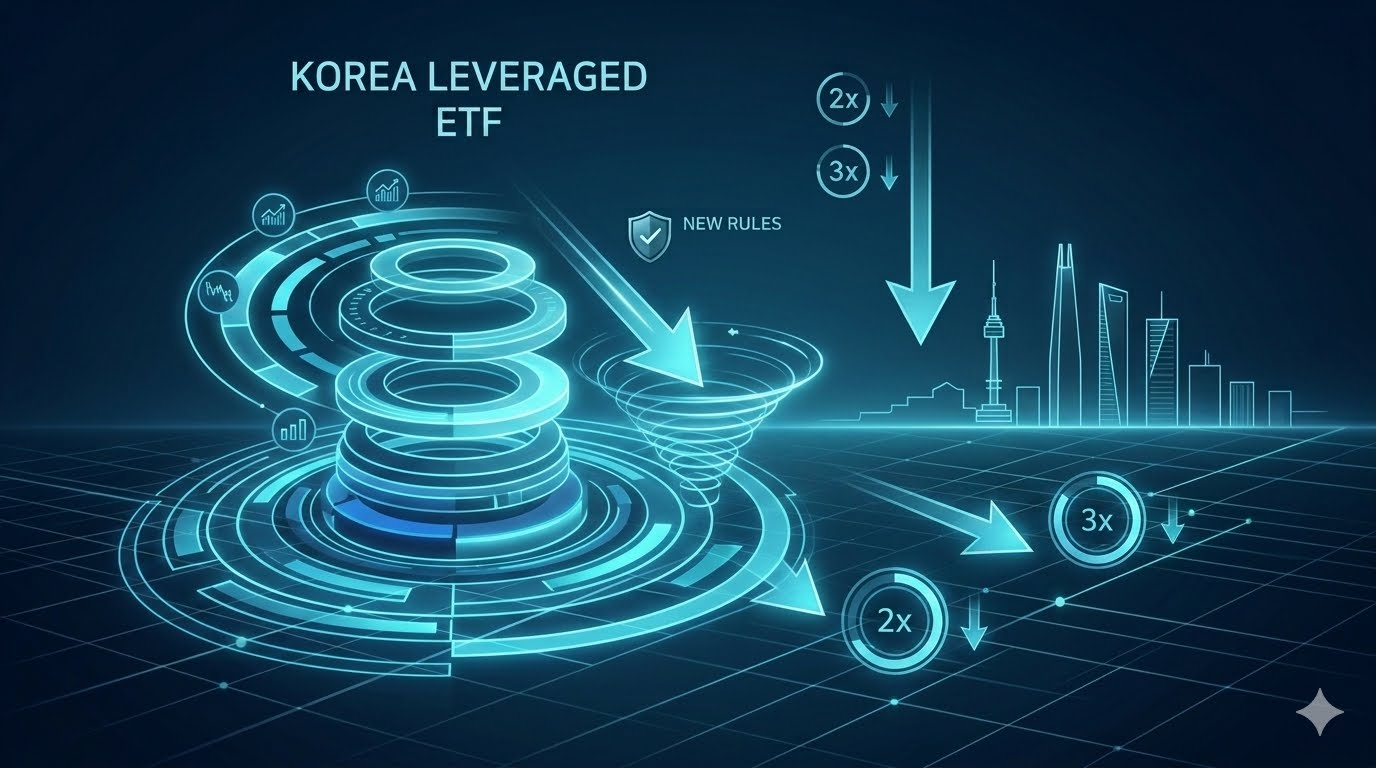
In mid-to-late July 2026, South Korean financial authorities took decisive and significant action to impose restrictions on single-stock leveraged exchange-traded funds that were linked to the prominent companies Samsung Electronics and SK Hynix. This intervention was prompted by the observation that these financial products had been amplifying volatility within the Kospi benchmark index, which is a critical indicator of the overall performance of the South Korean stock market. As a result of the new regulations, trading activity, which had previously surged to multi-trillion-won daily levels, experienced a rapid contraction once the higher cash-deposit requirements and various other regulatory barriers were implemented. This regulatory shift effectively brought an end to a brief but intense period of retail speculation that had begun when these leveraged products were launched in late May 2026.
The sudden and dramatic decline in the trading volumes of single-stock leveraged ETFs serves as a clear demonstration that elevated entry thresholds, along with the suspension of new listings, can effectively dampen the flow of leveraged retail investments. This regulatory approach has successfully restored a measure of stability to Korea’s equity market while simultaneously exposing the inherent risks associated with concentrated, high-leverage financial instruments that are tied to a limited number of mega-cap stocks. The actions taken by the authorities highlight the delicate balance between fostering market participation and ensuring the stability of the financial system.
Quick Volume Contraction Follows Deposit Threshold Increase
Data from the Korea Exchange showed that the combined trading volume of 16 leveraged and inverse ETFs tracking Samsung Electronics and SK Hynix fell from approximately 12.4 trillion won on the final day before the higher margin requirement to about 1.2 trillion won within two trading sessions. The largest product, the KODEX SK Hynix leveraged ETF, saw its volume decline from 3.6 trillion won to 422.6 billion won. This contraction represented roughly a 90 percent reduction and marked one of the sharpest liquidity shifts recorded in the Korean ETF market during 2026. Individual investors moved into net-selling positions across the group of funds, indicating that existing holders were unwinding exposure rather than adding new positions.
The speed of the decline underscored how sensitive short-term speculative activity had become to the cost of capital required to participate. Market participants noted that the higher threshold did not prevent sales of existing holdings, which remained unrestricted. As a result, liquidity dried up primarily on the buy side. Shares of the underlying stocks themselves recorded sizable declines on the day of the volume data release, with Samsung Electronics and SK Hynix each falling more than 8 percent, while the leveraged ETFs registered losses between 13 and 18 percent. Inverse products correspondingly posted gains. The pattern confirmed that the regulatory change had immediately altered the balance of demand for these instruments.
Minimum Cash Balance Raised to 30 Million Won
Authorities increased the minimum cash deposit required to trade single-stock leveraged ETFs from 10 million won to 30 million won, equivalent to roughly 20,300 U.S. dollars at prevailing exchange rates. The measure was first announced on July 16 with an original effective date of August 5, then accelerated to the end of July following further market declines. Investors were required to maintain this cash balance each time they sought to establish new positions. The change raised the financial barrier for retail participants who had previously entered the market with smaller account balances. Brokerage firms and asset managers adjusted their systems to enforce the new threshold, limiting the pool of eligible buyers.
The elevated deposit requirement formed part of a broader package designed to reduce excessive short-term trading. Officials stated that the higher capital commitment would discourage pure speculation while still allowing more capitalized investors to participate. Early evidence indicated that the rule achieved its intended effect: speculative retail leverage effectively ended for new purchases, according to market commentary from securities sales desks. Existing positions could still be sold freely, contributing to the observed net selling pressure. The policy therefore altered both the composition of market participants and the direction of net flows in a short period.
Temporary Halt on New Single-Stock Leveraged Listings
On July 16, the Financial Services Commission announced a temporary ban on new listings of single-stock leveraged exchange-traded products until market conditions stabilized. The decision followed the quick growth of funds linked to Samsung Electronics and SK Hynix after their introduction in late May. Only large-cap, highly liquid domestic stocks meeting specific market-capitalization and turnover criteria had been eligible, effectively limiting the universe to the two chipmakers. The suspension prevented additional products from entering the market and compounding existing volatility.
Regulators emphasized that existing listed funds would continue to trade, but the absence of new supply removed a potential source of further retail inflows. Asset managers that had prepared additional offerings were required to pause those plans. The listing freeze was presented as a temporary measure rather than a permanent prohibition, contingent on the restoration of orderly market conditions. Combined with the deposit increase, the ban signaled a clear policy preference for reducing the footprint of single-stock leverage in the domestic market.
Additional Caps Limit Individual Portfolio Concentration
In late July, authorities introduced a further restriction limiting an individual’s investment in single-stock leveraged ETFs to 20 percent of total investment assets. The finance ministry confirmed the measure after an emergency meeting of financial regulators. The cap aimed to prevent concentrated bets that could amplify losses for retail investors and increase systemic pressure during sharp market moves. Implementation was described as immediate, alongside previously announced safeguards.
Officials also prepared mechanisms to raise trading costs for excessive order activity, drawing on fee structures already applied in the futures market. Mandatory trading simulations were added to existing investor education requirements. These layered constraints reduced the attractiveness of the products for leveraged retail strategies and reinforced the higher cash-deposit rule. Market observers noted that the combination of capital, concentration, and educational barriers significantly narrowed the investor base capable of sustaining high turnover in the affected ETFs.
KODEX SK Hynix Product Records Lowest Volume Since Early June
The KODEX single-stock leveraged ETF tracking SK Hynix, one of the largest products in the category, recorded a trading volume of 59 million shares on the most recent session reported, the lowest level since June 4. A comparable product linked to Samsung Electronics registered its lowest volume since the late-May launch. These figures illustrated the depth of the liquidity contraction once the new rules took hold. Prior to the regulatory tightening, the same funds had routinely ranked among the most actively traded ETFs in Korea, with monthly cumulative values reaching tens of trillions of won.
Analysts attributed the decline to the practical elimination of new speculative entry by retail investors. While existing positions could be liquidated without restriction, the 30-million-won cash threshold and related measures made fresh purchases prohibitively expensive for many participants. Net selling by individuals therefore dominated flows. The volume data provided concrete evidence that the regulatory package had achieved its primary objective of cooling leveraged demand linked to the two dominant technology stocks.
Market Volatility Linked to Daily Rebalancing Flows
Single-stock leveraged ETFs require daily rebalancing of derivatives positions to maintain their target exposure. During periods of elevated trading, these flows generated substantial secondary market activity that exceeded underlying investor capital. Authorities and market participants identified the rebalancing mechanism as a contributor to amplified price swings in Samsung Electronics and SK Hynix shares. When the Kospi declined sharply in July, the leveraged products magnified both downward moves and subsequent volatility.
The regulatory response targeted the source of that amplification by raising the cost of participation and limiting new product supply. After the deposit threshold took effect, the scale of daily rebalancing diminished in line with the drop in overall volume. Inverse products experienced corresponding gains on days when the underlying stocks fell, confirming the mechanical linkage. The episode highlighted the structural difference between single-stock leveraged vehicles and broader index-based leveraged ETFs, which distribute exposure across multiple constituents and typically generate less concentrated rebalancing pressure.
Retail Investor Behavior Shifts Toward Net Selling
Individual investors had driven a large share of the earlier surge in single-stock leveraged ETF activity. Once the higher cash requirement became operational, the same cohort shifted to net selling across the product set. Significant sell-offs were recorded in multiple funds on consecutive sessions. The change reflected both forced liquidity needs among some holders and a broader reassessment of risk after consecutive days of large percentage declines in the leveraged instruments.
Securities industry commentary described the outcome as the effective end of unrestricted retail speculative leverage in these products. Investors who already held positions could exit, yet the barriers to new entry removed the speculative fuel that had previously sustained high turnover. The resulting net-selling pressure contributed to price weakness in both the ETFs and the underlying stocks on the days immediately following implementation. The behavioral shift demonstrated the sensitivity of retail leveraged flows to capital requirements.
Underlying Chip Stocks Experience Amplified Declines
On the session corresponding to the sharp volume data release, Samsung Electronics shares fell 8.76 percent, and SK Hynix shares declined 8.79 percent. Fourteen leveraged ETFs posted losses ranging from 13 to 18 percent, while inverse counterparts advanced between 12 and 23 percent. The divergence illustrated the leverage multiplier in action and the mechanical relationship between the ETFs and their reference stocks. Earlier periods of strong gains in the chipmakers had similarly produced outsized advances in the leveraged products.
The concentration of trading in only two stocks meant that ETF-related flows exerted disproportionate influence on price discovery. When those flows reversed, the stocks themselves absorbed additional selling pressure. Regulators had previously noted that the two companies accounted for a large share of overall market capitalization and turnover, heightening the systemic impact of any leveraged overlay. The post-regulation price action confirmed that reducing ETF activity could moderate, though not eliminate, volatility in the underlying equities.
Policy Package Includes Trading Simulations and Cost Adjustments
Beyond the deposit increase and listing suspension, authorities introduced mandatory trading simulations for prospective investors and prepared higher fees for excessive order submission modeled on futures-market practices. A legal framework was also under development to permit variable leverage adjustments by asset managers in emergency conditions, similar to mechanisms used in other jurisdictions. These elements formed a comprehensive set of constraints rather than a single isolated rule.
The simulation requirement added a practical educational layer intended to ensure that participants understood the daily reset and compounding characteristics of leveraged products. Higher-order costs aimed to discourage high-frequency or overly aggressive trading strategies. Taken together, the measures raised both the financial and informational barriers to entry. Early market reaction indicated that the combined package succeeded in reducing speculative intensity within a short timeframe.
Historical Context of Product Launch in Late May
South Korea first permitted domestic single-stock leveraged ETFs in late May 2026 after regulatory approval earlier that spring. Eligibility was restricted to stocks meeting stringent liquidity and market-capitalization thresholds, which at the time applied only to Samsung Electronics and SK Hynix. Assets under management in the category expanded rapidly, reaching multi-trillion-won levels within weeks. Cumulative net inflows into the 16 products linked to the two stocks exceeded 7 trillion won over a one-month window in June and July.
The swift growth reflected strong retail appetite for leveraged exposure to the dominant technology names. However, the same concentration that drove popularity also generated the volatility that later prompted regulatory intervention. Within less than three months of launch, authorities moved from facilitation to restriction, illustrating the speed with which policy can reverse when market stability is judged to be at risk. The episode provided a clear case study of product innovation followed by rapid corrective action.
Broader Effects for Korean Equity Market Structure
The contraction in single-stock leveraged ETF volumes reduced one source of secondary-market liquidity and rebalancing pressure on the two largest technology stocks. Foreign investors, who had been net sellers earlier in the year, later recorded substantial purchases on selected sessions, including a record daily inflow exceeding 5 billion dollars in late July. The shift in participant mix coincided with the cooling of domestic leveraged retail activity.
While causation cannot be attributed solely to the ETF rules, the timing aligned with a reduction in retail speculative intensity. Market depth in the underlying stocks may adjust as ETF-related flows diminish. Asset managers and brokers face lower commission revenue from the affected products, yet the broader market may benefit from reduced extreme volatility. The regulatory experiment demonstrated that targeted capital requirements can alter trading patterns without requiring outright product bans for existing funds.
Investor Education and Risk Awareness Measures Strengthened
Authorities expanded mandatory investor education and added trading-simulation requirements specifically for single-stock leveraged ETFs. These steps addressed concerns that many retail participants had entered positions without fully appreciating the effects of daily compounding and potential path dependency of returns. Official statements emphasized the need to minimize volatility and protect less-experienced investors from concentrated leveraged losses.
The educational overlay complemented the hard capital constraints. By requiring demonstrated understanding before trading, regulators sought to raise the qualitative bar for participation. Combined with the 20 percent portfolio-concentration limit, the measures aimed to prevent over-allocation by individual accounts. Market data after implementation suggested that the practical effect was a substantial reduction in new leveraged retail interest, consistent with the policy goals articulated in official announcements.
Conclusion
Existing single-stock leveraged ETFs remain listed and tradable, subject to the higher deposit threshold, concentration caps, and elevated trading costs. No immediate delisting has been mandated. Authorities retain the option to adjust leverage ratios under emergency conditions once the enabling legal framework is finalized. The temporary listing ban continues until market conditions are judged stable.
Further policy evolution will depend on observed volatility and the behavior of remaining market participants. Should volumes remain subdued and price swings moderate, the current restrictive stance may persist. Conversely, a sustained improvement in market stability could prompt gradual relaxation. For now, the data show a clear and rapid response of trading activity to the new rules, confirming the effectiveness of capital-based barriers in restraining leveraged single-stock demand.
FAQs
How did the minimum deposit requirement change for single-stock leveraged ETFs in Korea?
The Financial Services Commission raised the minimum cash balance needed to trade these products from 10 million won to 30 million won. The higher threshold was accelerated from an original August 5 target to the end of July 2026. Investors must maintain the cash amount for each new trade, significantly increasing the capital commitment required of retail participants and contributing directly to the observed drop in new buying interest.
Why were new listings of single-stock leveraged ETFs suspended?
Authorities imposed a temporary ban on new listings until market conditions stabilize. The decision followed rapid growth in products tied to the two largest technology stocks and concerns that additional supply would further amplify volatility through daily rebalancing flows. Existing funds continue to trade under the tightened rules.
What role did retail investors play before and after the regulatory changes?
Retail participants had driven much of the earlier high turnover and net inflows. After the deposit threshold and related rules took effect, the same group shifted to net selling across the product set. Unrestricted sales of existing positions continued, but new purchases faced substantially higher capital requirements, effectively curtailing speculative entry.
When were the single-stock leveraged ETFs first introduced in Korea?
Domestic products linked to Samsung Electronics and SK Hynix launched in late May 2026 after earlier regulatory approval. Eligibility was limited to stocks meeting strict liquidity and capitalization criteria, which at the time applied only to those two names. Assets and trading volumes expanded rapidly in the following weeks.
Do the new rules permanently eliminate single-stock leveraged ETFs?
Existing listed products remain available for trading under the higher deposit, concentration, and cost constraints. New listings are suspended only until market conditions stabilize. Authorities have retained flexibility to adjust leverage parameters in emergencies once enabling legislation is complete, indicating a calibrated rather than absolute prohibition.
Join KuCoin 9th Anniversary Trading Campaign
KuCoin is celebrating its 9th anniversary with a special platform campaign filled with exclusive rewards, trading activities, and limited-time offers. Don’t miss the chance to participate and enjoy the benefits as the exchange marks nine years of growth and innovation. Visit the official campaign page now:
Disclaimer
The information provided on this page may originate from third-party sources and does not necessarily represent the views or opinions of KuCoin. This content is intended solely for general informational purposes and should not be considered financial, investment, or professional advice. KuCoin does not guarantee the accuracy, completeness, or reliability of the information, and is not responsible for any errors, omissions, or outcomes resulting from its use. Investing in digital assets carries inherent risks. Please carefully evaluate your risk tolerance and financial situation before making any investment decisions. For further details, please consult KuCoin’s Terms of Use and Risk Disclosure.