

US and Iran Establish Technical Negotiations Mechanism: 60-Day Roadmap to Final Agreement Set
2026/06/22 18:59:00
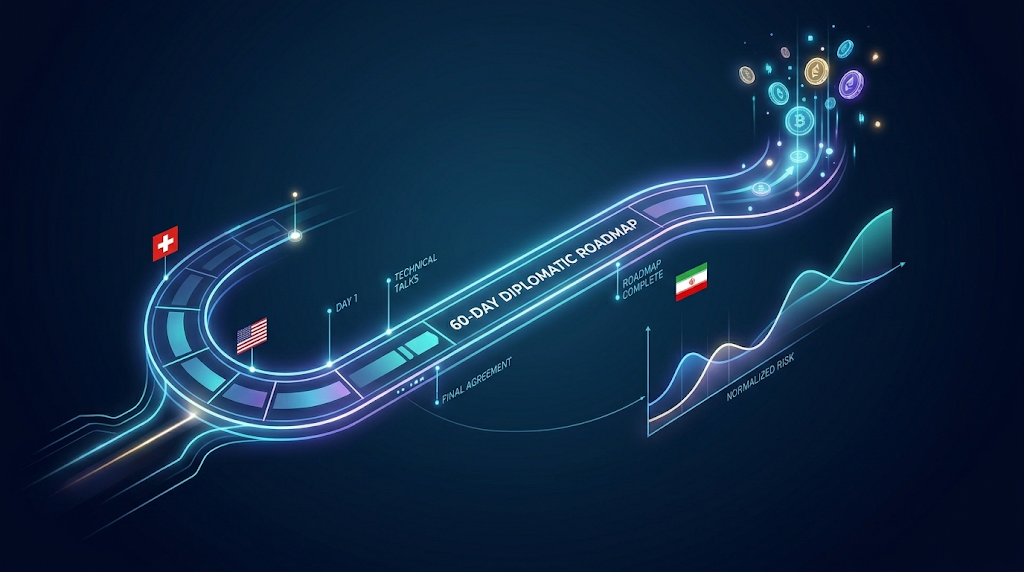
On June 22, 2026, the United States and Iran advanced their diplomatic framework in Switzerland, establishing a 60-day roadmap toward a final agreement. This geopolitical shift could indirectly influence the cryptocurrency market by stabilizing global energy supplies and lowering oil prices. A sustained decline in energy costs may ease global inflationary pressures, potentially giving central banks more flexibility to pause or pivot from restrictive interest rate policies. In the long term, any resulting improvement in macroeconomic liquidity could foster a more favorable environment for risk-on assets, including Bitcoin.
Key Takeaways
-
The US-Iran 60-day roadmap helps mitigate geopolitical uncertainty, which can lower regional risk premiums and contribute to more stable global energy supplies.
-
A sustained decline in global energy costs can help ease headline inflationary pressures, potentially giving central banks more baseline data to continue or resume interest rate easing cycles.
-
As defensive risk premiums fade, institutional asset managers may gradually re-evaluate their over-weighted positions in safe-havens like gold, with a modest portion of sidelined liquidity potentially migrating toward growth-oriented tech and digital assets.
-
Establishing communication channels near the Strait of Hormuz mitigates supply shock risks, fostering a pro-risk macroeconomic environment.
The 60-Day Roadmap and Global Liquidity Mechanics
The 60-day roadmap provides a structured timeline for diplomatic discussions, which can help reduce geopolitical uncertainty and gradually stabilize investor sentiment. While it does not immediately inject new liquidity into global financial markets, a predictable negotiation period allows institutional funds to better assess regional risks. Over time, if the risk of conflict recedes, capital that was previously positioned defensively may begin to reallocate toward growth-oriented sectors, including technology and digital assets.
Mitigating Energy-Driven Inflationary Pressures
A successful diplomatic progression could help lower energy-driven inflation by reducing geopolitical risk premiums embedded in global oil prices. If the threat of disruption in the Middle East eases, a sustained decline in crude oil costs can lower logistical and operational expenses for corporations. This, in turn, may contribute to a broader deceleration of headline inflation metrics, potentially giving central banks economic justification to ease restrictive monetary policies, a macro shift that historically supports risk-on valuations.
For retail consumers, lower energy prices can help stabilize disposable income by reducing basic utility and transportation expenses. While a reduction in daily living costs does not guarantee direct capital inflows into cryptocurrency exchanges, a more stable inflationary environment generally creates a healthier macroeconomic backdrop for retail market participation.
Furthermore, lower energy volatility offers operational predictability for blockchain infrastructure and cryptocurrency mining firms. Because mining operations are highly sensitive to power costs, stable or decreasing energy prices can help manage overhead expenses, potentially reducing the immediate pressure on firms to liquidate their digital asset inventories to cover operational costs.
Central Bank Interest Rate Implications
A successful 60-day negotiation roadmap could provide central banks with broader macroeconomic justification to accelerate or sustain an interest rate easing cycle. Although global inflation is affected by a variety of complex variables, reducing the geopolitical risk premium in the energy sector can alleviate supply-side inflationary pressures. This stabilization helps clear a path for monetary policymakers to more comfortably lower or normalize baseline interest rates over the coming quarters, shifting away from a prolonged period of restrictive borrowing costs.
Over time, a transition toward a lower interest rate environment generally improves overall market liquidity. When borrowing costs decrease, institutional funds gain access to more affordable capital, which can gradually improve risk tolerance across various asset classes. This shifting dynamic may help stabilize capital flows into growth-oriented and tech-heavy sectors.
The normalization of monetary policy can also soften the relative yield advantage held by traditional sovereign bonds. During extended periods of elevated interest rates, risk-free government debt offers attractive risk-adjusted returns, drawing capital away from more speculative alternative markets. As inflation cools and bond yields decline, institutional asset managers evaluating their portfolios may become more inclined to reallocate a portion of their capital toward higher-yielding or growth-driven alternative asset categories, including digital asset ecosystems.
The Technical Negotiations Mechanism Explained
The newly established technical negotiations mechanism provides a structured framework to address specific technical and economic disputes between the US and Iran. By delegating complex implementation details to specialized working groups, the core diplomatic framework can remain insulated from minor technical disagreements, potentially providing a more predictable backdrop during the 60-day transition period.
Strait of Hormuz and Macroeconomic Stability
A primary objective of reducing regional tensions is minimizing disruptions near the Strait of Hormuz, a critical maritime chokepoint for global energy commodities. Establishing clearer communication channels helps lower the risk of accidental maritime encounters that could trigger sudden energy supply shocks and subsequent market sell-offs.
Furthermore, a less volatile security environment in the Middle East can help normalize insurance premiums for international shipping. These reduced logistical risks support broader disinflationary trends across the global economy. As energy-driven inflationary pressures subside, the resulting macroeconomic environment becomes generally more supportive of risk-on assets, potentially encouraging gradual capital reallocation toward the digital asset ecosystem.
Anticipated Asset Transfers and Regional Sentiment
The technical framework includes provisions discussing the conditional and gradual release of restricted Iranian financial assets held abroad, which represents an important step in regional economic normalization. Under strict international monitoring, these funds are legally restricted to specific humanitarian and reconstruction purposes rather than serving as general, liquid capital for unrestricted global financial markets.
Over the long term, any structured integration of regional financial systems back into the global economy can help improve broader liquidity within Middle Eastern banking sectors. As commercial financial institutions gradually rebuild traditional trade-finance capabilities, regional monetary systems become less fragmented. While these updates do not directly fund or enhance fiat-to-cryptocurrency transaction infrastructure, a healthier, more compliant international banking ecosystem indirectly lowers systemic risks across all modern asset classes by reducing reliance on unmonitored shadow networks.
Furthermore, a step toward formalizing global financial relationships can underscore the long-term utility of digital assets. While the relaxation of specific banking restrictions helps multinational corporations securely re-engage with local markets, it also highlights the broader structural trend toward highly efficient financial systems. For digital infrastructure, these diplomatic milestones reinforce a macro environment where global market integration and digital value-transfer networks can evolve alongside normalized institutional frameworks.
Potential Institutional Capital Shifts Post-Agreement
A successful implementation of the 60-day roadmap could encourage a gradual reallocation of institutional capital from traditional defensive assets back toward growth-oriented sectors. This structured timeline provides asset managers with a clearer framework to update their macroeconomic risk models. Over time, as geopolitical uncertainty recedes, a portion of the capital previously held in physical gold or short-term treasury bills may seek higher-yielding opportunities in technology and digital asset markets, potentially helping to stabilize crypto asset valuations.
Adjustments in Safe-Haven Commodity Exposure
As geopolitical risk premiums gradually diminish with the progress of technical negotiations, asset managers may reduce their over-weighted exposure to physical oil and gold. Lowering the probability of broader regional disruptions decreases the immediate need for defensive commodity positioning. Capital exiting these traditional safe-haven markets typically seeks redeployment into growth assets.
This shifting capital dynamic could help moderate the short-term correlation between digital assets and traditional risk-off instruments. During periods of heightened geopolitical crises, algorithmic trading models often group Bitcoin with broader speculative assets, leading to forced liquidations during sudden market shocks. A sustained diplomatic resolution can soften these reactive, panic-driven correlations, allowing cryptocurrency markets to focus more on broader monetary liquidity and underlying network fundamentals.
Potential Stabilization in Venture Capital Confidence
A sustained return of macroeconomic predictability, supported by diplomatic frameworks like the 60-day roadmap, can help improve long-term confidence among venture capital (VC) firms evaluating early-stage blockchain protocols. Over time, this may encourage some firms to steady their capital deployment schedules for long-term technological development cycles.
A more stable macroeconomic backdrop generally provides a supportive environment for infrastructure projects building decentralized applications. Startups focusing on cross-chain interoperability, zero-knowledge technology, and decentralized physical infrastructure networks (DePIN) require predictable multi-year funding to transition from testnets to full production. When capital availability improves across the broader tech sector, these deep-tech protocols can more reliably secure the institutional backing needed to expand their utility and attract organic user demographics.
Market Sentiments on Bitcoin and Digital Assets
Bitcoin and major digital assets can benefit from an improving macroeconomic environment as geopolitical headwinds begin to ease following diplomatic progression. The establishment of the technical negotiations mechanism relaxes a prominent risk premium that previously weighed on broader market sentiment. Over time, as energy-driven inflationary pressures moderate, a more accommodative financial backdrop may support the long-term investment thesis for digital assets, which frequently thrive when overall market uncertainty recedes.
Interplay with Technology Equities
Digital assets often exhibit a positive correlation with the broader technology equity sector, largely driven by shifts in global risk appetite. When diplomatic milestones reduce systemic regional risks, market-wide volatility tends to decline, fostering a more favorable environment for high-beta assets.
This correlation reflects how a significant segment of the market views digital assets: as early-stage, growth-oriented technology investments rather than simple inflation hedges. Investors often allocate capital to blockchain ecosystems based on their long-term potential to optimize financial and digital infrastructure. A structured 60-day roadmap provides a more predictable macroeconomic runway, allowing these decentralized technologies to continue developing away from immediate wartime panics.
However, market participants must monitor these correlations closely, as any breakdown in technical discussions could trigger a simultaneous retreat across both traditional tech equities and digital assets. Because short-term valuations remain sensitive to broader macroeconomic indicators and sentiment shifts, maintaining a diversified risk-management strategy remains vital during this 60-day transition window.
Utilizing Trading Platforms During Geopolitical Transitions
Navigating cryptocurrency markets during complex geopolitical transitions requires an understanding of the risk-management tools available on major digital asset platforms. Platforms like KuCoin offer standard trading interfaces that allow users to manage portfolio allocations while monitoring extended diplomatic timelines.
By utilizing basic order types and risk parameters, traders can attempt to mitigate exposure to sudden macroeconomic volatility.
Tactical Order Execution and Risk Controls
Within the spot trading terminal, setting specific order constraints can help manage entry and exit points during market fluctuations. Deploying limit orders allows traders to specify exact price targets, which can help avoid executing trades at unfavorable rates during brief periods of high market volatility.
Stablecoin Yield and Liquidity Management
For capital positioned on the sidelines, features like KuCoin Earn provide options to generate yields on fiat-pegged stablecoin balances. Holding stablecoins can help reduce exposure to crypto market volatility while waiting for clearer macroeconomic trends to emerge. Utilizing flexible or short-term yield products can be part of a broader strategy to maintain liquidity, allowing traders to remain positioned to adjust their portfolios as final diplomatic agreements materialize or shift.
Conclusion
The establishment of a technical negotiations mechanism and the corresponding 60-day roadmap between the United States and Iran represent a notable development with the potential to influence global macroeconomic trends and digital asset markets. Progress in these diplomatic discussions can help lower geopolitical risk premiums embedded in global energy commodities, contributing to a more predictable outlook near the Strait of Hormuz. A sustained moderation in global oil prices could ease supply-side inflationary pressures, potentially providing central banks with the baseline economic data needed to comfortably advance or sustain interest rate easing cycles, a monetary shift that historically fosters a more supportive environment for risk-on assets like Bitcoin.
While a final diplomatic resolution remains subject to the upcoming 60-day negotiation window, a reduction in regional volatility encourages institutional asset managers to re-evaluate their broader risk models. Over time, as prolonged macroeconomic uncertainties recede, a measured reallocation of capital from defensive safe-havens back into growth-oriented technology and alternative digital asset sectors may occur.
To navigate this transitional period successfully, market participants should focus on disciplined asset allocation, monitor core macroeconomic indicators closely, and utilize standard risk-management tools on established trading platforms to manage ongoing geopolitical volatility.
FAQs
How does the US-Iran 60-day roadmap affect global inflation?
The 60-day roadmap aims to reduce Middle Eastern tensions and minimize potential disruptions near the Strait of Hormuz, a critical maritime chokepoint. If successful, this stability can lower geopolitical risk premiums on crude oil, leading to a decline in global energy prices. While lower energy costs primarily drag down headline inflation, they can also indirectly ease some supply-chain and transportation costs over time, contributing to a more stable macroeconomic environment.
Why do lower interest rates benefit cryptocurrency prices?
Lower interest rates reduce borrowing costs, which generally increases the availability of macroeconomic liquidity in the global financial system. When capital becomes more accessible, the overall risk tolerance of institutional and retail investors tends to improve, often leading to increased capital reallocation toward growth-oriented and risk-on asset classes like cryptocurrencies. Additionally, declining interest rates soften the yield advantage traditionally held by risk-free sovereign bonds and savings accounts.
What is the technical negotiations mechanism?
The technical negotiations mechanism is a structured framework established to address specific infrastructural, economic, and security disputes between the US and Iran. By delegating complex variables like conditional fund transfers and maritime security to specialized working groups, the process seeks to prevent localized or technical disagreements from disrupting the broader 60-day diplomatic timeline.
Are institutional investors rotating out of gold and oil?
Institutional asset managers historically utilize gold and energy commodities as defensive safe-havens to hedge against geopolitical crises. Institutional funds typically reallocate their sidelined capital slowly, watching for verified diplomatic milestones before shifting substantial weight back into technology stocks and digital assets.
How can I trade safely during this 60-day transition period?
While no strategy can completely eliminate trading risk, market participants can manage exposure by utilizing standard risk-control tools on established platforms like KuCoin. Allocating a portion of a portfolio to fiat-pegged stablecoins can help cushion against short-term crypto market volatility if negotiations face unexpected delays. Furthermore, implementing disciplined stop-loss orders is a vital practice to manage downside risk, though traders should remain aware that market slippage during high-volatility events can still affect execution prices.
Disclaimer
The information provided on this page may originate from third-party sources and does not necessarily represent the views or opinions of KuCoin. This content is intended solely for general informational purposes and should not be considered financial, investment, or professional advice. KuCoin does not guarantee the accuracy, completeness, or reliability of the information, and is not responsible for any errors, omissions, or outcomes resulting from its use. Investing in digital assets carries inherent risks. Please carefully evaluate your risk tolerance and financial situation before making any investment decisions. For further details, please consult KuCoin’s Terms of Use and Risk Disclosure.