

DTCC Introduces Chainlink: Wall Street Is Accelerating On-Chain
2026/05/16 15:40:47
Overview
-
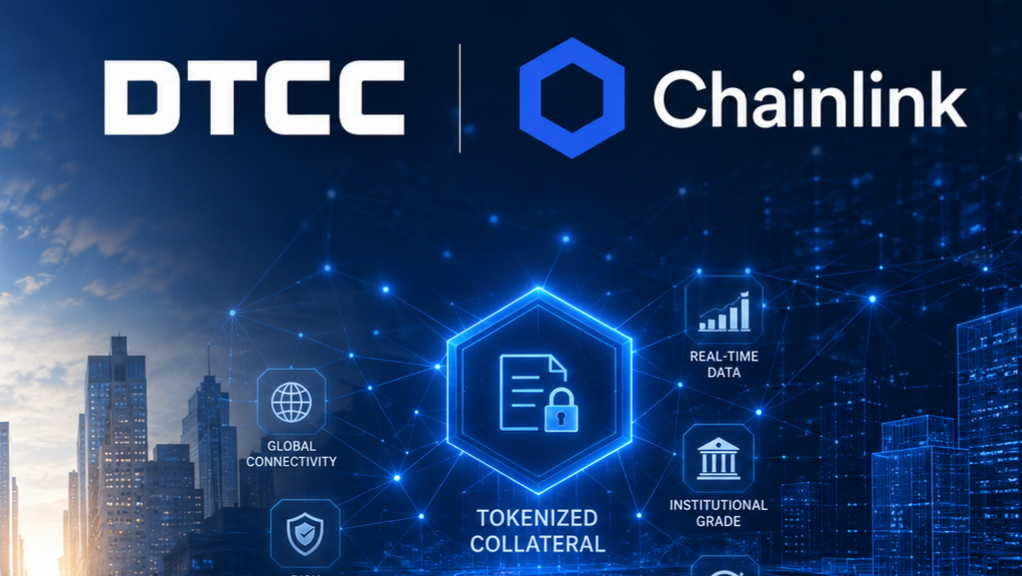
DTCC Chainlink collaboration shows Wall Street’s move toward on-chain finance.
-
DTCC Collateral AppChain aims to improve tokenized collateral and collateral management.
-
Chainlink technology connects blockchain systems with trusted financial data and off-chain infrastructure.
-
The move supports Wall Street blockchain adoption, faster settlement, and 24/7 collateral management.
-
This signals a gradual shift toward institutional tokenization and hybrid financial markets.
Introduction
Wall Street is moving closer to on-chain finance, and the latest collaboration between DTCC and Chainlink shows how serious this shift is becoming. DTCC, one of the most important financial market infrastructure providers, is using Chainlink technology to support its Collateral AppChain, a platform focused on tokenized collateral, automation, and faster settlement. This move is not just about blockchain hype; it is about improving how traditional financial markets manage assets, data, and collateral. As tokenization grows, the DTCC Chainlink integration signals that Wall Street is building stronger connections between traditional finance and blockchain-based systems.
What Is DTCC and Why Is Its Chainlink Move Important?
To understand why the DTCC Chainlink story is important, you first need to understand DTCC’s role.
DTCC is a major financial market infrastructure provider. It supports the systems that help securities markets process trades after they happen. While most retail investors never interact directly with DTCC, the institution plays a central role in the background of traditional finance.
That is why any move by DTCC into blockchain or digital assets carries weight.
When a small crypto startup talks about tokenization, it may be seen as innovation. When DTCC works on tokenized collateral infrastructure, the message is much bigger. It suggests that blockchain is moving closer to the operating layer of traditional finance.
The collaboration with Chainlink is focused on DTCC’s Collateral AppChain, a platform designed to support smarter collateral management using tokenized digital assets. This matters because collateral management is one of the most important parts of financial markets.
Collateral helps institutions manage risk. It supports trading activity. It helps meet margin requirements. It gives counterparties confidence that obligations can be fulfilled. But the current collateral system can be slow, fragmented, and limited by market hours, regional settlement windows, and legacy technology. DTCC’s move shows that Wall Street is looking for a better model.
What Is the DTCC Collateral AppChain?
The DTCC Collateral AppChain is a blockchain-based digital collateral management platform. Its goal is to help financial institutions manage collateral more efficiently by using tokenized assets and distributed ledger technology.
In simple terms, the AppChain is designed to make collateral easier to move, value, track, and settle.
Traditional collateral systems often involve multiple parties, separate databases, different settlement windows, and manual reconciliation. This can create delays. It can also make it harder for institutions to use their assets efficiently across different markets and counterparties.
The DTCC Collateral AppChain aims to address those problems by creating shared digital infrastructure for collateral workflows.
This is where tokenized collateral becomes important.
Tokenized collateral refers to collateral represented digitally on blockchain-based infrastructure. Instead of collateral being trapped inside isolated systems, tokenized assets can potentially become more mobile, programmable, and easier to use across financial workflows.
For institutions, this could mean faster access to liquidity, better use of assets, and more automated collateral operations.
The AppChain is not just about creating digital tokens. It is about building a system where tokenized collateral can support real financial processes, including valuation, margin, settlement, and post-trade operations.
That is why the platform is important for institutional tokenization. It moves tokenization from a concept into a practical financial market use case.
DTCC Integrates Chainlink to Advance On-Chain Finance
-
DTCC Moves Blockchain Closer to Market Infrastructure
DTCC’s integration of Chainlink marks an important step in the evolution of on-chain finance. For years, blockchain technology was often treated as an experimental tool within traditional finance. Now, with DTCC bringing Chainlink infrastructure into its Collateral AppChain, the conversation is moving from testing to real-world financial infrastructure.
This development shows that Wall Street blockchain adoption is becoming more practical. The focus is no longer just on crypto speculation. It is about using blockchain to improve the systems that support capital markets.
DTCC’s involvement also makes the story more meaningful. When a major market infrastructure provider works with blockchain technology, it suggests that tokenization is becoming part of a larger financial transformation.
-
Chainlink Helps Connect On-Chain and Off-Chain Systems
Chainlink plays a key role because institutional finance cannot rely on blockchain alone. Financial markets need trusted data, accurate valuations, secure automation, and reliable connections to existing systems.
Through Chainlink infrastructure, DTCC can connect blockchain-based workflows with external data, financial platforms, and off-chain processes. This makes Chainlink an important bridge between traditional finance and on-chain finance.
For collateral management, this connection is essential. A blockchain-based collateral system needs real-world asset prices, eligibility rules, margin data, settlement information, and custody details. Chainlink helps make those connections possible.
-
The Chainlink Runtime Environment Supports Automation
A key part of this collaboration is the Chainlink Runtime Environment, also known as CRE. This technology helps coordinate workflows between blockchains and traditional financial systems.
For DTCC’s Collateral AppChain, CRE can support important processes such as asset pricing, collateral valuation, eligibility checks, margin, settlement, and post-trade automation. These workflows are essential for making tokenized collateral useful in real institutional finance.
Without reliable automation and data connectivity, tokenized assets would have limited value for large institutions. Chainlink helps solve this by giving financial workflows a way to communicate across different systems.
-
Tokenized Collateral Could Improve Market Efficiency
The real value of the DTCC Chainlink collaboration is not simply putting assets on a blockchain. It is about making tokenized assets useful inside financial operations.
With tokenized collateral, institutions could move assets faster, improve liquidity access, reduce operational delays, and support more efficient settlement. This could help banks, custodians, asset managers, and clearing firms manage collateral across markets and time zones with greater flexibility.
Collateral is central to financial stability. If it can move more efficiently, institutions may be able to use capital more effectively and respond faster to changing market conditions.
-
DTCC Chainlink Signals a Bigger Wall Street Shift
DTCC’s use of Chainlink shows that Wall Street is building bridges between existing financial infrastructure and blockchain-based systems. Traditional finance is not moving fully on-chain overnight, but the direction is becoming clear.
The DTCC Chainlink integration advances on-chain finance by bringing blockchain connectivity, trusted data, and automation into one of the most important areas of capital markets: collateral management.
This is why the announcement matters. It is not just about DTCC. It is not just about Chainlink. It is about the future of financial infrastructure.
Why Chainlink Matters for Institutional Finance
Chainlink plays a key role in this development because blockchain systems cannot operate alone.
Financial markets depend on data. They need pricing information, valuation models, settlement instructions, custody data, margin rules, counterparty information, and compliance controls. A blockchain network by itself cannot provide all of that.
To make on-chain finance work for institutions, blockchain systems need secure connections to off-chain systems and traditional financial infrastructure. This is where Chainlink’s technology becomes important.
The Chainlink Runtime Environment helps connect workflows to blockchains, APIs, external systems, financial infrastructure, data providers, and payment networks. That may sound technical, but the idea is simple.
Chainlink helps connect blockchain-based applications with the real-world data and systems that financial institutions already use.
For example, a collateral workflow may need to know the price of an asset, whether that asset is eligible as collateral, how much margin is required, where the asset is held, and whether settlement has been completed. These steps involve different systems and data sources.
Chainlink’s infrastructure can help bring those pieces together.
This is why the DTCC Chainlink collaboration is not just about blockchain adoption. It is about making blockchain usable for institutional finance.
24/7 Collateral Management Could Change Wall Street
One of the most important parts of the DTCC and Chainlink collaboration is the push toward 24/7 collateral management.
Traditional financial markets are not always-on in the same way blockchain networks are. Many processes still depend on banking hours, settlement cycles, regional cutoffs, and legacy systems. This can slow down collateral movement, especially when institutions need to move assets across time zones or markets.
This could be a major step for Wall Street.
Collateral is central to trading, lending, clearing, derivatives, and risk management. When collateral cannot move quickly, capital can become inefficient. Assets may sit idle. Institutions may face delays. Risk management can become more complicated.
With tokenized collateral, institutions may be able to move assets more quickly and use them more efficiently. A more automated collateral system could help financial firms respond faster to market events, manage liquidity more effectively, and reduce operational friction.
This is why 24/7 collateral management matters.
It is not just about speed. It is about flexibility. It is about making capital markets more responsive.
Wall Street Accelerates Tokenization and Blockchain Adoption
-
Tokenization Moves From Concept to Real Infrastructure
Wall Street’s interest in tokenization is no longer limited to research reports and small pilot programs. Major financial institutions are now exploring how tokenized assets can improve the way markets operate.
Tokenization allows traditional financial assets to be represented digitally on blockchain-based infrastructure. This can include assets such as funds, securities, collateral, and other financial instruments.
For institutions, the value is not just the digital format. The real value comes from faster movement, better transparency, improved automation, and more efficient settlement.
This is why tokenization is becoming a serious topic in capital markets. It can help institutions rethink how assets are issued, moved, tracked, and used as collateral.
-
Blockchain Adoption Is Becoming More Institutional
The rise of Wall Street blockchain adoption shows that traditional finance is taking blockchain technology more seriously. Banks, asset managers, custodians, clearing firms, and market infrastructure providers are increasingly looking at blockchain as a tool for solving operational problems.
Instead of focusing only on cryptocurrency trading, Wall Street is now exploring blockchain for practical use cases. These include real-time settlement, tokenized collateral, post-trade automation, fund data distribution, and cross-market asset movement.
This shift shows that blockchain is becoming part of the financial infrastructure conversation.
It also shows that the industry is becoming more selective. Institutions are not adopting blockchain simply because it is new. They are adopting it where it can create measurable value.
-
DTCC and Chainlink Highlight the New Direction
The DTCC Chainlink collaboration is a strong example of this trend. DTCC’s work on the Collateral AppChain shows how traditional finance can use blockchain infrastructure to improve collateral management.
By integrating Chainlink technology, DTCC aims to connect on-chain systems with trusted data, automation tools, and existing financial infrastructure. This is important because institutional markets need more than blockchain networks. They need reliable data, secure workflows, and systems that can operate across both traditional and digital environments.
This is where Chainlink’s role becomes important. It helps provide the connectivity layer that can make blockchain-based financial workflows practical for institutions.
-
Tokenized Collateral Could Unlock Greater Efficiency
One of the biggest opportunities for tokenization is tokenized collateral. In today’s financial system, collateral can be difficult to move quickly across markets, custodians, and counterparties.
Tokenized collateral could help institutions improve liquidity access, reduce settlement delays, and make better use of assets. It may also support 24/7 collateral management, allowing financial firms to operate with more flexibility across global markets and time zones.
For Wall Street, this is a major reason why tokenization is becoming more attractive.
If collateral can become more mobile, institutions can potentially reduce trapped liquidity and improve capital efficiency. This could be especially valuable during periods of market stress, when access to collateral and liquidity becomes even more important.
-
Blockchain Adoption Will Likely Be Gradual but Significant
Wall Street is not moving fully on-chain overnight. Traditional finance has strict requirements around regulation, compliance, custody, privacy, and operational resilience. Any blockchain-based system must meet institutional standards before it can be widely adopted.
Still, the direction is clear. Tokenization and blockchain adoption are becoming more serious, more practical, and more focused on real financial infrastructure.
As firms like DTCC work with blockchain technology providers such as Chainlink, the gap between traditional finance and on-chain finance continues to narrow.
The future will likely be hybrid. Traditional systems will continue to exist, but blockchain-based infrastructure may increasingly support key workflows such as settlement, collateral management, data delivery, and asset movement.
Key Benefits and Takeaways of the DTCC Chainlink Collaboration
Here is the full section in that same style:
-
Improved collateral mobility: The DTCC Chainlink collaboration could help institutions move collateral more efficiently across markets, counterparties, and time zones.
-
Better liquidity access: Faster collateral movement may allow banks, custodians, asset managers, and clearing firms to use their assets more effectively.
-
Greater automation: Blockchain-based workflows and Chainlink-supported orchestration can help reduce slow, manual, and costly collateral processes.
-
Improved transparency: Shared digital infrastructure may give institutions better visibility into asset status, valuation, settlement, and collateral movement.
-
Near real-time settlement: Faster settlement can help reduce risk, improve capital efficiency, and support smoother financial market operations.
-
Stronger interoperability: Chainlink can help connect blockchain systems with APIs, data providers, financial infrastructure, and existing enterprise systems.
-
What it means for Chainlink: The collaboration shows that Chainlink is becoming more relevant to institutional finance, not just crypto-native markets.
-
What it means for DTCC: The collaboration supports DTCC’s broader digital assets strategy and its move toward tokenized collateral infrastructure.
-
Important limitation: The DTCC Collateral AppChain does not mean Wall Street has fully moved on-chain. It is part of a gradual shift toward blockchain-connected infrastructure.
-
Key challenges: Tokenization still requires legal clarity, trusted custody, regulation, privacy, security, operational resilience, and accurate data.
-
Final takeaway: The DTCC Chainlink collaboration is not about hype. It is about solving real collateral management problems and building stronger infrastructure for the future of global markets.
The Bigger Picture TradFi Blockchain Adoption
The DTCC Chainlink collaboration reflects a bigger shift in TradFi blockchain adoption. For years, traditional finance tested blockchain through pilots and small experiments. Now, tokenization, digital collateral, blockchain settlement, and on-chain data are becoming more serious use cases.
This matters because DTCC is not a small crypto project. It is a major financial infrastructure provider using blockchain to solve real market problems. The future of finance may not be fully decentralized, but it will likely be hybrid, combining traditional systems with blockchain-based infrastructure.
Conclusion
The DTCC Chainlink collaboration is a clear sign that Wall Street is moving closer to on-chain finance. By integrating Chainlink technology into the DTCC Collateral AppChain, DTCC is helping advance tokenized collateral, faster settlement, improved automation, and more efficient 24/7 collateral management. This development shows that Wall Street blockchain adoption is becoming more practical and focused on real financial infrastructure. While traditional finance will not move fully on-chain overnight, the partnership between DTCC and Chainlink highlights the growing role of institutional tokenization and blockchain-based systems in the future of global capital markets.
FAQs
What is the DTCC Chainlink collaboration?
It is DTCC’s use of Chainlink technology to support its Collateral AppChain and advance on-chain finance.
What is the DTCC Collateral AppChain?
It is a blockchain-based platform designed to improve tokenized collateral, settlement, and collateral management.
Why is Chainlink important?
Chainlink connects blockchain systems with trusted financial data, APIs, and off-chain infrastructure.
How does this help Wall Street?
It may support faster settlement, better automation, improved liquidity, and 24/7 collateral management.
Is Wall Street fully moving on-chain?
No. This is a gradual shift toward hybrid finance, where traditional systems and blockchain infrastructure work together.
Disclaimer
The information provided on this page may originate from third-party sources and does not necessarily represent the views or opinions of KuCoin. This content is intended solely for general informational purposes and should not be considered financial, investment, or professional advice. KuCoin does not guarantee the accuracy, completeness, or reliability of the information, and is not responsible for any errors, omissions, or outcomes resulting from its use. Investing in digital assets carries inherent risks. Please carefully evaluate your risk tolerance and financial situation before making any investment decisions. For further details, please consult KuCoin’s Terms of Use and Risk Disclosure.