

2026 PoW Mining vs Staking: Which Is More Profitable and Suitable for You?
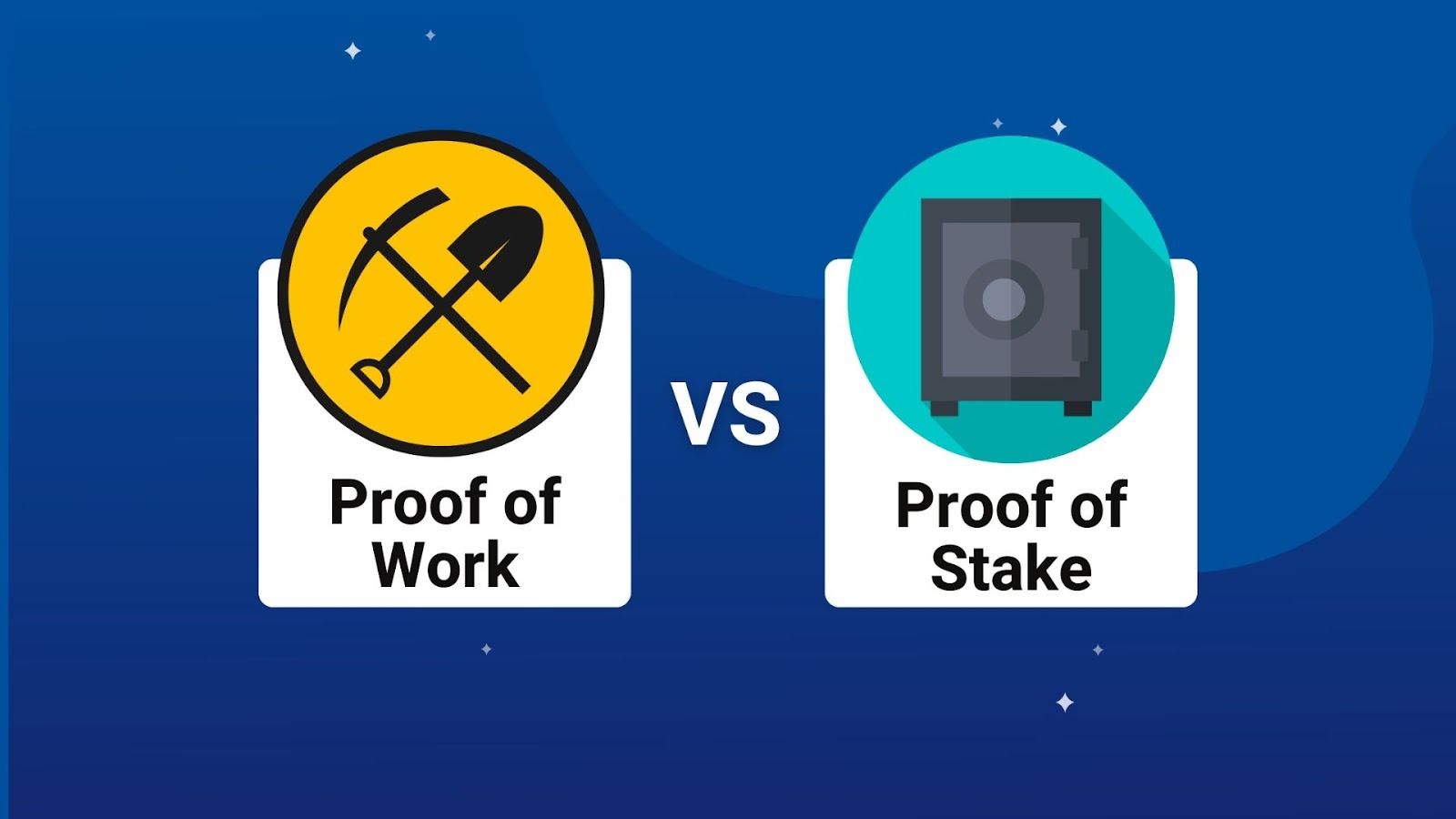
The cryptocurrency world blockchain in early 2026 looks very different from just a few years ago. Bitcoin has passed its fourth halving, rewards sit at 3.125 BTC per block, and the network hash rate hovers near 1 zettahash per second after recent dips.
At the same time, staking on Proof-of-Stake chains has matured into a mainstream way for holders to earn steady returns without heavy hardware. For many investors, the real question is no longer “Should I get into crypto?” but “How do I make my holdings work for me through PoW mining or staking?”
This article breaks down the realities of both approaches in 2026. Readers will see clear numbers on costs, yields, risks, and suitability. By the end, anyone can decide which path aligns with their budget, technical comfort, and long-term goals.
Understanding Proof-of-Work Mining in 2026
Proof-of-Work (PoW) mining remains the backbone of Bitcoin and a handful of other blockchain networks. Miners compete to solve complex mathematical puzzles using specialized hardware called ASICs. The winner adds the next block and collects the reward plus transaction fees. In 2026, this process is no longer a hobby at home. It has become an industrial operation where margins are razor-thin, and efficiency decides survival.
Network difficulty currently sits around 133.79 trillion and adjusts every two weeks. Recent drops in hash rate of roughly 10-20% from late-2025 peaks were driven by winter power limits, regulatory checks, and unprofitable machines shutting off. Yet the system stays antifragile: when miners exit, difficulty falls, helping efficient operators stay in the game.
Electricity is the single biggest expense. High-efficiency ASICs today run at 15-20 J/TH or better. Anything above 20 J/TH often loses money unless power costs drop below $0.05/kWh. Institutional players with access to stranded renewable energy or negotiated power purchase agreements (PPAs) can produce one Bitcoin for roughly $35,000–$45,000. At current Bitcoin prices near $71,000, that leaves room for profit. Retail users paying $0.15/kWh or more usually operate at a loss.
Hardware itself has evolved. Top models like Bitmain’s Antminer S21 series or MicroBT Whatsminers deliver hundreds of terahashes while sipping relatively less power. Immersion cooling and waste-heat recovery (for greenhouse heating or district systems) have become standard ways to squeeze extra value. Still, machines depreciate fast; most have a useful life of only 3–5 years before newer, more efficient versions push them aside.
What Staking Looks Like in 2026
Staking on Proof-of-Stake (PoS) networks works differently. Instead of burning electricity to solve puzzles, participants lock up tokens to help secure the chain. In return, they earn a share of newly issued tokens plus fees. The more you stake (or delegate), the higher your chance of being chosen as a validator or receiving rewards.
Ethereum, the largest PoS network, offers an APR of roughly 2.2–3.5% depending on the method. Solo validators with 32 ETH can push toward 4% when including MEV (miner-extractable value) tips, while liquid staking through Lido or Rocket Pool delivers 2.4–2.6% with full liquidity. Solana yields sit higher at native staking rates of 6–7%, and some liquid staking tokens (LSTs) like mSOL or JupSOL have reached 6.1–6.4% after recent epochs. Smaller or higher-inflation chains can deliver double-digit returns, but at a higher level of volatility.
Liquid staking derivatives have exploded in popularity. Users deposit tokens, receive an LST that can be traded or used in DeFi, and still earn the base yield. Total value locked in liquid staking protocols now exceeds tens of billions, giving everyday holders flexibility without locking capital for months. No noisy fans, no power bills, just a few clicks on a blockchain app or exchange.
How PoW Mining and Staking Shape Crypto Markets
Proof-of-Work (PoW) mining continues to link Bitcoin’s security directly to real-world energy consumption. The enormous computational power required makes a 51% attack prohibitively expensive in 2026. Beyond security, miners have become valuable grid partners. They absorb surplus renewable energy during periods of high solar or wind generation and quickly curtail operations when demand spikes. This flexible “energy arbitrage” helps balance electricity systems in places like Texas, Iceland, and parts of Asia.
In Texas, for instance, Bitcoin miners provide an interruptible load that stabilizes the ERCOT grid. They consume excess power when it is abundant and cheap, then reduce usage or even sell power back during peak times. Studies show that this demand-response capability has helped lower ancillary service costs and prevent blackouts during extreme weather. Miners act almost like large, controllable batteries, turning on when energy is plentiful and stepping aside when the grid needs relief. This role turns what some see as pure consumption into a tool for grid resilience, especially as renewable sources grow more variable.
Staking’s Focus on Efficiency and Accessibility
Staking on Proof-of-Stake (PoS) networks takes the opposite approach, emphasizing energy efficiency. Ethereum’s transition from PoW to PoS slashed its electricity consumption by more than 99%. Networks such as Solana and Cardano operate on standard servers rather than power-hungry ASIC farms. This makes them far greener and simpler to scale globally.
Participation in staking has grown steadily. As of early 2026, roughly 30% of Ethereum’s circulating supply, around 36–37 million ETH, is actively staked. This level strengthens network security and decentralization. Anyone holding tokens can help validate blocks without investing in expensive hardware. The result is broader participation: retail holders, institutions, and even exchanges contribute to consensus without the barriers that once limited involvement to specialized miners.
Economic Influences on Token Markets
Both mechanisms shape token supply and demand in distinct ways. PoW mining generates new coins through block rewards, creating consistent selling pressure that buyers must absorb. In a post-halving environment, this pressure, combined with transaction fees, influences Bitcoin’s market dynamics.
Staking, by contrast, removes tokens from circulation by locking them. This reduced float often supports price stability during bear markets. Higher staking rates signal long-term holder confidence and can create upward pressure on prices over time. In 2026, observers point out that staking has become the go-to passive-income method for everyday retail investors. It offers predictable yields with minimal effort. Mining, meanwhile, remains a specialized infrastructure business suited to those with access to cheap power and technical expertise.
Broader Market Implications
The contrast between the two models affects investor behavior and capital allocation across the crypto market. PoW keeps Bitcoin anchored to tangible energy costs, reinforcing its narrative as “digital gold” backed by real-world work. PoS networks attract users seeking lower environmental impact and easier entry points, accelerating adoption in DeFi, NFTs, and everyday applications.
Many market participants now blend both approaches. Some allocate capital to optimized mining for direct Bitcoin exposure while staking other assets for steady yields. This hybrid thinking reflects the maturing ecosystem, where security, sustainability, and accessibility each play important roles.
Overall, PoW mining and staking do not compete so much as complement one another. Mining provides robust, energy-backed security for the original cryptocurrency, while staking democratizes participation and reduces the environmental footprint of newer networks. Together, they continue to influence how tokens are valued, how networks are secured, and how investors generate returns in the 2026 crypto landscape.
Advantages of Each Approach in Today’s Market
In the evolving 2026 cryptocurrency landscape, both Proof-of-Work (PoW) mining and staking offer distinct benefits that cater to different investor profiles. Understanding these advantages helps clarify why some participants lean toward one method while others prefer the alternative or even combine them for balanced exposure.
PoW Mining Advantages
Direct Bitcoin Ownership Without Intermediaries
One of the strongest draws of PoW mining is the ability to acquire Bitcoin directly from the network. Miners receive freshly minted BTC as block rewards without needing to go through centralized exchanges for every purchase.
This avoids trading fees, slippage, and repeated KYC processes. For those who value pure, permissionless accumulation, mining provides the cleanest way to “stack sats” straight from the protocol itself.
Tangible, Resalable Assets
Unlike staking, which involves digital tokens, mining produces physical hardware ASIC miners that hold residual value. Even after several years of use, efficient machines can often be resold on secondary markets or repurposed for other computational tasks. This tangibility gives miners a safety net that pure token holders rarely enjoy. In uncertain markets, the ability to liquidate rigs can help recover part of the initial capital.
Higher Potential Returns in Bull Markets
When Bitcoin’s price rises faster than network difficulty increases, mining profitability can significantly outpace staking yields. The leverage comes from fixed operational costs (mainly electricity) against rising BTC revenue.
In strong bull cycles, well-optimized operations have historically delivered returns that exceed typical staking APRs. This upside potential appeals to investors willing to accept higher operational complexity for the chance of outsized gains.
Energy Monetization Opportunities
Modern mining farms increasingly turn their energy consumption into multiple revenue streams. Many provide demand-response services to utility companies, earning payments for curtailing power during grid stress.
Others capture waste heat from ASICs to warm greenhouses, warehouses, or even residential districts. These side benefits transform what appears to be a pure expense into a flexible energy asset, improving overall economics.
Staking Advantages
Extremely Low Barriers to Entry
Staking stands out for its accessibility. Investors can begin with as little as $50 worth of tokens on most major platforms. No specialized equipment, industrial electricity contracts, or complex setup is required. This democratizes passive income in crypto, allowing beginners and small holders to participate meaningfully without large upfront commitments.
Predictable Yields That Compound Automatically
Staking delivers relatively stable annual percentage rates (APRs) ranging from 3% to 12% on major assets like Ethereum and Solana. These rewards typically compound daily or weekly, steadily growing holdings over time. Unlike mining, where revenue fluctuates with Bitcoin price and difficulty, staking offers more predictable income that many long-term holders appreciate for financial planning.
High Liquidity Through Liquid Staking Derivatives (LSTs)
A major evolution in 2026 is the widespread use of liquid staking. When users stake tokens, they often receive LSTs (such as stETH or mSOL) that can be traded, used in DeFi, or borrowed against without having to unstake the underlying assets. This maintains full liquidity while still earning yields, solving one of the traditional drawbacks of locked staking.
Eco-Friendly and Beginner-Friendly
Staking requires almost no technical maintenance beyond selecting a reputable validator or pool. There are no noisy fans, heat management issues, or massive power bills. Its dramatically lower energy footprint also aligns with ESG priorities, making it attractive to environmentally conscious investors and institutions.
Lower Risk of Total Capital Loss from Obsolescence
Because staking involves holding tokens rather than depreciating hardware, participants avoid the rapid obsolescence risk that plagues ASIC miners. Newer, more efficient machines can render older rigs unprofitable within a few years, but staked assets continue generating rewards as long as the network remains active.
Real-World Applications Highlighting the Split
Large mining companies with billion-dollar balance sheets demonstrate sophisticated risk management. They hedge exposure by signing long-term power purchase agreements and sometimes redirect excess capacity toward high-value AI and high-performance computing (HPC) workloads when crypto margins tighten. This flexibility has helped several publicly traded miners survive multiple market cycles.
On the other side, retail holders benefit from simplicity. Platforms like Coinbase, Binance, or decentralized protocols allow users to stake ETH or SOL with just a few clicks. Rewards accrue daily with minimal intervention, turning idle holdings into growing positions. Many everyday investors now treat staking as their primary source of passive crypto income, appreciating its set-and-forget nature compared to the hands-on demands of mining.
Together, these advantages show why PoW mining and staking continue to coexist. Mining appeals to those seeking direct Bitcoin exposure, tangible assets, and higher upside potential in favorable conditions. Staking attracts participants who prioritize ease, predictability, liquidity, and lower operational risk. Many experienced investors ultimately adopt elements of both, allocating capital according to their resources, technical comfort, and market outlook.
Challenges and Considerations for 2026 Investors
PoW mining carries heavy upfront capital expenditure (CAPEX) and ongoing operating expenses (OPEX). A single modern ASIC costs thousands; a small farm runs into six figures. Noise, heat, and regulatory uncertainty (in some countries, high-energy use is still restricted) add complexity. Hardware can become obsolete overnight if efficiency standards jump. Geopolitical risks have led to sudden bans or power restrictions, forcing entire operations to relocate.
Staking is not risk-free either. Token price volatility can erase yield gains; a 20% drop in ETH can wipe out months of 3% rewards. Slashing penalties punish validator downtime or misbehavior, though reputable pools keep this risk near zero. While rare, smart-contract bugs in liquid staking protocols have occurred. Regulatory scrutiny on staking-as-a-service is growing in some jurisdictions, and tax treatment of rewards varies by country.
Practical precautions
-
For mining: run detailed ROI calculators that factor current hash price, projected difficulty growth, and electricity contracts. Source hardware only from trusted manufacturers.
-
For staking: choose established protocols with audited code and transparent validator performance. Diversify across chains and never stake more than you can afford to hold long-term.
-
Both: treat rewards as taxable income in most countries and keep meticulous records.
Direct Comparison: PoW Mining vs Staking in 2026
|
Feature |
PoW Mining |
Staking (PoS) |
|
Barrier to Entry |
High (hardware + cheap power) |
Low (tokens only) |
|
Technical Skill Needed |
High (setup, cooling, maintenance) |
Low (delegate or use apps) |
|
Typical Annual Yield |
Volatile (depends on BTC price & difficulty) |
Stable 3–12% APR |
|
Capital Type |
Fixed assets (machines) |
Liquid tokens |
|
Environmental Impact |
High energy use |
Eco-friendly |
|
Main Risks |
Electricity costs, hardware depreciation, and regulation |
Token price drops, slashing, smart-contract issues |
|
Liquidity |
Low (sell rigs or mined BTC) |
High (especially with LSTs) |
|
Best For |
Tech-savvy users with cheap energy |
Beginners, HODLers, ESG-focused investors |
Which Is More Profitable and More Suitable for You?
Profitability in 2026 ultimately hinges on personal circumstances. Staking delivers better risk-adjusted returns for the average investor. It removes electricity bills, hardware depreciation, and constant monitoring. A modest portfolio of ETH or SOL can generate predictable yields of 3–7% with almost no effort.
Mining can outperform staking when conditions align: access to sub-$0.06/kWh power, latest-generation ASICs, and a bullish Bitcoin market. Institutional operators and tech-savvy individuals in mining-friendly regions (such as Texas, Paraguay, and parts of Central Asia) still achieve strong ROI. Retail users without these advantages often find mining unprofitable or capital-destructive at current prices.
Many sophisticated portfolios now use a hybrid strategy. Stake the majority of holdings for steady income and allocate a smaller, optimized slice to mining for direct Bitcoin exposure and potential upside. This balances liquidity, sustainability, and high potential rewards.
Choose mining if you
-
Have technical know-how and can secure industrial-grade electricity.
-
Want pure Bitcoin without intermediaries.
-
Accept high effort for potentially higher long-term returns.
Choose staking if you
-
Prefer a set-and-forget approach.
-
Value liquidity and environmental impact.
-
Are starting with limited capital or a lack of infrastructure.
Final Thoughts on the 2026 Landscape
The choice between PoW mining and staking no longer pits one against the other; both serve distinct roles in a maturing ecosystem. Mining anchors Bitcoin’s security and turns surplus energy into digital gold. Staking democratizes participation, lowers energy footprints, and lets ordinary holders earn while they hold.
As networks evolve restaking on Ethereum, more efficient ASICs, and deeper integration with traditional finance hybrid strategies may become the norm.
Investors who take time to match their resources and risk appetite to the right method will be best positioned for whatever the next market cycle brings. Whether building an industrial mining operation or simply staking a few tokens from a phone app, the key is informed, disciplined participation.
Ready to explore further? Check out detailed guides on Bitcoin mining economics or the latest staking yields on major exchanges. Consider your own electricity rates, portfolio size, and comfort with technology, then take the first step that matches your situation.
Subscribe for monthly crypto income updates and share your own mining or staking experiences in the comments below. Exploring related articles on ASIC efficiency or liquid staking derivatives can further refine your strategy.
Frequently Asked Questions
1. Is Bitcoin mining still profitable for individuals in 2026?
Only if electricity costs stay below $0.05–$0.06/kWh and you run top-tier efficient ASICs. Most home users pay higher rates and find it unprofitable; institutional setups with cheap power continue to succeed.
2. What are current staking yields for major assets?
Ethereum hovers between 2.2–3.5% APR (higher with MEV), Solana around 6–7%, and some smaller chains reach 10–21%. Liquid staking often matches or slightly exceeds native rates while keeping funds tradable.
3. How much capital do I need to start staking versus mining?
Staking can begin with a few dollars’ worth of tokens. Mining typically requires tens of thousands for even a small viable setup, including hardware and power infrastructure.
4. Does staking carry a slashing risk?
Yes, but reputable validators and pools keep it extremely low, often near zero for delegators. Always review the validator's uptime and track record.
5. Can I combine mining and staking?
Absolutely. Many investors mine Bitcoin for direct exposure and stake altcoins for steady yield, creating a balanced, diversified income stream.
6. How do halvings affect mining profitability?
They cut block rewards in half, forcing miners to rely on higher Bitcoin prices or better efficiency. The 2024 halving already tightened margins, making cheap power essential.
7. Are there tax implications for rewards from either method?
Yes. Most jurisdictions treat mined or staked rewards as taxable income at the fair-market value when received. Capital gains may apply when you later sell the assets. Consult a tax professional.
8. Which method is more environmentally friendly?
Staking wins easily. PoW mining consumes significant electricity, though many operations now pair with renewable energy. PoS networks consume a fraction of the energy.
Risk Disclaimer: This content is for informational purposes only and does not constitute financial, investment, or legal advice. Cryptocurrency investments carry significant risk and volatility. Always conduct your own research and consult a qualified professional before making any financial decisions. Past performance does not guarantee future results or returns.