

Can You Stake ZEC? Zcash Proof of Work vs Proof of Stake Explained
2026/08/21 17:37:00
Overview
- Learn whether ZEC has native staking, how Zcash Proof of Work and Equihash mining operate, and how cloud mining differs from platform yield services.
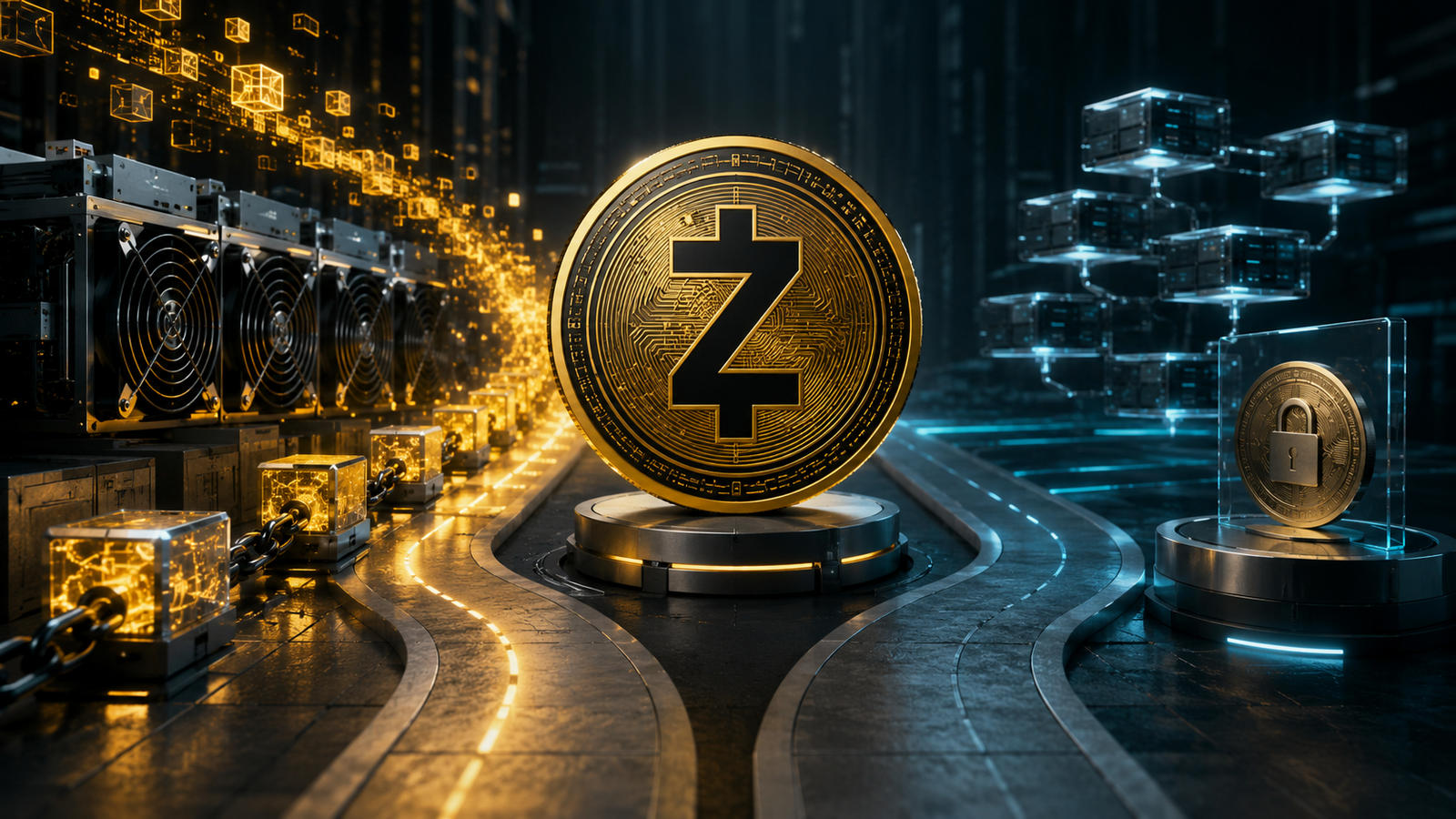
A user sees one token offering staking rewards and another offering mining output, so it is natural to ask: can ZEC be staked too? The confusion comes from treating every way of earning tokens as the same mechanism.
At the protocol level, Zcash currently uses Proof of Work, not Proof of Stake. Miners use Equihash-compatible hardware to create blocks and secure transaction history. A platform may separately offer an earn, lending or hold-to-earn service involving ZEC, but that service is not the same as native Zcash staking.
Quick answer As of August 2026, Zcash does not use native Proof-of-Stake validation, so holding ZEC does not make a user a protocol validator. ZEC is produced through Proof-of-Work mining with Equihash. Platform yield features may exist, but they carry separate service terms and must not be described as native ZEC staking unless the protocol itself supports it.
What Does 'Staking' Normally Mean?
In a Proof-of-Stake network, validators lock or delegate eligible tokens and participate in proposing or validating blocks. The protocol defines validator selection, penalties, unbonding rules and reward distribution. Native staking rewards come from that consensus role.
Simply holding a token in a wallet is not automatically staking. A centralized exchange earn product, a lending product and a promotional yield program can all produce account rewards without making the user a network validator.
How Zcash Reaches Consensus Today
Zcash uses Proof of Work. Specialized machines compete to solve a difficult Equihash problem. When a miner or pool finds a valid solution, the block can be broadcast to the network. Nodes verify the block and transactions against the consensus rules before extending the chain.
Mining has two linked roles: it orders transactions into blocks and makes past transaction history expensive to rewrite. Miners receive the miner-allocated portion of the block subsidy plus transaction fees under the applicable protocol and pool rules.
Core distinction ZEC ownership represents an asset balance. ZEC mining represents contributed computational work. The current Zcash protocol does not select block producers based on how much ZEC they lock.
Proof of Work vs Proof of Stake
|
Dimension
|
Zcash Proof of Work
|
Typical Proof of Stake
|
|
Block producer resource
|
Equihash computing work
|
Locked or delegated protocol tokens
|
|
Equipment
|
ASIC mining infrastructure
|
Validator server and eligible stake
|
|
Main operating cost
|
Hardware, electricity, cooling and maintenance
|
Capital lockup, validator operations and slashing risk
|
|
Reward basis
|
Hashrate contribution and mining/pool rules
|
Stake weight and protocol validator rules
|
|
Can simple holding validate?
|
No
|
Only if the protocol and chosen method support staking
|
|
Current ZEC status
|
Native consensus mechanism
|
Not the current native Zcash mechanism
|
Why Users Confuse ZEC Mining with Staking
-
Both can show token rewards over time, even though the network mechanism is different.
-
Platforms may place mining output and earn services inside the same account ecosystem.
-
Marketing pages sometimes use broad words such as yield or passive participation without naming the consensus role.
-
Users may assume every token can be staked because many newer networks use Proof of Stake.
-
A displayed annualized rate can distract from who bears hardware, price, liquidity or service risk.
Protocol Mining, Cloud Mining and Platform Yield Are Three Different Layers
1. Protocol mining
Physical Equihash ASICs perform work, mining pools collect shares, and valid blocks secure Zcash. Rewards originate from block subsidy and transaction-fee rules.
2. Cloud mining
A user purchases a managed hashrate service for a defined period. The infrastructure operator runs the machines and pool connections. The user receives mining output under the product's payout, fee and settlement rules.
3. Platform yield or Hold-to-Earn
A platform may offer a separate service that pays yield on eligible balances. KuMining's Mining Account guide describes Hold-to-Earn for supported balances, with supported coins and rates following the live service. That account feature does not convert the Zcash network into Proof of Stake.
Label check Ask where the reward comes from: network validation, purchased hashrate, lending, platform incentives or another service. Similar-looking account credits can represent different risks and legal terms.
Why Cloud Mining Can Be Relevant for ZEC
Cloud mining provides an alternative participation structure. KuMining users can select managed ZEC hashrate while the infrastructure is operated by the provider. Daily mining output and electricity deductions appear in a dedicated Mining Account, reducing the need to configure hardware or a pool.
The value is operational simplicity, not guaranteed profitability. ZEC output and value remain affected by network difficulty, total hashrate, reward rules, electricity costs, service terms and market price.
How to Evaluate Any 'ZEC Yield' Offer
-
Identify whether the offer is native mining, cloud mining, lending, staking or a platform promotion.
-
Ask what resource creates the reward: hashrate, locked tokens, borrower interest or platform subsidy.
-
Check whether assets are locked, transferable or withdrawable during the service period.
-
Review fees, electricity costs, counterparty risk and early-exit rules.
-
Confirm whether the displayed rate or output is estimated, variable or guaranteed - and reject unsupported guarantees.
-
Read the live product terms instead of relying on a generic label.
Frequently Asked Questions
Can I natively stake ZEC to validate the Zcash network?
Not under the current Zcash consensus rules as of August 2026. Zcash uses Equihash Proof of Work, and blocks are produced by miners rather than stake-weighted validators.
If a platform offers ZEC yield, is that Zcash staking?
Not necessarily. It may be lending, an earn service, a promotional program or another platform feature. Check the source of rewards and the terms.
Do I need to own ZEC before mining ZEC?
Not necessarily. Mining participation is based on hashrate and the service's fee rules, not on locking an existing ZEC balance.
What equipment is used for ZEC mining?
The official Zcash mining guide states that current network difficulty requires Equihash ASIC hardware for practical mining.
Could Zcash switch to Proof of Stake in the future?
Consensus mechanisms can change only through protocol development, community agreement, software implementation and network activation. This article describes the current network and should not treat the future mechanism as fixed.
Is cloud mining a risk-free substitute for staking?
No. It removes the need to own hardware but still involves variable mining output, electricity and service costs, network conditions and ZEC price risk.
Final Takeaway
The safest answer to 'Can I stake ZEC?' begins with one word: native. Zcash currently secures its chain through mining, not stake-weighted validation. Any platform yield feature should be evaluated as a separate service, while ZEC cloud mining should be evaluated as managed Proof-of-Work hashrate.
Start Mining with KuMining Explore current ZEC mining plans with KuMining if you want managed Equihash hashrate. Review the hashrate fee, electricity fee, duration, payout method and risk notice before purchasing. Explore KuMining