

What Is a Crypto Wallet Address? Everything You Need to Know in 2026
2026/03/18 14:42:01
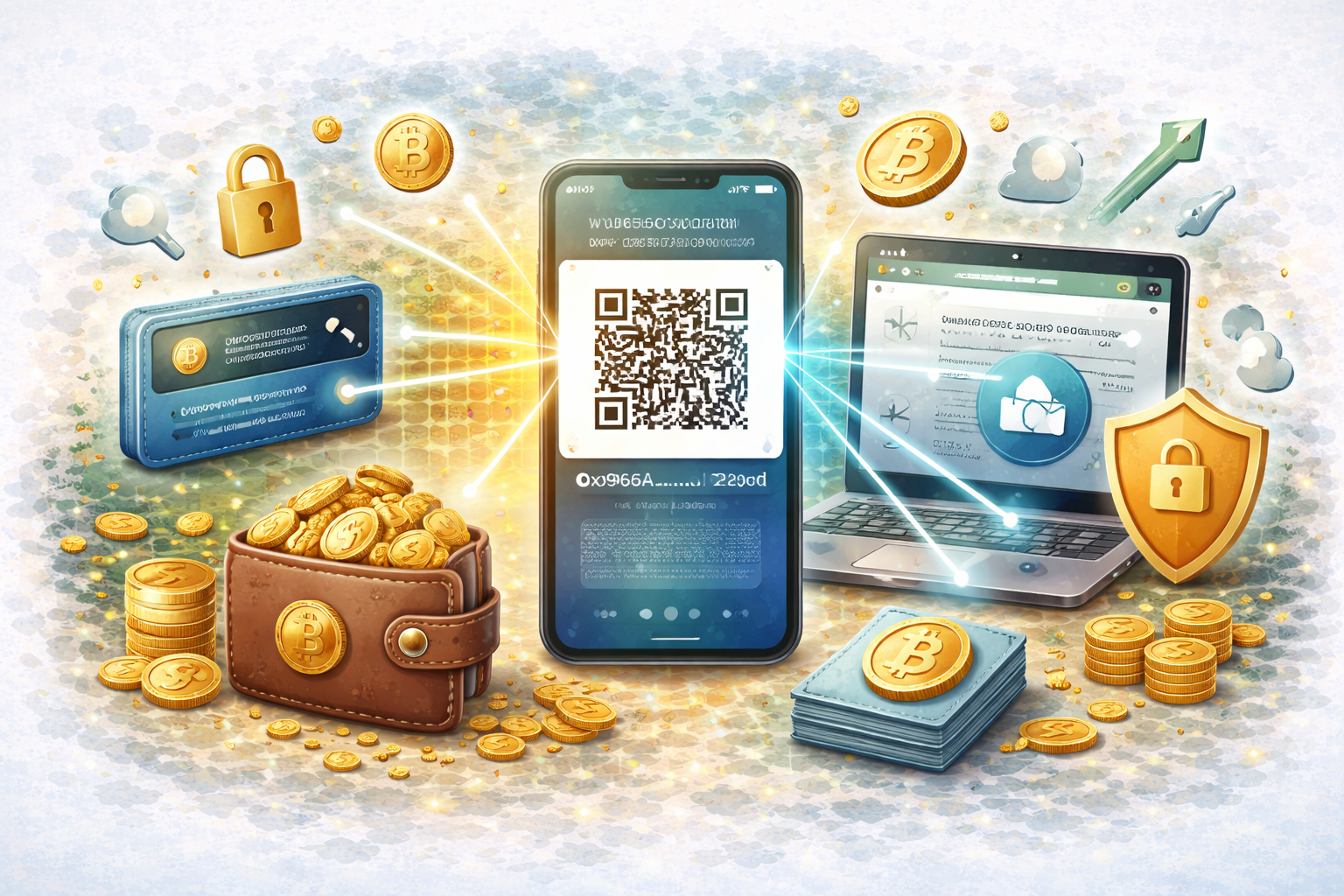
In the digital asset ecosystem, the concept of ownership is inextricably linked to the ability to receive, store, and transmit data via a specific identifier. This identifier, known as a crypto wallet address, serves as the primary touchpoint for all blockchain interactions, functioning similarly to a bank account number but within a decentralized framework. As global adoption scales in 2026, understanding the technical and security nuances of these addresses is vital for navigating the market safely.
The following guide provides an exhaustive analysis of the infrastructure behind your on-chain identity. By exploring the mechanics of a crypto wallet address and the broader context of crypto bubbles, participants can better distinguish between fundamental security practices and speculative trends.
Key Takeaways
-
A crypto wallet address is a hashed version of a public key, acting as a destination for digital asset transfers.
-
Private keys are the critical credentials used to sign transactions, while public keys are used to generate the readable wallet address.
-
Blockchain transparency allows anyone to view the balance and transaction history of a public wallet address using a block explorer.
-
Addresses are network-specific; sending assets to an incompatible chain address typically results in a permanent loss of funds.
-
Vanity addresses allow for limited customization of the character string but require significant computational effort to generate.
-
Wallet addresses are pseudonymous, meaning they are not inherently linked to a real-world identity unless a user undergoes KYC on a platform.
What Is a Crypto Wallet Address?
A crypto wallet address is a unique string of alphanumeric characters that represents a destination on a blockchain. It serves as a public identifier that allows users to receive funds from other participants. While it is often compared to an email address or a bank account number, its generation is based on complex cryptographic hashing algorithms that ensure no two addresses are identical.
Each blockchain network utilizes its own specific format for these addresses. For example, Bitcoin addresses often start with "1", "3", or "bc1", while Ethereum-compatible networks use an "0x" prefix followed by a 40-character hexadecimal string. For individuals interested in trading or accessing the token's markets, the wallet address is the most basic tool required to engage with the ecosystem.
How to Create a Crypto Wallet Address
The process of creating a wallet address is decentralized and does not require approval from a central authority. It is performed through a crypto wallet, a software or hardware tool that manages your cryptographic keys.
-
Select a Wallet Type: Users choose between a "hot wallet" (software connected to the internet) or a "cold wallet" (hardware disconnected from the internet).
-
Generate a Seed Phrase: The wallet software generates a 12 to 24-word recovery phrase, which acts as the master key for all addresses managed by that wallet.
-
Automatic Address Generation: Once the wallet is initialized, the software uses the seed phrase to derive a private key, which then generates the public key and the visible wallet address.
-
Backup the Credentials: The user must record the seed phrase in a secure, offline location, as losing this phrase results in the permanent loss of the associated addresses.
How to Find Your Crypto Wallet Address
Locating your identifier is a straightforward task within any wallet interface, though the location may vary slightly depending on the platform's design.
-
Receive Menu: Most wallets have a prominent "Receive" or "Deposit" button. Clicking this will display your public address.
-
QR Code: Wallets typically generate a QR code that encodes the alphanumeric string, allowing for easy scanning by the sender.
-
Account Settings: In multi-chain wallets, the address for specific networks (like Bitcoin or Ethereum) can be found under the respective asset's account details.
-
Copy Feature: Always use the integrated "copy to clipboard" function rather than typing the address manually to avoid errors.
When monitoring market data and trading pairs, users often keep their public addresses ready for quick transfers between self-custody and exchange environments.
Essential Safety Tips for Managing Wallet Addresses
Verify Network Compatibility
One of the most common causes of fund loss is sending an asset to an address on the wrong blockchain. A Bitcoin address cannot receive Ethereum, and an Ethereum address cannot receive Solana. Before initiating a transfer, always confirm that the destination address supports the specific network and token standard being sent.
The "Test Transaction" Rule
For large transfers, it is standard industry practice to send a small "test" amount first. Once the small transaction is successfully confirmed on the blockchain, the user can proceed with the remaining balance. This mitigates the risk of a total loss due to an incorrect address or a compromised clipboard.
Guard Against Clipboard Hijacking
Malware known as "clipboard hijackers" can detect when a user has copied a wallet address and replaced it with an address controlled by an attacker. Always double-check the first and last five characters of the address after pasting it into the destination field. To learn more about protecting your assets, you can read more through research resources that cover advanced security hygiene.
How Do Crypto Wallet Addresses Work?
The functionality of a wallet address is rooted in asymmetric cryptography. This system uses pairs of keys: a public key, which can be shared with anyone, and a private key, which must be kept secret.
The Hashing Process
A wallet address is not the public key itself; rather, it is a "hashed" version of it. The public key undergoes a series of mathematical transformations (such as SHA-256 and RIPEMD-160) to create a shorter, more manageable string. This one-way process ensures that while an address can be derived from a public key, the public key cannot be easily reversed to find the private key.
Transaction Validation
When you send funds, your wallet uses your private key to "sign" the transaction. This signature proves to the network that you have the authority to move assets from that specific address without ever revealing the private key. The network's nodes use your public key to verify that the signature is valid, ensuring that the ledger remains accurate and tamper-proof.
Can Your Wallet Address Be Tracked?
Because blockchains are public ledgers, all wallet addresses and their transaction histories are fully transparent. Anyone with access to a block explorer can enter a public address and see its current balance, the addresses it has interacted with, and the exact timestamps of every transaction.
This transparency is what allows for the analysis of crypto bubbles and "whale" movements. Analysts can track large transfers from dormant addresses to exchanges, which often serves as a signal of impending market volatility. However, while the activity is trackable, the identity behind the address remains hidden unless the owner links the address to their real-world persona.
Wallets vs. Keys vs. Addresses: Key Differences Explained
These terms are often used interchangeably, but they represent distinct components of the digital asset infrastructure.
-
Wallet: A tool (software or hardware) that stores and manages your keys. It does not actually "hold" your crypto; the crypto remains on the blockchain.
-
Private Key: A secret code (like a password) that allows you to spend or move your assets. If someone has your private key, they have total control over your funds.
-
Public Key: A cryptographic code that is derived from the private key. It is used to verify signatures and generate the wallet address.
-
Address: A shortened, hashed version of the public key. This is the only part of the system that you share with others to receive funds.
Is a Crypto Wallet Address Truly Anonymous?
The most accurate term for the privacy offered by a wallet address is "pseudonymity." An address acts as a pseudonym; it does not contain your name, physical address, or IP information. However, the link between an address and a person can be established through several methods.
The most common link occurs when a user interacts with a centralized platform. When you deposit funds from a self-custody wallet into your KuCoin account, the platform can link your off-chain identity (KYC) to that specific on-chain address. Furthermore, blockchain forensics firms use sophisticated clustering algorithms to group addresses together, often deanonymizing users by observing their spending patterns over time.
Tax Implications of Crypto Wallet Addresses: What You Should Know
In 2026, tax authorities in many jurisdictions have increased their focus on on-chain activity. A wallet address is essentially a ledger of taxable events. Every time you move assets from one address to another—if it involves a swap or a sale—it may trigger a capital gains tax liability.
Tax agencies now use automated tools to monitor public addresses. It is essential for users to keep accurate records of the "cost basis" for the assets held in each address. Failing to account for transactions between your own addresses or missing income from staking rewards can lead to significant audit risks. For the latest updates on regulatory compliance, checking platform updates and announcements can provide clarity on how platforms assist with tax reporting.
Summary
The crypto wallet address is the cornerstone of decentralized finance, serving as the essential bridge between the user and the global blockchain ledger. While the alphanumeric string may appear complex, it is governed by rigorous mathematical principles that ensure security and uniqueness. Mastering the management of these addresses—from generation to verification—is the most effective way to prevent the loss of digital assets.
As we continue through the 2026 market cycle, characterized by both innovation and the risk of crypto bubbles, the ability to maintain self-custody via secure wallet addresses remains a fundamental advantage for the informed participant. By prioritizing security hygiene and understanding the underlying cryptography, users can engage with the market with confidence and transparency.
Start your crypto journey in minutes by creating a secure KuCoin account with no initial deposit required. Sign Up Now!
FAQs
Can I have more than one crypto wallet address?
Yes. A single wallet (managed by one seed phrase) can generate an almost infinite number of unique addresses across different blockchains. In fact, many privacy-conscious users generate a new address for every transaction to make it more difficult for others to track their total holdings.
What happens if I send crypto to the wrong address?
In the vast majority of cases, transactions on blockchain are irreversible. If you send funds to an incorrect address or a different blockchain network, those funds are usually lost forever. There is no central authority or "customer support" for a blockchain that can reverse the transaction.
Can someone steal my crypto if they know my wallet address?
No. Knowing a wallet address only allows someone to see your balance and transaction history. To steal or move your funds, an attacker would need access to your private key or your seed phrase. Your public address is safe to share with anyone you wish to receive funds from.
Is my wallet address the same for every cryptocurrency?
No. Different cryptocurrencies operate on different blockchain networks, each with its own address format. However, some networks are "EVM-compatible," meaning you can use the same 0x-style address for Ethereum and several other supported layers. You must always confirm compatibility before sending.
Can I delete a crypto wallet address?
You cannot "delete" an address from the blockchain, as the ledger is a permanent historical record. You can, however, stop using an address and delete the wallet software that manages the keys for it. As long as you do not share the keys, the address will simply remain dormant.
How do I check if my wallet address has been involved in a hack?
You can use a block explorer to search for your address and see if any unauthorized transactions have occurred. Additionally, there are security services that monitor for "leaked" seed phrases or private keys in known database breaches, though the best protection is offline storage.
Further reading
Disclaimer: The information on this page may have been obtained from third parties and does not necessarily reflect the views or opinions of KuCoin. This content is provided for general informational purposes only, without any representation or warranty of any kind, nor shall it be construed as financial or investment advice. KuCoin shall not be liable for any errors or omissions, or for any outcomes resulting from the use of this information. Investments in digital assets can be risky. Please carefully evaluate the risks of a product and your risk tolerance based on your own financial circumstances. For more information, please refer to our Terms of Use and Risk Disclosure.