

How Much Does It Cost to Mine Zcash? 5 Costs Beginners Often Miss
2026/07/31 10:51:00
Overview
- Understand the five major Zcash mining costs—from ASIC hardware and electricity to cooling, downtime, and pool fees—before mining ZEC.
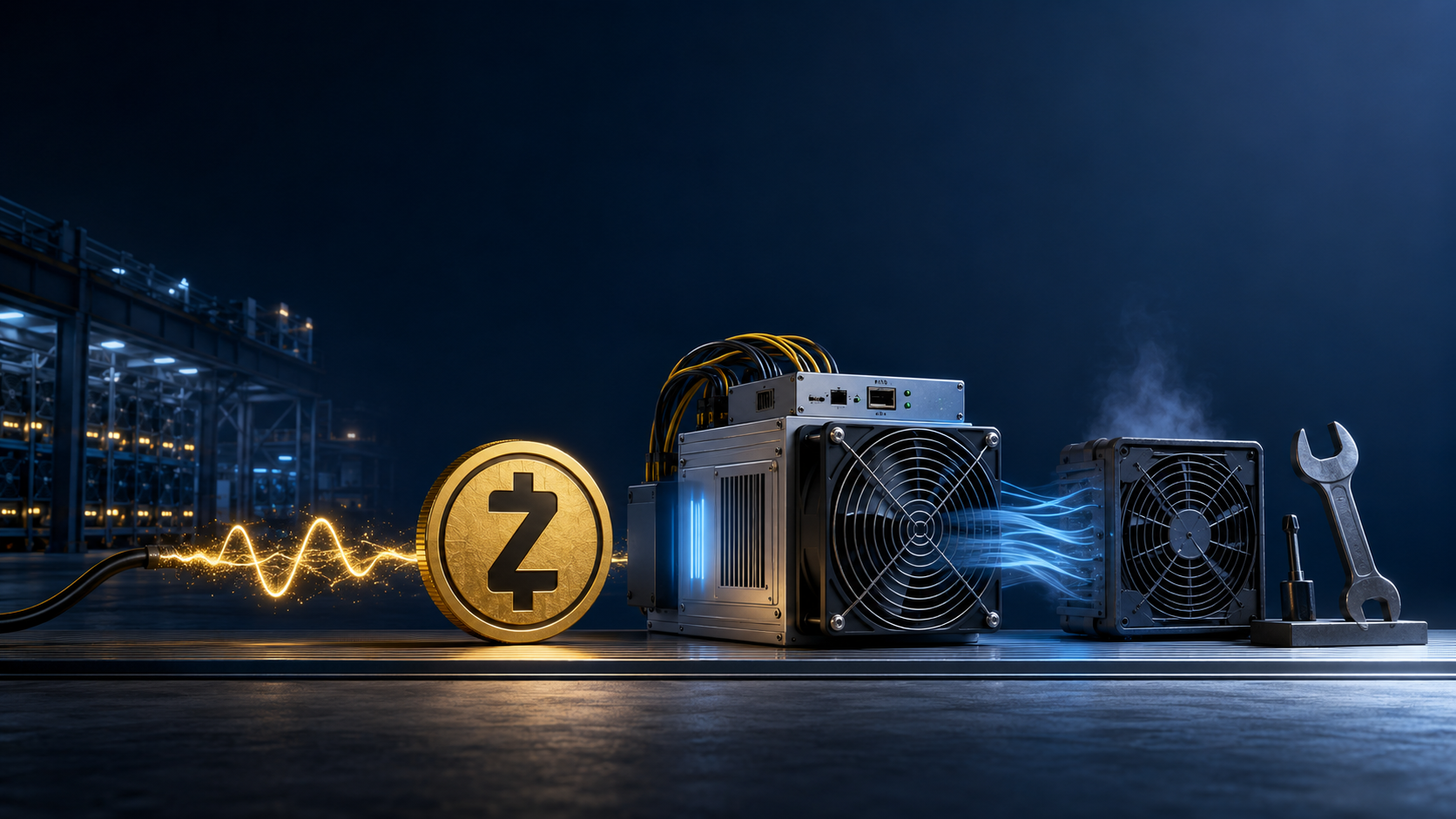
A beginner searching “how much does it cost to mine Zcash?” often expects one number. In reality, there is no universal answer. The true cost depends on hardware efficiency, electricity prices, operating conditions, network difficulty, plan duration, and how much operational work you manage yourself.
The useful question is not only “What does the miner cost?” It is “What is my total cost to keep productive hashrate running over the full mining period?”
|
Beginner takeaway: Mining cost is a stack, not a single fee. Compare capital cost, daily operating cost, and operational risk before comparing expected output.
|
Why Zcash Mining Usually Requires Specialized Hardware
Zcash uses the Equihash Proof-of-Work algorithm. The official Zcash mining guide states that current network difficulty requires ASIC hardware for competitive mining. ASICs are designed for a specific calculation and can be far more efficient than general-purpose computers, but they introduce upfront cost, power requirements, noise, heat, and maintenance needs.
This means direct ZEC mining is closer to operating specialized infrastructure than running a normal desktop application.
Cost 1: ASIC Hardware and Depreciation
The purchase price of an ASIC is the most visible cost. But purchase price alone is not enough. A miner can lose economic value as newer, more efficient machines enter the market or as network difficulty rises.
-
Machine purchase price and shipping
-
Import duties or local taxes where applicable
-
Power supplies, cables, and supporting equipment
-
Depreciation over the expected operating life
-
Resale risk if the machine becomes less competitive
A cheap older ASIC can be expensive to operate if it consumes much more electricity for the same hashrate.
Cost 2: Electricity
Electricity is the largest recurring cost for many mining operations. Two machines with the same hashrate can produce very different net results if one uses more power or runs in a region with higher electricity prices.
|
Simple model: Estimated electricity cost = machine power (kW) × operating hours × electricity price per kWh
|
Beginners should also check whether the quoted electricity price includes distribution charges, taxes, hosting markups, or other facility fees. A plan that looks attractive before electricity can become uncompetitive after full power costs are included.
Cost 3: Cooling, Space, and Infrastructure
ASICs generate substantial heat and noise. A safe operation may require ventilation, cooling, dust control, suitable wiring, stable internet, fire-safety measures, and physical space. Home mining can be especially difficult because household circuits and rooms may not be designed for continuous high-power equipment.
Professional hosting transfers these requirements to a facility, but hosting itself becomes part of the cost stack.
Cost 4: Maintenance and Downtime
A miner only contributes useful hashrate while it is online and functioning. Fan failures, power interruptions, overheating, network issues, firmware problems, and replacement-part delays can reduce effective hashrate.
Maintenance cost includes both repair expense and lost mining time. For a small operator without spare machines or technicians, one failure can have an outsized impact.
Cost 5: Pool, Settlement, and Operational Fees
Solo mining has high reward variance, so many miners use a pool. Pools may charge fees, impose payout thresholds, or use different settlement methods. Users also need to account for wallet management, monitoring tools, and the time spent configuring and supervising the operation.
These costs may look small individually, but they affect the final result over a long mining period.
A More Useful Mining Cost Formula
Instead of judging a plan from headline revenue, use a complete framework:
|
Simple model: Estimated net mining result = value of mining output − hardware or hashrate cost − electricity − hosting, maintenance, and service costs
|
This result is still an estimate because ZEC price, network difficulty, total network hashrate, and block reward rules can change. A professional evaluation should include at least a conservative case, a base case, and an optimistic case.
Hardware Mining vs. Cloud Mining Cost Responsibilities
|
Cost or task
|
Direct hardware mining
|
Cloud mining
|
|
ASIC purchase
|
User purchases and owns the machine
|
No physical machine purchase required
|
|
Electricity
|
User contracts and manages power directly
|
Paid under the service’s electricity rules
|
|
Cooling and site
|
User provides facility, ventilation, and safety
|
Managed by the service provider
|
|
Maintenance
|
User diagnoses, repairs, and replaces parts
|
Managed as part of mining operations
|
|
Pool setup
|
User selects and configures the pool
|
Handled within the managed service
|
|
Main user decision
|
Machine, site, power, and operations
|
Hashrate amount, duration, budget, and provider
|
How KuMining Separates the Cost Structure
KuMining separates hashrate purchasing from electricity management. Users pay the hashrate fee when placing the order, then prepay electricity in the dedicated Mining Account. Electricity is deducted daily based on consumption.
This structure gives beginners two practical advantages:
-
The order can be evaluated as two visible components instead of one opaque bundle.
-
Electricity can be funded after the hashrate order and managed through the Mining Account, reducing the pressure to prepay the entire operating cost at the first step.
Lite Mode recommends a hashrate and duration plan from the user’s budget. Pro Mode supports durations from 7 to 360 days and more independent hashrate configuration. Neither mode removes market or network risk; they reduce the operational burden of acquiring and running hardware.
Six Questions to Ask Before You Start
-
What exactly am I paying for: hardware ownership, hosted hardware, or rented hashrate?
-
Is electricity included, prepaid separately, or deducted from output?
-
What network assumptions are used in the output estimate?
-
Who absorbs hardware downtime and maintenance work?
-
What happens if the electricity balance is insufficient?
-
Can I clearly view daily output, cumulative output, fees, and remaining plan duration?
The Value of Cloud Mining for Beginners
Cloud mining is useful when the user’s main pain point is not interest in mining—it is the operational barrier. A managed service can remove the need to source ASICs, build a power environment, control heat and noise, maintain machines, and configure pools.
That convenience does not mean every cloud-mining product is suitable. Users should still compare provider credibility, hashrate transparency, fees, electricity rules, contract duration, output visibility, and risk disclosures.
Final Thoughts
The cost of mining Zcash is not only the price of a machine or hashrate plan. It is the total cost of keeping effective hashrate online. Beginners who account for hardware, electricity, infrastructure, maintenance, and service fees are less likely to be surprised later.
KuMining turns many physical operating costs into a managed participation model. The user still needs to understand the fee structure and dynamic output, but no longer needs to become a mining-farm operator first.
|
Explore ZEC Cloud Mining Without Buying Hardware
Compare Lite and Pro plans, review hashrate and electricity separately, and choose a plan that fits your budget and risk tolerance. Start Mining with KuMining →
|
Frequently Asked Questions
Can I mine Zcash with a normal laptop?
The official Zcash mining guide says current network difficulty requires specialized ASIC hardware for competitive mining.
Is electricity included in the KuMining hashrate fee?
No. The hashrate fee is paid at order placement, while electricity is prepaid separately through the Mining Account and deducted daily.
Does cloud mining guarantee profitability?
No. Cloud mining reduces hardware and operational complexity, but output value can still change with price, difficulty, network hashrate, reward rules, and fees.