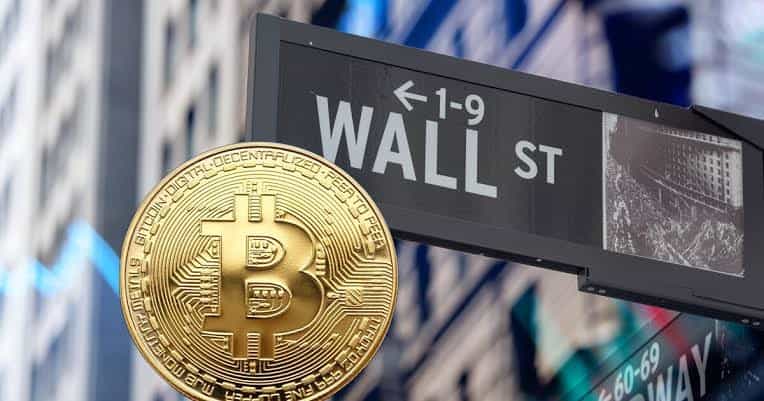
Wall Street vs Crypto Natives: The Great Liquidity Shift of 2026
Wall Street vs Crypto Natives: The Great Liquidity Shift of 2026
Thesis Statement
The rotation from crypto-native market makers to Wall Street titans in 2026 is professionalizing liquidity, reducing volatility, and unlocking massive institutional opportunities.
The Billion Dollar Handover Dominating Current Digital Markets
The digital asset ecosystemin April 2026 has reached a definitive turning point where the Wild West of private crypto native market making meets the rigid sophistication of the New York Stock Exchange. As of early April, Bitcoin is navigating a complex consolidation phase between $60,000 and $74,000, a range heavily influenced by the massive structural shift in who provides the underlying liquidity.
For over a decade, crypto native firms like Wintermute and GSR held the keys to the kingdom, utilizing high frequency algorithms born in the era of unregulated exchanges. However, the first quarter of 2026 has seen a staggering migration of volume toward institutional-grade liquidity providers.
Recent market analysis from Capital Street FX, the institutional infrastructure is expanding even as short term price action remains mixed. This transition is not merely a change in nameplates, it represents a fundamental rewiring of how assets are bought and sold.
The old money of crypto whales who built fortunes on early stage volatility is increasingly finding itself in a market that no longer responds to simple retail hype. Instead, the order books are being filled by entities that view Bitcoin and Ethereum as standard treasury assets, applying the same risk management frameworks they use for S&P 500 futures. This professionalization is creating a more resilient market, though one that feels noticeably different to the original pioneers who thrived on chaos.
The Great Smoothing: Why Giant Institutional Inflows Stifle Traditional Volatility Cycles
One of the most visible impacts of Wall Street’s dominance in 2026 is the dampening of the legendary crypto volatility smile. In previous cycles, a lack of deep liquidity meant that a single large order could send prices spiraling or soaring by double digits in minutes.
Today, the presence of major players like BlackRock’s iShares Bitcoin Trust (IBIT), which held over 784,000 BTC as of March 16, 2026, provides a massive liquid wall that absorbs shocks.
Data shows that BlackRock’s holdings are driven by consistent institutional demand, acting as a stabilizing force that separates price action from the erratic whims of individual traders.
While the market still experiences corrections such as the recent 30% drawdown in Ethereum from its January peaks the flash crashes of 2021 and 2022 are becoming increasingly rare. This new market structure is characterized by compressed volatility ranges, where moves are now largely dictated by macroeconomic indicators like Federal Reserve policy rather than just liquidations on offshore exchanges.
This shift has made crypto more attractive to pension funds and insurance companies that previously viewed the asset class as too unstable for long term allocation. By treating crypto as a legitimate financial infrastructure, Wall Street is effectively taming the asset, turning it into a predictable component of a modern multi-asset portfolio.
Battle of the Titans Between BlackRock and MicroStrategy
A fascinating human and corporate drama is unfolding in the race to become the last lender or ultimate hoarder of Bitcoin. As of late March 2026, a fierce competition persists between BlackRock and Michael Saylor’s MicroStrategy. The gap between these two behemoths has shrunk to just roughly 23,000 coins.
While BlackRock represents the New Wall Street money inflows from thousands of individual and institutional clients MicroStrategy represents the Old Money conviction of the early corporate adopters.
This rivalry is more than just a leaderboard, it signifies two different philosophies of market participation. BlackRock’s holdings are a function of market sentiment and ETF flows, meaning they provide liquidity back to the market when investors sell. In contrast, MicroStrategy operates on a buy and hold treasury model, effectively removing supply from the liquid market indefinitely.
This tug of war is creating a unique supply demand dynamic where the available float of Bitcoin on exchanges is hitting multi-year lows. As Forex.com notes, the proportion of Bitcoin held for over a year has stabilized just below 60%, representing over 2 million BTC that is currently off the table for daily trading. This scarcity, enforced by the competing giants, sets a structural floor for the industry that old money natives could never have achieved alone.
Moving Toward Instant Settlement Through Tokenized Securities
The rotation of market makers is also accelerating the technical evolution of the plumbing behind the trades. In early 2026, the New York Stock Exchange (NYSE) and Nasdaq have moved beyond mere interest to active implementation of blockchain based settlement systems.
A report from Grand Pinnacle Tribune confirms that the NYSE is developing a platform for 24/7 trading and real time (T+0) settlement of tokenized securities. This is a massive leap from the traditional T+2 settlement cycle that has defined Wall Street for decades.
By integrating blockchain technology into the heart of traditional finance, these institutions are erasing the lines between crypto and finance. This move is largely a response to the efficiency of crypto native market makers who proved that 24/7 global markets were not only possible but superior.
Now, the big banks are stealing the playbook. UBS has also confirmed plans for expanded crypto trading and tokenized services, indicating that the world's largest wealth managers are no longer satisfied with just being gatekeepers, they want to be the infrastructure.
This technical rotation ensures that the industry’s growth is no longer limited by the on ramp and off ramp bottlenecks of the past. Instead, capital can flow seamlessly between tokenized stocks, stablecoins, and digital assets, creating a unified global liquidity pool that operates at the speed of the internet.
The Invisible Upgrade: Rise of the Digital Dollar and Stablecoin Dominance
In March 2026, the aggregate market capitalization of stablecoins breached the $300 billion milestone, a figure that KuCoin describes as a structural floor for the industry. This is a far cry from the early days when stablecoins were viewed as risky casino chips.
Today, stablecoins like USDC and USDT have become the internet’s primary dollar utility, used for everything from cross border trade to corporate treasury management. The New Money fueling this growth isn't just coming from retail speculators, it is pouring in from fintech giants like Stripe, PayPal, and Visa.
These companies are utilizing stablecoins as a programmable layer for payments, bypassing the inefficiencies of the legacy banking system.
Silicon Valley Bank predicts that by the end of 2026, stablecoins will be the primary currency for Real World Asset (RWA) tokenization, which is finally going mainstream. This shift is a direct result of the GENIUS Act of 2025, which provided the legal green light for U.S. institutions to hold and settle in stablecoins.
As a result, the liquidity in the crypto market is no longer just dry powder waiting for a dip, it is active capital integrated into the global economy. This maturation means that the old money of the crypto world the early adopters who held USDT when it was a mystery now shares the stage with the world's largest payment processors, providing a level of legitimacy and scale that was previously unimaginable.
The Oracle of Crowds: Prediction Markets Emerge as the New Global Barometer
A surprising development in the 2026 market rotation is the explosive growth of on chain prediction markets, which have transitioned from niche crypto experiments to major financial indicators.
Monthly transaction volumes for these markets jumped from $1.2 billion in early 2025 to over $20 billion by January 2026. These platforms are no longer just for betting on crypto prices, they are now driven by geopolitics, macroeconomics, and global elections. This shift has attracted a new class of market makers who specialize in informational liquidity. These participants use advanced AI models to trade on real world events, providing a real time sentiment gauge that often moves faster than traditional news outlets.
TRM Labs identified that unique wallets in this space tripled in the six months leading up to February 2026, showing that a massive wave of New Money is entering the ecosystem through utility rather than just asset speculation. This growth is essential because it broadens the crypto industry's use case beyond store of value or medium of exchange and into global truth machine. For Wall Street, these markets offer a new way to hedge against geopolitical risk, while for crypto natives, they represent the ultimate expression of decentralized, permissionless data.
The Frictionless Frontier: Kinetic Finance and the Efficiency of Onchain Assets
The year 2026 has been dubbed the dawn of the Kinetic Finance era by OKX Ventures. This concept focuses on how efficiently on chain assets can move and generate returns, moving past the simple road building phase of previous years.
In this new era, the rotation of market makers is driving a push toward RWA 2.0, where blockchains serve as a 24/7 global clearing and settlement hub for everything from homes to private credit. The core ambition is to abandon the one size fits all automated market maker (AMM) model in favor of tailored architectures for different asset tiers. This is where Wall Street’s expertise in structured finance meets the programmable nature of DeFi.
OKX Ventures highlights that tokenizing illiquid assets like real estate or GPUs allows for risk packaging that is intuitive for institutional hedgers. This is a massive opportunity for the industry because it unlocks trillions of dollars in value that was previously trapped in siloed, paper-based systems.
As the Old Money of crypto provides the technical foundations, the New Money from Wall Street provides the assets and the regulatory friendly wrappers needed to scale these solutions to a global audience.
Integration of AI Agents in Daily Financial Transactions
A major driver of the 2026 market rotation is the sudden emergence of AI agents as active participants in the financial ecosystem. According to a16z and Fidelity, AI agents are fundamentally changing internet payments by enabling instant, permissionless transactions without the need for traditional invoices or reconciliations.
These agents require a currency that is native to the internet leading to a massive surge in demand for stablecoins and high-throughput blockchains like Solana. This is not a futuristic dream, it is happening now.
As J.P. Morgan points out, leading edge agentic models are expected to reach human level performance by May 2026. These agents don't care about Wall Street vs. Crypto Natives they simply look for the most efficient, lowest-cost rail for their tasks.
This machine to machine economy represents a massive new source of demand for the industry. While humans debate the rotation of market makers, AI agents are quietly becoming the most consistent users of on chain liquidity.
This shift ensures that the industry’s growth is tied to the broader AI revolution, making the crypto industry a misnomer, it is simply becoming the digital infrastructure layer for the autonomous economy.
FAQ SECTION
Is Wall Street's entry into the crypto market making the industry safer for regular investors?
Yes, the arrival of institutional market makers in 2026 has professionalized the trading environment, leading to deeper order books and reduced flash crash volatility. While this provides a more stable price floor, it also means crypto is now more closely correlated with traditional stock and bond markets, reducing its role as an isolated, uncorrelated asset.
What happened to the original crypto-native market makers during this 2026 rotation?
Original firms have either consolidated through acquisitions by major banks or shifted their focus to the technical on-chain frontier. They now specialize in complex DeFi protocols, privacy focused trading, and AI driven liquidity areas where traditional Wall Street firms remain hesitant to operate due to technical complexity.
How does the 2026 GENIUS Act change the way companies use stablecoins?
The GENIUS Act of 2025 established a federal framework that allows U.S. corporate treasuries to hold and settle transactions using licensed stablecoins like USDC. This has turned stablecoins into a primary business tool for real time payments and supplier settlements, bypassing the delays of the legacy SWIFT banking system.
Are AI agents actually trading crypto in 2026 or is that still just a future concept?
AI agents are active participants today, using high speed blockchains to execute autonomous tasks like yield harvesting and micropayments. Because these agents require 24/7, permissionless settlement, they have become a major source of consistent trading volume, driving the market toward more scalable and automated infrastructure.
Does Bitcoin still have the potential for massive gains if Wall Street is controlling the liquidity?
While extreme short term volatility has dampened, the structural scarcity of Bitcoin’s 21 million coin limit remains a powerful driver. As sovereign states and global corporations compete for a fixed supply to use as strategic reserves, the long term appreciation potential remains high, albeit with more predictable price movements.
What is the RWA 2.0 phase mentioned in current 2026 investment outlooks?
RWA 2.0 is the evolution of Real World Asset tokenization where assets like stocks, real estate, and private credit are natively issued on chain. This allows for instant (T+0) settlement and the ability to use these traditional assets as liquid collateral in decentralized finance, bridging trillions of dollars in offline value into the digital economy.
Disclaimer
This content is for informational purposes only and does not constitute investment advice. Cryptocurrency investments carry risk. Please do your own research (DYOR).