

Liz Truss: Why Bitcoin is the Technological Key to a British Financial Counter-Revolution
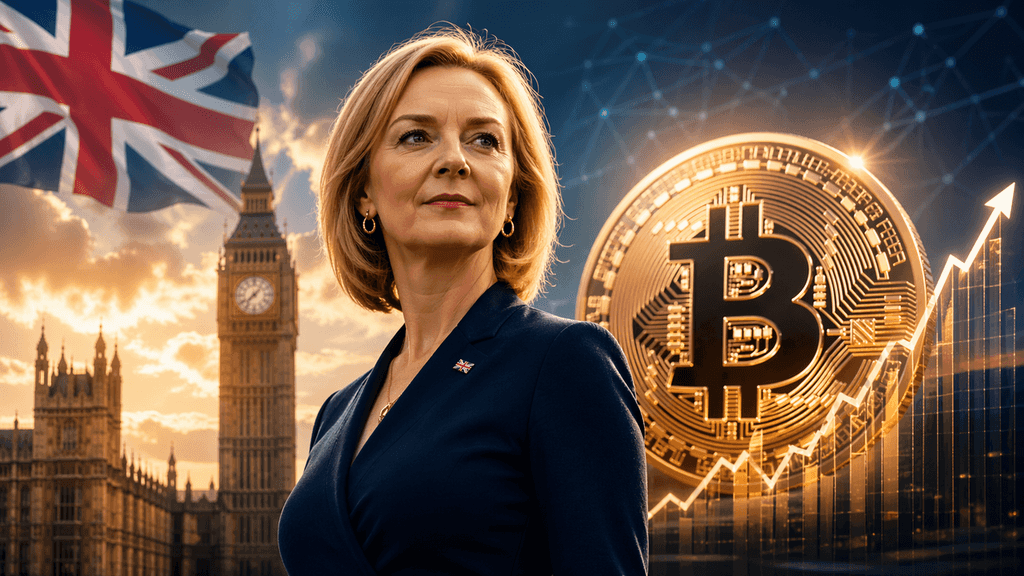
In April 2026, former British Prime Minister Liz Truss ignited a global conversation by identifying Bitcoin as the essential instrument for a "British Counter-Revolution." Her bold stance challenges the traditional financial establishment, arguing that decentralized digital assets are the only viable escape from the UK’s current economic stagnation and the overreach of unelected institutional bureaucrats.
This deep dive explores how Liz Truss views Bitcoin as the definitive solution to the UK’s fiscal decline, offering a strategic roadmap for reclaiming national sovereignty and individual financial independence.
Key Takeaways
-
Systemic Critique: Liz Truss argues the UK is on a "negative trajectory" caused by currency debasement and a risk-averse permanent bureaucracy.
-
The Bitcoin Solution: She labels Bitcoin as the "ultimate weapon" against central bank monopolies, specifically targeting the Bank of England's influence.
-
Sovereignty Reclaimed: The "Counter-Revolution" isn't just about money; it’s about linking Bitcoin ownership to fundamental civil liberties and free speech.
-
Economic Reality: A stark comparison suggests the UK’s per-capita wealth has fallen behind the poorest U.S. states, necessitating a radical shift toward decentralized finance.
The "Negative Trajectory": Why Liz Truss Believes the UK Needs a Hard Break
The core of the Truss doctrine in 2026 is the belief that the United Kingdom is not merely experiencing a temporary downturn, but is locked into a managed decline. She posits that the current path—defined by high taxes, heavy regulation, and inflationary monetary policy—is a "negative trajectory" that cannot be fixed with minor policy tweaks. Instead, she advocates for a "hard break" from the legacy systems that have governed the country since the post-war era.
Beyond the Mini-Budget: Liz Truss on the 2022 "Powder Kegs" and Economic Stagnation
Reflecting on her brief but impactful tenure in 2022, Truss remains unapologetic about her "dash for growth." She argues that the market turmoil following her mini-budget was not the result of her fiscal plans, but rather a violent reaction from a fragile system.
-
Leveraged Fragility: She points to Liability Driven Investments (LDIs) within pension funds as "hidden powder kegs" that were waiting to explode.
-
Institutional Resistance: Truss claims that the "Treasury orthodoxy" and the Bank of England intentionally undermined her efforts to lower taxes, preferring the safety of stagnation over the volatility of growth.
-
Stagnation as a Choice: To Truss, the current low-growth environment is a policy choice made by an elite class that values stability for the state over prosperity for the citizen.
The 51st State Comparison: Analyzing the UK’s GDP Reality vs. Institutional Myths
One of the most jarring points in Truss’s recent speeches is the comparison of British wealth to American standards. She often cites data suggesting that the average Briton is under a delusion regarding the country's economic standing.
| Economic Metric | United Kingdom (2026 Est.) | Mississippi (US Poorest State) |
| GDP Per Capita | Lower | Higher |
| Energy Costs | Significantly Higher | Lower |
| Regulatory Burden | High (EU-Legacy + UK Gold-plating) | Moderate |
Truss argues that if the UK were incorporated into the United States, it would rank as the 51st state in terms of per-capita income—trailing even the historically poorest regions of America. This "grim reality" is often masked by institutional myths of "Great Britain" that no longer reflect the lived experience of the working population.
Challenging the "Permanent Bureaucracy": Why the Status Quo is Failing the British Public
Truss identifies a "permanent bureaucracy"—a layer of unelected officials in the civil service, the Bank of England, and international bodies—as the true seat of power in London.
-
Risk Aversion: These institutions are incentivized to avoid failure rather than pursue success, leading to a "regulatory state" that smothers startups.
-
Lack of Accountability: When monetary or fiscal policies fail, the bureaucrats remain in power while elected officials take the blame.
-
Groupthink: A narrow academic and institutional consensus prevents the consideration of radical alternatives like Bitcoin or supply-side reform.
Bitcoin as the "Ultimate Weapon": Stripping Power from Central Banks
For Liz Truss, Bitcoin is the primary technological disruptor capable of dismantling the centralized grip of the "statist" economy. She has transitioned from a traditional politician to a vocal advocate for decentralized protocols, viewing the blockchain as a check on the unchecked power of the Bank of England.
Decentralization vs. Centralization: How Bitcoin Acts as a Counterweight to the Bank of England
The Bank of England has long held a monopoly on the issuance of the pound sterling. Truss argues that this centralization allows for a "hidden tax" on the public through the manipulation of interest rates and quantitative easing.
-
The Counterweight: Bitcoin’s decentralized nature means no single entity—no matter how powerful—can alter its protocol or print more units.
-
Neutralizing the ECB and BoE: By adopting or encouraging the use of Bitcoin, Truss believes the UK can bypass the "monetary groupthink" of European and British central bankers who coordinate to keep the system rigged in favor of the state.
Ending Currency Debasement: Sound Money as a Hedge Against Inflationary Fiat Systems
"Sound money" is a recurring theme in the Truss 2026 narrative. She draws a direct line between the expansion of the money supply and the rising cost of living that has plagued British households.
"We are seeing the systematic destruction of the pound's purchasing power. Bitcoin offers a mathematical certainty that fiat currency simply cannot provide. It is the only escape hatch from a system designed to inflate away your hard-earned savings." — Liz Truss, CPAC UK 2026.
By promoting an asset with a hard cap of 21 million units, Truss positions herself as a defender of the "average saver" against the inflationary impulses of the Treasury.
Financial Sovereignty: Returning Economic Control Directly to the People
The shift toward Bitcoin represents a fundamental move toward financial sovereignty. In a world where bank accounts can be frozen and transactions monitored, Truss sees decentralized assets as a sanctuary for individual liberty.
-
Permissionless Access: No bureaucrat can prevent a citizen from sending or receiving Bitcoin.
-
Self-Custody: Ownership of one’s private keys is the ultimate form of property right, a concept Truss believes is being eroded in the digital age of traditional banking.
-
Direct Empowerment: It removes the "middleman" of the state-aligned banking sector, allowing for a peer-to-peer economy that mirrors the merchant-driven roots of British prosperity.
The Counter-Revolution: Linking Bitcoin to Civil Liberties and Free Speech
The "British Counter-Revolution" is more than an economic policy; it is a cultural and political movement. Truss has successfully linked the technical properties of the blockchain to the broader struggle for civil liberties in the 21st century.
A New Political Narrative: Why "Disruptive Political Operators" are Embracing Crypto
Truss points to a global trend where "disruptive political operators" are utilizing Bitcoin to challenge the establishment. She cites examples of leaders in emerging economies using digital assets to bypass failing legacy systems and argues that the UK must do the same to remain competitive. This narrative reframes Bitcoin from a "speculative bubble" to a "liberation technology" for the politically marginalized.
Beyond Finance: The Link Between Bitcoin Ownership and Core Individual Freedoms
In her 2026 framework, financial freedom is the bedrock of all other liberties. She argues that if the state controls your money, they effectively control your speech and your movement.
-
Freedom of Expression: The ability to fund causes and buy goods without state oversight is essential for a functioning democracy.
-
Resistance to CBDCs: Truss is a vocal opponent of Central Bank Digital Currencies (CBDCs), labeling them as "surveillance tools" and positioning Bitcoin as the pro-freedom alternative.
-
Privacy as a Right: She asserts that financial privacy is not about hiding illicit activity, but about protecting the individual from the "prying eyes of the permanent bureaucracy."
CPAC UK and the Global Shift: How Truss is Mobilizing the Bitcoin Community for Change
Through appearances at high-profile events like CPAC UK, Truss is building a bridge between the "Orange Pill" community and traditional conservative activists. She is mobilizing a base that is increasingly skeptical of central authorities and hungry for a leader who understands the intersection of technology and liberty. This movement is not just about the price of Bitcoin; it is about building a parallel infrastructure that can survive the collapse of the legacy "statist" model.
Conclusion
In summary, Liz Truss has repositioned herself as the political face of a Bitcoin-led "British Counter-Revolution," targeting the systemic failures of the UK’s economic establishment. By identifying the "negative trajectory" of currency debasement and institutional overreach, she offers a radical vision where decentralized technology restores financial sovereignty to the individual. Whether this movement gains mainstream traction or remains a radical fringe, it marks a significant shift in how political leaders perceive the power of digital assets. For Truss, Bitcoin is not just a digital gold; it is the ultimate safeguard for the core freedoms of the British people in an increasingly centralized world.
FAQ
Why does Liz Truss believe Bitcoin is a "Counter-Revolution" tool?
Liz Truss views Bitcoin as a "counter-revolution" tool because it allows citizens to opt out of the failing fiat system. She believes it provides a technological check against the power of central banks and unelected bureaucrats who have overseen the UK’s economic decline.
What is the "negative trajectory" Liz Truss refers to regarding the UK?
The "negative trajectory" refers to the UK’s long-term economic stagnation, characterized by high taxes, excessive regulation, and the debasement of the pound. Truss argues that without a radical break—like adopting Bitcoin principles—the UK will continue to fall behind globally.
How does Bitcoin link to civil liberties according to Liz Truss?
Truss argues that financial freedom is the foundation of all rights. By owning Bitcoin, individuals gain protection from state surveillance and financial de-platforming, which she links directly to the preservation of freedom of speech and individual sovereignty.
What is the "51st state" comparison used by Liz Truss?
Truss uses this comparison to highlight the UK's economic decline, noting that the average Briton's wealth is now lower than that of residents in Mississippi, the poorest U.S. state. She uses this data to argue that the current financial status quo is an absolute failure.
Why is Liz Truss against Central Bank Digital Currencies (CBDCs)?
Liz Truss opposes CBDCs because she views them as the ultimate tool for state surveillance and control. She contrasts the "surveillance-ready" nature of CBDCs with the "liberation-focused" decentralization of Bitcoin, urging a total rejection of state-issued digital coins.