



AI Summer 2026: Will Artificial Intelligence Replicate DeFi's Explosive Growth?
In 2020, a handful of users turned a few thousand dollars into millions by interacting with protocols most people had never heard of. The opportunity was public, the rules were transparent, and still, almost everyone missed it.
Platforms like Uniswap, Aave, and Compound did not look like billion-dollar systems at the start. They were early, experimental, and easy to ignore. Within months, they redefined how users traded, borrowed, and earned in crypto. That period is now known as DeFi Summer.
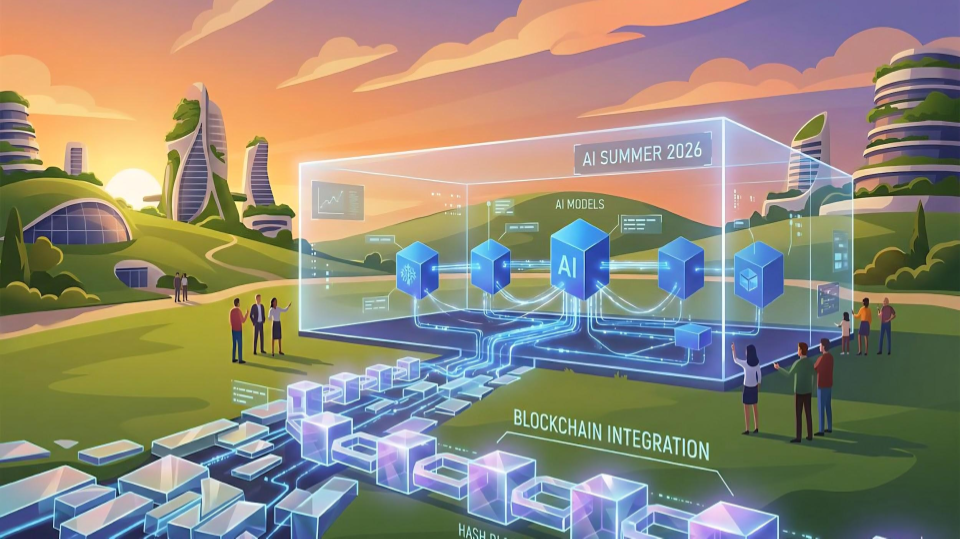
A similar setup is forming again in 2026. This time, the shift is not centered on finance alone. It is driven by artificial intelligence operating within blockchain systems. AI-linked tokens are gaining attention, decentralized compute networks are scaling, and autonomous agents are starting to execute transactions and manage assets on-chain without direct human input.
The pattern is familiar. Early infrastructure, rising attention, and rapid capital movement. What changes is the layer where value is created.
This article examines how DeFi Summer 2020 unfolded, what defines the emerging AI cycle in 2026, and why the convergence of AI and DeFi could shape the next phase of the crypto market.
What Was DeFi Summer 2020?
DeFi Summer began when decentralized finance moved from theory to real, repeatable profit.
Ethereum made it possible through smart contracts, allowing developers to build financial applications without intermediaries. But adoption remained limited until incentives changed. That shift came in June 2020, when Compound introduced its COMP token and began rewarding users for supplying and borrowing assets. For the first time, users could earn additional returns simply by participating in a protocol.
Capital responded immediately. Users began moving funds into DeFi platforms to capture these rewards, and the model spread quickly. Uniswap enabled permissionless trading through liquidity pools, while Aave expanded decentralized lending with flexible borrowing options. Together, these protocols defined the core activities of the period: trading, lending, and liquidity provisioning.
Yield farming became the dominant strategy. Users shifted assets across protocols to maximize returns, often earning both transaction fees and governance tokens. This created a powerful cycle. More liquidity improved market efficiency, which attracted more users, leading to higher fees and stronger incentives.
Growth followed at an unprecedented pace. Total Value Locked in DeFi rose from under $1 billion in early 2020 to over $10 billion within months, marking a rapid shift from niche experimentation to mainstream adoption within crypto.
DeFi Summer was not driven by speculation alone. It was driven by access. Anyone with a crypto wallet could participate without relying on traditional financial systems. Smart contracts handled execution, tokens aligned incentives, and users became active contributors to the protocols they used.
Within a short period, decentralized finance established itself as a core sector of the crypto market, setting the foundation for everything that followed.
AI Summer 2026: The New Explosive Growth Narrative in Crypto
AI Summer is emerging as a structural phase in crypto, not a short-lived trend.
By 2026, the intersection of artificial intelligence and blockchain has moved past early experimentation into a more mature stage of development. What began as speculative interest in combining AI with crypto has evolved into an ecosystem with defined use cases, active users, and measurable utility. The narrative is no longer peripheral. It is becoming a core layer for new decentralized systems.
The current landscape includes decentralized compute networks, AI-powered trading systems, data marketplaces, and machine learning platforms built on blockchain infrastructure. These components enable developers to train, deploy, and operate AI models in open environments without relying on centralized providers. As a result, participation is no longer limited to a small group of organizations. It is distributed across networks that reward contribution and usage.
This shift mirrors an earlier phase in crypto history. Ethereum provided the base layer for DeFi Summer, enabling smart contracts to coordinate financial activity without intermediaries. In the same way, decentralized compute and AI-agent frameworks are forming the base layer for AI-driven applications in crypto. The underlying principle remains consistent. Open infrastructure, aligned incentives, and user ownership create conditions for rapid growth.
Several AI-related crypto projects have already seen increased activity across trading volume, developer participation, and network usage. This growth is happening alongside rapid advances in mainstream artificial intelligence, including improvements in language models, generative systems, and autonomous agents capable of executing complex tasks.
AI Summer 2026 is not defined by a single breakthrough. It is defined by convergence. As AI capabilities expand and blockchain infrastructure supports coordination, ownership, and incentives, the two technologies are beginning to reinforce each other in ways that resemble the early stages of DeFi, but on a broader and more autonomous scale.
The Symbiosis: How DeFi and AI Have Merged Into One Ecosystem
The evolution from DeFi Summer to AI Summer is not just a shift in narrative. It marks a transition from human-driven participation to systems where intelligent agents actively interact with financial infrastructure. What began as decentralized finance built on Ethereum is now becoming the execution layer for autonomous, AI-driven activity across multiple networks.
AI Agents and DeFi: The Rise of Autonomous On-Chain Users
From Human Users to Autonomous AI Agents in DeFi
In DeFi Summer 2020, users were individuals connecting wallets, supplying liquidity, and executing transactions manually. In AI Summer 2026, a growing share of those users are no longer human. They are AI agents operating with self-managed wallets, predefined objectives, and the ability to make independent decisions on-chain.
This shift introduces what is often described as the agentic economy. In this model, AI systems interact directly with decentralized protocols, not as tools controlled step by step by humans, but as autonomous participants capable of initiating and completing financial actions. DeFi protocols built between 2020 and 2022 now function as execution environments for these agents.
How AI Agents Execute Trading, Yield Farming, and Portfolio Management
AI agents are increasingly capable of performing tasks that previously required constant human oversight. They can monitor multiple lending markets, identify yield opportunities, rebalance portfolios, execute trades, and respond to changing market conditions in real time.
Protocols such as Uniswap and Aave provide the infrastructure for these actions, while AI systems determine when and how to interact with them. Instead of manual yield farming strategies, agents optimize capital allocation continuously based on data inputs, risk parameters, and predefined goals.
This represents a transition from reactive participation to intent-based execution, where users define objectives and agents handle the operational complexity.
The Agentic Economy and On-Chain Decision Making
The emergence of the agentic economy reflects a broader shift toward programmable economic activity. AI agents are not only executing transactions but also coordinating across protocols, managing risk exposure, and adapting strategies dynamically.
This creates a system where capital is no longer static. It is actively managed by software that can interpret market conditions and act without delay. Blockchain provides the settlement layer that records these actions transparently, ensuring that every decision and transaction can be verified.
Key AI Crypto Projects Powering Autonomous Finance
Several projects are contributing to this emerging infrastructure by combining artificial intelligence with decentralized networks:
-
Fetch.ai
-
Bittensor
-
Ocean Protocol
-
SingularityNET
-
Render Network
-
The Graph
-
Numeraire
-
Virtual Protocol
These platforms focus on areas such as decentralized compute, data sharing, machine learning coordination, and AI model deployment. Together, they support the development of systems where AI agents can operate independently while interacting with blockchain-based financial protocols.
Why AI and Blockchain Are Complementary Technologies
Artificial intelligence systems are often described as black boxes because their decision-making processes can be difficult to interpret. This creates challenges around trust, accountability, and verification, especially in financial applications.
Blockchain addresses this limitation by introducing transparency and immutability. Transactions executed by AI agents can be recorded on-chain, providing a verifiable history of actions. This allows users and systems to audit behavior, track outcomes, and establish a level of trust that centralized AI systems do not inherently provide.
Why AI Is Needed to Manage Multi-Chain Complexity
At the same time, blockchain ecosystems have become increasingly complex. Multiple chains, protocols, and liquidity sources create an environment that is difficult to navigate manually.
AI helps address this complexity by analyzing large volumes of data, identifying patterns, and coordinating actions across different systems. In a multi-chain environment in 2026, AI agents such as Giza already optimize routes, manage cross-protocol interactions, and dynamically adjust strategies based on real-time market conditions.
ZKML and Verifiable AI Outputs on Blockchain
Zero-knowledge machine learning, often referred to as ZKML, is emerging as a solution to ensure that AI outputs are both accurate and verifiable. By combining machine learning with zero-knowledge proofs, systems can confirm that a given output was generated correctly without exposing the underlying data or model.
This is particularly relevant for financial applications where trust, privacy, and correctness are critical. ZKML introduces a way to validate AI decisions mathematically, aligning with the transparency requirements of decentralized systems.
Toward Transparent, Decentralized, and Community-Owned AI Systems
The convergence of AI and blockchain is driving a shift toward systems that are not only intelligent but also open and auditable. Centralized AI models concentrate control and data, while decentralized approaches distribute ownership and participation.
As these technologies continue to integrate, the result is a new class of infrastructure where intelligence operates alongside transparency and user ownership. This alignment is what defines the symbiosis between DeFi and AI, and it is shaping the next phase of autonomous digital economies.
The Key Infrastructure Projects Driving AI Summer 2026
As with DeFi in 2020, narratives alone do not sustain a market cycle. Infrastructure does. The rise of AI in crypto is being driven by a stack of technologies that bring together compute, intelligence, and data. Understanding this stack is key to identifying where real value is forming.
AI Summer 2026 is built on three core layers: compute, intelligence, and data. DeFi relied on Ethereum, liquidity pools, and token incentives working together. In the same way, AI-driven crypto systems depend on processing power, model coordination, and access to high-quality datasets.
Decentralized Compute (GPU Infrastructure Layer)
At the foundation is compute. AI models require large amounts of processing power, and supply constraints from traditional providers have created an opening for decentralized alternatives.
Networks like Render and Akash aggregate idle GPU capacity from gaming hardware, data centers, and former mining operations. This creates a distributed compute marketplace that is already attracting AI workloads such as model training, inference, and edge deployment.
The shift is clear. The market is moving from speculative mining to productive compute economies where demand is driven by real usage.
AI Models and Agent Networks (Intelligence Layer)
Above compute sits the intelligence layer, where models are trained, deployed, and monetized.
Bittensor represents this shift by creating a decentralized network where AI models compete and collaborate. Rewards are distributed based on the value of their output, introducing a market-driven approach to intelligence.
At the ecosystem level, the ASI alliance, originally formed by Fetch.ai, SingularityNET, and Ocean Protocol, represents a broader push toward integrating autonomous agents, AI services, and decentralized coordination. However, in October 2025, Ocean Protocol separated from the alliance to continue as an independent AI data infrastructure project, reflecting a shift toward more specialized and modular development within the AI crypto stack.
This evolution highlights an important trend. Rather than consolidating into a single unified system, the AI crypto ecosystem is maturing into distinct layers, where compute, intelligence, and data providers can scale independently while still interacting across protocols.
Decentralized Data Markets (Data Layer)
Data forms the final layer and plays a critical role.
Ocean Protocol (Formerly part of the ASI Alliance) enables datasets to be tokenized and accessed while preserving privacy through compute-to-data mechanisms. This allows AI systems to train on sensitive or proprietary data without exposing it.
For crypto markets, this has direct implications. It improves trading models, strengthens risk management, and enables more adaptive DeFi strategies.
Data is what transforms AI systems from reactive tools into predictive systems that can respond to market conditions in real time.
The Advantages of AI Crypto in the Current Market
The shift toward AI in crypto is not only narrative driven. It is supported by changes in how value is created, who is investing, and where developers are building. These factors help explain why the current cycle looks structurally different from previous ones.
Real Revenue Models, Not Just Token Emissions
One of the biggest criticisms of DeFi Summer 2020 was sustainability. Many protocols relied on token emissions to fund yields, creating short-term incentives without long-term economic activity.
AI crypto projects are beginning to move in a different direction.
Platforms such as Render and Akash generate revenue from real GPU workloads. Demand comes from developers and enterprises that need compute for training and deploying AI models. This creates a direct link between usage and value.
In the case of Bittensor, token rewards are tied to model performance. Participants are incentivized based on the usefulness of their output rather than passive liquidity provision.
This shift matters. It moves the market from incentive-driven growth to usage-driven growth.
Institutional Capital Is Entering AI Crypto
Another key difference is the type of capital entering the market.
In 2020, DeFi growth was largely driven by retail users and crypto-native funds. In 2026, AI crypto is attracting attention from venture capital, infrastructure investors, and institutions with exposure to artificial intelligence.
This changes market dynamics.
Institutional capital tends to favor projects with clearer revenue models, stronger infrastructure, and longer-term potential. As a result, capital allocation becomes more selective, which can reduce the likelihood of short-lived hype cycles.
It also signals that AI crypto is being viewed as part of a broader technology trend, not just a niche within digital assets.
Developer Activity Is Shifting Toward AI and Crypto Integration
Developer behavior remains one of the most reliable indicators of where the market is heading.
GitHub’s Octoverse 2025 report revealed that over 4.3 million AI-related repositories now exist on the platform, with a 178% year-over-year increase in large language model focused projects alone. This level of growth signals a rapid expansion in tooling, experimentation, and real-world AI deployment.
A growing share of this activity is now intersecting with blockchain.
AI platforms are beginning to integrate with decentralized infrastructure, creating systems where intelligence and coordination can operate on-chain. For example, platforms like OpenClaw are building AI systems that interact with blockchain environments, while emerging crypto-native projects such as Amiko, often described as a personal AI twin, reflect how identity, automation, and agents are becoming part of the on-chain economy.
Automation frameworks are also accelerating this shift. Tools like n8n are increasingly being used to orchestrate AI workflows, connect APIs, and trigger on-chain actions based on real-time data. This makes it easier to deploy AI agents that can monitor markets, execute strategies, and interact with multiple protocols without constant human input.
This mirrors the early Ethereum era, where developer momentum translated into new applications, user growth, and eventually capital inflows.
The implication is consistent with past cycles. Where developers build, markets tend to follow.
Challenges and Risks: What Could Slow AI Summer Down
While AI is emerging as a powerful narrative in crypto, not every growth cycle sustains itself. The same forces that drive rapid expansion can also create structural weaknesses. Understanding these risks is essential for separating durable projects from short-lived speculation.
The AI Washing Problem in Crypto
As capital flows into the sector, a growing number of projects are positioning themselves as AI-driven without delivering meaningful innovation.
The key question is simple. If the underlying AI product can function without a token, the token may not have real utility. Projects that rely on generic APIs or claim proprietary trading models without verifiable outputs should be approached with caution.
This closely mirrors the DeFi expansion between 2020 and 2021, when a lot of defi farms attracted liquidity but failed to deliver long-term value.
The response remains the same. Focus on measurable indicators such as on-chain usage, inference demand, and revenue generation rather than narrative alone.
Regulatory Pressure and AI Governance
Regulation is becoming a defining factor in the development of AI crypto projects.
In regions such as the United States and the European Union, emerging frameworks around model accountability and data usage are reshaping how AI systems can operate. This creates a split between compliant projects that may face limitations and decentralized systems that operate with fewer constraints but higher regulatory uncertainty.
There is also an unresolved question around autonomous agents. As AI systems begin to control wallets and execute transactions, legal frameworks have yet to define their status or liability.
As a result, the market is shifting toward more transparent and verifiable systems. The next phase of growth may favor auditable intelligence, where models can prove how decisions are made and how data is used.
Developer Concentration and Ecosystem Imbalance
Developer activity is a critical driver of long-term growth, and recent trends show a shift.
Blockchain development has declined since early 2025, with fewer active contributors and reduced code output. At the same time, AI development continues to accelerate, attracting a large share of technical talent.
This creates a potential imbalance.
If developers move entirely toward AI without maintaining core blockchain infrastructure, the foundation that supports DeFi and other applications could weaken. The strength of the ecosystem depends on both layers evolving together.
Market Overhype and Cycle Risk
Rapid capital inflows can create distortions.
If investment outpaces real utility, valuations may rise faster than fundamentals can support. This increases the likelihood of sharp corrections once expectations reset.
The pattern is familiar. DeFi experienced rapid expansion followed by a significant downturn when liquidity dried up and unsustainable models were exposed.
AI crypto faces a similar risk.
For market participants, this reinforces the importance of disciplined positioning, diversification, and a focus on long-term value rather than short-term narrative momentum.
Got it. Here’s a tighter, sharper version with strong flow and no em or en dash:
Conclusion: The Convergence That Changes Everything
DeFi Summer 2020 proved that financial systems could be rebuilt on open and programmable infrastructure. It created the foundation that crypto markets still run on today.
AI in 2026 is extending that foundation into intelligence.
What began as automated finance is evolving into systems that can analyze, adapt, and execute. The same mechanisms that once rewarded liquidity are now supporting compute, models, and data. This marks a shift from static protocols to adaptive financial systems.
For traders and investors, the implication is clear. The platforms and protocols in use today are becoming the execution layer for AI-driven markets.
Understanding both the infrastructure and the intelligence built on top of it will define who captures value in the next phase of crypto.
FAQ
What is AI Summer 2026 in crypto?
AI Summer 2026 refers to the rapid growth of blockchain projects integrating artificial intelligence, including decentralized compute networks, AI agents, and data marketplaces. It represents a new phase in crypto where AI-driven systems create value beyond traditional DeFi use cases.
How is AI Summer different from DeFi Summer 2020?
DeFi Summer 2020 focused on human-driven financial activities like lending and yield farming, while AI Summer 2026 introduces autonomous AI agents that can trade, manage portfolios, and interact with protocols independently, shifting from manual participation to automated execution.
What are AI agents in decentralized finance (DeFi)?
AI agents are autonomous systems that operate on-chain with their own wallets and predefined goals. They can analyze market data, execute trades, optimize yield strategies, and manage assets without constant human intervention.
Which projects are leading the AI crypto ecosystem?
Key projects include Fetch.ai, Bittensor, Ocean Protocol, SingularityNET, Render Network, and The Graph. These platforms support decentralized compute, AI model coordination, and data sharing, forming the infrastructure behind AI-driven blockchain applications.
What risks could slow down AI Summer in crypto?
Major risks include “AI washing” (projects overstating AI capabilities), regulatory uncertainty, developer imbalance between AI and blockchain, and market overhype. These factors could lead to unsustainable growth or sharp market corrections if not addressed.