

How Latest June US CPI Data Boosted US Stocks and Crypto Markets, But Long-Term Risks Persist
2026/07/15 11:34:00
Introduction
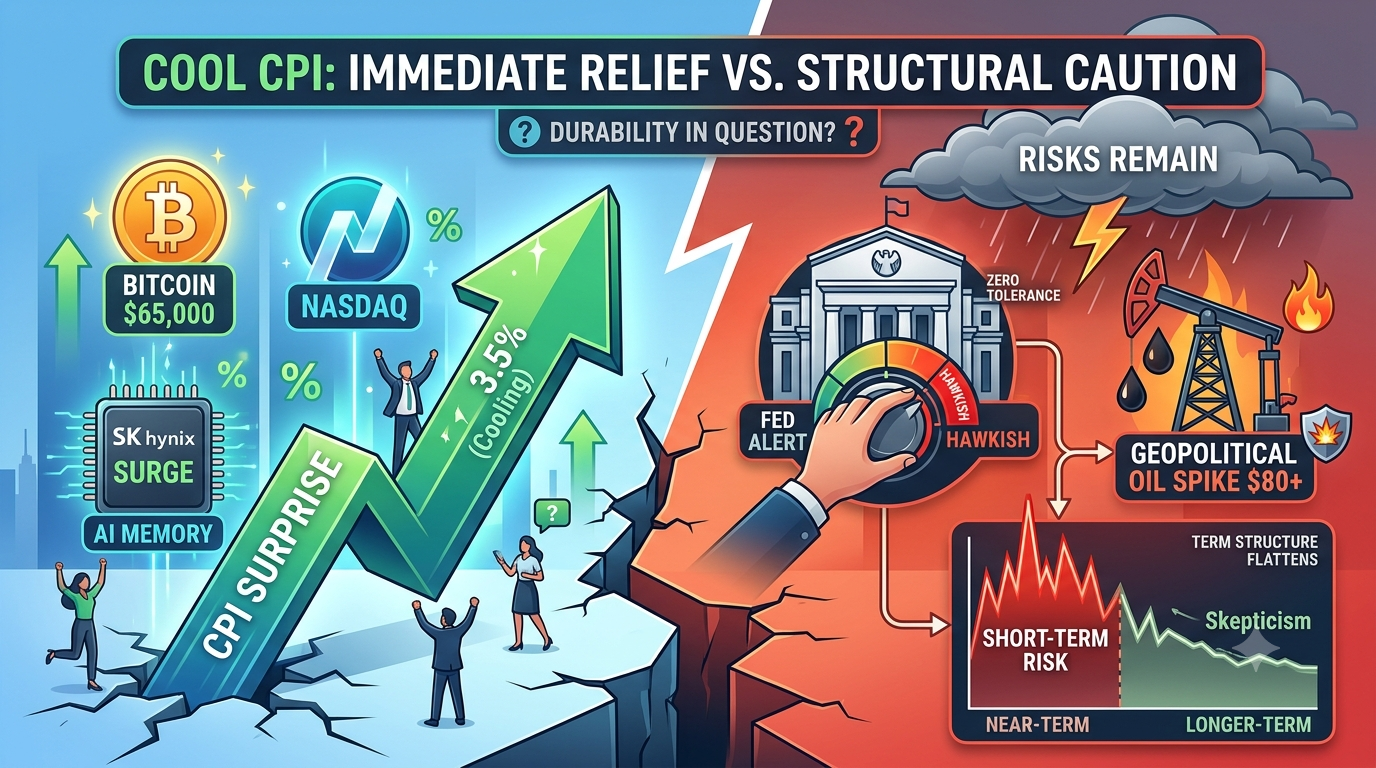
The latest US Consumer Price Index (CPI) data delivered a significant surprise on July 14, 2026, coming in at 3.5% year-over-year, well below the 3.8% consensus forecast and down from May’s 4.2%. This cooler-than-expected reading immediately eased market tensions, sparking a sharp rally in risk assets. Bitcoin climbed back toward the $65,000 level, the Nasdaq rose approximately 0.9%, and SK Hynix shares surged as much as 27% in a single session, erasing recent losses and displaying meme-like volatility.
The short-term relief is clear: softer inflation data reduces the immediate likelihood of aggressive Federal Reserve rate hikes, allowing investors to breathe easier. However, a deeper look at Fed communications, geopolitical tensions, oil prices, and options market structures reveals that medium- to long-term risks remain far from resolved. Investors must navigate this disconnect between headline relief and underlying vulnerabilities.
Why the CPI Print Triggered an Immediate Risk-On Rally
The June CPI report marked a notable deceleration in price pressures. Headline CPI fell 0.4% month-over-month against expectations of a milder 0.1% decline, while core CPI eased to 2.6% annually from prior levels. According to recent market analysis, this beat fueled expectations that the Fed would hold rates steady rather than hike further in 2026.
Risk assets responded swiftly. Bitcoin recovered from near $62,000 to around $65,000 as traders priced in a more dovish policy path. US equities followed suit, with the Nasdaq posting solid gains. SK Hynix, a key AI memory chip player, stood out dramatically — its US-listed shares reversed recent declines with outsized gains, reflecting heightened sensitivity to macro sentiment in the semiconductor sector.
This reaction underscores how inflation data functions as a primary catalyst for near-term sentiment in both traditional and crypto markets. Lower readings directly lower perceived policy tightening risks, boosting liquidity expectations and risk appetite.
Fed Chair Maintains Hawkish Stance Despite the Data Beat
Despite the favorable CPI numbers, Federal Reserve leadership continues to signal caution. In recent congressional testimony, the Fed Chair emphasized “zero tolerance” for persistently high inflation and described missing the 2% target for over five years as a policy failure. Single-month improvements will not alter the central bank’s judgment or commitment to sustained disinflation.
The Fed’s messaging makes one thing clear: one soft CPI print does not equate to mission accomplished. Policymakers remain data-dependent and prepared to deploy rate tools if inflation reaccelerates. This hawkish undertone caps the upside for risk assets and keeps volatility elevated even after positive surprises.
Geopolitical Tensions and Oil Prices Add Inflationary Pressure
Ongoing US-Iran conflicts introduce another layer of uncertainty. Recent escalations, including strikes and retaliatory actions in the Middle East, threaten energy supply routes such as the Strait of Hormuz. WTI crude oil currently trades near $80 per barrel, with potential for further spikes if tensions worsen.
Higher energy costs represent a direct transmission mechanism back into consumer prices. Any sustained rise in oil could reverse recent CPI progress and force the Fed into a more restrictive posture. Investors cannot ignore this exogenous risk when assessing the durability of the current rally.
Options Markets Reveal Caution: High Near-Term IV, Flattening Term Structure
Surface-level price action appears bullish, yet derivatives markets tell a more nuanced story. For SK Hynix, implied volatility (IV) has spiked dramatically, with short-dated at-the-money options showing IV around 150-180%, significantly higher than longer-dated contracts (dropping to 115-123% for 38-66 day expirations). This inversion signals that traders price in substantial near-term event risk but limited sustained momentum beyond that.
Bitcoin options exhibit a similar pattern. While the CPI-driven move lifted spot prices, near-term IV rose modestly to around 35%, but longer-term IV remains subdued in the low 32-33% range. The flat-to-inverted term structure indicates skepticism about prolonged upside.
Options pricing with real capital demonstrates that markets anticipate short-term volatility from news flow but doubt strong structural drivers for multi-month rallies. This disconnect between spot enthusiasm and derivatives caution is a critical warning sign.
Broader Market Implications for Crypto and Equities
Crypto and tech-heavy equities share exposure to macroeconomic cycles, liquidity conditions, and risk sentiment. The CPI relief provides a temporary tailwind, but persistent Fed vigilance, geopolitical oil risks, and cautious options flows suggest limited room for error.
Traders should expect continued choppiness rather than a straight-line recovery. Catalysts like upcoming Fed speeches, inflation revisions, or Middle East developments could quickly shift momentum.
Should You Trade or Invest in Crypto on KuCoin Amid This Environment?
The recent CPI-driven rebound creates actionable short-term opportunities on KuCoin, especially in major assets like BTC/USDT and ETH/USDT that benefit from risk-on flows. KuCoin offers competitive spot and futures trading with high liquidity, allowing users to capitalize on volatility through leveraged positions or spot accumulation during dips.
However, given the medium-term risks highlighted by Fed rhetoric and options data, a balanced approach is essential. Use KuCoin’s tools for risk management — set stop-losses, diversify across assets, and avoid over-leveraging. Consider dollar-cost averaging into core holdings while monitoring key levels.
Always trade responsibly and align positions with your risk tolerance, as geopolitical and policy surprises can materialize rapidly. Registering on KuCoin provides access to a wide range of trading pairs and features designed for both beginners and experienced traders navigating these dynamic conditions.
Conclusion
The June 2026 US CPI data at 3.5% delivered welcome relief, driving immediate gains in US stocks and cryptocurrencies by lowering near-term rate hike fears. Bitcoin’s recovery toward $65,000 and strong performances in names like SK Hynix highlight the market’s sensitivity to inflation beats. Yet this optimism must be tempered by reality: the Fed maintains a hawkish bias with zero tolerance for above-target inflation, Middle East conflicts threaten oil-driven price rebounds, and options markets price in high short-term uncertainty with fading longer-term conviction.
Investors and traders face a market where short-term euphoria coexists with structural caution. Success depends on disciplined risk management, close monitoring of Fed communications and geopolitical headlines, and avoiding the trap of extrapolating one data point into a new bull thesis. While the path forward includes opportunities, vigilance against renewed volatility remains paramount for sustainable positioning in both traditional and digital assets.
FAQs
What does a lower-than-expected CPI reading typically mean for cryptocurrency prices?
It generally supports higher crypto prices in the short term by reducing expectations for aggressive monetary tightening and improving risk sentiment.
How does the Fed’s “zero tolerance” stance affect market reactions to good CPI data?
It limits the rally’s durability, as policymakers require consistent progress toward 2% rather than celebrating isolated improvements.
Why are oil prices important for assessing long-term inflation risks?
Sustained high oil prices around $80/barrel can feed back into transportation and production costs, potentially pushing CPI higher again.
What does an inverted options volatility term structure indicate?
It signals elevated near-term event risk but skepticism about sustained price momentum, often preceding choppy or corrective price action.
Should beginners trade crypto during periods of high geopolitical tension?
Beginners should exercise extra caution, start small, use risk management tools, and prioritize education over speculation when macro uncertainties are elevated.